10 Modern Living Room Ideas with Soft Organic Textures
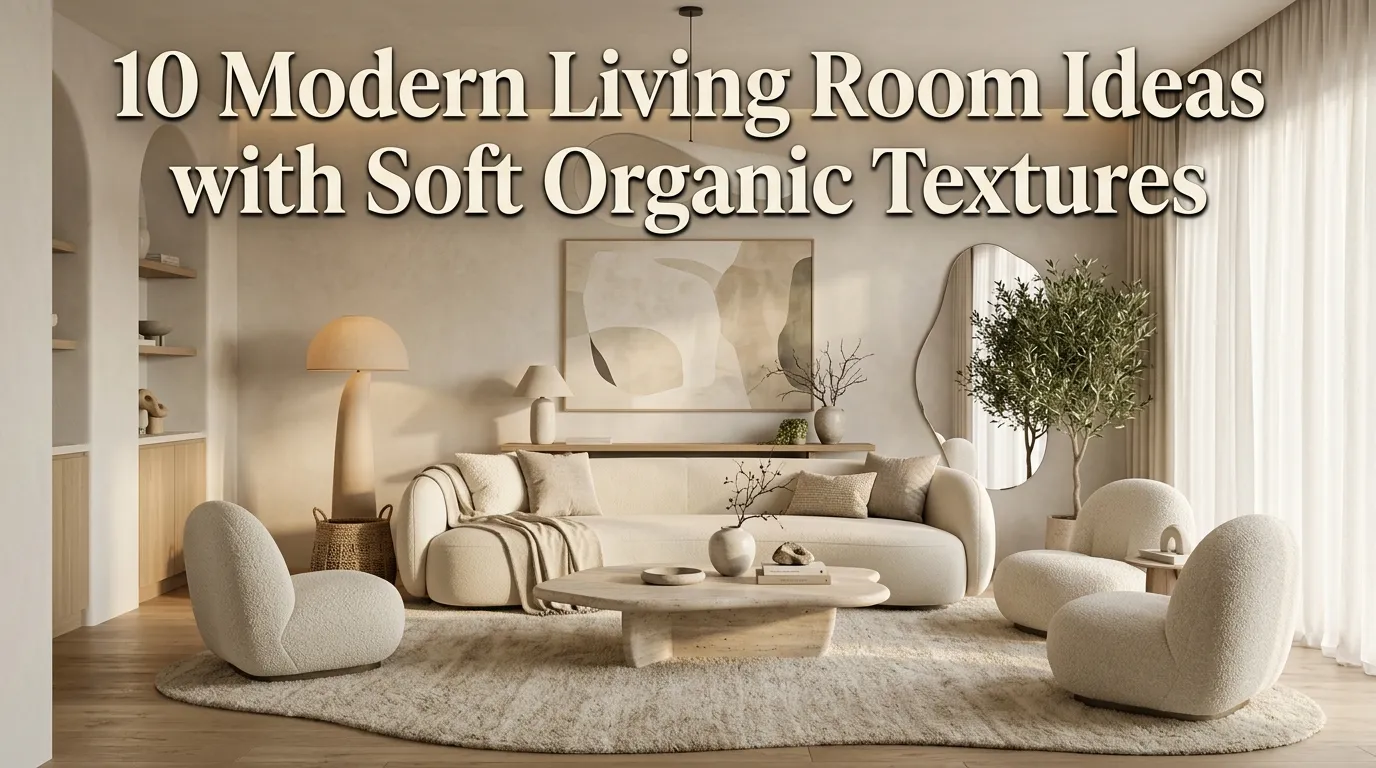
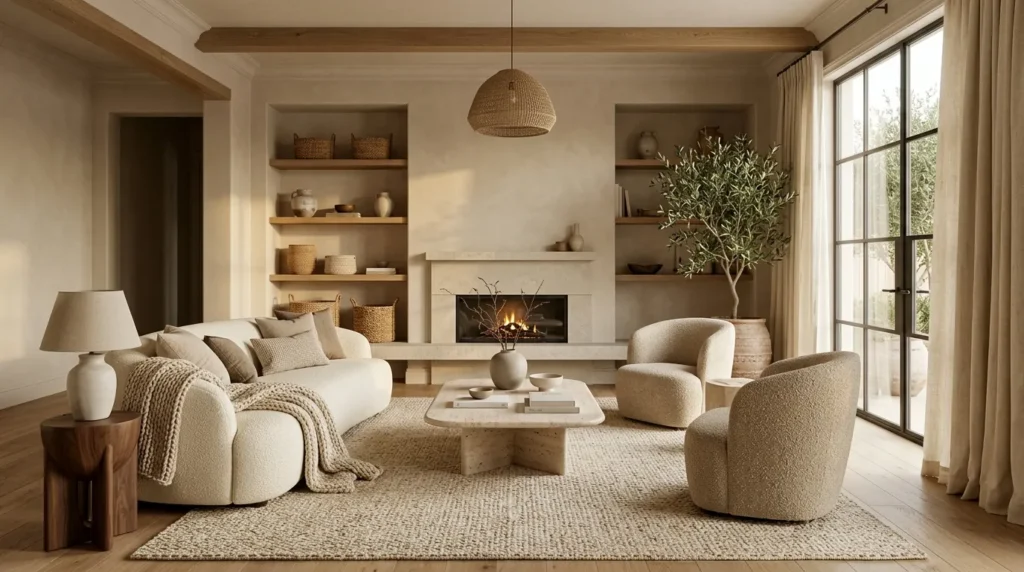
There’s a particular kind of modern living room that feels warm the moment you walk into it, and it’s rarely the furniture shape or the color on the walls that does the work — it’s texture. In my experience, the biggest complaint people have about modern design is that it can feel cold or sterile, but that’s almost always a texture problem rather than a style problem. The clean lines of modern furniture paired with soft, organic materials is what actually creates a room that feels both current and genuinely comfortable to spend time in.
If you’re anything like me, you’ve probably scrolled through minimalist living room photos on Pinterest and noticed that the ones that feel inviting rather than stark all share something in common: boucle upholstery, raw wood grain, nubby linen, unglazed ceramics. None of it is loud or decorative in the traditional sense, but it adds a tactile richness that flat, glossy modern rooms are missing.
A mistake many homeowners make when going for a modern look is leaning entirely into hard, smooth surfaces — glass, polished metal, lacquered wood — without balancing them against anything soft or textured. That’s why many designers recommend the opposite approach: start with a clean, modern furniture layout, then deliberately layer in organic textures throughout, so the hard architectural lines have something warm to play against.
I’ve noticed that the modern living rooms people save most often on Pinterest lean on a consistent formula: a neutral, earthy color palette, a mix of natural materials like wood, stone, and woven fiber, and at least one or two statement textural pieces — a chunky knit throw, a sculptural ceramic vessel — that anchor the whole room’s tactile feel.
In this guide, I’m sharing ten modern living room ideas built around soft organic textures, covering furniture, materials, and styling details that work together to create a space that’s both clean-lined and genuinely cozy. Each idea includes practical guidance so you can bring the look into your own space, whether you’re starting from scratch or layering texture into a room that already exists.
Table of Contents
- Boucle Upholstery Anchor Piece A textural statement seat that softens a modern layout.
- Raw Wood Coffee Table A natural material centerpiece with visible grain.
- Layered Woven Textile Rug A grounding texture layer underfoot.
- Chunky Knit Throw Styling A cozy accent that softens clean-lined furniture.
- Unglazed Ceramic Vessel Grouping A sculptural, earthy accent for shelving and tables.
- Linen Drapery Panels A soft, breathable window treatment for a modern room.
- Rattan and Cane Accent Furniture A natural woven texture for chairs and storage.
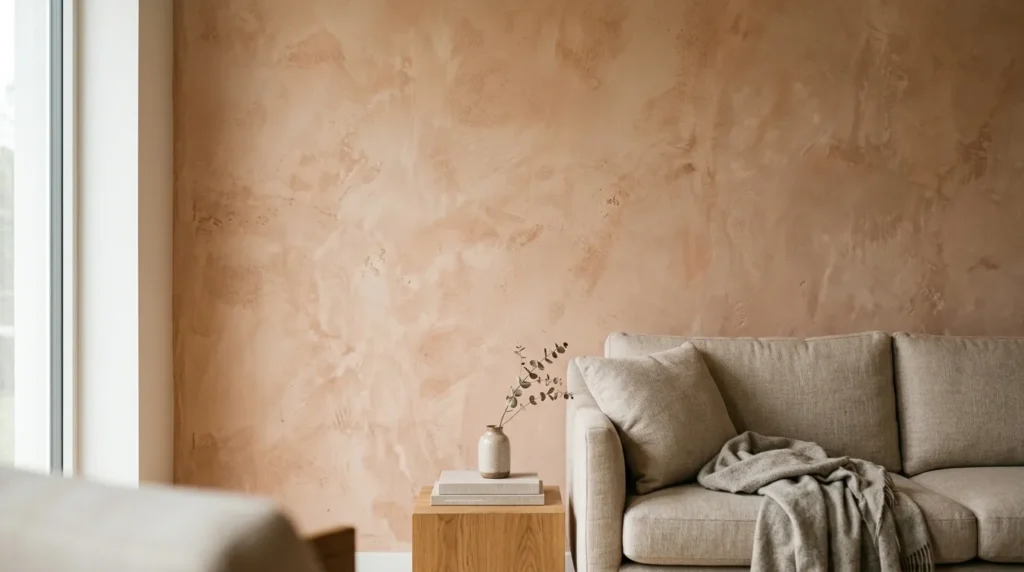
- Plaster or Limewash Wall Finish A textured wall treatment beyond flat paint.
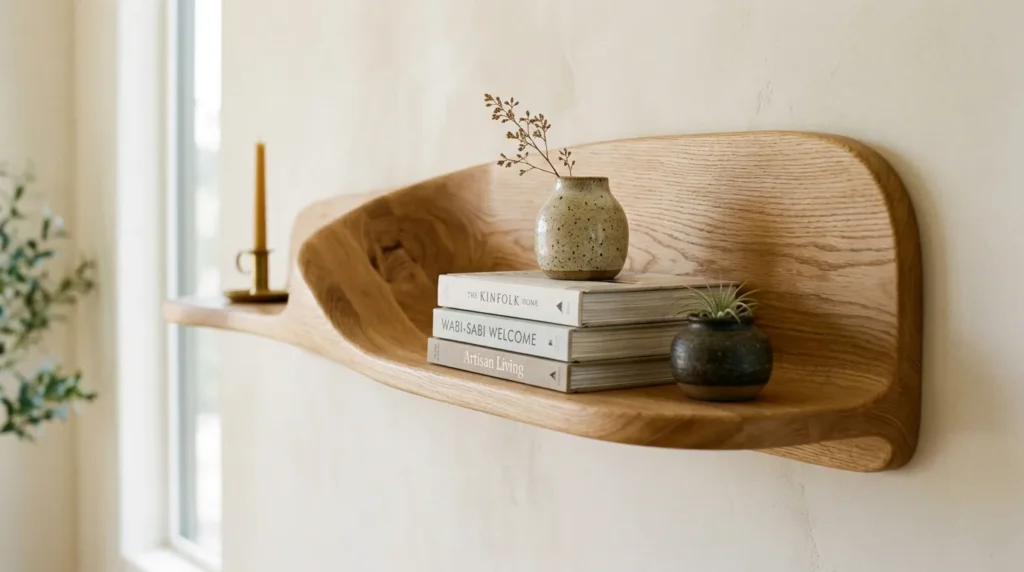
- Organic-Shaped Wood Shelving Sculptural storage that doubles as a design feature.
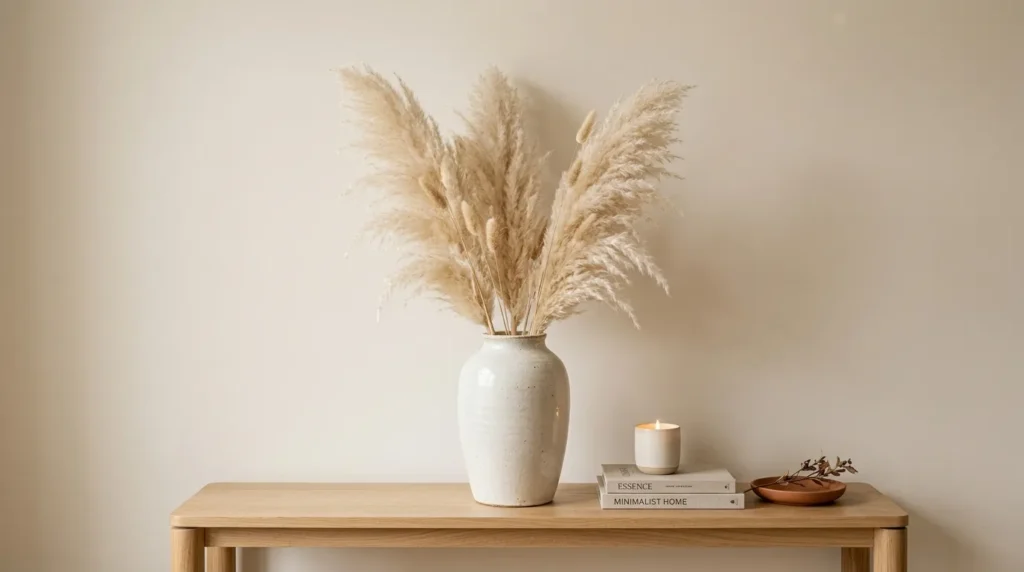
- Dried Botanical Styling A natural, low-maintenance greenery alternative.
1. Boucle Upholstery Anchor Piece
Quick Benefits
- Adds instant softness to a modern layout
- Durable, family-friendly fabric choice
- Works as a chair, sofa, or ottoman
- Neutral tones pair with nearly any palette
- Highly Pinterest-popular texture
Why It Works
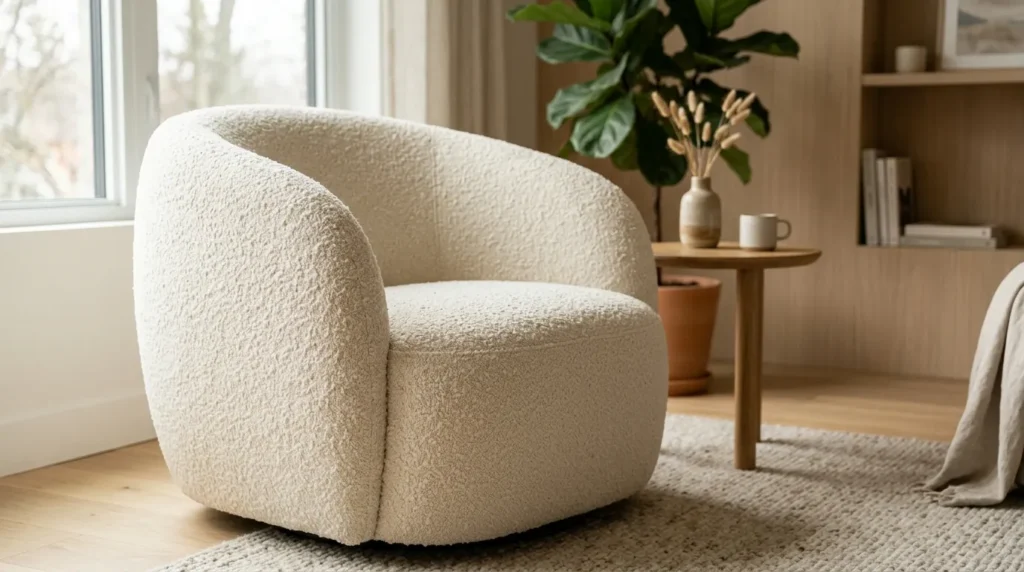
A boucle chair or sofa has become one of the defining pieces of the modern-organic aesthetic, and it earns that popularity because the nubby, looped texture reads as soft and tactile even from across the room, in a way that a flat linen or smooth leather upholstery simply doesn’t. In my experience, this is the single easiest way to soften an otherwise clean-lined, minimalist furniture layout — a boucle piece introduces texture without requiring any change to the room’s overall color palette or furniture silhouette, since most boucle upholstery comes in the same neutral, earthy tones already common in modern design.
How To Style It
Choose one anchor piece — an accent chair, a sculptural ottoman, or a full sofa — in a cream, oatmeal, or soft gray boucle fabric, and let its curved or rounded silhouette contrast against the straighter lines of the rest of the room’s furniture. Boucle pairs particularly well with warm wood tones and brass or unlacquered metal accents, so consider coordinating side tables or lighting fixtures in those finishes. One simple trick I always suggest is choosing just one or two boucle pieces rather than covering multiple furniture items in the same texture, since a single well-placed piece reads as more intentional than an entire room of matching upholstery.
2. Raw Wood Coffee Table
Quick Benefits
- Adds natural material warmth
- Grounds a modern furniture layout
- Highlights authentic grain and texture
- Works with nearly any modern color scheme
- Durable, long-lasting centerpiece
Why It Works
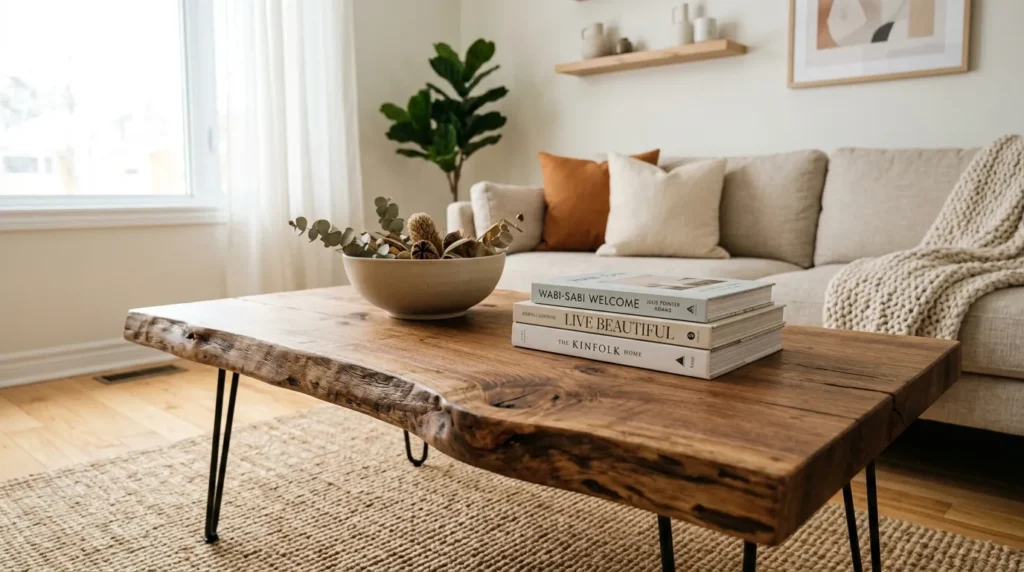
A coffee table with visible, natural wood grain — rather than a painted, lacquered, or heavily finished surface — brings an organic material warmth to the center of a modern living room, which is exactly where the room’s coldest, most polished furniture often ends up otherwise. That’s why many designers recommend a raw or lightly finished wood table specifically as the room’s central anchor, since its position in the middle of the seating area means its texture is visible and felt from every angle of the room, more than almost any other single piece.
How To Style It
Choose a coffee table in solid wood with a matte, low-sheen finish that preserves the grain’s natural texture rather than obscuring it under heavy lacquer. Live-edge or organically shaped tables lean further into the textural, natural aesthetic, while a simple rectangular or round table in a warm wood tone works just as well for a slightly more restrained look. Style the table’s surface with a mix of textures on top — a ceramic bowl, a stack of books, a small woven tray — to continue the organic material story at a smaller scale.
3. Layered Woven Textile Rug
Quick Benefits
- Grounds the whole room visually
- Adds texture underfoot
- Works well layered over a smaller rug
- Softens hard flooring materials
- Available in a wide range of natural fibers
Why It Works
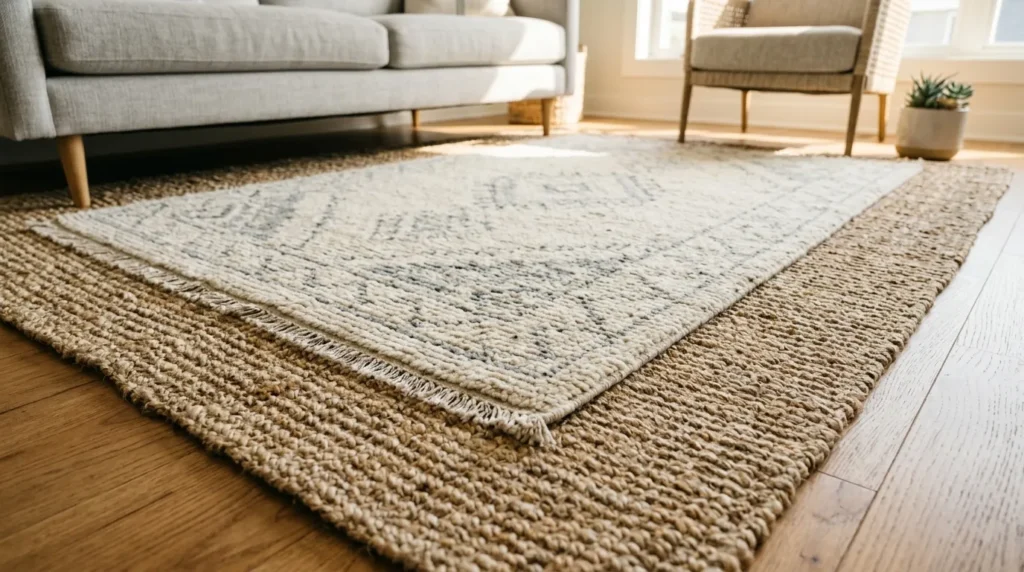
A woven rug in a natural fiber like jute, sisal, or wool brings texture to the largest surface in the room, which matters more than it might seem — a smooth, flat rug or bare hard flooring can make an otherwise well-styled modern room feel visually cold from the ground up. I’ve seen this idea transform rooms that felt sparse and sharp-edged into spaces that read as genuinely warm, simply by adding a textured natural fiber rug beneath the existing furniture layout, without changing a single other element in the room.
How To Style It
Choose a jute or sisal rug as a base layer for its natural texture and neutral tone, and consider layering a smaller, softer wool or cotton rug on top near the seating area for an extra tactile layer underfoot where people actually sit and walk barefoot most often. Keep the color palette neutral and earthy to match the rest of the organic textures in the room, avoiding busy patterns that would compete with the other textural elements already at play. This idea pairs particularly well with the raw wood coffee table, letting both natural materials reinforce the same grounded, organic mood.
4. Chunky Knit Throw Styling
Quick Benefits
- Quick, low-cost texture addition
- Adds visible dimension and softness
- Easy to swap seasonally
- Works on any sofa or chair
- Highly photogenic styling detail
Why It Works
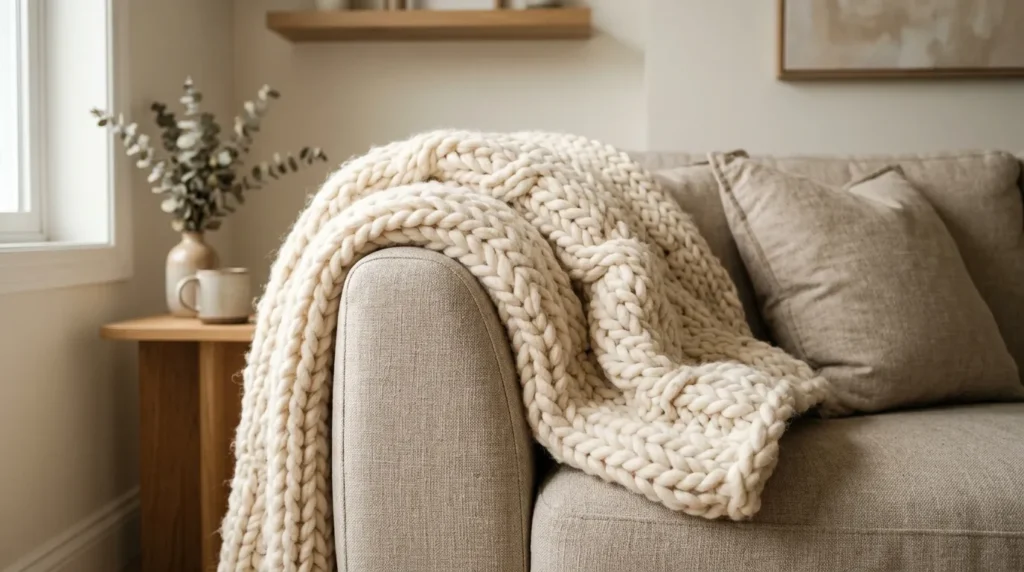
A chunky knit throw draped over a sofa or chair is one of the fastest, most affordable ways to add visible texture to a modern living room, and it works because the thick, dimensional knit creates shadow and depth in a way that a flat throw blanket simply can’t. That’s why many designers recommend this as an easy starting point for anyone wanting to introduce more organic texture into an existing room without committing to new furniture or a full redesign — a single well-chosen throw can noticeably shift how soft and inviting a room feels.
How To Style It
Drape a chunky knit throw — cream, oatmeal, or a soft neutral tone — over one arm of a sofa or the back of an accent chair, allowing it to fall naturally rather than folding it too precisely. A mistake many homeowners make is over-styling a throw into a perfectly symmetrical fold, which actually reads as less natural and inviting than a more relaxed, slightly rumpled drape. This idea pairs especially well with the boucle upholstery anchor piece, layering two different but complementary knit and looped textures within the same seating area.
5. Unglazed Ceramic Vessel Grouping
Quick Benefits
- Adds sculptural, earthy texture
- Works well on shelving, tables, or the floor
- Highly versatile styling accent
- Available at a wide range of price points
- Reinforces the organic material palette
Why It Works
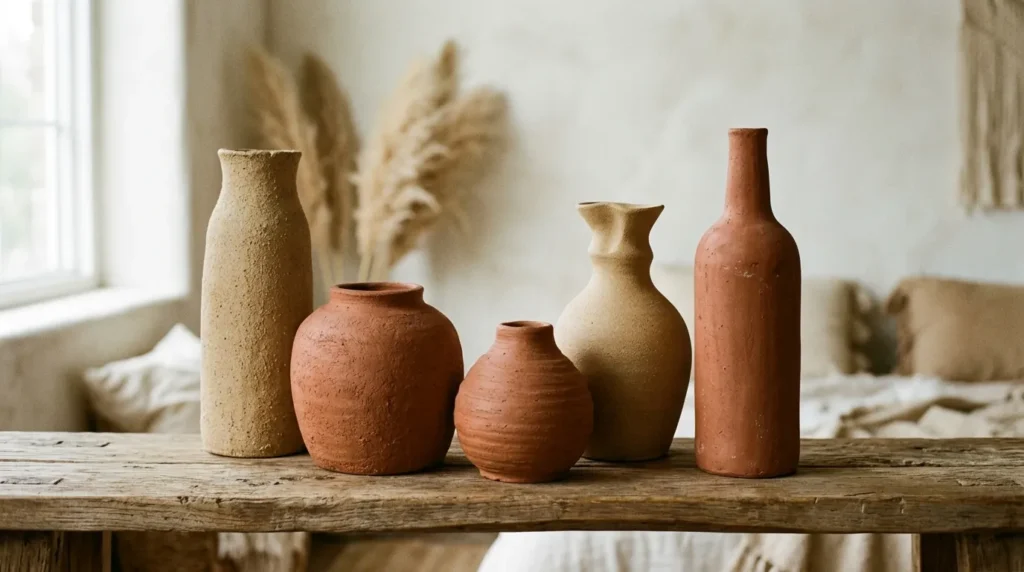
Unglazed or matte ceramic vessels bring a raw, earthy texture to a modern living room that glossy, glazed ceramics don’t quite achieve, since the matte, slightly porous surface reads as more organic and handmade even when the piece itself has clean, modern lines. I’ve noticed this is one of the more overlooked texture opportunities in modern styling — most people think of fabric and wood first, but ceramic vessels offer a completely different textural quality that adds real variety when grouped alongside the room’s other organic materials.
How To Style It
Group two or three unglazed ceramic vessels in varying heights and shapes on a shelf, console table, or the floor beside a piece of furniture, choosing pieces in warm terracotta, sandy beige, or soft gray tones that complement the rest of the room’s palette. Leave one vessel empty as a sculptural object and use another to hold dried botanicals or a single stem, avoiding the temptation to fill every vessel with something — the empty ones contribute just as much to the room’s visual texture as the styled ones.
6. Linen Drapery Panels
Quick Benefits
- Soft, breathable texture at window height
- Filters light gently rather than blocking it
- Works well in nearly any modern color scheme
- Adds movement and softness to a room
- Elevates a space significantly compared to bare windows
Why It Works
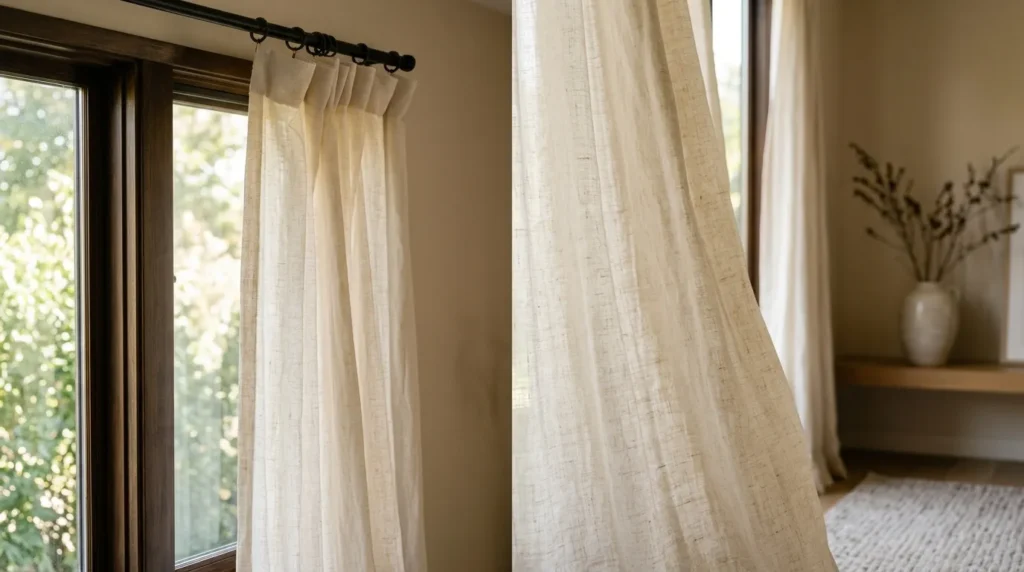
Linen curtain panels bring texture and softness to window height, an area of the room that’s easy to overlook but has a significant impact on how warm or stark the overall space feels. That’s why many designers recommend linen specifically over smoother, more structured curtain fabrics for a modern-organic living room, since linen’s natural slubbed texture and slightly imperfect drape reinforces the same relaxed, organic quality found in the room’s other textural elements, rather than introducing a crisp, formal note that would clash with it.
How To Style It
Hang lightweight linen panels from a simple black, brass, or natural wood curtain rod, allowing a bit of extra fabric width for a soft, gathered look rather than a flat, stretched panel. Natural, undyed linen in cream or oatmeal tones tends to suit the modern-organic palette best, though a soft sage or clay tone can work well if it complements the room’s existing color scheme. Let the panels puddle slightly at the floor or hang just above it for a relaxed, unstructured look that fits the overall texture-forward aesthetic.
7. Rattan and Cane Accent Furniture
Quick Benefits
- Adds natural woven texture
- Lightweight and versatile placement
- Works well as chairs, shelving, or storage
- Brings warmth without visual heaviness
- Pairs beautifully with wood and boucle
Why It Works
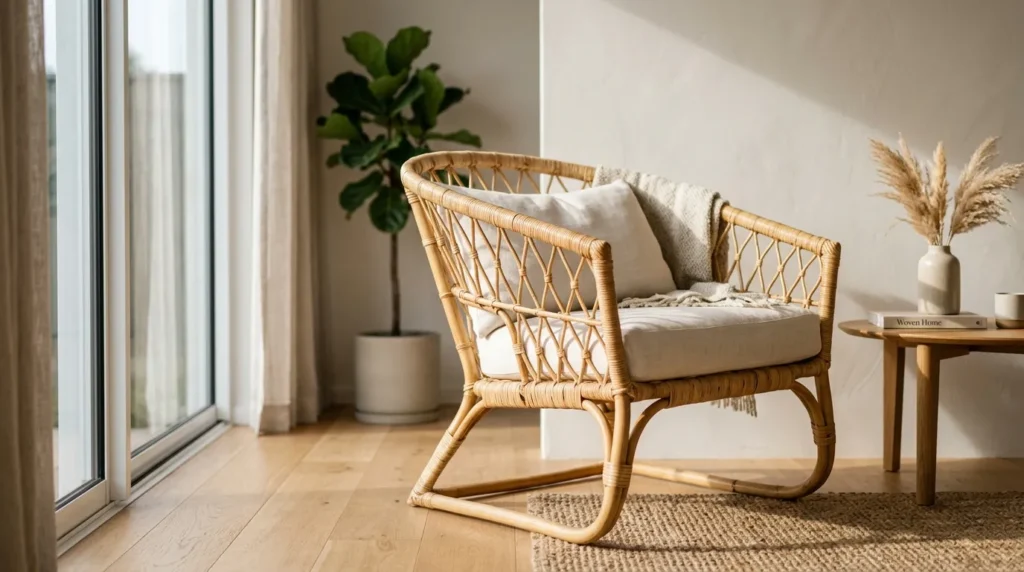
Rattan and cane furniture bring a distinctly different woven texture to a room than fabric or wood alone can offer, and their naturally lightweight, open construction means they add warmth without visually weighing down a modern layout the way a bulkier upholstered piece might. In my experience, this is a particularly good texture to introduce through a single accent chair or a piece of cane-fronted storage, since it adds variety to the room’s material palette without requiring a major furniture overhaul.
How To Style It
Incorporate a rattan accent chair, a cane-fronted media console, or a woven pendant light fixture into the room, positioning it where its open, textured silhouette can be appreciated against a plainer wall or floor behind it. Rattan and cane both pair beautifully with the raw wood tones and boucle textures covered earlier in this list, so consider coordinating the wood tones across pieces for a cohesive, intentional look rather than mismatched finishes competing with each other. This idea works especially well in a reading nook or a secondary seating area, where a single rattan chair can stand out as its own textural moment.
8. Plaster or Limewash Wall Finish
Quick Benefits
- Adds subtle texture to the largest surface in the room
- More dimensional than flat paint
- Timeless, organic wall treatment
- Works with nearly any modern furniture style
- Elevates a room significantly compared to standard paint
Why It Works
A plaster or limewash wall finish introduces texture to the largest, most dominant surface in any living room — the walls themselves — which flat paint, no matter the color, simply can’t replicate. That’s why many designers recommend this upgrade specifically for homeowners who’ve already nailed the furniture and styling but still feel like something is missing from the room’s overall warmth, since a textured wall finish changes how light moves across the space throughout the day in a way that flat paint doesn’t.
How To Style It
Apply a limewash or plaster finish to one accent wall, or the full room if budget and scope allow, choosing a soft, warm neutral tone that complements the rest of the organic material palette already in play. These finishes create subtle variation and depth as light shifts throughout the day, adding a sense of movement and texture even when no other decor is touching that wall. This upgrade requires more skill and investment than most other ideas on this list, so it’s often best treated as the finishing touch on a room where the furniture and textiles are already established.
9. Organic-Shaped Wood Shelving
Quick Benefits
- Doubles as storage and sculptural decor
- Adds warmth to vertical wall space
- Highlights natural wood grain
- Works well for styling smaller textural accents
- Distinct alternative to standard straight-line shelving
Why It Works
Shelving with a curved, organic silhouette — rather than a standard straight rectangular shape — brings sculptural interest to vertical wall space while still serving the practical function of storage and display. I’ve seen this idea transform plain, underused wall space into one of the more visually interesting parts of a room, since the shelving itself becomes a design feature rather than a purely functional afterthought. It also provides a natural surface for styling some of the smaller textural accents covered elsewhere on this list, like ceramic vessels or dried botanicals.
How To Style It
Install one or two organically shaped wood shelves — a soft arch, a kidney-bean curve, or an irregular natural-edge slab — on an open wall, positioning them at varying heights for visual interest rather than in a perfectly even row. Style each shelf with a mix of ceramic vessels, a small stack of books, and one or two dried botanical stems, leaving some open space on each shelf rather than filling every surface completely. This idea pairs particularly well with the unglazed ceramic vessel grouping, giving those pieces a dedicated, elevated display space.
10. Dried Botanical Styling
Quick Benefits
- Adds organic texture without maintenance
- Long-lasting compared to fresh flowers
- Works in any lighting condition
- Reinforces the room’s natural material palette
- Budget-friendly styling accent
Why It Works
Dried botanicals — pampas grass, dried eucalyptus, or bunny tail grass — bring the same organic, textural quality as fresh greenery without the maintenance or the limitations of needing bright, direct light to thrive, which makes them especially practical for living rooms that don’t get consistent natural light throughout the day. That’s why many designers recommend dried botanicals as a low-effort way to finish off a modern-organic room, since a single well-placed stem or bundle adds noticeable texture and softness without requiring any ongoing care.
How To Style It
Place a few dried botanical stems in a tall ceramic or glass vessel, positioning the arrangement somewhere it can be seen clearly, like a console table, the corner of a room, or styled among the shelving described above. Keep the stem selection relatively simple — one or two varieties rather than an overly busy mixed arrangement — to match the restrained, intentional styling found throughout the rest of the room. This idea works as a finishing touch layered into nearly every other concept on this list, from the raw wood coffee table to the organic-shaped shelving.
Frequently Asked Questions
How do I make a modern living room feel warmer without losing the modern look? Layering in organic textures — boucle upholstery, raw wood, woven rugs, and linen textiles — softens a modern room without changing its underlying clean-lined furniture or neutral color palette. The key is texture variety rather than adding decorative clutter.
What colors work best with organic modern textures? Warm neutrals like cream, oatmeal, sand, and soft gray tend to work best, since they let the texture itself do the visual work rather than competing with bold color. Earthy accent tones like terracotta or sage can be layered in without disrupting the overall calm palette.
What furniture materials define the modern-organic style? Boucle and linen upholstery, raw or matte-finished wood, rattan and cane, and unglazed ceramic are the most common materials associated with this look. The common thread across all of them is a soft, natural, slightly imperfect texture rather than anything glossy or heavily processed.
Can I add organic texture to a small living room without overwhelming it? Yes, choosing one or two anchor pieces — like a boucle chair and a woven rug — rather than layering texture onto every single surface tends to work better in smaller rooms. A restrained approach with a few well-chosen textural pieces reads as more intentional than an overly busy mix.
Is boucle fabric durable enough for everyday use? Most boucle upholstery fabrics are woven tightly enough to hold up well to regular use, though it’s worth checking the specific fabric’s durability rating if the piece will see heavy daily wear, like a family living room sofa. Many manufacturers now offer performance boucle blends designed specifically for durability.
What lighting works best in a modern room with organic textures? Warm-toned lighting, ideally around 2700K to 3000K, complements the earthy, natural material palette far better than cool white light, which can make organic textures look flat and washed out. Woven or ceramic light fixtures also reinforce the room’s overall textural theme.
How do I keep a texture-heavy room from feeling cluttered? Sticking to a consistent, limited color palette across all the textural elements helps prevent visual clutter, even when several different materials and textures are present in the same room. Leaving some open, unstyled space on shelves and surfaces also keeps a texture-rich room feeling intentional rather than overloaded.
Final Thoughts
The most inviting modern living rooms aren’t the ones with the most decor — they’re the ones with the most thoughtfully chosen texture. Whether it’s a single boucle chair, a raw wood coffee table, or a limewash accent wall, each of these ideas works by giving a clean, modern layout something soft and organic to play against, which is exactly what keeps minimalism from tipping over into feeling cold or unfinished.
Start with one or two ideas and gradually build a room that reflects your style and layers in texture at a pace that feels natural rather than rushed. A modern living room built around soft, organic materials has a way of feeling both current and timeless at once — the kind of space that photographs beautifully but, more importantly, actually feels good to spend time in every day.
Related Articles
- Cozy Living Room Ideas for Winter
- Neutral Home Decor Inspiration
- Small Living Room Layout Ideas
- Modern Farmhouse Decor Ideas
- Minimalist Home Styling Tips