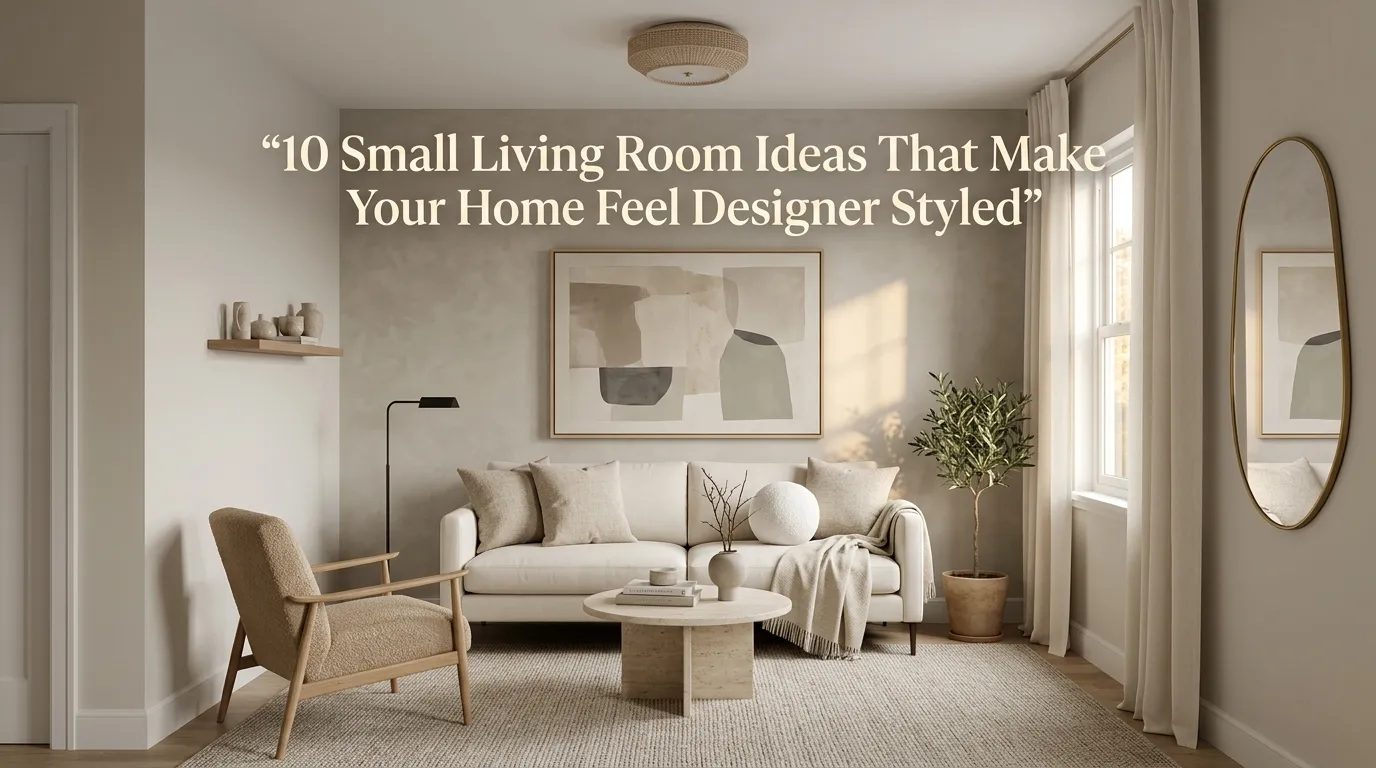
10 Small Living Room Ideas That Make Your Home Feel Designer Styled
If you’ve ever scrolled past a beautifully styled living room online and thought, “that would never work in my space,” you’re not alone. Small living rooms come with real challenges — awkward layouts, limited wall space, and furniture that always seems just a little too big for the room. In my experience working with tight floor plans, the issue is rarely the size of the room itself. It’s usually the way the space is being used.
A small living room can absolutely feel designer styled. It doesn’t require a full renovation, a huge budget, or knocking down walls. What it requires is intention — the right furniture proportions, a thoughtful color palette, smart lighting, and a few carefully chosen decor pieces that pull everything together. I’ve noticed that homeowners often try to solve a small space problem by removing things, when the real solution is usually about how those things are arranged.
This guide walks through ten practical, real-world small living room ideas that create the polished, pulled-together look you see in professionally designed homes. These aren’t abstract design theories — they’re the same strategies interior stylists use again and again because they work in real houses and apartments, not just showrooms. Whether you’re renting a cozy one-bedroom, working with an oddly shaped den, or trying to make an open-concept living area feel more defined, you’ll find ideas here that fit your situation.
By the end of this article, you’ll have a clear roadmap for transforming your small living room — from furniture placement and color choices to lighting, textiles, and the small styling details that make the biggest visual difference. Let’s get started.
Table of Contents
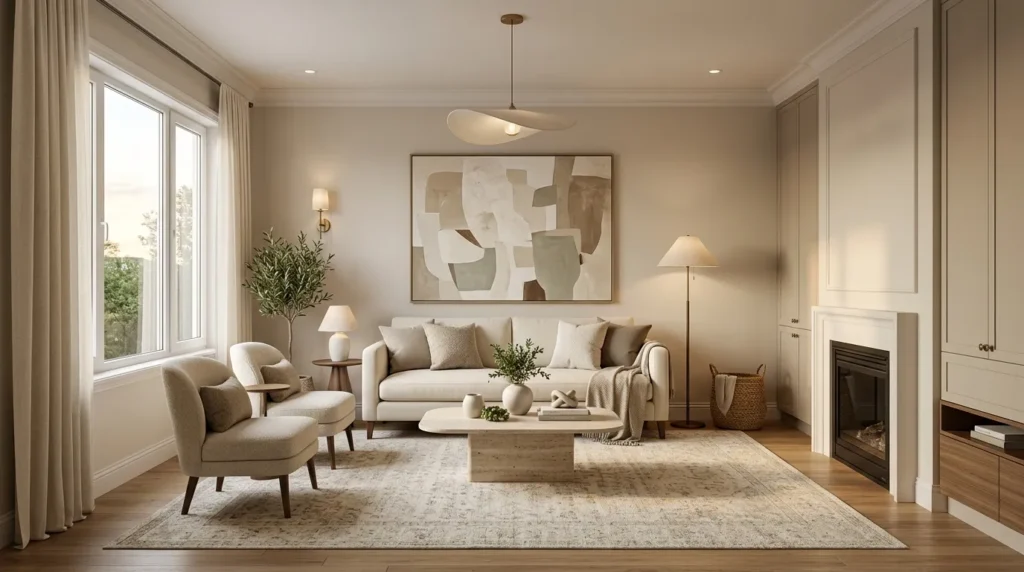
- Multi-Functional Furniture Choosing pieces that do double duty to save space without sacrificing style.
- Light Neutral Palette Using color strategically to make a small room feel open and airy.
- Vertical Storage Solutions Drawing the eye upward to add function without crowding the floor.
- Layered Lighting Layout Combining light sources for warmth, depth, and flexibility.
- Statement Mirror Placement Using reflection to visually double your square footage.
- Curated Gallery Wall Adding personality and depth without cluttering the room.
- Slim Profile Seating Selecting furniture silhouettes that keep sightlines open.
- Textured Layered Rug Grounding the room and defining the seating area.
- Floating Shelf Styling Displaying decor without eating into your usable floor space.
- Cohesive Color Story Tying every element together for a designer-level finish.
1. Multi-Functional Furniture
Quick Benefits
- Maximizes usable space without cluttering the room
- Reduces the need for extra furniture pieces
- Adapts easily for guests, work, or storage
- Keeps the room feeling open and uncrowded
- Works well in apartments and rental spaces
Why It Works
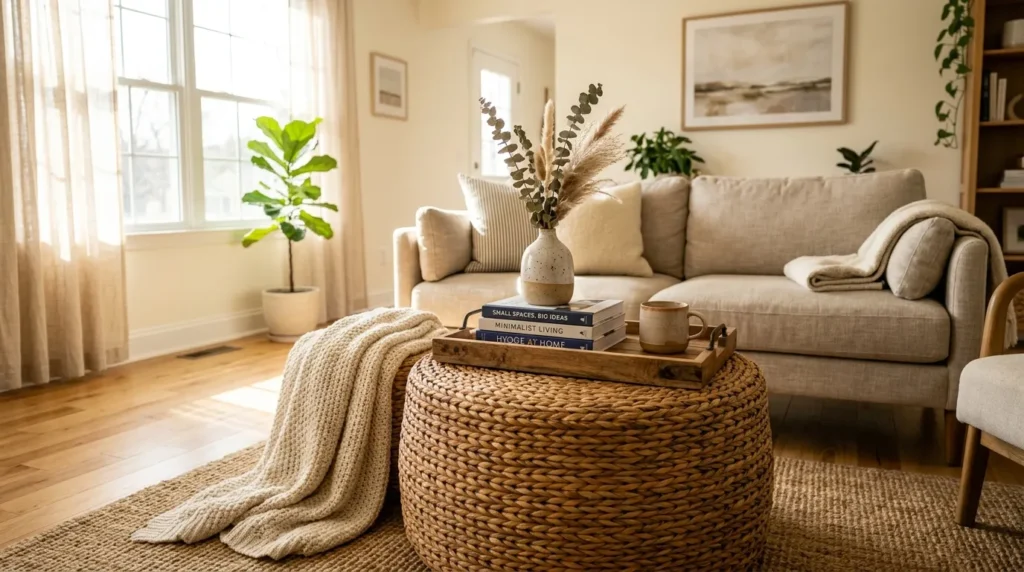
Small living rooms often suffer from too much furniture trying to serve too few functions. A mistake many homeowners make is filling the room with separate pieces for every need — a coffee table, a side table, an ottoman, extra storage — when one well-chosen piece could handle several of those jobs at once. Multi-functional furniture, like a storage ottoman or a nesting coffee table set, reduces visual clutter while still giving you everything you actually need. Designers rely on this approach because it solves two problems simultaneously: it saves physical space and it simplifies the room’s visual rhythm, which makes the whole area feel calmer and more intentional.
How To Style It
Start with a storage ottoman that can serve as a coffee table, footrest, and hidden storage for blankets or remotes. Look for a bench with a lift-top or hidden drawers to place under a window instead of a bulky console table. Nesting tables are especially useful because they can be tucked together most of the time and pulled apart when you need extra surface space for guests. If you work from your living room, consider a slim desk that folds against the wall when not in use. The goal is furniture that flexes with your daily life instead of sitting there taking up space it doesn’t need to occupy.
2. Light Neutral Palette
Quick Benefits
- Makes ceilings and walls feel further away
- Reflects natural and artificial light more effectively
- Creates a calm, cohesive backdrop for decor
- Pairs easily with changing accent colors
- Photographs beautifully for a bright, airy feel
Why It Works
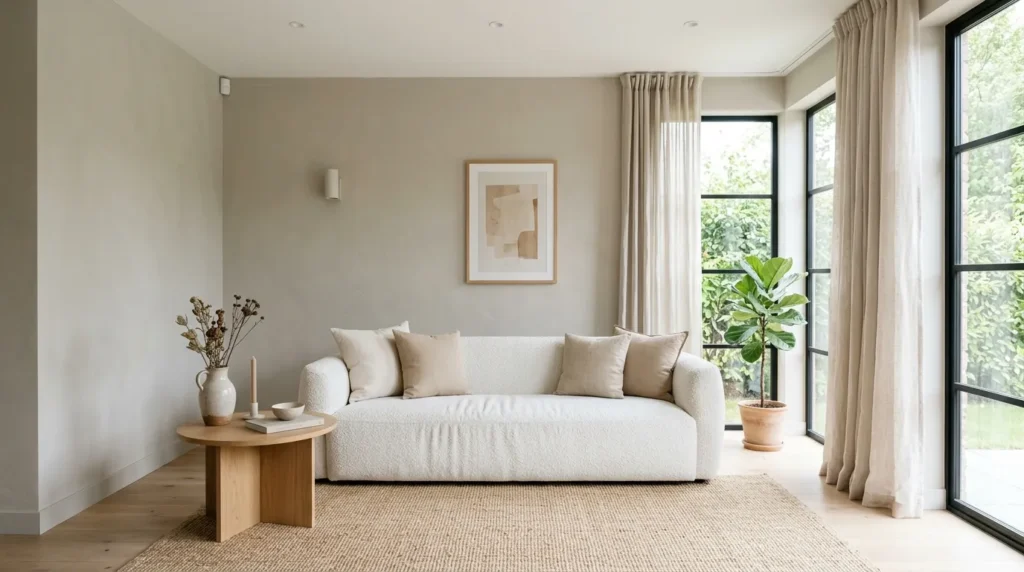
Color has a bigger impact on perceived room size than most people realize. In my experience, one simple trick I always suggest to someone struggling with a cramped-feeling living room is lightening the wall color before doing anything else. Soft whites, warm greige, and pale sandy tones reflect available light rather than absorbing it, which visually pushes walls outward. Dark, saturated colors can look stunning in large rooms with abundant natural light, but in a small space they tend to close the walls in and make furniture feel heavier than it is. A light neutral palette also gives you a flexible foundation, so you can change your accent colors seasonally without repainting.
How To Style It
Choose a warm off-white or soft greige for your walls, and extend that same tone to trim where possible to avoid a choppy, segmented look. Keep large furniture pieces — sofas, media consoles — in tones that are close to the wall color so they blend rather than compete for visual space. Save your boldest colors for small, movable items like throw pillows, art, or a single accent chair. If you’re anything like me, you’ll find that a monochromatic base with one or two intentional pops of color reads as far more sophisticated than a room with five competing colors fighting for attention.
3. Vertical Storage Solutions
Quick Benefits
- Frees up valuable floor space
- Draws the eye upward for a taller-feeling room
- Adds practical storage without bulky furniture
- Creates opportunities for decorative styling
- Works in nearly any room shape
Why It Works
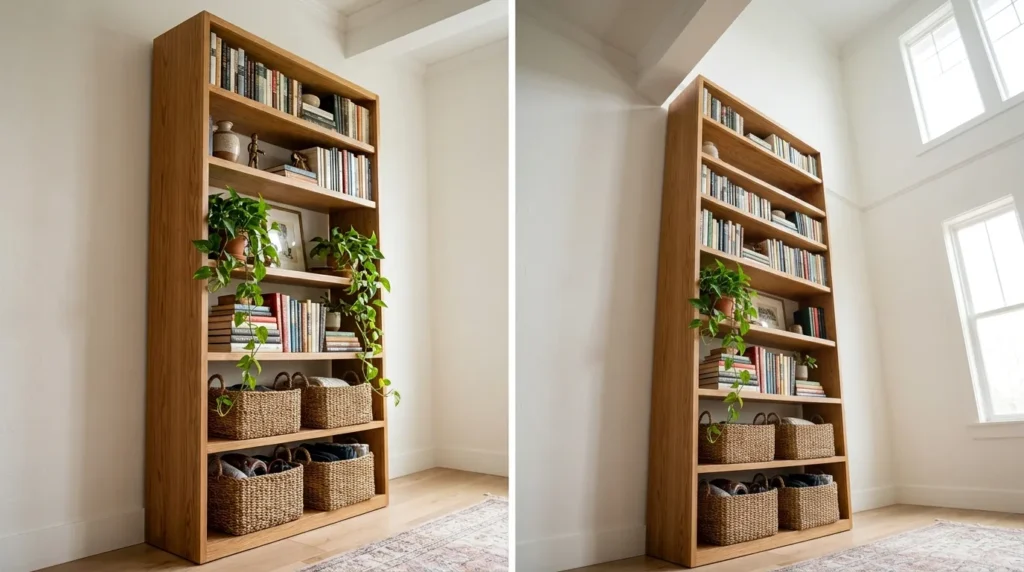
When floor space is limited, the walls become your best design asset. Tall, narrow bookshelves and wall-mounted cabinets use vertical real estate that’s otherwise wasted, and they create a natural upward line that makes ceilings feel higher. I’ve seen this idea transform spaces that felt cramped and boxy into rooms that suddenly read as airy and well-planned — simply by shifting storage from wide, low pieces to tall, slim ones. This isn’t just about function. Vertical storage also gives your eye a place to travel, which adds a sense of architectural interest to a room that might otherwise feel flat.
How To Style It
Choose bookshelves that are taller than they are wide, and position them against a single wall rather than spreading storage across multiple walls. Leave the top shelf partially open for a plant or a piece of art, and use closed baskets on lower shelves to hide everyday clutter. Wall-mounted cabinets near the ceiling work well for items you don’t need daily, keeping them accessible without taking up floor footprint. If your room has an awkward corner, a tall corner shelf unit can turn dead space into functional storage while adding architectural presence to a spot that’s otherwise easy to overlook.
4. Layered Lighting Layout
Quick Benefits
- Eliminates harsh, flat overhead lighting
- Adds warmth and dimension to the room
- Creates flexibility for different times of day
- Highlights architectural and decor details
- Makes the space feel finished, not unfinished
Why It Works
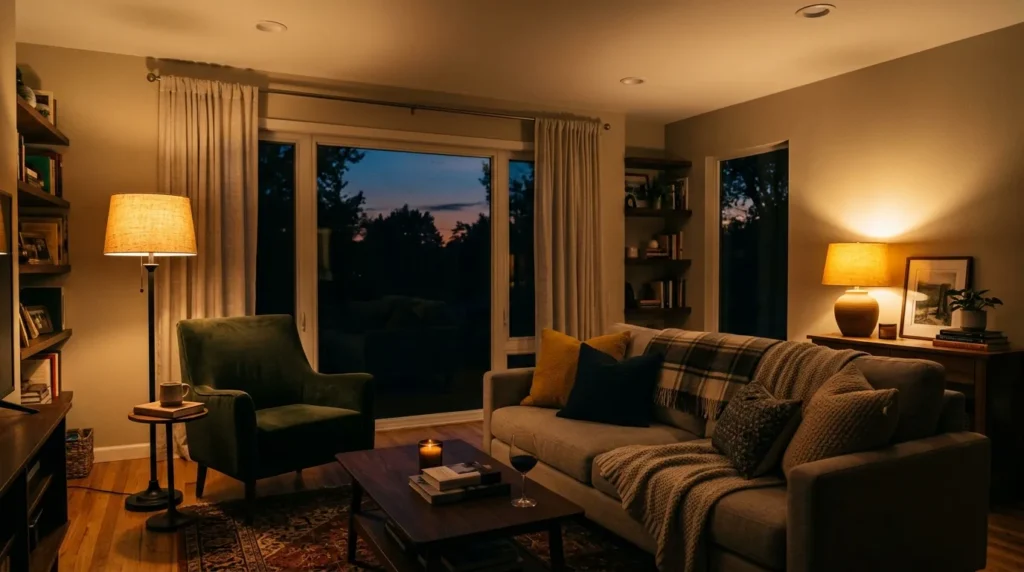
One of the fastest ways to spot an amateur-styled room versus a professionally designed one is the lighting. A single overhead fixture creates flat, even light that flattens the whole room and makes it feel more like an office than a living space. That’s why many designers recommend layering at least three light sources — ambient, task, and accent — in every room, regardless of size. Layered lighting adds shadow and warmth, which creates the kind of visual depth that photographs well and feels genuinely cozy to sit in, especially in the evening.
How To Style It
Start with your ceiling or ambient light, but don’t rely on it alone. Add a floor lamp near your reading chair for task lighting, and a table lamp on a console or shelf for accent lighting. Choose warm-toned bulbs (around 2700K–3000K) rather than cool white, which can feel clinical in a residential space. If your room has architectural details like a fireplace or built-in shelving, consider a small accent light to highlight it after dark. Dimmer switches are a worthwhile investment if your budget allows, since they let you adjust the mood from bright and functional during the day to soft and relaxed in the evening.
5. Statement Mirror Placement
Quick Benefits
- Visually doubles the perceived square footage
- Bounces natural light deeper into the room
- Adds a decorative focal point
- Works in nearly any design style
- Requires minimal floor or furniture space
Why It Works
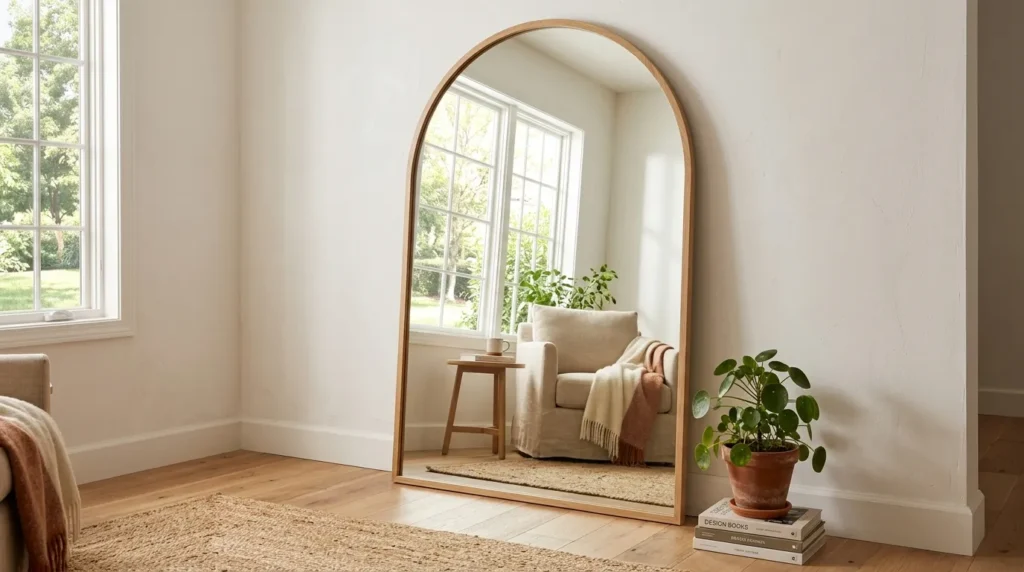
Few tricks in interior design deliver as much visual payoff for as little effort as a well-placed mirror. A large mirror reflects both light and the room itself, which tricks the eye into perceiving more depth than actually exists. I’ve noticed that even a single oversized mirror, placed strategically, can shift a small living room from feeling closed-in to feeling genuinely expansive. This works especially well in rooms with limited natural light, since the mirror reflects whatever light is available and spreads it further into the space.
How To Style It
Position a large mirror directly across from your main window so it reflects the outdoor light and view back into the room. Lean an oversized floor mirror against an empty wall for an easy, low-commitment styling move that also adds height. If wall space is limited, a round or arched mirror above a console table works well and adds a softer shape to balance out a room full of straight lines. Avoid clustering too many small mirrors together, as this can feel busy — one substantial piece almost always outperforms several smaller ones in a compact room.
6. Curated Gallery Wall
Quick Benefits
- Adds personality without using floor space
- Creates a strong visual focal point
- Allows for flexible, evolving decor
- Draws the eye upward and across the room
- Works with almost any budget
Why It Works
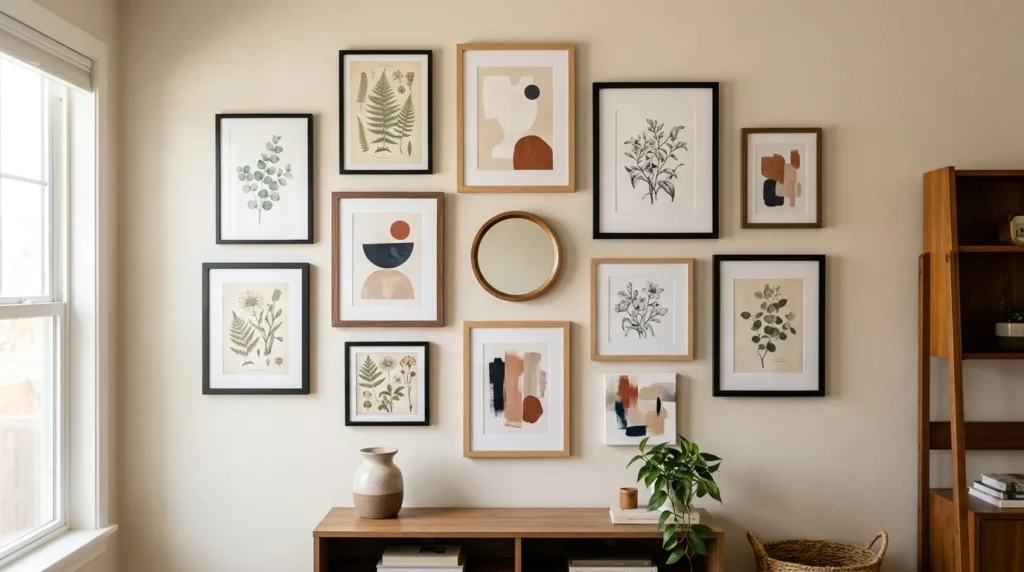
A well-curated gallery wall does more than fill empty space — it tells a story and gives the room a sense of intention. A mistake many homeowners make is hanging art too small or too scattered, which reads as random rather than curated. When frames are grouped thoughtfully with consistent spacing, they create a cohesive block that feels like a single design statement rather than an afterthought. This is one of the easiest ways to add real personality and visual richness to a small room without touching the furniture layout at all.
How To Style It
Choose a mix of frame sizes but keep a consistent color palette — either all black frames, all wood tones, or a mix of two complementary finishes. Lay the arrangement out on the floor first to test spacing before committing to nail holes, keeping about two to three inches between frames. Mix in a few non-photo elements like a small mirror, a woven wall hanging, or a piece of textile art to add texture. Keep the overall shape of the gallery wall intentional — a rectangle, an oval, or a staggered grid — rather than letting it sprawl without structure.
7. Slim Profile Seating
Quick Benefits
- Keeps sightlines open across the room
- Reduces visual bulk without sacrificing comfort
- Allows for better traffic flow
- Fits more easily through doorways and stairwells
- Pairs well with a variety of design styles
Why It Works
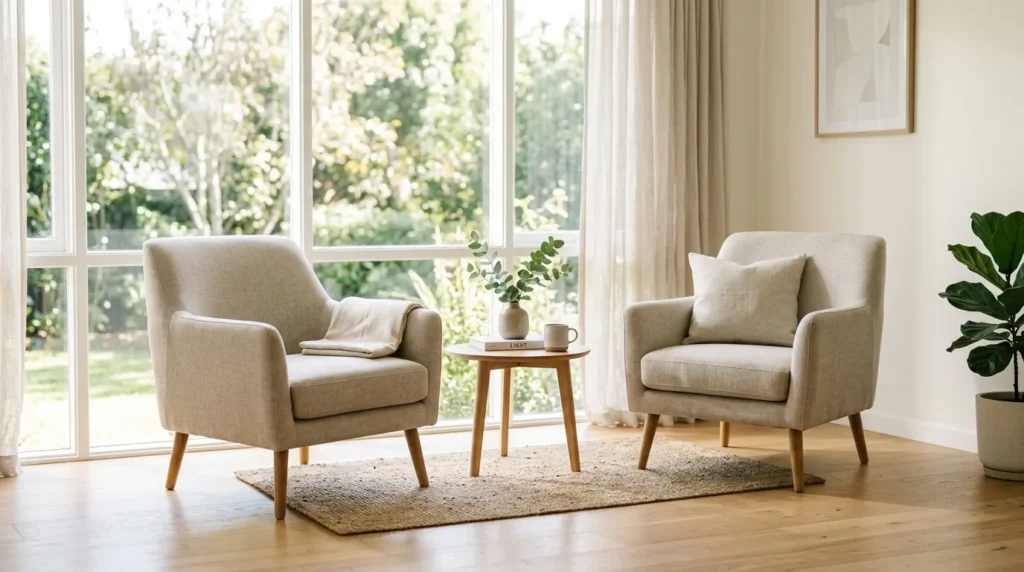
Furniture scale is one of the most overlooked factors in small-room design. A deep, overstuffed sectional might be comfortable, but in a small living room it can dominate the entire space and block natural walkways. Slim profile seating — sofas and chairs with tapered legs, lower arms, and a raised base — takes up the same functional footprint while appearing visually lighter. In my experience, this single swap often has more impact on how “designer styled” a room feels than any amount of decorating, because it changes the fundamental proportions of the space.
How To Style It
Look for sofas with exposed wood or metal legs rather than a solid skirted base, since visible legs let light pass underneath and make the piece feel less heavy. Choose arm styles that are narrower rather than overstuffed, which can save several inches of usable width. If you need extra seating for guests, consider a pair of slim armchairs that can be pulled in as needed rather than a permanent oversized loveseat. Keep a few inches of breathing room between furniture and walls where possible, since furniture pushed flush against every wall can paradoxically make a room feel smaller, not larger.
8. Textured Layered Rug
Quick Benefits
- Defines the seating area within an open space
- Adds warmth and softness underfoot
- Introduces texture without adding color clutter
- Anchors furniture for a grounded, intentional look
- Helps zone multi-purpose rooms
Why It Works
An area rug does more than add comfort — it defines boundaries in a room that might not have walls to do that job for you. This is especially useful in open-concept living areas, where the living room can blend awkwardly into the dining or entry space without a clear visual break. A rug large enough for at least the front legs of your furniture to rest on it signals “this is the living room zone” in a way that instantly reads as intentional. Texture, in particular, adds a layer of richness that a flat, single-tone floor can’t achieve on its own.
How To Style It
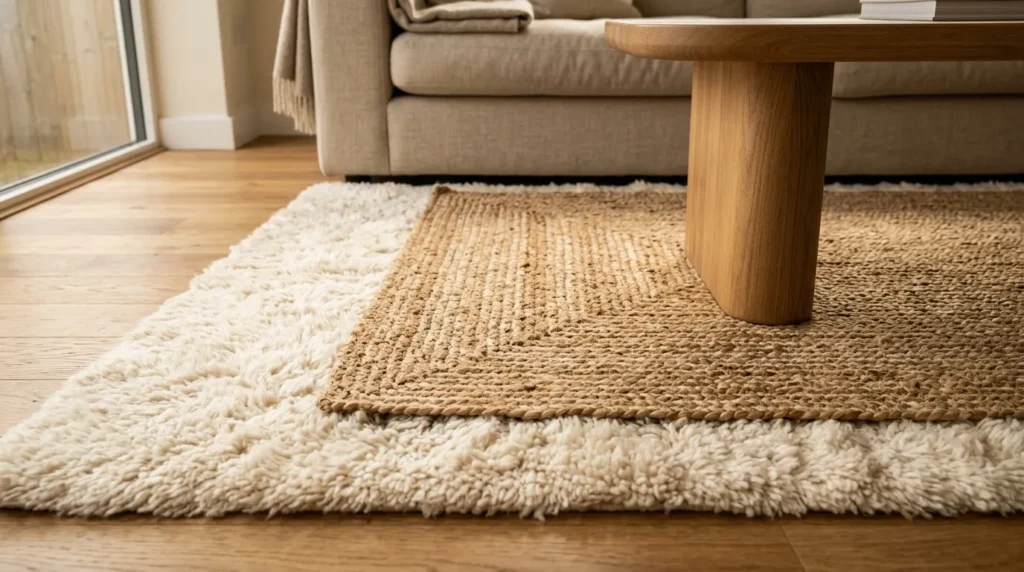
Choose a rug sized so that at minimum the front legs of your sofa and chairs sit on it — ideally, all furniture legs fit within the rug’s edges if your space allows. Layering a smaller textured rug, like a flatweave or jute piece, over a plush neutral base rug adds dimension without overwhelming a small floor plan. Stick to low-pile or flatweave options in high-traffic small rooms, since they’re easier to keep looking crisp and don’t visually bulk up the floor the way a shag rug can. Let the rug’s pattern stay subtle if your walls or furniture already carry visual interest, so the room doesn’t compete with itself.
9. Floating Shelf Styling
Quick Benefits
- Adds display space without using floor area
- Keeps the room feeling open below eye level
- Offers flexible, changeable styling opportunities
- Works well in odd corners and awkward walls
- Complements almost any decor style
Why It Works
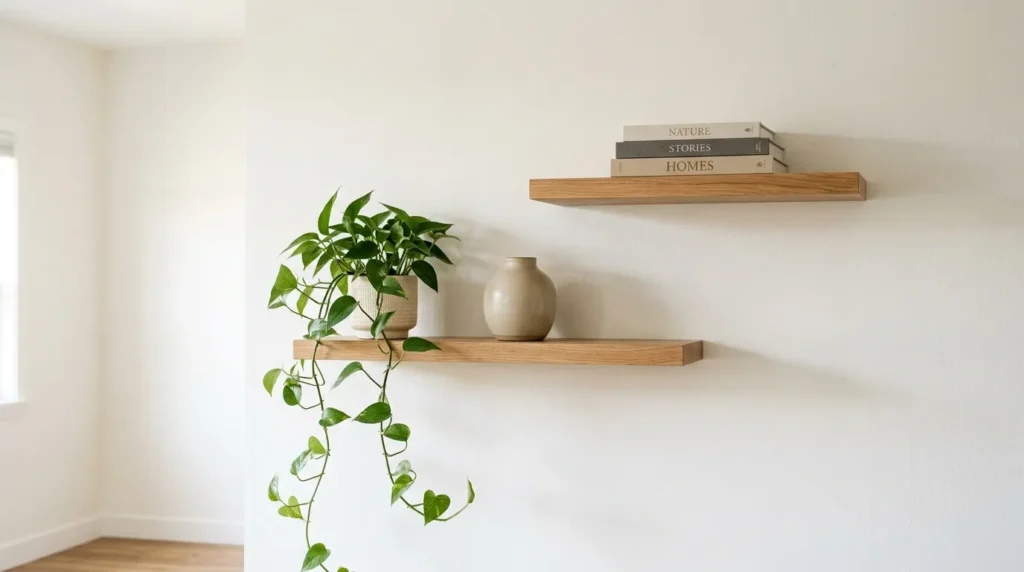
Floating shelves solve a very specific small-space problem: the need for surfaces to display books, plants, and personal items without adding another piece of furniture to the floor. Because they appear to hover on the wall with no visible brackets or legs, they read as lighter and less intrusive than a bookcase or console table. One simple trick I always suggest is using floating shelves in awkward nooks — beside a fireplace, under a window, or in a narrow hallway leading into the living room — spots that are usually wasted but can become some of the most styled corners in the house.
How To Style It
Install shelves at varying heights rather than in a single uniform row, which creates visual interest and makes styling easier. Group items in odd numbers — three or five pieces per shelf — mixing height, texture, and shape, such as a stack of books, a small plant, and one ceramic object. Leave some negative space on each shelf; overcrowding a floating shelf undoes the airy effect you’re going for. Keep the shelf material consistent with your other wood tones in the room, whether that’s a warm oak, a matte black metal bracket, or a painted-to-match finish.
10. Cohesive Color Story
Quick Benefits
- Ties every element of the room together
- Creates a polished, intentional look
- Makes decor choices easier going forward
- Prevents a cluttered, mismatched feel
- Elevates even budget-friendly furniture
Why It Works
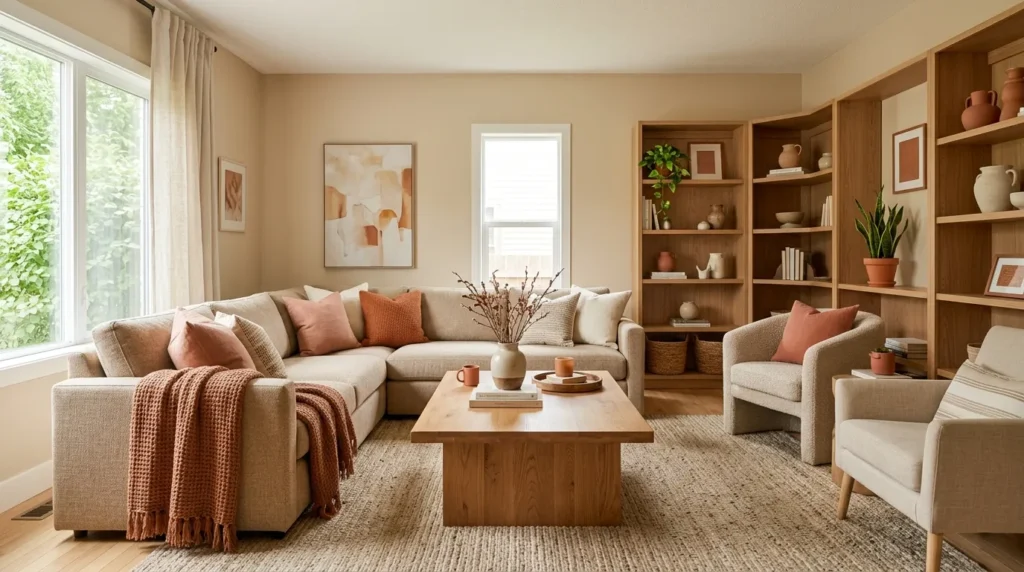
The single biggest difference between a room that feels “decorated” and one that feels “designer styled” is usually color cohesion. A mistake many homeowners make is choosing furniture and decor piece by piece without a unifying thread, which results in a room that feels busy even when it isn’t overly full. When every element — walls, furniture, textiles, and accessories — pulls from the same limited color story, the whole room reads as considered and intentional, even if individual pieces were budget finds. This is the finishing layer that pulls together every other idea on this list.
How To Style It
Choose a simple palette of one neutral base, one secondary tone, and one accent color, then apply that consistently across pillows, art, rugs, and accessories. Keep wood tones consistent throughout the room — mixing warm oak with cool gray-washed wood can create visual dissonance even when everything else matches. Use your accent color sparingly, in two or three spots, rather than scattering it evenly throughout, which creates a more curated, less matchy feel. Revisit your color story any time you add a new piece, and ask whether it supports the existing palette or introduces a note that clashes with what’s already working.
Frequently Asked Questions
How can I make my small living room look bigger without renovating?
Focus on light colors, a large mirror placed across from a window, and furniture with visible legs rather than solid, skirted bases. These three changes alone can significantly shift how spacious a room feels, and none of them require structural changes or a big budget.
What furniture size is best for a small living room?
Look for sofas around 70–78 inches wide with slim arms and exposed legs, paired with a coffee table roughly two-thirds the length of the sofa. Scaling furniture to the room, rather than choosing the biggest piece that technically fits, keeps the space feeling open.
Should I use dark colors in a small living room?
Dark colors can work beautifully in a small room with strong natural light and can even create a cozy, intentional feel, but they’re best used with restraint. If your room has limited light, a light neutral base with one dark accent wall or piece of furniture is generally a safer, more flattering choice.
How do I style a small living room on a budget?
Start with lighting and color, since both have an outsized visual impact relative to their cost. A few new throw pillows, a large mirror, and repositioned furniture can transform the feel of a room before you spend money on new furniture pieces.
What rug size works best in a small living room?
Aim for a rug that fits at least the front legs of your main seating pieces, and size up if your floor plan allows it. A rug that’s too small tends to make the whole room look smaller by visually shrinking the seating area.
How many light sources should a small living room have?
Three is a good baseline: one ambient source (ceiling or overhead), one task light (floor or table lamp near seating), and one accent light (highlighting art, shelving, or a fireplace). This layered approach avoids the flat, harsh look of relying on a single overhead fixture.
Do gallery walls make a small room feel cluttered?
A thoughtfully spaced gallery wall with a consistent color palette actually adds structure and interest rather than clutter. The key is planning the layout in advance and keeping frame finishes cohesive, rather than hanging pieces randomly over time.
Conclusion
A small living room doesn’t have to feel like a limitation — it can be one of the most charming, well-loved rooms in your entire home. The ten ideas covered here, from multi-functional furniture and layered lighting to a cohesive color story, all work together to create the kind of polished, intentional look you associate with professionally designed spaces. None of them require a full renovation or an unlimited budget. What they require is a shift in how you think about the room: less about fitting more in, and more about making every piece earn its place.
Start with one or two ideas and gradually build a space that reflects your style and supports everyday comfort. Maybe that means swapping your coffee table for a storage ottoman this month, and adding a statement mirror next. Small, consistent changes compound into a room that feels completely transformed, without the stress or expense of starting from scratch. Your small living room has more potential than you think — it just needs the right strategy to bring it out.
Related Articles
- Cozy Bedroom Ideas
- Small Living Room Layouts
- Modern Farmhouse Decor
- Neutral Home Styling
- DIY Accent Wall Ideas