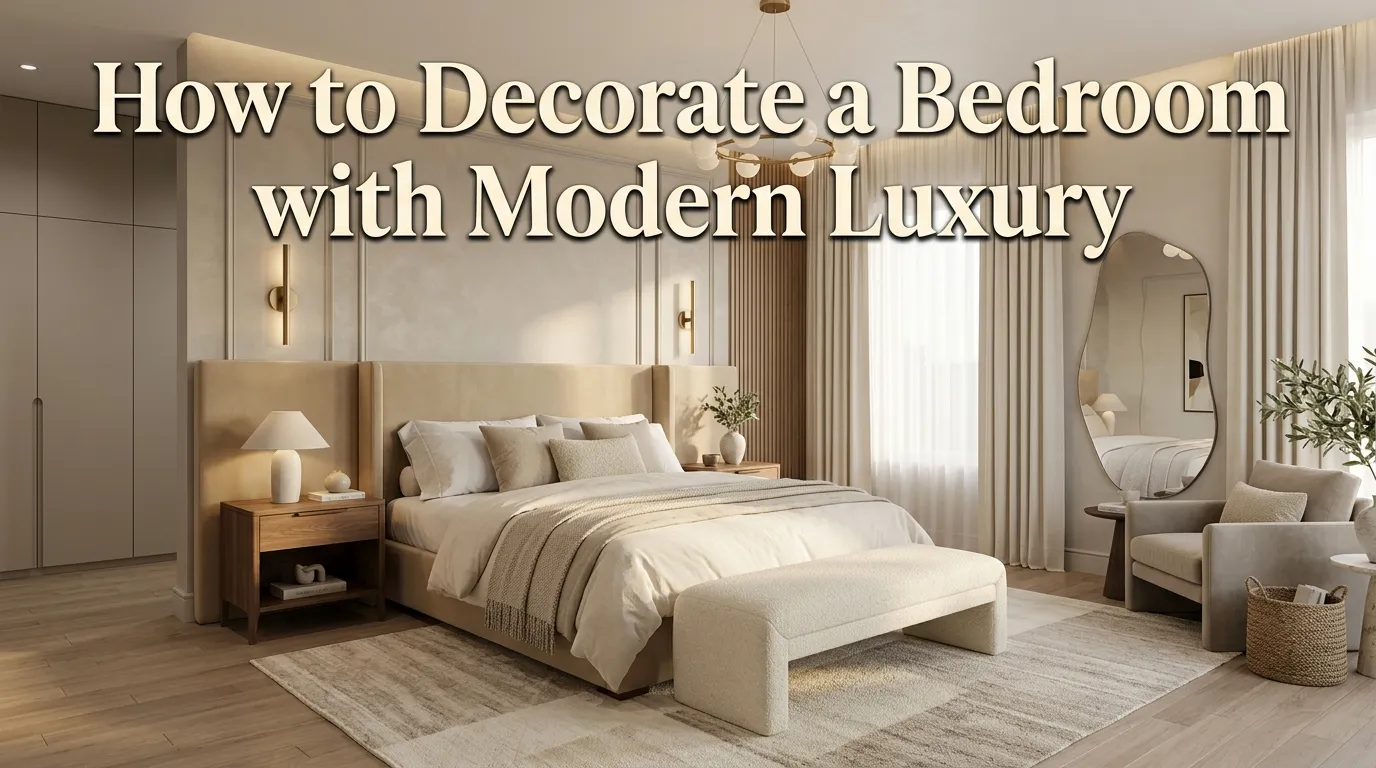
How to Decorate a Bedroom with Modern Luxury
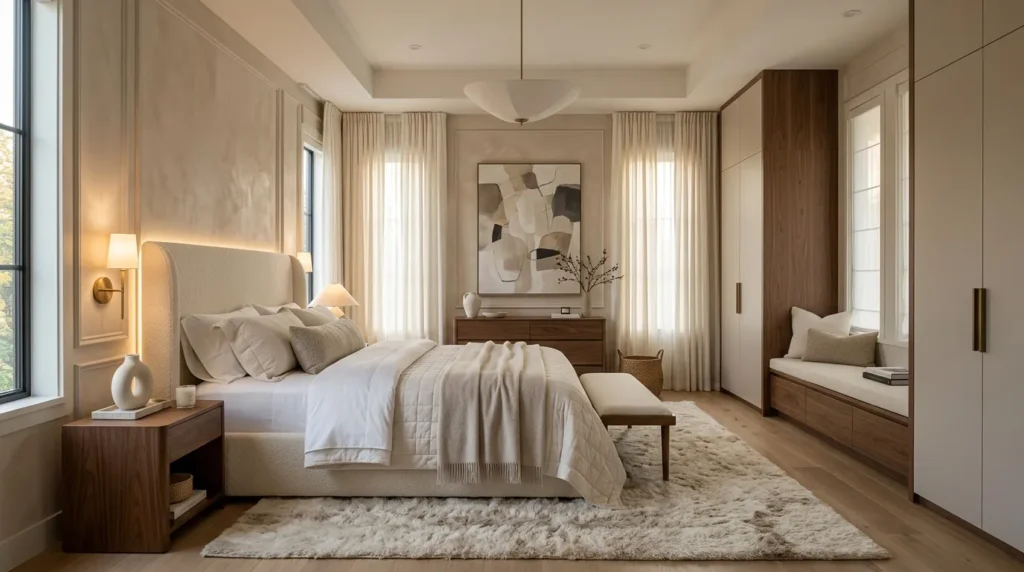
There’s a specific feeling that comes from walking into a beautifully designed bedroom — the kind you see in boutique hotels or high-end design magazines. The lighting feels intentional, the textures feel rich, and somehow nothing looks overdone. In my experience, most people assume that feeling requires a massive renovation budget or a full furniture overhaul. It doesn’t. Modern luxury in a bedroom is less about how much you spend and more about how deliberately every element is chosen.
I’ve noticed that the bedrooms which read as truly luxurious usually share a few things in common: a restrained color palette, quality textiles, layered lighting, and just enough negative space to let each piece breathe. A mistake many homeowners make is trying to add luxury through more — more pillows, more accessories, more furniture — when the opposite approach almost always reads as more expensive. Modern luxury design leans on restraint, texture, and craftsmanship rather than volume.
This guide walks through ten practical, achievable ideas for bringing that elevated, modern-luxury feeling into your own bedroom. These are the same principles interior designers rely on again and again, broken down into steps you can actually apply — whether you’re working with a primary suite or a smaller guest room. You’ll find guidance on everything from bedding and lighting to furniture silhouettes and the small styling details that make the biggest visual difference.
By the end of this article, you’ll have a clear, room-by-room approach for creating a bedroom that feels calm, considered, and genuinely luxurious — without needing to gut the space or spend beyond your means. Let’s get into it.
Table of Contents
- Layered Neutral Palette Building a sophisticated color foundation that feels calm and expensive.
- Plush Textural Bedding Using fabric and texture to create an inviting, hotel-quality bed.
- Statement Headboard Focal Point Anchoring the room with a bold, well-proportioned headboard.
- Warm Ambient Lighting Layering light sources for a soft, elevated evening glow.
- Curated Nightstand Styling Styling surfaces with intention instead of clutter.
- Sculptural Furniture Silhouettes Choosing furniture shapes that add quiet visual interest.
- Metallic Accent Details Introducing subtle shine without overwhelming the space.
- Oversized Wall Art Using scale to create a gallery-level focal point.
- Hotel-Inspired Symmetry Balancing the room for a calm, polished feel.
- Elevated Window Treatments Framing natural light with fabric that adds softness and height.
1. Layered Neutral Palette
Quick Benefits
- Creates a calm, sophisticated backdrop
- Makes textures and materials stand out
- Works well with changing seasonal accents
- Feels timeless rather than trend-driven
- Reads as expensive without bold color
Why It Works
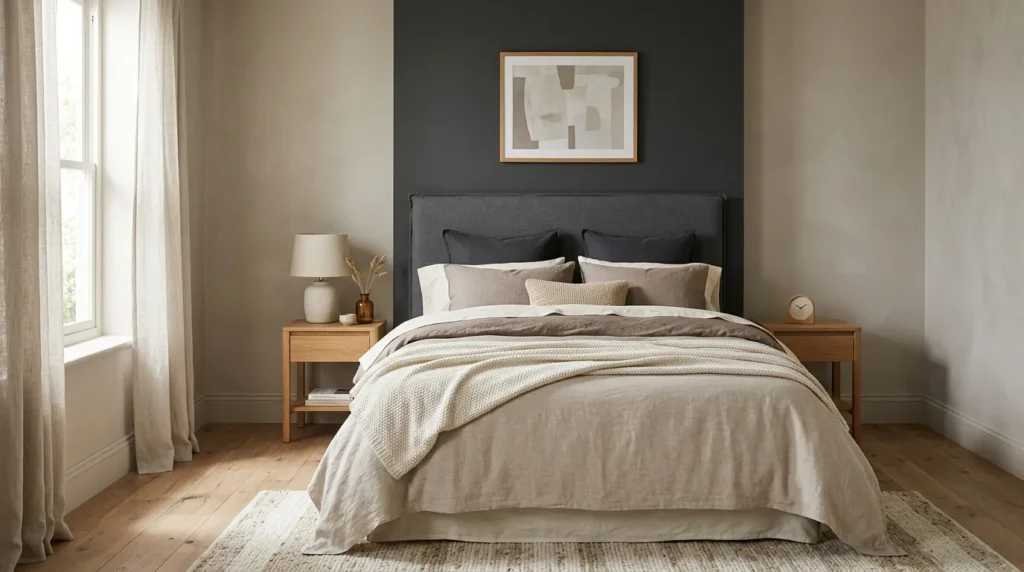
Modern luxury design rarely relies on bold, saturated color. Instead, it builds depth through layered neutrals — warm whites, taupe, soft greige, and deep charcoal — that shift subtly from wall to wall and surface to surface. That’s why many designers recommend starting with a neutral base before adding any decor at all. A layered neutral palette allows texture and material quality to become the star of the room, rather than competing with a loud color scheme. It also gives the space a timeless quality, since neutral tones age well and rarely feel dated the way trend-driven colors can.
How To Style It
Choose two to three neutral tones within the same warm or cool family, and apply them across your walls, bedding, and large furniture pieces. Use your darkest neutral sparingly, perhaps on a single accent wall behind the headboard or on the frame of the bed itself, to add depth without overwhelming the room. Keep trim and ceiling in a slightly lighter tone than the walls to maintain a soft, cohesive gradient. If you want a touch of warmth, a caramel or walnut wood tone layered against your neutral palette adds richness without introducing a competing color.
2. Plush Textural Bedding
Quick Benefits
- Instantly elevates the look and feel of the bed
- Adds visual richness without adding color
- Improves comfort and everyday sleep quality
- Creates a hotel-like, inviting focal point
- Works with almost any design style
Why It Works
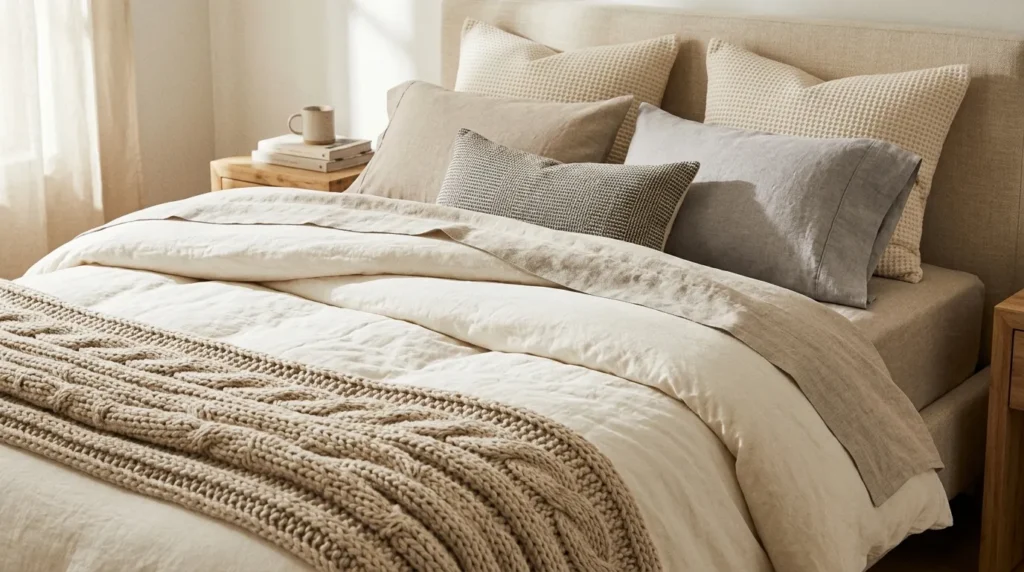
If there’s one simple trick I always suggest for an instant luxury upgrade, it’s investing in your bedding before anything else. The bed is the visual and functional center of the room, and texture does more heavy lifting here than color or pattern ever could. A mix of linen, cotton sateen, and a substantial duvet creates the kind of layered, inviting look associated with high-end hotels. This isn’t about having the most pillows — it’s about choosing fewer, higher-quality textiles that feel substantial and look intentional.
How To Style It
Start with a high-thread-count sheet set in a soft neutral tone, then layer a textured duvet or coverlet in a complementary shade. Add two to three Euro pillows against the headboard, two standard or king sleeping pillows in front, and a single lumbar or accent pillow for contrast. Fold a substantial throw blanket — wool, cashmere-blend, or heavy knit — across the foot of the bed for both texture and function. Avoid overcrowding the bed with too many decorative pillows; five to seven total, including sleeping pillows, is typically the sweet spot for a curated rather than cluttered look.
3. Statement Headboard Focal Point
Quick Benefits
- Anchors the entire room around the bed
- Adds architectural interest without renovation
- Creates a strong photographic focal point
- Elevates even simple bedding and decor
- Works in a range of material finishes
Why It Works
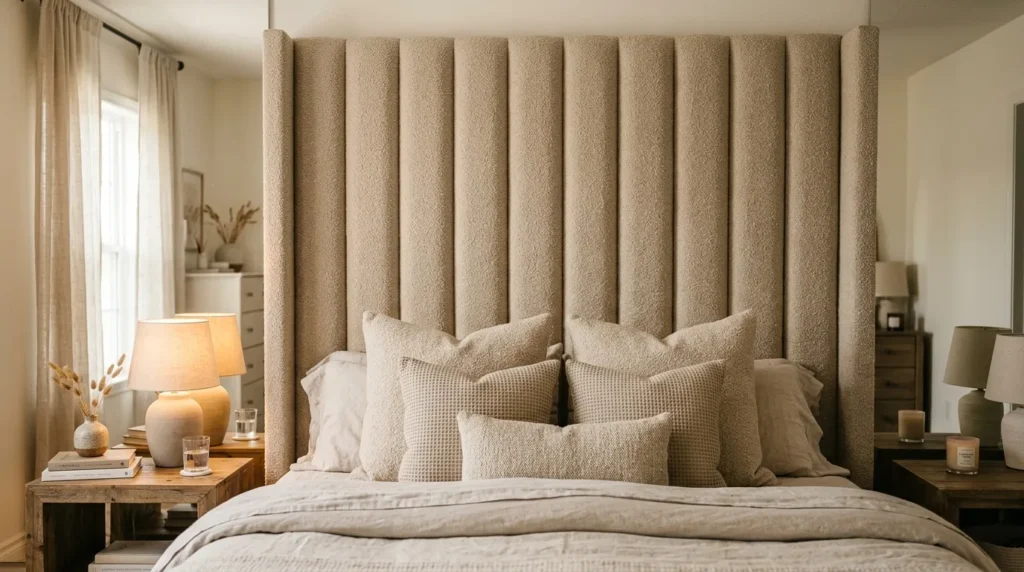
A well-proportioned, substantial headboard does more to signal “designer styled” than almost any other single piece in the room. I’ve seen this idea transform bedrooms that felt flat and unfinished into spaces with genuine visual weight and presence. An upholstered, channel-tufted, or wood-paneled headboard that extends slightly beyond the width of the bed frame creates a sense of scale and intention, anchoring everything else in the room around it. A small or missing headboard, by contrast, tends to make even a well-decorated bed feel incomplete.
How To Style It
Choose a headboard that extends a few inches wider than your mattress on each side, and consider one that reaches higher than standard — tall, upholstered headboards read as more architectural and luxurious. Boucle, velvet, and performance linen are popular upholstery choices because they add texture while staying practical. If you prefer a wood or paneled headboard, choose a finish that echoes another wood tone already in the room, such as your nightstands or flooring. For rented spaces where a full headboard isn’t possible, a large, framed textile or an oversized art piece mounted at headboard height can create a similar visual anchor.
4. Warm Ambient Lighting
Quick Benefits
- Softens the overall mood of the room
- Eliminates harsh, flat overhead lighting
- Adds flexibility for reading, relaxing, and sleeping
- Highlights texture and architectural details
- Creates a hotel-like evening atmosphere
Why It Works
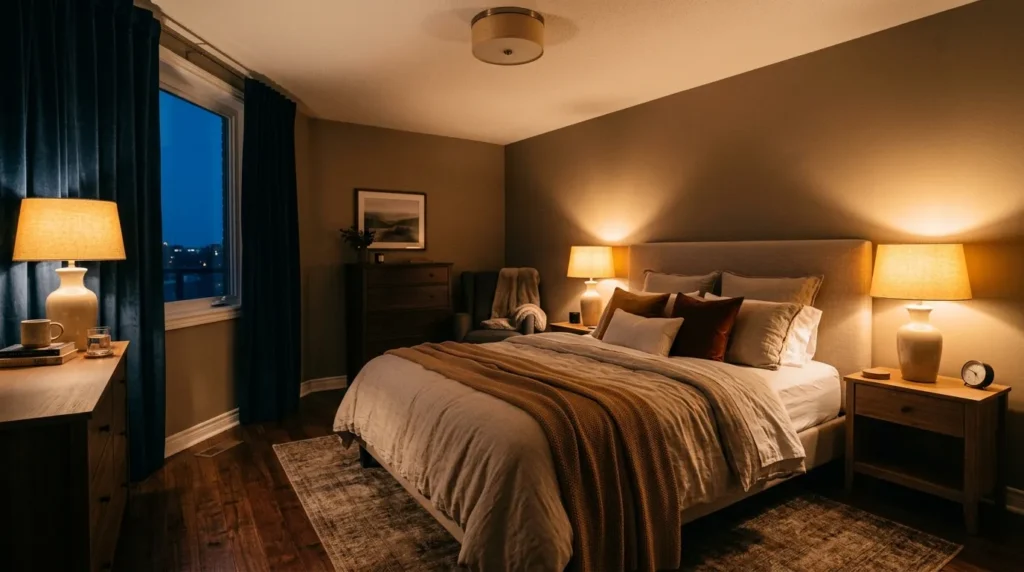
Overhead lighting alone almost always undercuts a luxury bedroom design, no matter how well the rest of the room is styled. A mistake many homeowners make is relying on a single central light fixture, which creates flat, even light that flattens texture and casts unflattering shadows. Layered, warm-toned lighting — bedside lamps, a dimmed overhead fixture, and perhaps a floor lamp in a reading corner — creates the soft, dimensional glow associated with high-end hotel rooms. This kind of lighting also gives you flexibility throughout the day, from bright and functional in the morning to soft and relaxed at night.
How To Style It
Add a lamp on each nightstand, choosing a warm bulb temperature (around 2700K) rather than a cool white tone that can feel clinical in a bedroom. If your budget allows, install a dimmer switch on the overhead fixture so you can adjust brightness throughout the day. Consider a plug-in wall sconce flanking the headboard as an alternative to table lamps, which frees up nightstand surface space and adds a more architectural, hotel-like detail. Avoid lighting the room with a single bright source in the evening — softer, layered light almost always feels more luxurious than one strong overhead beam.
5. Curated Nightstand Styling
Quick Benefits
- Keeps surfaces feeling calm and intentional
- Balances function with visual polish
- Reflects personal style without clutter
- Creates symmetry when paired on both sides
- Elevates even simple, budget nightstands
Why It Works
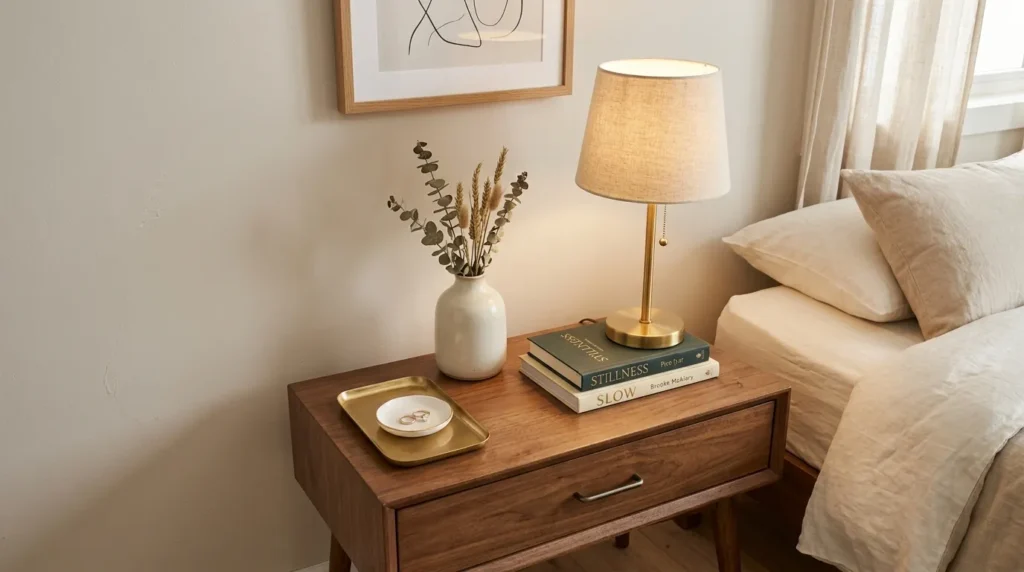
Nightstands are one of the most-used surfaces in the entire home, which means they’re also one of the easiest to let become cluttered. In my experience, the difference between a nightstand that looks styled and one that looks messy usually comes down to restraint. A curated nightstand — lamp, a small stack of books, a candle or small object, and a tray to corral daily items like glasses or a phone — reads as intentional. An overcrowded nightstand, even with nice individual pieces, undercuts the calm, elevated feeling the rest of the room is working to create.
How To Style It
Limit each nightstand to no more than four or five items: a lamp, a small stack of one to three books, one decorative object, and a small tray or dish for daily essentials. Use a tray to visually contain smaller items like rings, chargers, or lip balm, which keeps the surface looking tidy even with everyday use. If you have nightstands on both sides of the bed, aim for loose symmetry — similar lamp heights and a similar number of objects — rather than an exact mirror image, which can feel sterile. Rotate a book or small object seasonally to keep the styling feeling fresh without starting from scratch.
6. Sculptural Furniture Silhouettes
Quick Benefits
- Adds quiet visual interest without extra color
- Elevates the room’s overall design language
- Works well in both large and small bedrooms
- Creates a sense of intentional curation
- Pairs easily with a neutral palette
Why It Works
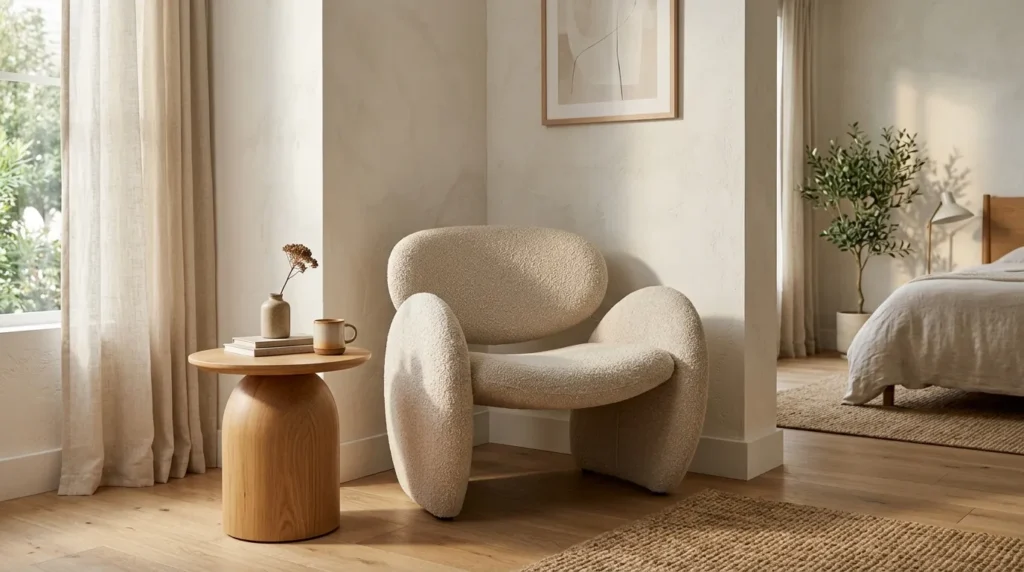
Modern luxury design often leans on shape and silhouette rather than ornamentation. A chair with a curved back, a nightstand with a rounded edge, or a bench with tapered legs introduces visual interest through form alone, which feels more sophisticated than relying on pattern or bold color. That’s why many designers recommend choosing at least one or two sculptural pieces per room — they act as quiet focal points that reward a second look, giving the space a sense of curation rather than simply furniture that was purchased as a matching set.
How To Style It
Look for one statement piece with a distinct silhouette — a curved accent chair in the corner, a rounded bench at the foot of the bed, or an organically shaped mirror — and let it stand somewhat apart from the rest of the furniture rather than blending in. Balance sculptural pieces with simpler, more streamlined furniture elsewhere in the room so the space doesn’t feel visually competitive. Mixing a matching furniture set with one or two independently sourced sculptural pieces almost always reads as more curated and higher-end than an entire room of matching furniture from a single collection.
7. Metallic Accent Details
Quick Benefits
- Adds subtle shine without overwhelming the room
- Elevates hardware, lighting, and small decor
- Creates a cohesive finishing touch
- Works well with any neutral palette
- Requires minimal investment for high impact
Why It Works
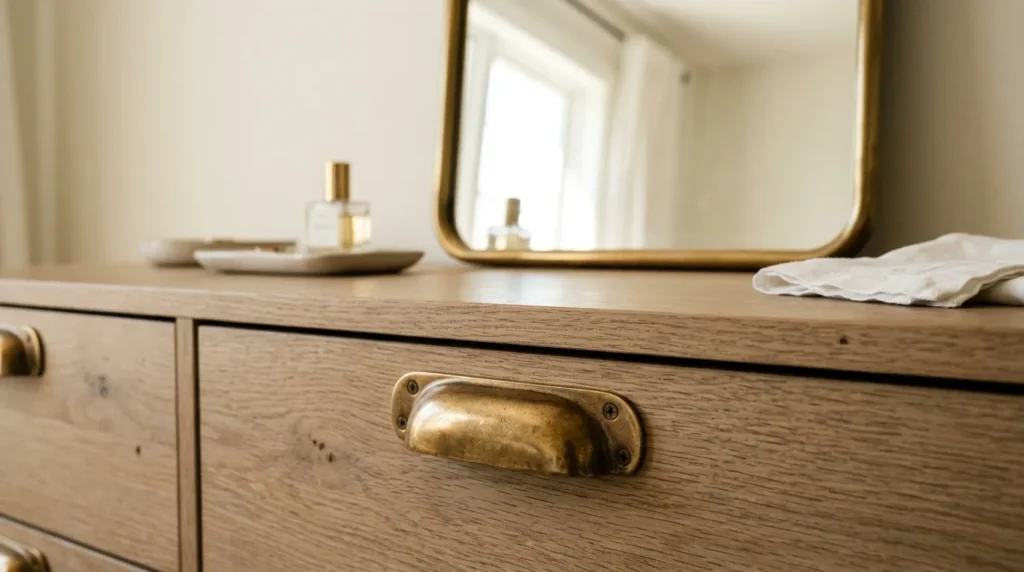
Small metallic details — drawer pulls, lamp bases, picture frames, mirror edges — add a layer of polish that’s easy to underestimate. If you’re anything like me, you’ve probably noticed that a room can look nearly finished but still feel slightly flat until a few metallic touches are introduced. Warm metals like brass, aged brass, or warm gold tend to feel more luxurious and less trend-dependent than cooler finishes, though brushed nickel or matte black can work equally well depending on your existing palette. The key is consistency: scattered, mismatched metals throughout a room can undercut the very polish they’re meant to add.
How To Style It
Choose one primary metal finish and use it consistently across hardware, lighting fixtures, and frames throughout the room. Swap dated drawer pulls on nightstands or a dresser for a simple, updated finish — this is one of the most affordable upgrades with an outsized visual impact. Add a metallic-framed mirror or a lamp with a metal base to introduce the finish without overdoing it, and keep the rest of the room’s materials — wood, textiles, ceramics — in supporting neutral tones so the metallic details stand out as intentional accents rather than the main event.
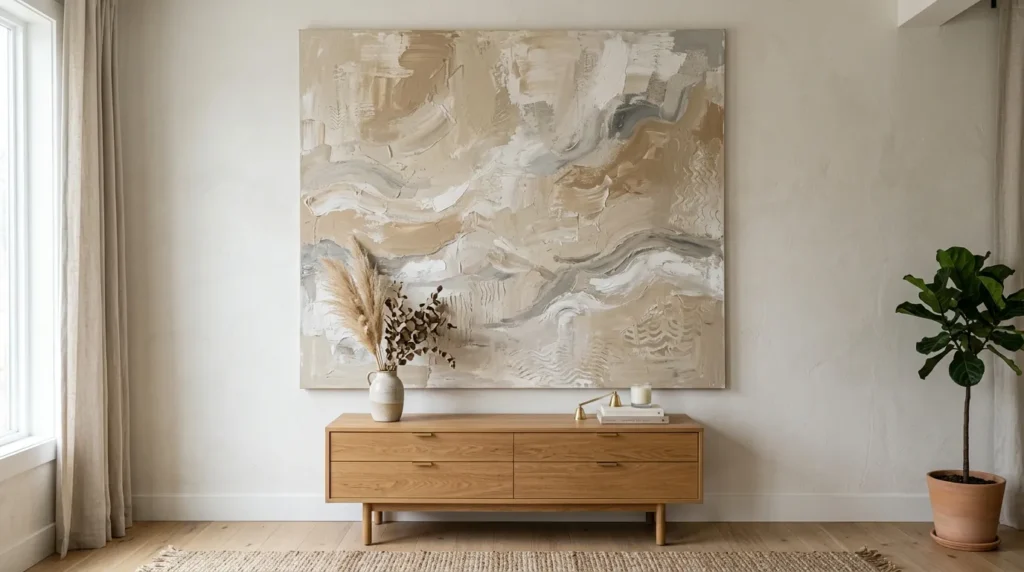
8. Oversized Wall Art
Quick Benefits
- Creates a strong visual focal point
- Fills wall space without added furniture
- Adds personality and depth to the room
- Balances a large headboard or bed frame
- Works well above dressers or seating areas
Why It Works
Small, scattered art tends to disappear on a large bedroom wall, while one substantial piece creates the kind of confident focal point associated with professionally designed spaces. A mistake many homeowners make is under-scaling their art, choosing pieces that are technically appropriately sized for a gallery wall but too small to stand alone above a bed or dresser. Oversized art, whether a single large canvas or a substantial framed print, gives the eye somewhere clear to land and adds a sense of intentional design that smaller, scattered pieces can’t achieve on their own.
How To Style It
Choose a piece roughly two-thirds the width of your headboard or dresser, and hang it with the center at approximately eye level, typically 57 to 60 inches from the floor. Abstract art, soft landscape photography, or large-scale botanical prints all pair well with a modern luxury palette, especially in muted, tonal color schemes. If a single oversized piece isn’t available or affordable, two large pieces hung side by side with minimal spacing can create a similar visual weight. Leave breathing room around the art rather than crowding it with additional smaller frames, which preserves its impact as a clear focal point.
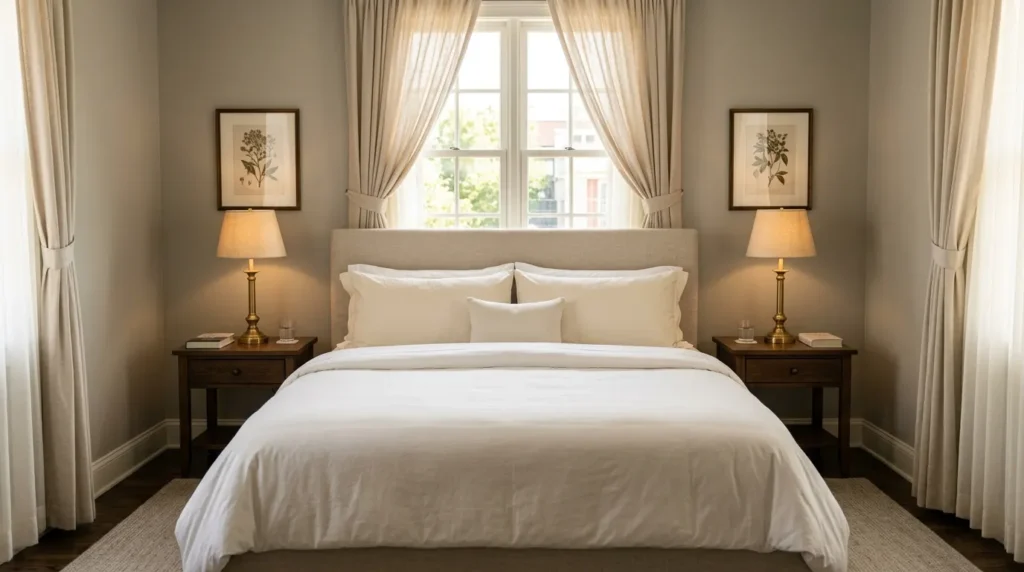
9. Hotel-Inspired Symmetry
Quick Benefits
- Creates an instantly calm, balanced feeling
- Mimics the polish of high-end hotel rooms
- Simplifies furniture and decor decisions
- Works especially well with a centered bed
- Elevates even modest furniture pieces
Why It Works
There’s a reason hotel rooms feel instantly calming the moment you walk in — symmetry. Matching nightstands, matching lamps, and a centered bed create a sense of order and balance that the eye reads as restful and considered. In my experience, symmetry is one of the most underused tools in home bedroom design, even though it’s one of the simplest to apply. A perfectly symmetrical room isn’t about being rigid or impersonal — it’s about giving the space a calm foundation that personal touches can then be layered onto without disrupting the overall sense of balance.
How To Style It
Center your bed on the longest wall of the room, ideally with equal space on either side for nightstands and lamps. Choose matching or closely coordinated nightstands and lamps for both sides of the bed, even if the rest of the room’s decor is more eclectic. If your room’s layout doesn’t allow for perfect symmetry, aim for balanced visual weight instead — a floor plant on one side can offset a chair on the other, for example. Reserve asymmetry for smaller decorative choices, like an accent pillow or a piece of art, so the overall structure still reads as intentional and calm.
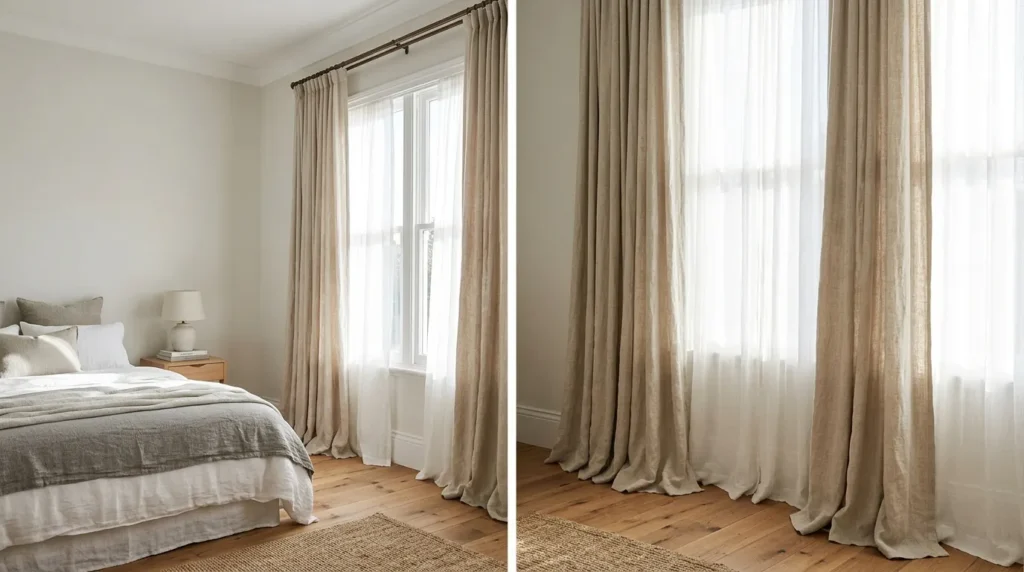
10. Elevated Window Treatments
Quick Benefits
- Adds height and softness to the room
- Frames natural light in a flattering way
- Elevates the perceived ceiling height
- Introduces texture without extra furniture
- Completes the room’s overall polish
Why It Works
Window treatments are often one of the last things homeowners think about, yet they have an outsized impact on how finished and luxurious a room feels. Floor-length curtains hung close to the ceiling, rather than short curtains hung tight to the window frame, create the illusion of a taller room and add a soft, flowing texture that hard surfaces like walls and furniture can’t provide on their own. One simple trick I always suggest is checking curtain length before anything else — puddling or floor-skimming curtains almost always look more expensive than curtains that stop short above the sill.
How To Style It
Mount curtain rods as close to the ceiling as practical, extending a few inches beyond the window frame on each side, so curtains frame the window generously and let in maximum light when open. Choose curtains that either just graze the floor or puddle slightly for a softer, more luxurious look, avoiding lengths that hover awkwardly above the ground. Linen and heavier cotton blends tend to read as higher-end than lightweight polyester, both in texture and in the way they drape. If privacy is a concern, layer sheer curtains beneath your primary drapery for a soft, diffused daytime light with the option to close heavier curtains at night.
Frequently Asked Questions
What colors are best for a modern luxury bedroom?
Warm neutrals like soft white, taupe, and greige form the best foundation, often paired with one deeper tone like charcoal or espresso brown for contrast. This layered neutral approach feels calm and expensive while staying flexible enough to update with seasonal accents.
Do I need to buy new furniture for a luxury bedroom look?
Not necessarily. Updating hardware, adding quality bedding, layering lighting, and introducing one or two sculptural or statement pieces can dramatically shift the feel of a room without replacing every piece of furniture you own.
How much bedding is too much for a luxury look?
Five to seven pillows total, including sleeping pillows, is generally the sweet spot. Beyond that, the bed can start to look cluttered rather than curated, which works against the calm, intentional feeling modern luxury design is going for.
What lighting works best in a luxury bedroom?
A layered approach — a dimmable overhead fixture plus two bedside lamps with warm-toned bulbs — creates the soft, hotel-like glow associated with high-end bedroom design. Avoid relying on a single bright overhead light as your only source.
How do I add luxury on a small budget?
Focus on high-impact, lower-cost changes first: updated hardware, a quality duvet, curtain length adjustments, and warm lighting. These changes affect texture and mood far more than their price tag suggests, and they lay the groundwork for bigger updates later.
Is symmetry necessary for a luxury bedroom design?
It’s not strictly necessary, but it’s one of the fastest ways to create a calm, polished feeling. Matching nightstands and lamps on either side of a centered bed instantly reads as considered and hotel-like, even in an otherwise simple room.
What fabrics feel the most luxurious for bedding and curtains?
Linen, cotton sateen, velvet, and boucle all read as higher-end due to their texture and drape. These materials tend to look and feel more substantial than lightweight synthetic blends, which is part of why they’re associated with elevated design.
Conclusion
Creating a modern luxury bedroom isn’t about how much you spend — it’s about how intentionally each element is chosen. From a layered neutral palette and plush bedding to warm lighting and hotel-inspired symmetry, every idea in this guide works toward the same goal: a room that feels calm, considered, and genuinely elevated to live in every day. None of these changes require a full renovation, and most can be introduced gradually as your budget and time allow.
Start with one or two ideas and gradually build a space that reflects your style and supports genuine rest and comfort. Maybe that means upgrading your bedding this month and adding a statement headboard next season. Small, deliberate changes compound into a bedroom that feels like your own private retreat — polished, warm, and unmistakably designer styled.
Related Articles
- Cozy Bedroom Ideas
- Small Living Room Layouts
- Modern Farmhouse Decor
- Neutral Home Styling
- DIY Accent Wall Ideas