
Can Area Rugs Overlap the Bottom Lip of an Electric Baseboard Heater?
Determining whether you can area rugs overlap the bottom lip of an electric baseboard heater is a critical safety consideration for any homeowner. While it might seem like a simple design choice to run a rug right up to the wall, electric heating units generate significant heat that requires proper ventilation. Blocking the intake or output of these systems creates a genuine fire hazard that could damage your flooring or ignite nearby textiles.
In this article, we explore the mechanical requirements of these systems and why maintaining a clear buffer zone is essential for your home’s safety and the efficiency of your heating equipment.
The Clear Verdict on Safety
Modern heaters often feature thermal limit switches designed to shut the unit off if it overheats, but relying on these as your primary safety barrier is a significant risk. Repeatedly tripping these switches can lead to premature mechanical failure, and in older units lacking such safety features, the concentrated heat can easily scorch rug fibers or ignite synthetic materials.
Understanding Convection and Air Flow
Electric baseboard heaters function entirely on the principle of natural convection. Cold air from the floor is denser than warm air, so it naturally moves toward the bottom of the heater to replace the rising warm air.
When you place a carpet or rug over the floor space directly in front of the heater, you create a physical barrier that disrupts this essential cycle. Even if the rug is not technically “overlapping” the metal lip, placing it too close creates a dead zone where air cannot circulate properly. This results in the heater working much harder than necessary to warm the room, often leading to uneven heating patterns and higher energy bills.
The Risks of Heat Accumulation
When you trap this heat behind or under a rug, the thermal energy has nowhere to go but back into the unit or into your flooring material. Many area rugs, particularly those with rubber or latex backings, are highly susceptible to melting or off-gassing when exposed to consistent, high-intensity heat. Over time, this constant exposure can lead to the deterioration of the floor finish underneath the rug, causing discoloration or even charring of hardwood or laminate surfaces.
Recommended Safety Clearances
Most manufacturers and fire safety organizations, such as the National Fire Protection Association, recommend maintaining a minimum clearance of at least 12 inches around baseboard heating units.
While some modern units might be rated for slightly closer proximity, the 12-inch rule remains the gold standard for preventing accidental ignition. This buffer zone ensures that air can be drawn in freely from the floor and that any objects—including curtains, furniture, and rugs—are kept safely outside the radiant heat zone.
If you have a small room where furniture placement is difficult, it is better to choose a smaller rug that does not reach the wall than to risk fire safety for the sake of aesthetics.
Comparing Heating Types and Clearance Needs
Different types of heating systems present varying levels of risk regarding proximity to floor coverings. Electric baseboard units are generally more hazardous than hydronic (water-filled) baseboards because the heating elements in electric models reach much higher temperatures much faster.
| Heater Type | Common Surface Temp | Risk Level |
|---|---|---|
| Electric Baseboard | High (180°F – 250°F) | Severe Fire Risk |
| Hydronic (Water) | Moderate (120°F – 160°F) | Low/Moderate |
| Forced Air Register | Variable | Low (if not blocked) |
Impact on Flooring Materials

The material of your floor matters significantly when considering how close you can place an area rug to your heating unit. Hardwood floors are particularly sensitive to sustained heat, which can cause the wood to dry out, warp, or crack over time. If you use a rug with a synthetic pad on top of hardwood, the heat from the baseboard can cause the chemicals in the pad to bond with the floor finish. This often results in permanent staining that requires professional refinishing to remove. Always prioritize keeping your floor space clear to protect the long-term structural integrity of your home’s flooring.
Common Signs of Overheating
If you suspect that your rug is too close to your baseboard heater, look for specific physical warning signs. Discoloration of the rug fibers, a burnt or “dusty” smell when the heat turns on, or the unit clicking on and off rapidly are all indicators of a problem. If the rug feels warm to the touch even several feet away from the heater, you have likely restricted the air flow enough to cause the unit to labor. These symptoms are your home’s way of signaling that the system is not getting enough air to operate efficiently and safely.
Designing a Room with Baseboard Heating
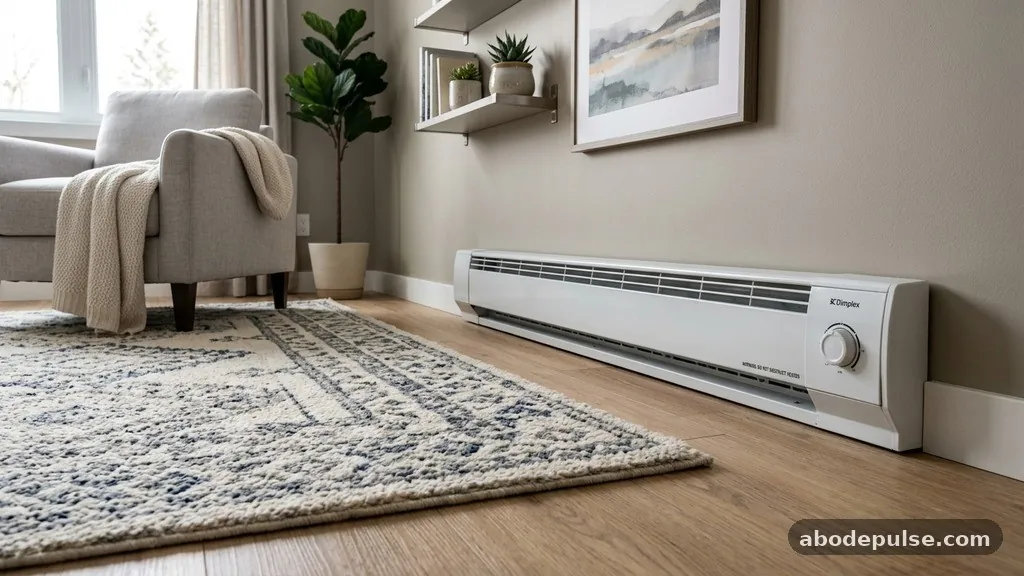
When placing furniture or rugs in a room with baseboard heaters, you must adopt a “heater-first” design approach. Plan your layout around the location of the heaters rather than trying to force a large rug into a space that doesn’t accommodate it. If you want a plush, wall-to-wall look, consider using smaller, individual area rugs that stop well short of the heating perimeter. You can also utilize floor vents or registers if your home is equipped with a dual heating system, but never place rugs over these either, as they serve the same critical air circulation function.
Safety Checklist for Homeowners
To ensure your home remains safe during the cold season, follow this maintenance and safety checklist:
- Vacuum the area under and around your heaters every two weeks to remove dust build-up.
- Measure a 12-inch gap between your rugs and the front of all baseboard units.
- Inspect the wall paint and floor finish near the heater for signs of scorching or bubbling.
- Ensure curtains or drapes are hemmed at least 6 inches above the heater.
- Check that no cords, toys, or pet bedding are pushed against the unit.
Addressing Modern Smart Thermostats
Some homeowners believe that installing a digital or smart thermostat solves the problem of heater safety. While a smart thermostat can help you manage your energy consumption, it cannot prevent a physical fire hazard caused by an obstructed heater. No matter how sophisticated your control system is, the physical laws of convection remain unchanged. You must still keep the area around the heater clear to ensure that the air movement is not restricted by your home decor.
Frequently Asked Questions
Does the height of the rug matter?
Yes, a thick, high-pile shag rug is more dangerous than a thin, flat-weave rug. Thicker rugs have more surface area and can trap heat more effectively, while also being more prone to catching fire if they do reach the critical temperature threshold.
What should I do if my rug has already caused damage?
If your floor is discolored or your rug has scorched, immediately turn off the heater and remove the rug. For floor damage, consult a flooring professional, as heat-damaged wood or laminate often requires sanding or board replacement to fix the underlying issues.
Can I use a metal heat deflector?
Heat deflectors are designed to push air into the room, but they do not eliminate the need for clearance. They can actually make the situation worse if they are not installed correctly, as they can direct heat back toward the floor rather than out into the space.
Are there specific rugs that are fire-resistant?
While some rugs are treated with fire retardants, they are not fireproof. Even materials like wool, which is naturally more flame-resistant than synthetics, can still smolder and release toxic fumes if placed directly against a high-heat source like an electric element.
How do I heat a room if I can’t put a rug down?
If you have cold floors and need warmth, consider using a space heater with a “tip-over” safety switch and a ceramic heating element. These are portable and can be placed in the center of the room, away from walls and baseboard units, providing targeted warmth without blocking your primary heating system.
Conclusion
Maintaining proper clearance around your baseboard heating equipment is one of the most effective ways to prevent household fires and protect your flooring. The primary goal is to ensure that air flow remains unobstructed, allowing the unit to cycle naturally without overheating. Because electric baseboard heaters generate intense, direct heat, you should treat the 12-inch buffer zone as a non-negotiable rule. Whether you are rearranging furniture or selecting new decor, always prioritize the safety of your home by keeping rugs and other textiles away from these critical components. By being mindful of where your area rugs overlap the bottom lip of an electric baseboard heater, you can keep your home warm and secure throughout the winter months.