What Happens If Furniture Blocks the Convection Airflow of Baseboard Heaters?
When you place a sofa or a bookshelf directly in front of a heat source, you disrupt the natural cycle of room warming. Understanding what happens if furniture blocks the convection airflow of baseboard heaters is essential for both your home’s safety and your monthly utility bills. These systems rely on a specific physical process to move heat into your living area, and obstructing that path creates immediate inefficiency.
By learning how to manage your floor plan around these units, you can ensure your space stays comfortable without risking damage to your belongings. This article explains the mechanics of convection, the specific risks of obstruction, and how to maintain proper clearance in any room.
The Mechanics of Convection Heating

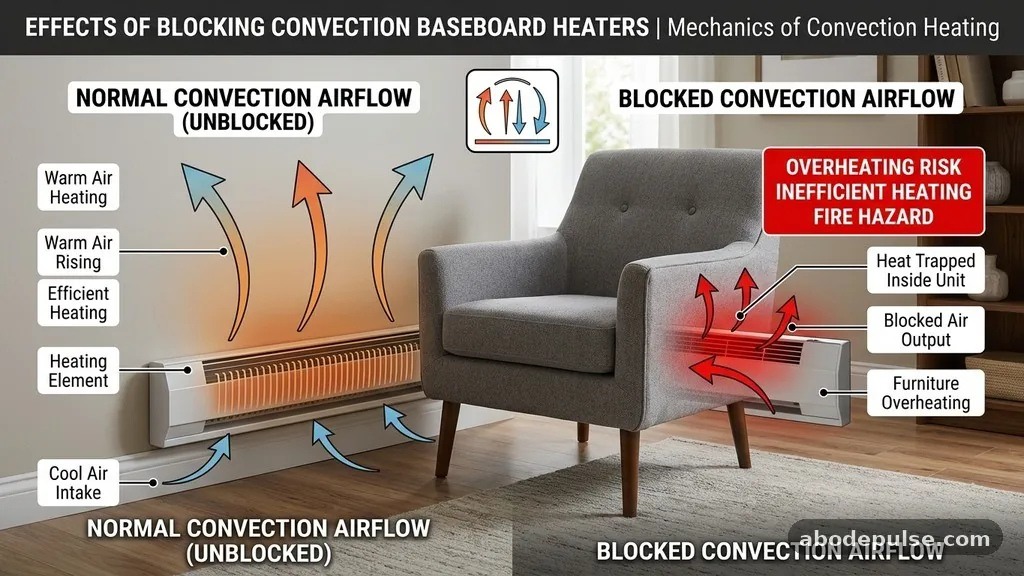
Baseboard heaters function by utilizing the principle of natural convection. Cool air from the floor level enters the bottom of the heater, where it is warmed by internal heating elements or fins.
As this air heats up, it becomes less dense and naturally rises, exiting through the top vents to circulate through the room. This creates a continuous loop where the heater draws in cold air and pushes out warm air to maintain a consistent temperature.
When you place an object in front of this unit, you create a barrier that prevents the cold air from entering the intake. Even a small gap that seems sufficient to a human eye can be restrictive for air molecules.
If the intake is blocked, the heater cannot perform its primary function of circulating warm air throughout the space. Consequently, the area immediately surrounding the heater becomes trapped with stagnant, overheated air, while the rest of the room stays chilly.
This process is highly sensitive to external variables like furniture placement. Because the system lacks a fan to force air movement, it depends entirely on the unobstructed flow of gravity and thermodynamics.
Any physical mass, such as a heavy sofa or a thick rug, acts as a heat sink or a wall. This interference forces the unit to work significantly harder, leading to a cascade of efficiency issues that affect your entire home heating system.
Immediate Consequences of Airflow Obstruction
The most direct result of blocking your heaters is a sharp decline in heating efficiency. Since the air cannot circulate properly, the thermostat—often located in a different part of the room or hallway—will continue to signal for heat because the target temperature has not been reached. The heater remains on for longer cycles, consuming electricity or fuel to produce heat that never effectively leaves the immediate vicinity of the metal casing.
You will likely notice that the room feels uneven, with a “hot spot” right next to the heater and a cold draft elsewhere. This temperature disparity forces your heating system into an endless loop of over-functioning.
The internal components, such as the limit switches, may trigger prematurely to prevent overheating, causing the system to cycle on and off rapidly. This behavior, known as “short-cycling,” places significant mechanical stress on the hardware, potentially shortening its lifespan.
Furthermore, the heat that cannot escape into the room gets trapped against the wall and the back of your furniture. This can cause the wood, fabric, or upholstery to dry out, crack, or become discolored over time.
In extreme cases, the localized heat buildup can cause materials to warp or even create a fire hazard if the furniture is made of highly combustible materials. The energy wasted during these inefficient cycles translates directly into higher monthly utility costs.
Safety Risks and Fire Hazards
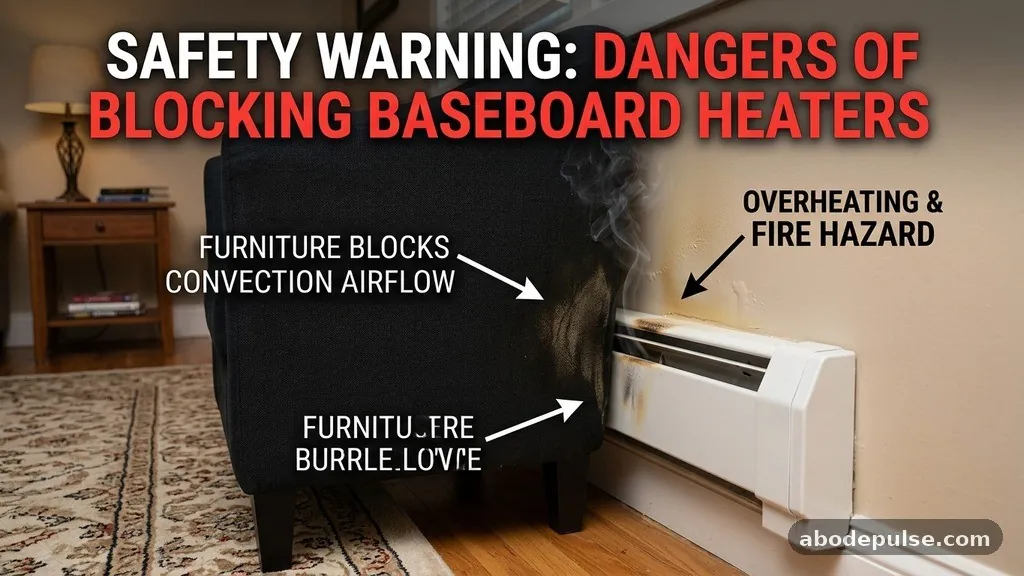
While most modern baseboard heaters include safety features like thermal cut-off switches, these are not foolproof. If a piece of furniture is pushed directly against the unit, the heat buildup can exceed the threshold of the safety mechanism. This creates a situation where the unit is constantly struggling against the blockage, pushing temperatures in the restricted space to dangerous levels.
Many homeowners overlook the accumulation of dust and debris that occurs when furniture blocks the airflow. Baseboards naturally attract dust, and when that dust is trapped behind a sofa, it becomes a tinderbox.
As the heating element reaches high temperatures, that dry, accumulated lint can become a fire risk. Regular cleaning is difficult when furniture is permanently placed over the unit, exacerbating this problem.
According to safety guidance from the National Fire Protection Association, maintaining a clear perimeter around any heating appliance is a fundamental rule of home safety. You should never allow curtains, blankets, or upholstered furniture to touch the heater. Even if the heater doesn’t reach the ignition point of your furniture, the sustained heat can degrade the integrity of the materials, leading to expensive damage that is rarely covered by standard warranties.
Recommended Clearance Distances
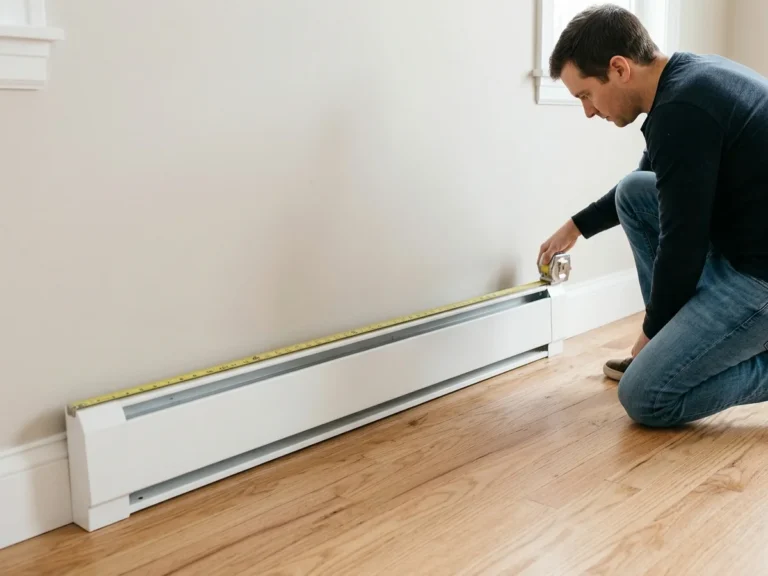
To maintain optimal performance and safety, you must adhere to specific clearance guidelines. A general rule of thumb is to keep at least 6 to 12 inches of space between the front of the heater and any furniture.
This gap allows the cool air to enter the bottom intake freely and the heated air to rise and dissipate into the room. If your furniture is particularly bulky or deep, you might need even more space to ensure the air can circulate properly.
Consider the height of your furniture as well. If you have a low-profile sofa, it might not block the top vent, but it could still cut off the bottom air intake.
Conversely, a tall bookshelf might block the rising warm air even if it is positioned a few inches away. Always prioritize an unobstructed path for the air to flow from the floor, through the fins, and out into the open room.
If you are dealing with a small room, this can be challenging. You might need to rearrange your furniture layout entirely to keep the heaters accessible.
Avoid placing heavy curtains that hang down to the floor, as these can drape over the heater and create a significant blockage. Instead, opt for blinds or curtains that stop above the height of the heater unit.
The Role of Hydronic vs. Electric Systems
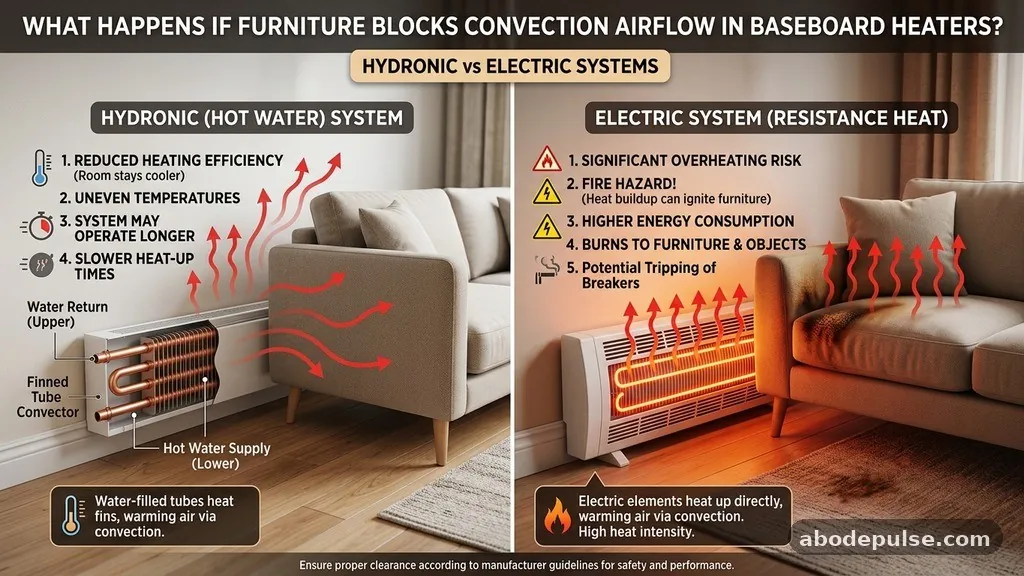
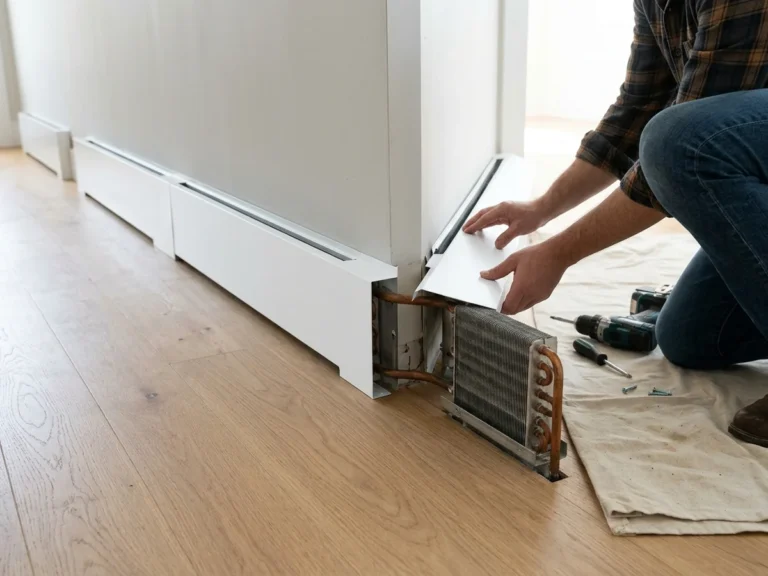
The type of baseboard heater you have—either electric or hydronic—influences how it manages heat, but the rules for airflow remain largely the same. Electric baseboard heaters use metal fins to heat the air directly.
Because they heat up very quickly, they are particularly susceptible to overheating if their airflow is restricted. Their rapid cycling makes them very sensitive to any object placed in their path.
Hydronic baseboard systems use a liquid-filled pipe to distribute heat, which generally results in a more gradual and sustained heat output. While they are slightly less prone to immediate, extreme overheating compared to electric units, they still rely on the same convection process.
If you block a hydronic unit, you are still wasting significant energy and creating stagnant air zones. The water inside the pipes will lose heat much faster than intended because the air isn’t carrying it away.
Regardless of the system, the goal remains the same: ensuring the air can move freely. Electric units might pose a more immediate fire risk due to the rapid temperature spikes, but both types will suffer from efficiency loss. You should treat both systems with the same level of caution regarding furniture placement and room layout.
Managing Airflow in Tight Spaces
In smaller apartments or older homes, finding the right furniture layout can feel like a puzzle. If you absolutely cannot avoid placing furniture near a heater, consider using specialized heat-deflector shields.
These devices attach to the top of the baseboard and direct the warm air outward into the room rather than letting it rise directly into the back of your furniture. While not a perfect substitute for proper clearance, they can help mitigate some of the negative effects.
Another strategy is to choose furniture that is elevated on legs. A sofa with six-inch legs allows air to flow underneath and into the bottom of the heater, which is much better than a solid-base piece that sits flush against the floor. This simple design choice can make a major difference in how your room heats up.
You should also be mindful of rugs and carpeting. Thick, plush carpets can sometimes interfere with the bottom intake of the heater if the unit is installed very close to the floor.
If you have high-pile carpet, ensure there is still a visible gap between the bottom of the metal casing and the floor surface. If not, consider trimming the carpet or installing a spacer to allow for proper air entry.
Long-Term Effects on Home Maintenance
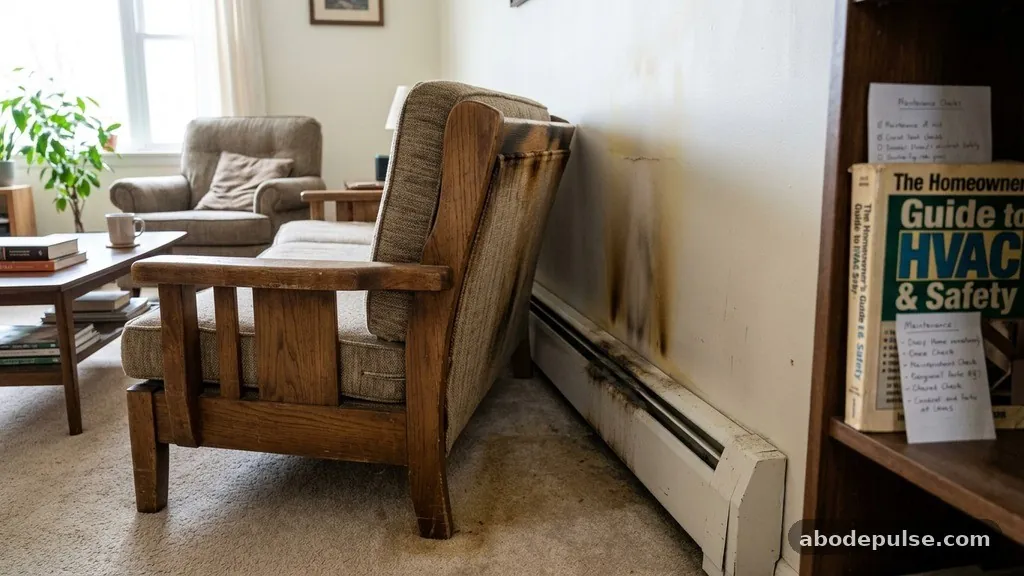
Ignoring the impact of blocked heaters will eventually lead to maintenance headaches beyond just high bills. The constant heat stress can cause the paint on the wall behind the heater to peel or bubble.
The baseboards themselves may become discolored or warped due to the trapped heat. These are signs that your furniture placement is actively damaging your home’s infrastructure.
Furthermore, the lack of airflow can cause moisture issues. If warm air isn’t circulating to the walls, the area behind the furniture can become a cold spot.
In humid climates, this creates a perfect environment for mold growth, as the moisture from the air condenses on the cold, stagnant wall surface. You may find yourself dealing with mildew issues that are hidden behind your sofa or bookshelf.
By keeping your heaters clear, you extend the life of your paint, your flooring, and the furniture itself. You also reduce the amount of dust that gets trapped in the system, which means less frequent deep cleaning. A well-maintained heating system that is allowed to “breathe” will last significantly longer and provide more consistent comfort throughout the winter months.
Comparing Common Obstructions
Different types of furniture block airflow in different ways. Understanding these differences can help you prioritize which items to move first.
| Furniture Type | Impact on Airflow | Risk Level |
|---|---|---|
| Upholstered Sofa | High (Blocks both intake and output) | High (Fire/Damage) |
| Bookshelf (Solid back) | Medium-High (Blocks output) | Medium (Material warping) |
| Drapes/Curtains | High (Drapes over the unit) | High (Fire hazard) |
| Open-frame chair | Low (Allows some air movement) | Low |
| End Table | Low (Limited blockage) | Minimal |
As shown in the table, furniture that is solid or fabric-heavy poses the greatest risk. Items that allow air to pass through, like an open-frame chair, are much safer. Always prioritize moving large, solid, or fabric-covered items away from your heating units.
Maintenance and Cleaning Tips
Even with proper clearance, baseboard heaters require regular maintenance to function efficiently. Dust, pet hair, and dander are naturally drawn into the unit by the convection process.
Over a full heating season, this buildup can act as an insulator, preventing the metal fins from transferring heat effectively. You should aim to clean your heaters at least twice a year—once before the heating season begins and once mid-winter.
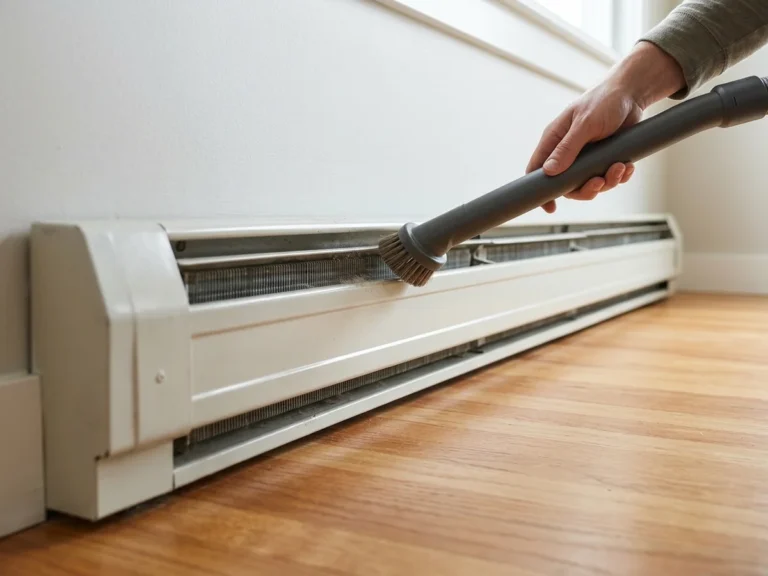
To clean them, first ensure the unit is turned off and completely cool. Use a vacuum with a brush attachment to gently remove dust from the top vents and the bottom intake.
You can also use a long, thin tool to reach between the fins and clear out any stubborn debris. Never use water or liquid cleaners, as this can cause corrosion or electrical issues.
If you notice any strange odors when the heater first turns on, it is often just dust burning off. If the smell persists, however, it may indicate that something is trapped deep inside the unit or that a component is failing. Regular cleaning is the best way to prevent these issues and ensure that your heating system remains both safe and effective throughout the year.
Frequently Asked Questions
Is it ever okay to have furniture touching a baseboard heater?
No, it is never recommended to have furniture touching a baseboard heater. The units are designed to dissipate heat into the air, and any physical contact can cause the furniture to overheat, leading to potential fire hazards or damage to the piece itself.
How far away should my sofa be from the heater?
You should aim for at least 6 to 12 inches of clearance. This distance ensures that cool air can freely enter the bottom of the heater and warm air can circulate into the room without being trapped against the back of your furniture.
What if I don’t have enough space to move my furniture?
If you have a small room, consider using a heat deflector to push the air out into the room. You can also look for furniture with legs that allow for better airflow underneath, or rearrange your layout to place non-essential items near the heaters instead of large, solid pieces.
Can I cover my baseboard heaters with a decorative cover?
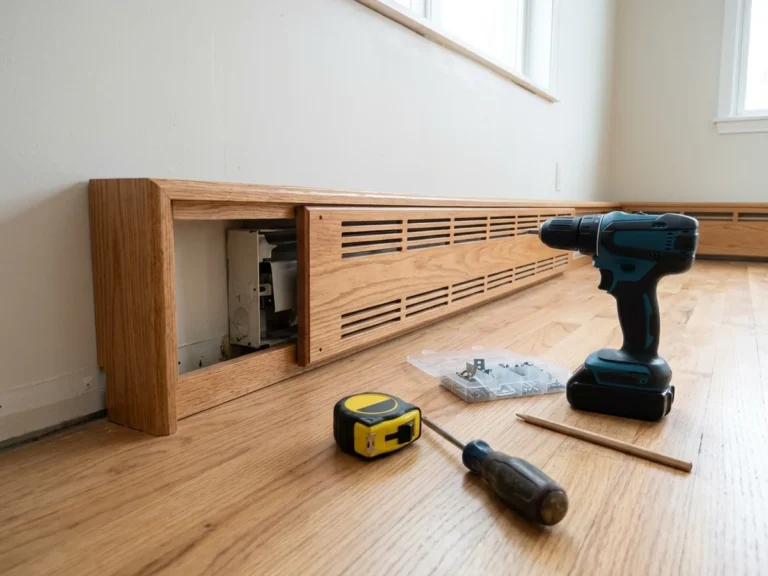
Yes, you can use specialized metal baseboard covers designed for this purpose. However, you must ensure that these covers are specifically engineered to allow for proper airflow; never use DIY covers made of wood or fabric, as these are significant fire hazards.
How do I know if my furniture is affecting my heating?
Signs include uneven room temperatures, the heater clicking on and off rapidly, or the furniture itself feeling hot to the touch. You may also notice discoloration or warping on the wall or the back of your furniture, which indicates excessive heat exposure.
Conclusion
Properly managing the space around your heating units is one of the most effective ways to improve your home’s energy efficiency and safety. When you ensure that nothing obstructs the natural convection process, you allow your heating system to operate as intended, providing consistent warmth without the risk of overheating or mechanical failure. The answer to what happens if furniture blocks the convection airflow of baseboard heaters is clear: you waste money, shorten the lifespan of your heater, and create unnecessary fire risks in your living space.
Take a few minutes today to inspect your home and ensure all your baseboards have the recommended clearance. By moving large pieces of furniture and keeping curtains away from the vents, you can create a safer and more comfortable environment for the entire household. If you remain proactive about your room layout and regular maintenance, you will enjoy a reliable heating system for years to come.