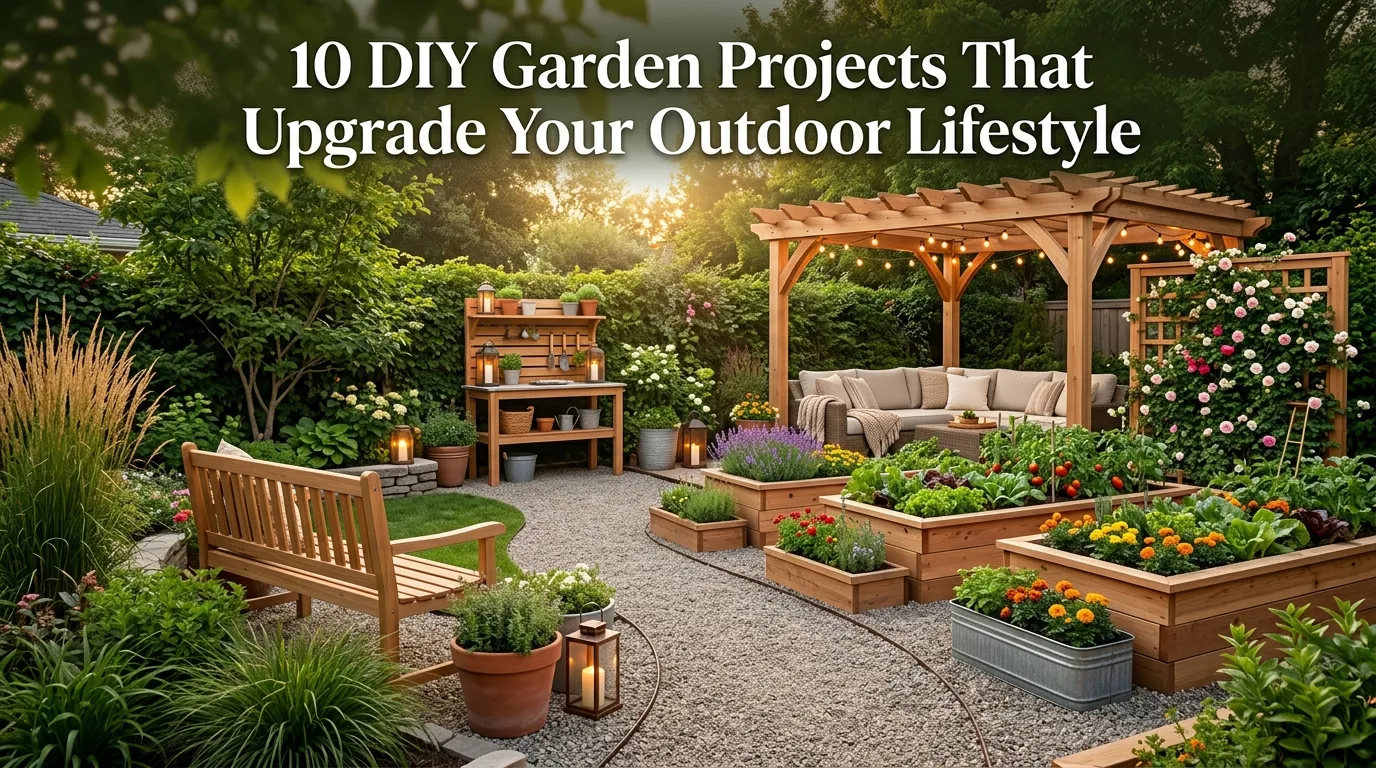
10 DIY Garden Projects That Upgrade Your Outdoor Lifestyle
A garden can be much more than a collection of plants. With a few thoughtful DIY projects, even an ordinary backyard can become a place where you actually want to spend more time—whether that’s sipping coffee in the morning, growing fresh herbs for dinner, entertaining friends, or relaxing after a long day.
The best garden projects aren’t necessarily the most complicated ones. In my experience, the projects that make the biggest difference are the ones that solve a real outdoor-living problem while adding something beautiful. A simple raised planter can make gardening easier. A DIY seating area can turn an unused corner into a destination. Even a small pathway can make the garden feel more intentional and inviting.
You also don’t need a huge yard. Many of these ideas can be adapted for suburban backyards, compact gardens, side yards, patios, and rental-friendly outdoor spaces. The important thing is to work with what you already have and choose projects that fit your lifestyle.
Think about how you want to use your outdoor space before picking a project. Do you want more privacy? Better organization? A place to entertain? More room for herbs and vegetables? A cozy corner for reading?
Once you know the answer, DIY projects become much easier to choose.
These ideas combine practical improvements with attractive design details so your garden can feel less like a collection of chores and more like an extension of your home.
Table of Contents
1. Raised Garden Beds
Create organized planting areas that make growing vegetables and flowers easier.
2. DIY Garden Path
Add structure and guide movement through the garden with a simple pathway.
3. Outdoor Potting Bench
Create a dedicated workstation for planting, pruning, and storing supplies.
4. Vertical Herb Garden
Grow useful herbs while taking advantage of vertical space.
5. Backyard Firewood Rack
Keep firewood organized while adding a purposeful outdoor feature.
6. DIY Garden Seating
Turn an unused corner into a comfortable outdoor retreat.
7. Hanging Planter Display
Add greenery at different heights without consuming valuable floor space.
8. Outdoor Privacy Screen
Create a more secluded garden area with a decorative DIY screen.
9. DIY Garden Trellis
Give climbing plants support while adding architectural interest.
10. Garden Lighting
Use simple outdoor lighting to make the garden enjoyable after sunset.
1. Raised Garden Beds
Quick Benefits
- Creates organized planting zones
- Makes gardening easier to manage
- Separates different crops
- Adds structure to the landscape
- Works for flowers and vegetables
Why It Works
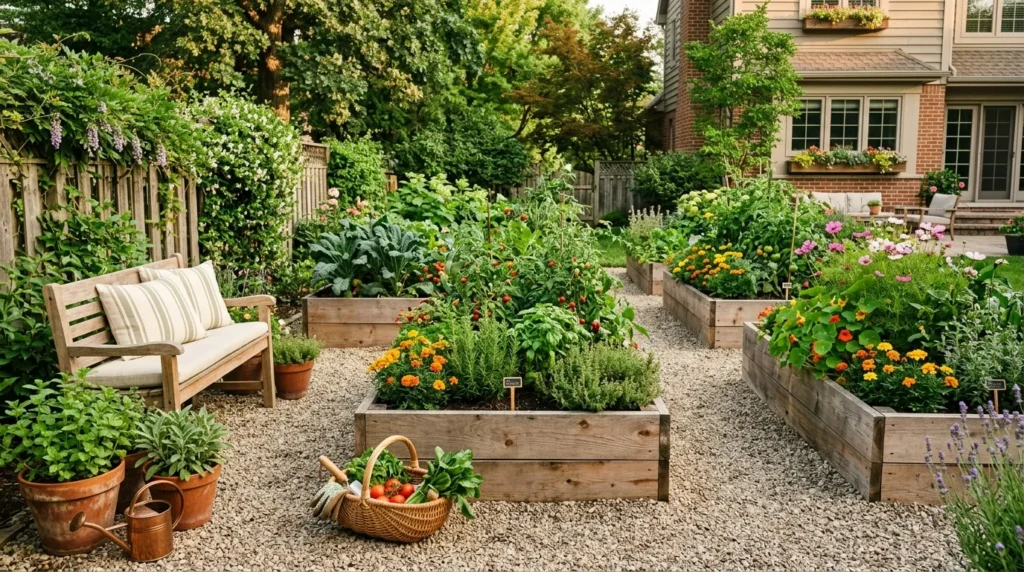
Raised garden beds are one of those DIY projects that can improve both the appearance and practicality of a backyard. Instead of scattering plants throughout the yard, raised beds create clear planting areas that are easier to maintain. They can also make a vegetable garden feel like an intentional part of the landscape rather than a purely functional area. Different heights and shapes can add visual interest, while the defined borders help keep pathways and planting areas separate.
How To Style It
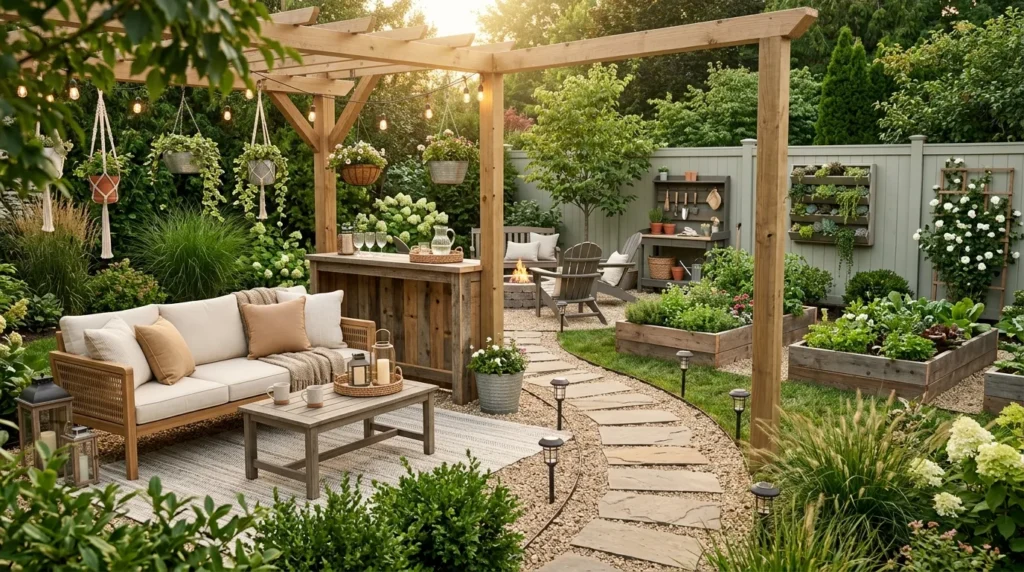
Use untreated, garden-appropriate wood or another suitable material to build rectangular, square, or tiered beds. Position them where plants will receive the amount of sunlight they require. Leave comfortable walking space between beds so you can water, weed, and harvest without stepping into the soil. Fill the beds with an appropriate growing medium and group plants according to their needs. For a polished appearance, repeat the same materials throughout nearby garden features.
2. DIY Garden Path
Quick Benefits
- Improves garden flow
- Defines different zones
- Makes plants easier to access
- Adds visual structure
- Can be built affordably
Why It Works
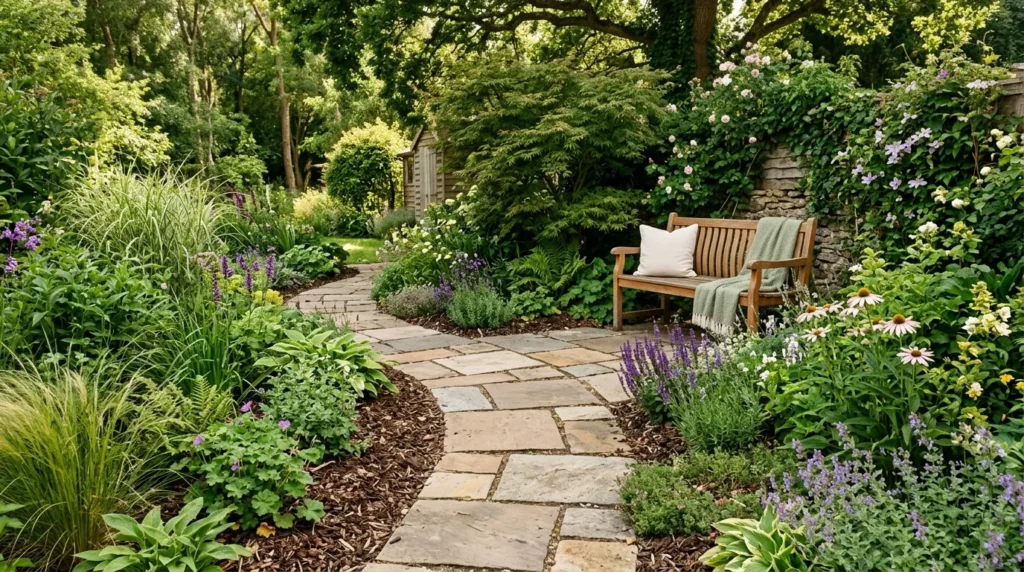
A garden path does more than provide a place to walk. It tells people how to experience the space. A pathway can lead from the patio toward a vegetable garden, wind through flower beds, or connect separate outdoor zones. Even a simple path can make a backyard feel more thoughtfully designed because it creates a sense of destination. It can also protect planting areas by giving foot traffic a defined route.
How To Style It
For a simple DIY project, consider gravel, stepping stones, brick, or other suitable landscaping materials. Start by mapping the route with stakes or a garden hose before installing anything permanently. Keep the path wide enough for comfortable walking and make sure the surface is stable. Soft curves can feel natural in informal gardens, while straight lines tend to suit modern landscapes. Border the path with low plants or mulch for a finished appearance.
3. Outdoor Potting Bench
Quick Benefits
- Creates a dedicated gardening station
- Keeps tools organized
- Makes planting more comfortable
- Adds functional character
- Can be customized to your space
Why It Works
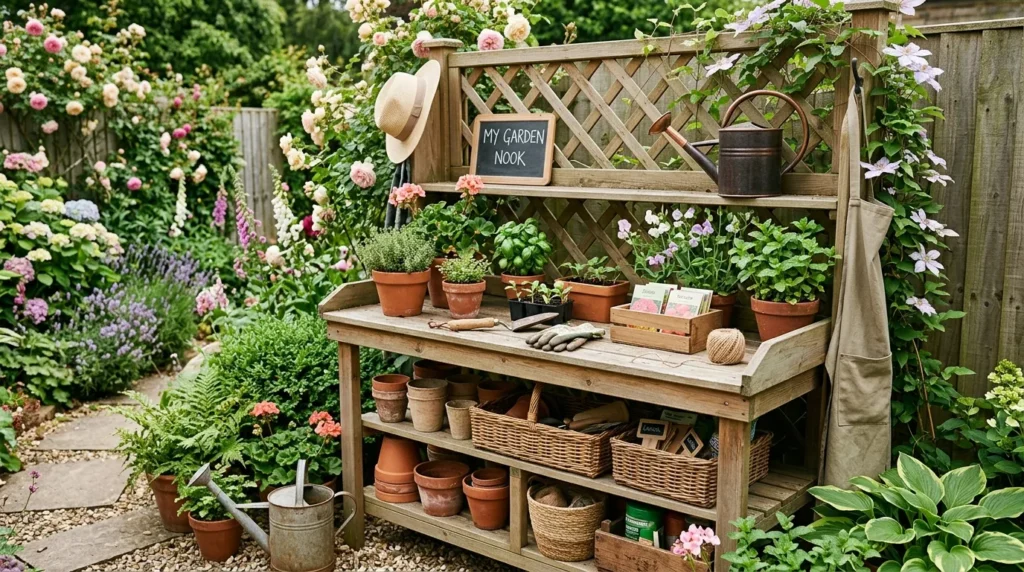
If you regularly garden, a potting bench can save time and reduce the frustration of constantly searching for tools. Instead of carrying soil, pots, gloves, and gardening equipment back and forth from the house, you can keep frequently used supplies together outdoors. It also creates a defined workstation, making routine tasks such as repotting and pruning more enjoyable.
How To Style It
Repurpose a sturdy outdoor table, build a simple wooden workbench, or adapt an old piece of furniture suitable for outdoor conditions. Add hooks for hand tools and shelves or bins for pots and supplies. Keep heavier materials on lower shelves for stability. A galvanized metal tray can provide a useful work surface for messy tasks. Position the bench somewhere protected from excessive weather when possible, and add a small herb or flower display to make the workstation feel decorative as well as practical.
4. Vertical Herb Garden
Quick Benefits
- Saves floor space
- Keeps herbs accessible
- Adds greenery
- Works in small gardens
- Creates a decorative focal point
Why It Works
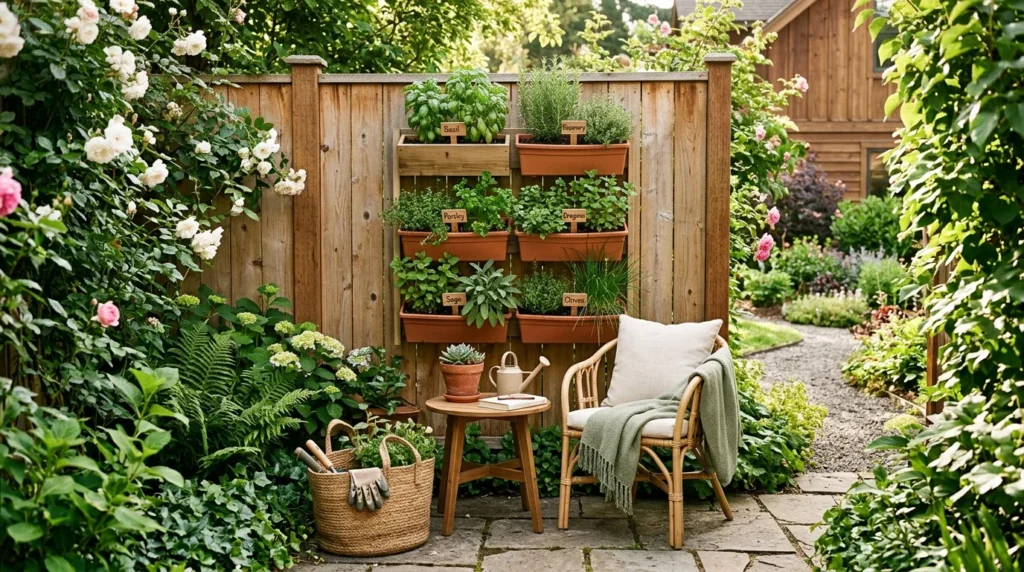
Growing herbs vertically is a smart way to make a garden more productive without requiring a large planting area. It can be particularly useful along fences, walls, patios, and narrow side yards. A vertical herb garden also brings plants closer to eye level, making it easier to check growth and harvest what you need. When arranged thoughtfully, the planting system can become an attractive garden feature rather than simply a collection of containers.
How To Style It
Use a suitable wall-mounted planter, tiered shelving system, hanging containers, or a secure wooden frame. Choose herbs based on sunlight, climate, drainage, and your cooking habits. Basil, thyme, rosemary, parsley, and chives can be useful options depending on local growing conditions. Group containers at varied heights for a more natural appearance. Add simple labels if you want an organized look, and make sure every container has adequate drainage.
5. Backyard Firewood Rack
Quick Benefits
- Keeps firewood organized
- Protects wood from ground moisture
- Adds visual structure
- Reduces messy piles
- Works near entertaining areas
Why It Works
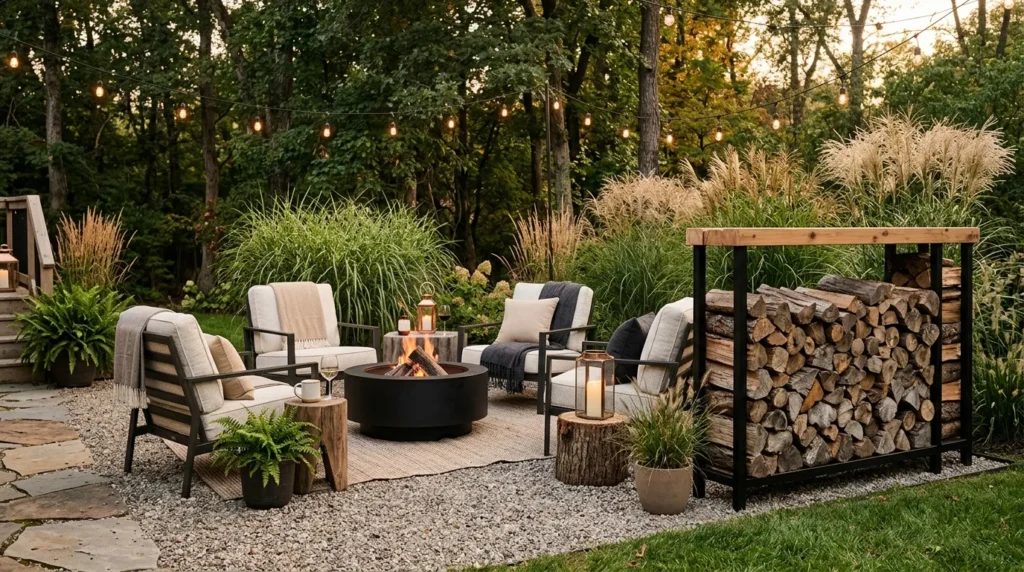
If you regularly use an outdoor fire pit or fireplace, a dedicated firewood rack can turn a messy necessity into an intentional part of the backyard design. Firewood stacked directly on the ground can become damp and difficult to access. A raised rack keeps the wood more organized and can make it easier to move pieces when needed. It also gives the area around a fire pit a finished appearance.
How To Style It
Build or purchase a suitable rack that keeps wood elevated and provides adequate airflow. Place it in a convenient but safe location relative to any fire feature, following local fire-safety requirements and manufacturer guidance. A simple black metal frame can suit modern gardens, while natural wood can work beautifully in rustic landscapes. Keep the rack neatly stacked and avoid allowing vegetation or other combustible materials to crowd the area.
6. DIY Garden Seating
Quick Benefits
- Creates a destination in the garden
- Encourages outdoor relaxation
- Uses unused corners
- Can be built on a budget
- Adds personality
Why It Works
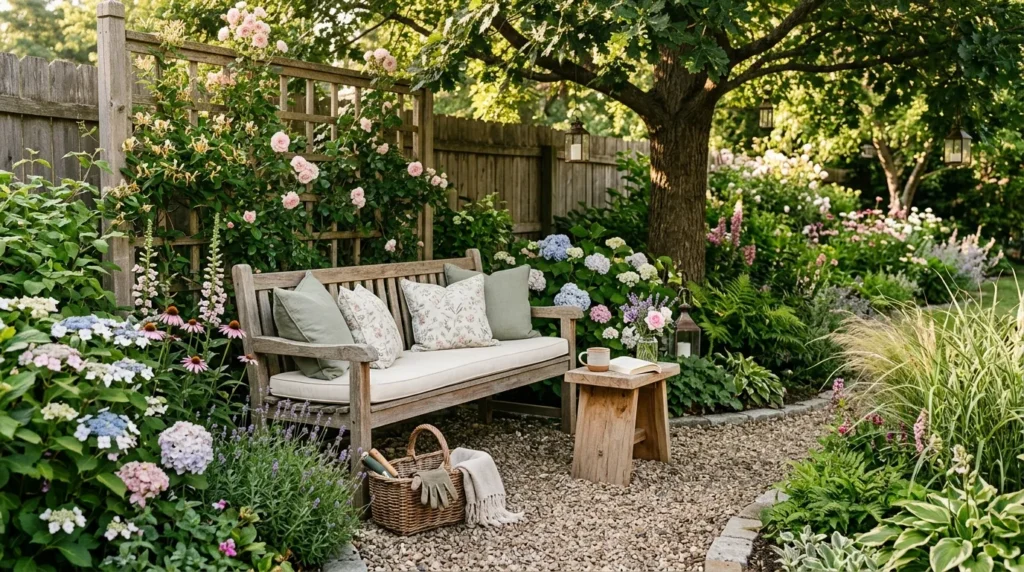
One of the simplest ways to upgrade outdoor living is to create a reason to sit outside. A bench tucked beneath a tree, a pair of chairs beside a flower bed, or a small built-in seating area can transform an overlooked part of the garden. The seating doesn’t need to be elaborate. What matters is choosing a location with something enjoyable to look at—flowers, trees, a water feature, or an open view.
How To Style It
Build a simple garden bench from appropriate outdoor materials or repurpose a sturdy seating piece that can handle exterior conditions. Add weather-resistant cushions where suitable and place a small side table nearby. Surround the seating with plants at different heights to create a sense of enclosure. A gravel or paver base can help define the area and keep furniture from sitting directly on wet soil.
7. Hanging Planter Display
Quick Benefits
- Uses vertical space
- Adds layered greenery
- Works in small gardens
- Creates visual movement
- Easy to customize
Why It Works
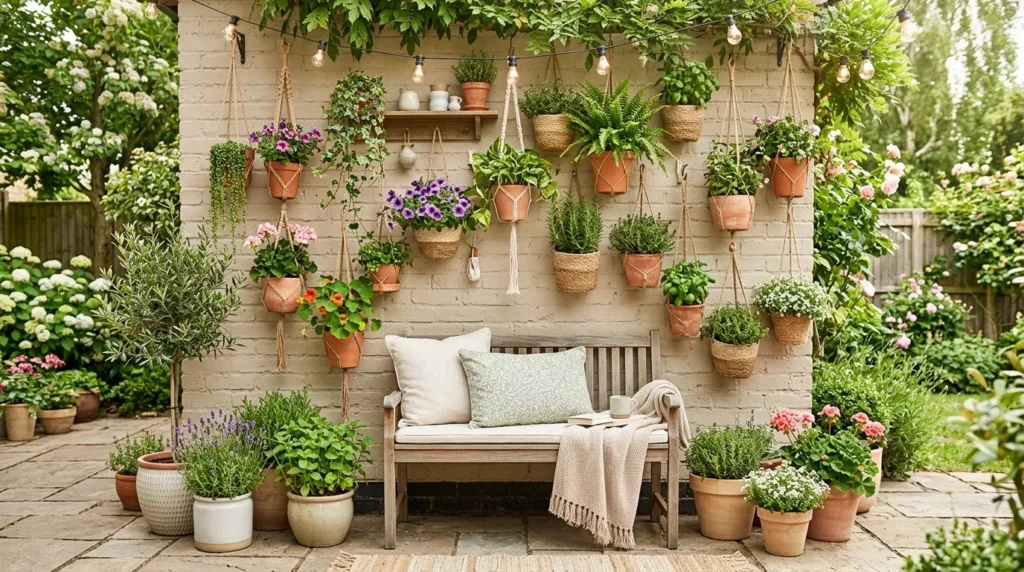
Plants become more visually interesting when they’re displayed at different heights. Hanging planters can fill an empty wall, fence, pergola, porch edge, or covered patio without taking up valuable ground space. They also introduce movement as trailing plants spill downward. This layered approach can make a garden feel fuller without requiring dozens of additional plants at ground level.
How To Style It
Choose containers appropriate for outdoor use and secure them carefully to a suitable structure. Mix trailing plants with compact upright varieties for contrast. Keep the color palette cohesive by repeating similar planter materials such as terracotta, ceramic, metal, or natural fiber. Make sure hanging plants can be watered easily. Avoid placing heavy containers where they could fall or interfere with pathways and seating.
8. Outdoor Privacy Screen
Quick Benefits
- Creates a private retreat
- Defines outdoor zones
- Adds architectural interest
- Can hide unattractive views
- Supports climbing plants
Why It Works
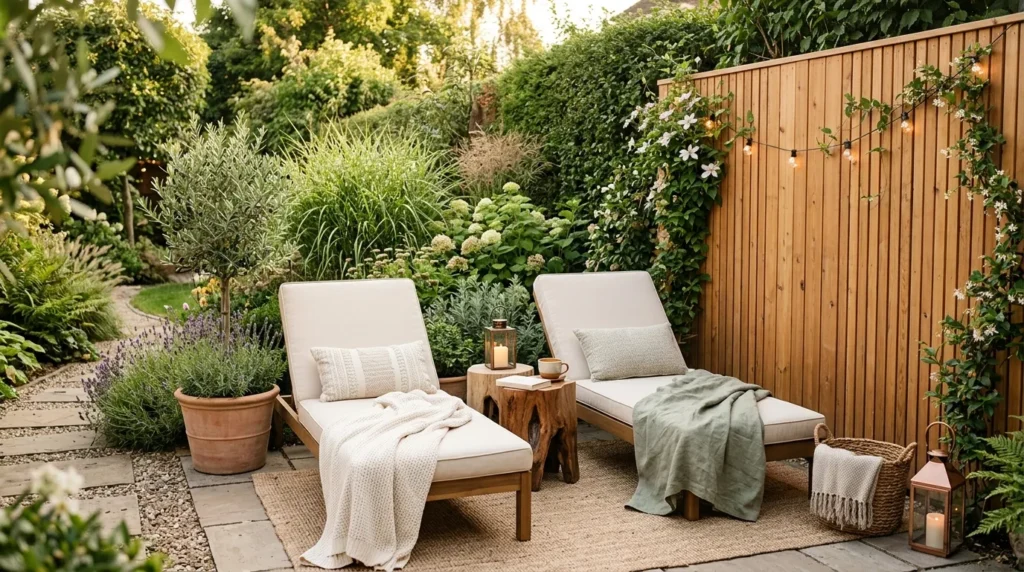
A backyard can feel less relaxing when it is completely exposed to neighbors, streets, or surrounding properties. A privacy screen can create a more intimate zone without requiring a major landscape renovation. It can also serve multiple purposes by hiding storage areas, air-conditioning equipment, bins, or other functional elements. When paired with greenery, a simple screen can become a beautiful garden backdrop.
How To Style It
Build a screen from appropriate outdoor-rated wood, composite material, or another suitable product. Vertical slats can create a contemporary appearance, while a trellis-style design works well with climbing plants. Place the screen where it provides useful separation without unnecessarily blocking light or airflow. Add planters at the base or train suitable vines across the structure. Secure the screen properly, particularly in windy areas.
9. DIY Garden Trellis
Quick Benefits
- Supports climbing plants
- Adds height
- Creates a focal point
- Makes walls more attractive
- Works in small spaces
Why It Works
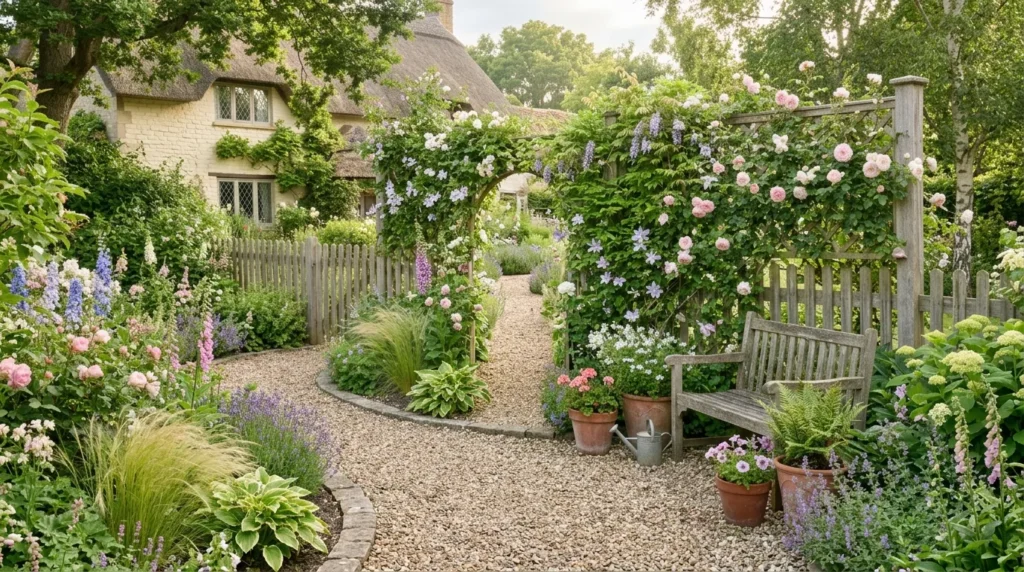
Gardens often look more layered when plants grow vertically as well as horizontally. A trellis gives climbing plants the support they need while creating a strong architectural element. It can also visually divide different areas of the yard. Even before the plants become established, the structure can add interest to an otherwise plain wall or fence.
How To Style It
Create a simple trellis from appropriately treated outdoor wood or another weather-resistant material. Position it where climbing plants will receive suitable sunlight. Choose plants based on your climate and the strength of the structure. Secure the trellis firmly rather than relying on the plants to support it. For a modern garden, use a simple geometric pattern; for a cottage-inspired landscape, a more traditional lattice can work beautifully.
10. Garden Lighting
Quick Benefits
- Extends outdoor use into the evening
- Adds atmosphere
- Highlights garden features
- Improves navigation
- Creates a welcoming mood
Why It Works
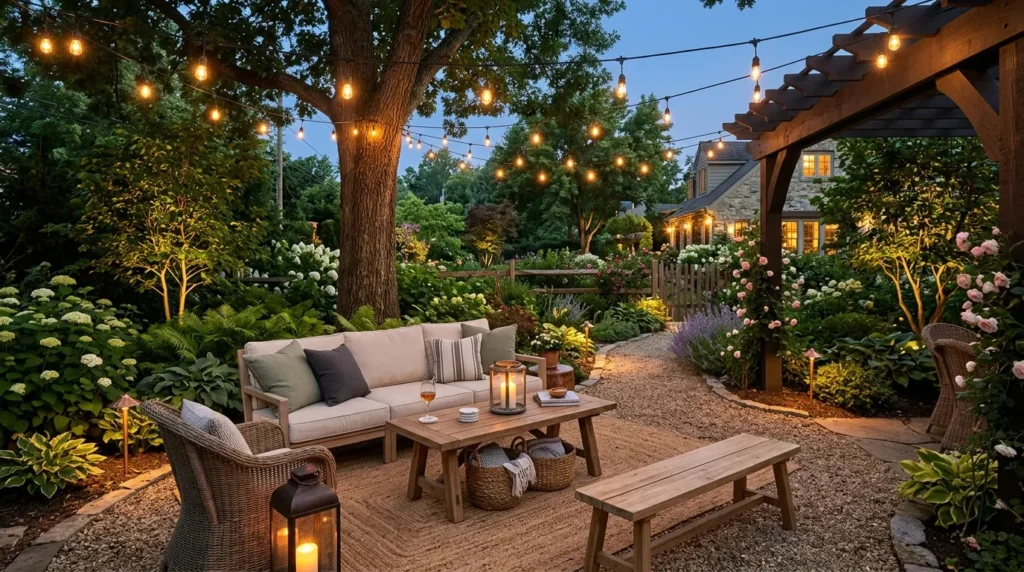
A garden can look completely different after dark. Strategic lighting highlights plants, pathways, seating areas, and architectural features while making the backyard feel more inviting. You don’t need elaborate landscape lighting to make an impact. A few carefully positioned lights can create layers of illumination and encourage you to use outdoor spaces later in the day.
How To Style It
Use suitable outdoor-rated lighting and choose fixtures according to their intended purpose. Path lights can help define walkways, while string lights can create a relaxed atmosphere around seating. Small accent lights can highlight trees, architectural features, or planting beds. Avoid illuminating everything equally. Some darker areas create contrast and make the lit features more visually interesting. Install and position electrical equipment according to manufacturer instructions and local requirements.
How to Choose the Right DIY Garden Project
Before starting a project, think about what your garden is missing.
If the backyard feels disorganized, start with raised beds, pathways, or a potting station.
If it feels empty, add seating, vertical plants, or a trellis.
If it feels too exposed, consider a privacy screen combined with greenery.
If you want to entertain more often, focus on seating and lighting.
If you’re trying to grow food, raised beds and vertical herb gardens are practical starting points.
The best project is the one that improves how you actually use the yard.
DIY Garden Materials Worth Having
A small collection of basic supplies can make future garden projects much easier.
Useful materials may include:
- Outdoor-rated screws
- Exterior wood
- Landscape fabric
- Gravel
- Pavers
- Plant containers
- Potting materials
- Garden hooks
- Outdoor brackets
- Weather-resistant paint or stain
- Twine
- Trellis materials
- Outdoor-rated lighting
- Garden gloves
- Hand tools
Choose materials based on your local climate and the specific project. Outdoor materials need to withstand moisture, sunlight, temperature changes, and wind.
How to Make a DIY Garden Look Expensive
You don’t need expensive materials to make a garden project feel polished.
The secret is consistency.
Repeat the same material in several areas. If you use natural wood for a bench, consider repeating it in a trellis or planter. If your containers are terracotta, use the same finish in several planting areas.
Limit your color palette.
Keep pathways tidy.
Give furniture enough space.
Hide practical clutter where possible.
And allow plants to do some of the decorating. A simple structure surrounded by healthy, well-placed greenery often looks more sophisticated than an overly decorated garden.
Common DIY Garden Mistakes
Choosing a Project Without Measuring
Always measure your available space before building.
Ignoring Drainage
Water management is essential for raised beds, containers, paths, and outdoor structures.
Using Indoor Materials Outdoors
Paint, wood, fabrics, and hardware need to be suitable for exterior conditions.
Forgetting Maintenance
A beautiful garden project isn’t useful if it requires more maintenance than you’re willing to provide.
Planting Without Checking Conditions
Sunlight, soil, moisture, wind, and local climate all affect plant selection.
Building Too Much
One or two well-designed features can have more impact than filling the yard with DIY projects.
Frequently Asked Questions
What are the easiest DIY garden projects for beginners?
Raised planters, simple garden seating, hanging planters, basic trellises, and decorative pathways can be approachable starting points. Choose a project that matches your tools and experience, and follow appropriate safety and material instructions.
How can I improve my backyard without spending a lot?
Start with projects that create a noticeable functional improvement. A simple garden path, DIY seating area, vertical planter, or outdoor lighting arrangement can change how the space feels without requiring a complete landscape renovation.
What DIY garden projects add the most value?
Projects that improve usability tend to have the greatest everyday impact. Defined seating areas, organized planting beds, pathways, privacy features, and practical storage can make a backyard more enjoyable and functional.
How do I make a small garden feel bigger?
Use vertical planting, keep pathways clear, choose appropriately scaled furniture, and create distinct zones. Repeating materials and limiting the number of colors can also make a compact garden feel more cohesive.
What materials are best for outdoor DIY projects?
Materials should be selected based on the specific project and local weather conditions. Exterior-rated wood, suitable metal, weather-resistant composite materials, outdoor fabrics, and appropriate hardware can all be useful when properly selected.
How can I make my garden more relaxing?
Create a comfortable place to sit, add greenery around the seating area, introduce warm outdoor lighting, and reduce visual clutter. A small private corner can often feel more relaxing than a large yard without a clear purpose.
What should I consider before building a DIY garden structure?
Check local rules, property boundaries, underground utilities, drainage, structural requirements, and manufacturer or material instructions. For larger structures or projects involving electrical, gas, structural, or other specialized work, use appropriately qualified professionals.
Conclusion
The best garden isn’t necessarily the biggest or most expensive one. It’s the outdoor space that makes you want to spend time there.
A raised bed can make gardening easier. A simple pathway can completely change how you move through the yard. A comfortable bench can turn a forgotten corner into your favorite place to sit, while a trellis or privacy screen can give the garden a stronger sense of structure.
Start with the problem you want to solve rather than the project you want to build. Then choose materials that can handle your local outdoor conditions and designs that complement the style of your home.
You don’t have to complete everything at once. Pick one project, finish it well, and see how it changes the way you use the garden.
A few intentional DIY improvements can turn an ordinary backyard into an outdoor extension of your lifestyle—one where gardening, relaxing, entertaining, and everyday living feel a little more enjoyable.
Related Articles
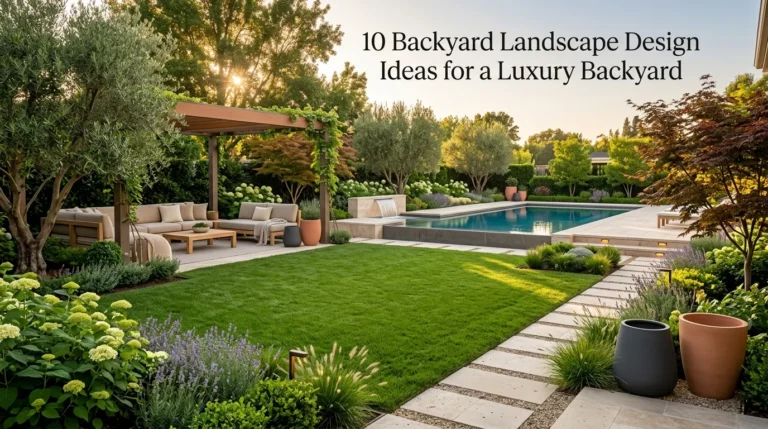
- 10 Backyard Landscape Design Ideas for a Luxury Backyard
- 11 Small Backyard Decor Ideas for Tiny Spaces
- 10 DIY Outdoor Projects for a Beautiful Backyard
- 10 Garden Seating Ideas for a Cozy Outdoor Retreat
- 11 Small Patio Decorating Ideas on a Budget