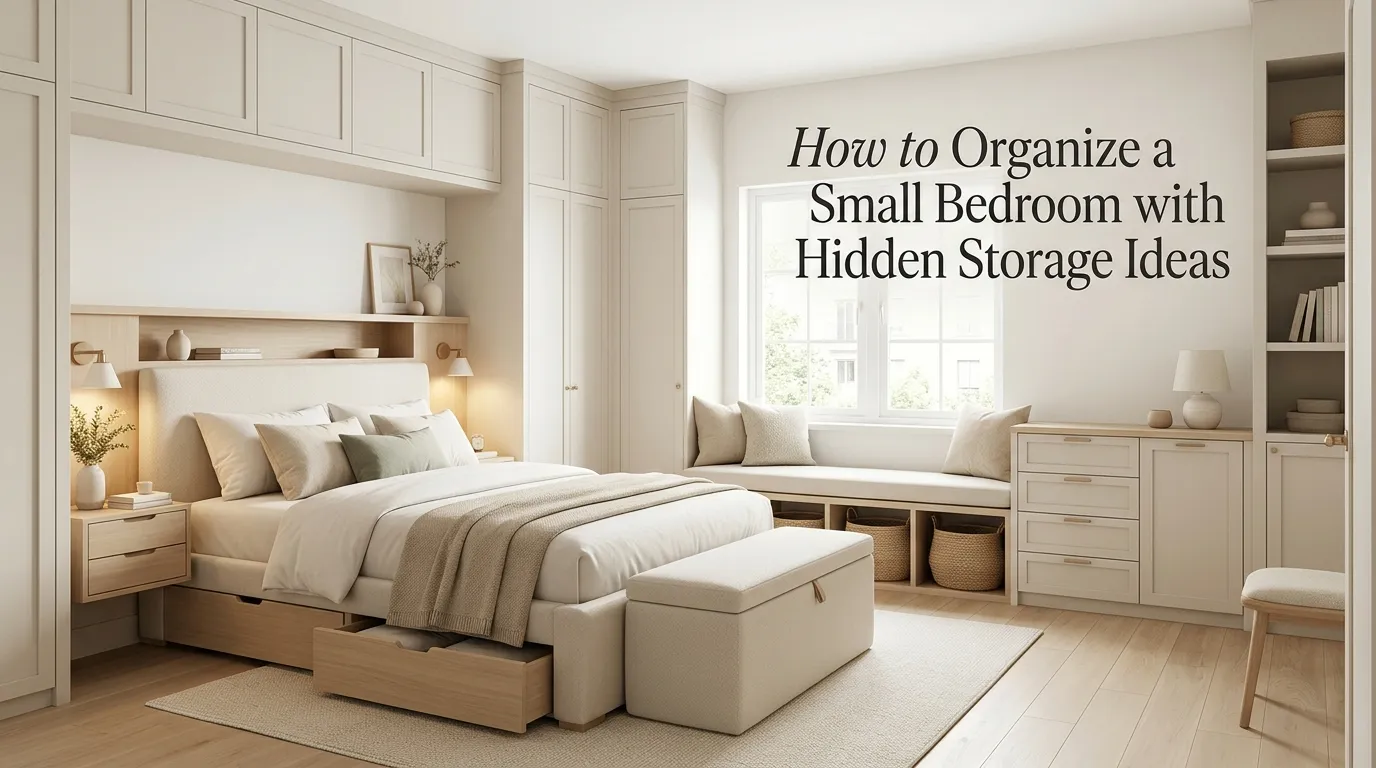
How to Organize a Small Bedroom with Hidden Storage Ideas
A small bedroom can become frustrating surprisingly quickly. When clothes, shoes, bedding, books, and everyday essentials don’t have a designated home, even a beautifully decorated room can start to feel crowded.
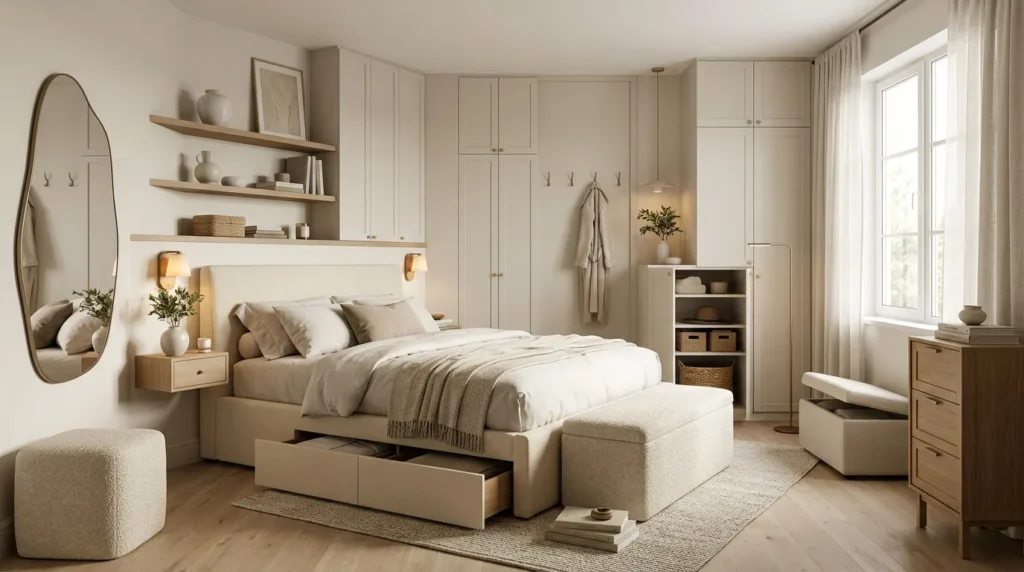
The good news is that organizing a small bedroom isn’t necessarily about getting rid of everything you own. Often, the bigger opportunity is to use overlooked spaces more intelligently. The area beneath the bed, the back of a door, the top of a wardrobe, the space inside an ottoman, and even the wall beside your bed can provide valuable storage without making the room feel more cluttered.
I’ve noticed that the most successful small-bedroom storage solutions are the ones that don’t constantly demand attention. When everyday belongings can disappear behind a drawer, basket, cabinet, or upholstered surface, the room naturally looks calmer.
Hidden storage is particularly useful because it combines organization with visual simplicity. Instead of adding more open shelves and containers everywhere, you can create designated places where belongings stay accessible but out of sight.
Whether you’re organizing a tiny apartment bedroom, a guest room, a child’s room, or a compact primary bedroom, these ideas can help you reclaim unused space while keeping the room comfortable and attractive.
The goal isn’t to make your bedroom look like a storage unit. It’s to create a space where everything has a place, frequently used items are easy to reach, and visual clutter stays under control.
Table of Contents
1. Under-Bed Drawers
Turn the unused space beneath your bed into a concealed storage zone.
2. Storage Headboard
Use the headboard area to hide books, accessories, and everyday essentials.
3. Lift-Up Bed
Create substantial hidden storage underneath a mattress platform.
4. Window Seat
Combine a cozy seating area with concealed compartments underneath.
5. Ottoman Storage
Add flexible seating and hidden storage at the foot of the bed.
6. Doorway Storage
Make use of the overlooked space behind the bedroom door.
7. Closet Top Zone
Capture unused vertical space above your everyday wardrobe.
8. Floating Nightstands
Free up floor space while creating discreet bedside storage.
9. Hidden Wall Cabinets
Use shallow cabinetry to store belongings without overwhelming the room.
10. Bench Storage
Turn an otherwise unused wall or bed-end area into practical storage.
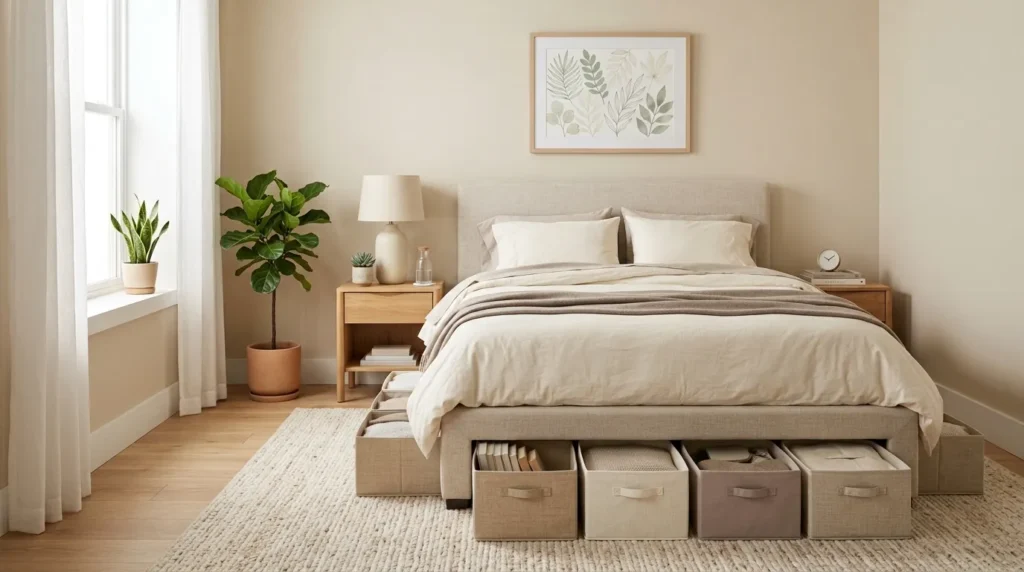
1. Under-Bed Drawers
Quick Benefits
- Uses otherwise wasted space
- Keeps seasonal items hidden
- Great for bedding and clothing
- Doesn’t consume additional floor area
- Easy to organize with containers
Why It Works
The space underneath a bed is one of the most valuable hidden storage areas in a small bedroom because it already exists. Instead of allowing dust to collect beneath the frame, you can use that footprint for items you don’t need every day. Under-bed storage is especially useful for extra bedding, seasonal clothing, shoes, handbags, and occasionally used accessories. The key is making sure the storage remains easy to access. Deep containers that are difficult to pull out often become forgotten clutter. Shallow drawers or rolling boxes make the area much more functional.
How To Style It
If you’re choosing a new bed, look for a frame with integrated drawers or lift-up compartments. For an existing bed, use low-profile rolling containers that fit comfortably underneath. Divide the interior with fabric bins or smaller organizers so individual categories don’t become mixed together. Label containers if you’re storing seasonal belongings. Keep frequently used items toward the front and rarely needed pieces farther back. Choose containers that are opaque if you want the storage to visually disappear.
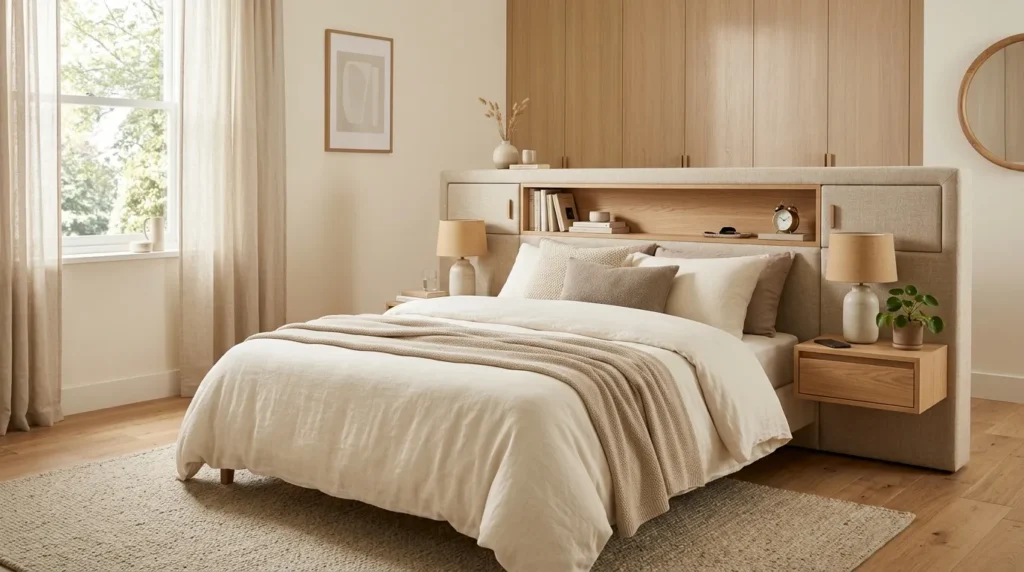
2. Storage Headboard
Quick Benefits
- Uses vertical space
- Reduces bedside clutter
- Adds hidden compartments
- Can replace a bulky nightstand
- Keeps essentials nearby
Why It Works
A headboard can be much more than a decorative backdrop. In a small bedroom, a storage headboard can provide concealed compartments for books, chargers, glasses, journals, and other small belongings that otherwise end up scattered across the nightstand. Because the storage is positioned directly behind the bed, it doesn’t require additional floor space. This is particularly helpful when there isn’t enough room for conventional bedside furniture on both sides of the bed.
How To Style It
Choose a headboard with closed cabinets, sliding panels, or recessed shelving with doors. For a more custom look, consider a built-in headboard that extends across the entire wall. Keep frequently used items in the easiest-to-reach compartments and less-used belongings higher up. If you use open sections, reserve them for attractive objects rather than everyday clutter. Upholstered storage headboards can also soften the room while providing practical functionality.
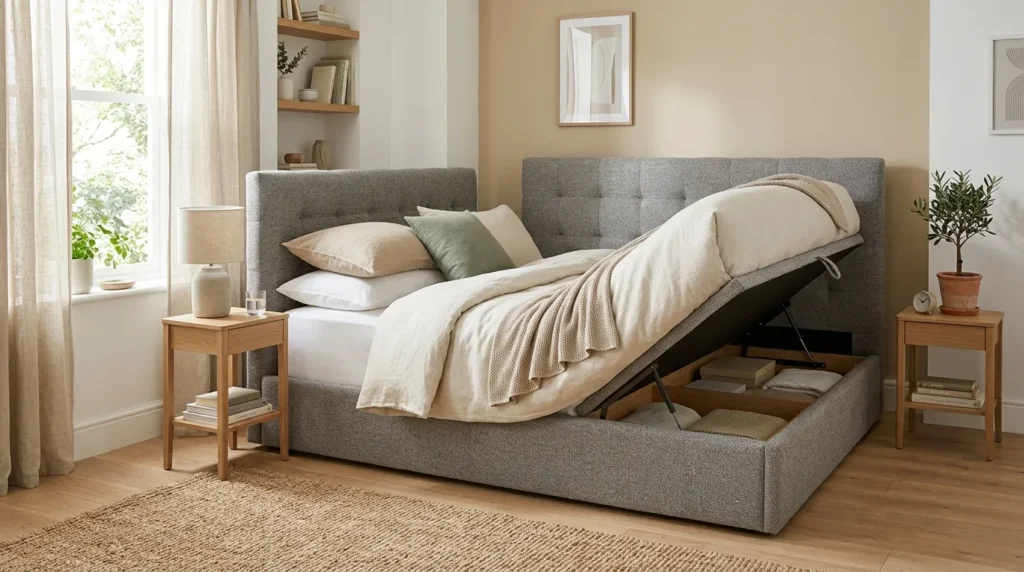
3. Lift-Up Bed
Quick Benefits
- Provides significant hidden storage
- Keeps the bedroom visually clean
- Excellent for bulky items
- Doesn’t require extra furniture
- Ideal for very small rooms
Why It Works
If your bedroom lacks closet space, the entire area beneath the mattress can become a valuable storage compartment. A lift-up bed gives you access to a large concealed space without adding another cabinet or dresser. This is especially useful for bulky belongings such as spare blankets, luggage, winter coats, extra pillows, or seasonal bedding. Since the storage remains completely hidden when the bed is closed, the room can maintain a clean appearance.
How To Style It
If purchasing a new bed, look for a sturdy lift-up platform with reliable hardware and sufficient ventilation. Divide the storage area into categories using soft-sided bins rather than filling it with loose belongings. Reserve the easiest-to-access areas for things you use seasonally. Avoid overloading the compartment, particularly if the bed mechanism has a specified weight limit. A neutral upholstered or wood frame can keep the bed visually streamlined while maximizing its practical value.
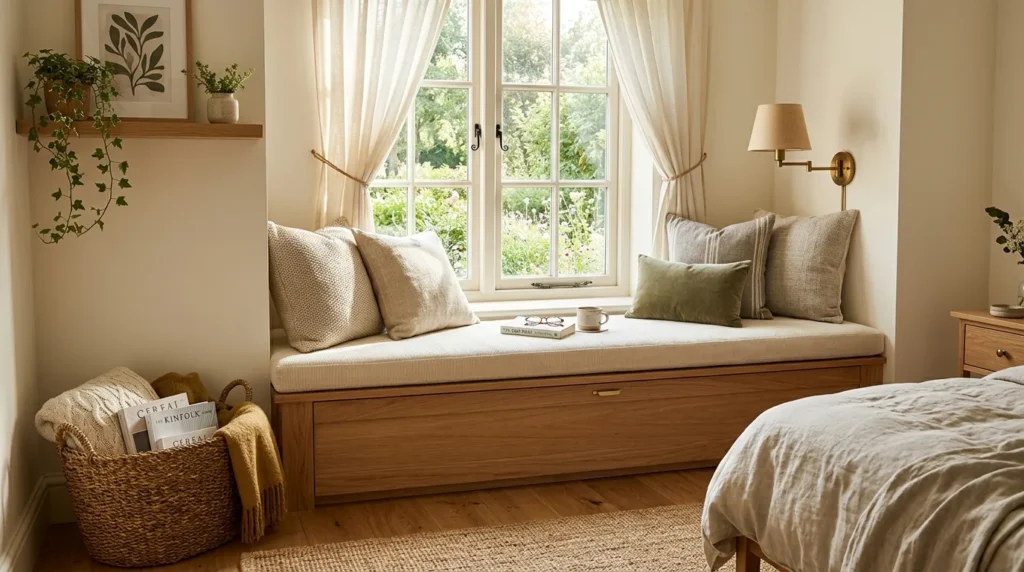
4. Window Seat
Quick Benefits
- Combines seating and storage
- Uses an overlooked area
- Adds architectural character
- Great for blankets and pillows
- Creates a cozy reading spot
Why It Works
A window area can become one of the most charming parts of a small bedroom when it serves multiple purposes. A built-in or freestanding window bench can provide a comfortable place to sit while concealing storage underneath. Instead of dedicating valuable floor space to a separate chair and storage cabinet, one piece can handle both functions. This approach works particularly well in bedrooms with deep window recesses or unused corners.
How To Style It
Create a simple bench with lift-up panels or drawers underneath. Add a comfortable cushion and a few washable pillows. Use the hidden compartment for blankets, spare bedding, seasonal accessories, or items that aren’t needed daily. Keep the color of the bench close to the wall or surrounding furniture if you want it to visually blend into the room. If the window receives strong sunlight, choose fabrics designed to resist fading.
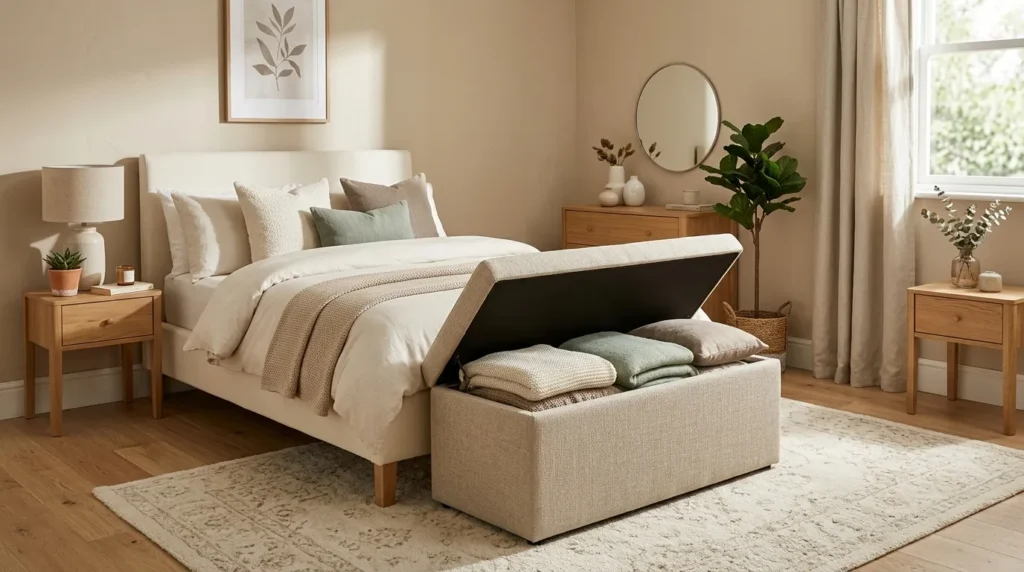
5. Ottoman Storage
Quick Benefits
- Provides seating
- Hides everyday clutter
- Works at the foot of the bed
- Easy to move
- Adds softness to the room
Why It Works
A storage ottoman is one of the easiest ways to add concealed organization without making a bedroom feel overly utilitarian. Positioned at the foot of the bed, it can fill otherwise unused space while providing somewhere to sit when getting dressed. The interior can hold extra pillows, blankets, handbags, accessories, or clothing that needs to be put away. Because the storage remains behind an upholstered exterior, it contributes to the room’s decor rather than looking like a traditional storage container.
How To Style It
Choose an ottoman that is narrow enough to leave comfortable clearance around the bed. Bouclé, linen, velvet, and woven upholstery can all add texture, depending on the decorating style. Use interior baskets or fabric dividers to prevent the compartment from becoming a catch-all. If you frequently sit on it, choose a sturdy construction with a secure lid. A neutral ottoman can blend into the bedding, while a muted accent color can create a subtle focal point.
6. Doorway Storage
Quick Benefits
- Uses forgotten space
- Doesn’t reduce bedroom floor area
- Great for accessories
- Affordable to implement
- Ideal for renters
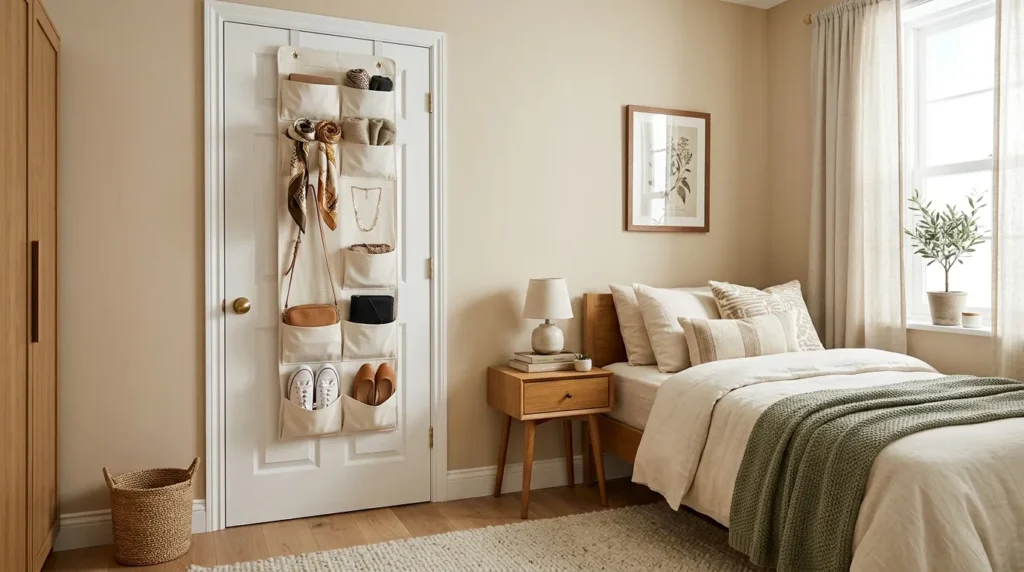
Why It Works
The back of a bedroom door is often completely unused, despite offering a convenient vertical surface. Slim organizers can hold accessories, shoes, hair tools, scarves, bags, or small clothing items without taking up precious floor space. This is particularly useful in bedrooms where the closet is small or shared. The key is choosing shallow storage so the door can still open and close normally.
How To Style It
Use an over-the-door organizer, slim hanging rack, or appropriate hooks depending on what you’re storing and what your door can support. Keep heavier belongings toward the bottom and frequently used accessories within easy reach. For a cleaner appearance, choose an organizer that matches the bedroom’s color palette. Avoid overfilling the door because excessive weight can affect the hardware. Always make sure the solution is compatible with your door and rental restrictions.
7. Closet Top Zone
Quick Benefits
- Uses vertical space
- Ideal for seasonal belongings
- Keeps rarely used items hidden
- Maximizes closet capacity
- Doesn’t require additional floor space
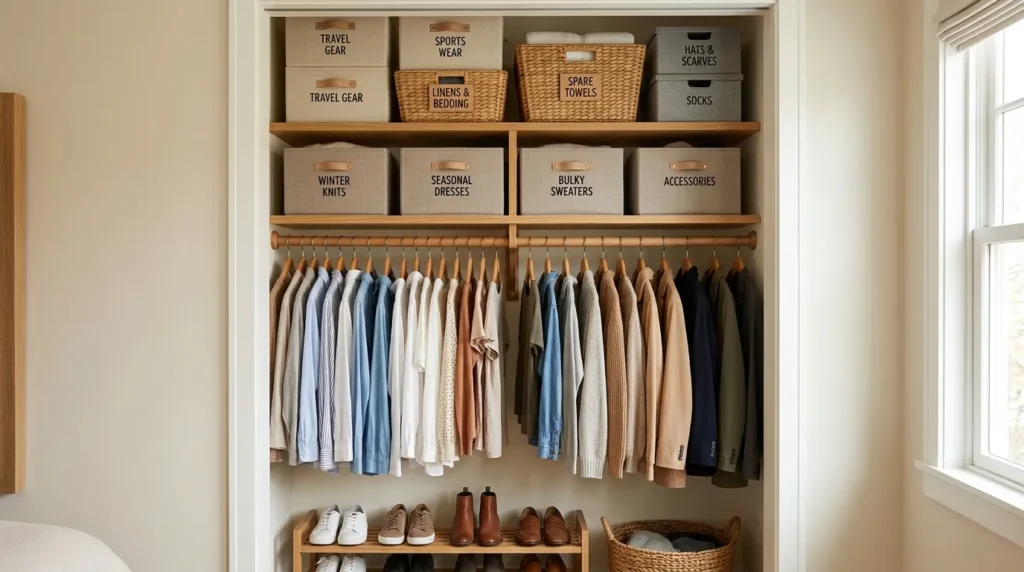
Why It Works
Many wardrobes and closets have a substantial amount of unused space above the everyday hanging area. In a small bedroom, that vertical zone can become valuable storage for things you don’t need constantly. Holiday clothing, luggage, extra linens, keepsakes, and occasional accessories can all live higher up while daily clothing remains easy to reach. The advantage is that the storage stays contained within an area that’s already dedicated to organization.
How To Style It
Add sturdy shelves or appropriately sized storage boxes above the existing closet area. Use matching containers to create a visually consistent appearance if the space is visible. Label the front of each box so you don’t need to pull everything down to find one item. Keep heavier objects on secure lower shelves whenever possible. Reserve the highest spaces for lightweight, infrequently used belongings.
8. Floating Nightstands
Quick Benefits
- Frees floor space
- Creates concealed bedside storage
- Makes cleaning easier
- Works in narrow bedrooms
- Creates a lighter visual appearance
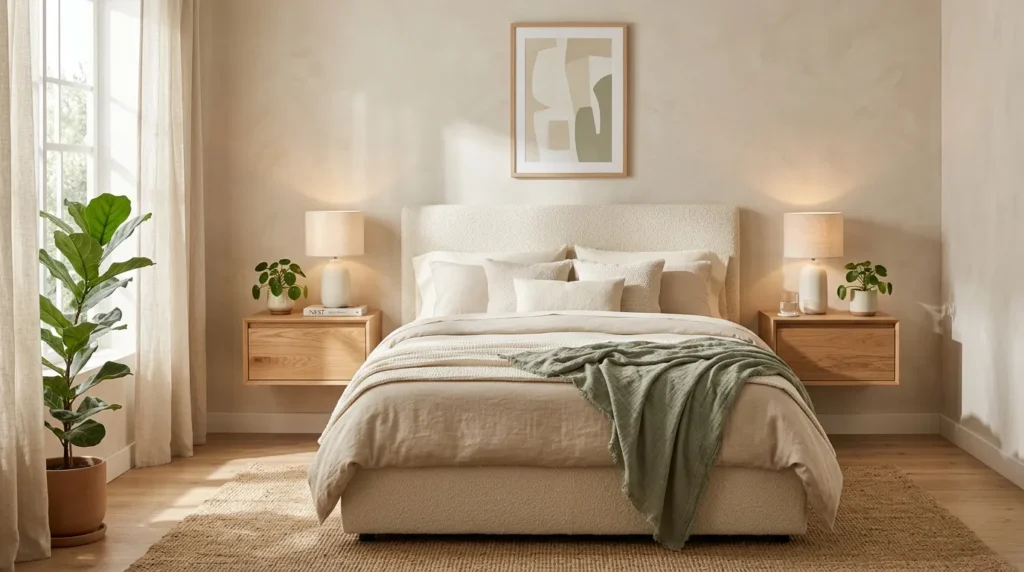
Why It Works
Traditional nightstands can consume more floor area than expected. A floating bedside cabinet can provide storage while leaving the floor underneath open. This creates a lighter visual effect and makes vacuuming or cleaning easier. In an exceptionally narrow bedroom, even a few extra inches of visible floor can make the room feel less cramped. A drawer or closed cabinet also keeps chargers, books, medications, and personal items from creating visual clutter.
How To Style It
Choose a compact floating drawer or wall-mounted cabinet with enough room for your essentials. Mount it at a comfortable height relative to the mattress and check the wall construction before installation. Keep the top surface intentionally simple: perhaps a small lamp, one decorative object, and only the items you use nightly. Hide charging cables inside or behind the cabinet when possible. Matching the finish to the wall can make the storage feel almost built in.
9. Hidden Wall Cabinets
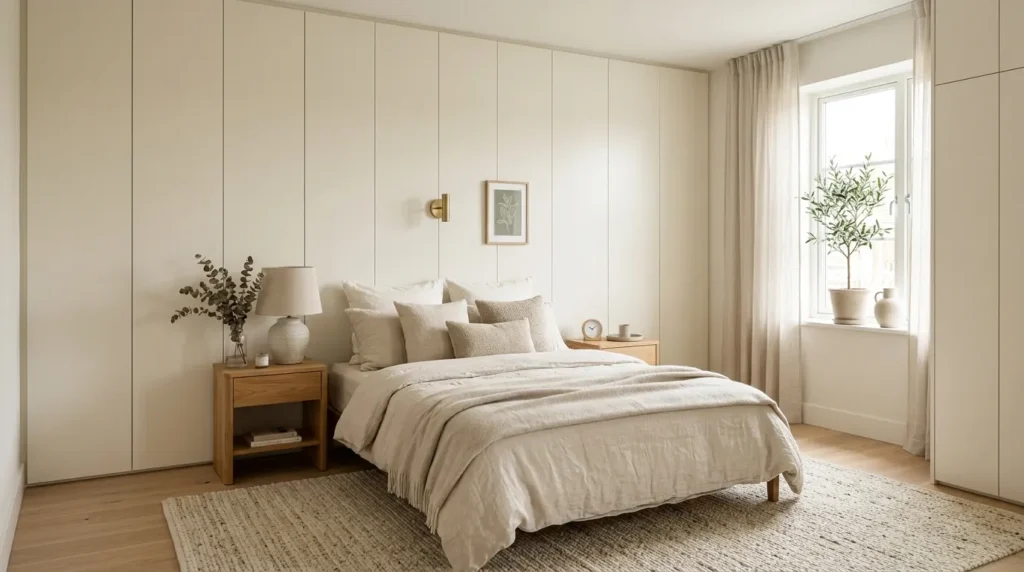
Quick Benefits
- Uses vertical wall space
- Keeps belongings concealed
- Adds substantial storage
- Can replace bulky furniture
- Works well in minimalist rooms
Why It Works
Wall-mounted cabinets can provide storage without extending deeply into the room. This is important when floor space is limited and a traditional dresser would make the room feel crowded. Shallow cabinetry can hold folded clothing, accessories, books, linens, and other items while keeping everything behind closed doors. When the cabinet fronts are simple and the finish matches the surrounding wall, the storage can almost disappear visually.
How To Style It
Choose shallow cabinets with clean, simple fronts. White, warm wood, soft gray, or colors that closely match the wall can make them feel less imposing. Use interior dividers to create specific zones rather than throwing everything into one large compartment. If installing permanent cabinetry isn’t possible, consider modular wall-mounted units that are appropriate for your space. Always secure wall storage properly and account for the wall’s construction and the cabinet’s loaded weight.
10. Bench Storage
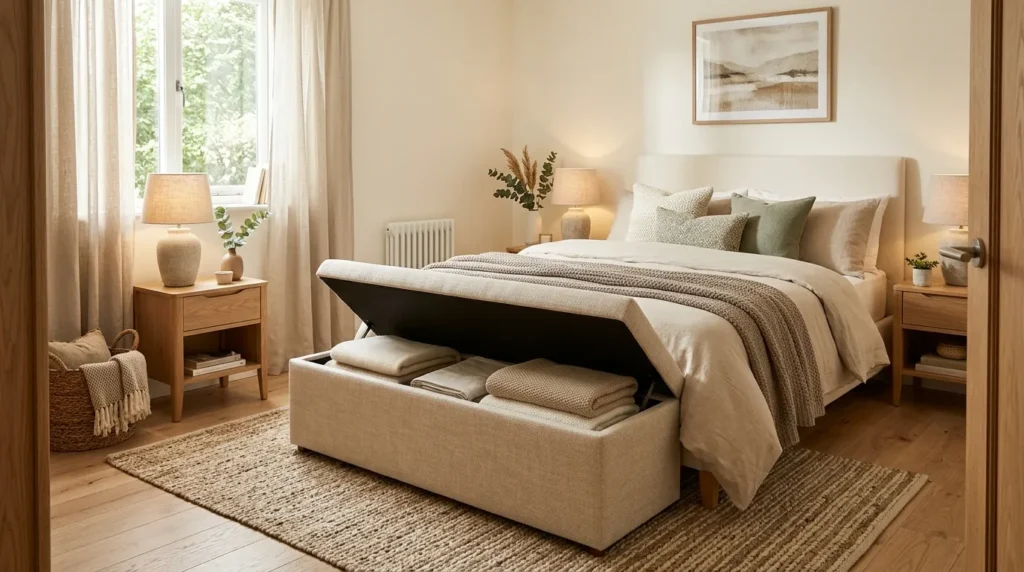
Quick Benefits
- Adds useful seating
- Creates concealed organization
- Makes use of dead space
- Works at the foot or side of a bed
- Adds visual structure
Why It Works
A storage bench can turn an otherwise unused stretch of wall into a useful feature. At the foot of the bed, it provides a place to sit while getting dressed and a convenient spot to store blankets or accessories. Along a wall, it can function as a compact seating area without requiring a full-size chair. This dual-purpose approach is especially valuable in small bedrooms where every piece of furniture needs to justify its footprint.
How To Style It
Choose a bench that is proportional to the bed and leaves enough clearance for comfortable movement. A lift-up seat is convenient for large items, while drawers work well when you want easier access. Add a slim cushion in linen, cotton, or another durable fabric. Keep the bench’s finish coordinated with the bed or flooring for a cohesive appearance. If the bench is at the foot of the bed, leave enough space between the bench and surrounding furniture to move freely.
How To Find Hidden Storage in a Small Bedroom
Before buying more organizers, take a slow look around the room.
Ask yourself:
What areas are currently doing nothing?
Check:
- Under the bed
- Behind the door
- Above the closet
- Beside the bed
- Beneath a window
- Inside unused corners
- Above a dresser
- Behind furniture
- Along empty wall sections
- Inside ottomans and benches
The goal is to identify unused volume, not simply unused floor space.
A small bedroom can have plenty of storage potential when you think vertically and consider furniture that performs two jobs.
What to Store in Hidden Compartments
Not everything belongs in hidden storage.
The best candidates are items that are used occasionally or would create visual clutter when left out.
Seasonal Clothing
Store winter coats, sweaters, scarves, or summer clothing when they’re not needed.
Extra Bedding
Keep spare sheets, blankets, and pillows together so they’re easy to find.
Shoes
Use under-bed or closet storage to keep footwear organized.
Handbags
A dedicated compartment prevents bags from accumulating on chairs or floors.
Keepsakes
Less frequently accessed sentimental items can occupy higher or deeper storage.
Extra Accessories
Belts, scarves, hats, and other small accessories benefit from compartments.
A Simple Small Bedroom Organization System
Hidden storage works best when it is paired with a straightforward organization system.
Step 1: Remove Obvious Clutter
Before organizing, take everything out of the area you’re working on.
Step 2: Group Similar Items
Keep bedding together, accessories together, shoes together, and so on.
Step 3: Decide What Needs Easy Access
Daily essentials should remain easier to reach than seasonal belongings.
Step 4: Choose the Right Container
Use shallow bins for under-bed storage and smaller organizers for drawers or cabinets.
Step 5: Label Hidden Storage
A simple label can save considerable time later.
Step 6: Leave Some Empty Space
Don’t pack every compartment completely full. Empty space makes future organization easier.
Small Bedroom Storage Mistakes To Avoid
Buying Storage Before Decluttering
More containers won’t solve the problem if you have too many belongings.
Ignoring Measurements
Always measure the available space before buying baskets, bins, furniture, or shelving.
Creating Deep Storage
Deep spaces can become difficult to access and encourage forgotten clutter.
Storing Everything Under the Bed
Under-bed storage is valuable, but it shouldn’t become a dumping ground.
Using Too Much Open Shelving
Open storage can make a small room look busier. Closed storage is often better for visual calm.
Forgetting Vertical Space
Walls and upper closet areas can provide substantial storage without reducing walking space.
How to Keep a Small Bedroom Organized
The best storage system is one you can maintain.
Try to return items to their designated location instead of creating temporary piles.
Use a small laundry basket rather than letting clothing collect on a chair.
Keep one accessible container for items that need to leave the room, then empty it regularly.
Review seasonal belongings before moving them into hidden storage. If you haven’t used something for years, it may not deserve valuable storage space.
Most importantly, make your organization system match your habits. If you use something every day, don’t hide it in an inconvenient cabinet simply because the room looks cleaner. Organization should make daily life easier, not harder.
Frequently Asked Questions
How do you organize a very small bedroom?
Start by using furniture that performs multiple functions and prioritize vertical storage. Under-bed drawers, storage headboards, floating nightstands, over-door organizers, and hidden cabinets can increase capacity without taking up much additional floor space.
What is the best hidden storage for a small bedroom?
Under-bed storage is one of the most useful options because it takes advantage of space that would otherwise remain unused. Lift-up beds, drawers, and low-profile containers can store clothing, bedding, shoes, and seasonal belongings.
How can I hide clutter in a small bedroom?
Closed storage is usually the simplest solution. Use drawers, cabinets, baskets with lids, storage ottomans, and concealed compartments to keep everyday belongings accessible without leaving them visible.
How do I maximize closet space in a small bedroom?
Use the full vertical height of the closet. Add appropriate upper shelving, slim organizers, drawer units, and coordinated storage boxes. Keep everyday clothing within easy reach and move seasonal belongings into higher areas.
Is under-bed storage a good idea?
Yes, particularly for seasonal clothing, extra bedding, shoes, luggage, and other items you don’t need every day. Choose containers that are easy to pull out and keep categories separated.
How can I organize a small bedroom without buying furniture?
Start with overlooked spaces. Use under-bed containers, hanging door organizers, shelf dividers, storage boxes, hooks, and vertical organizers. Decluttering first can also create significant additional capacity.
How do I keep a small bedroom from looking cluttered?
Limit visible storage, choose furniture with simple silhouettes, and keep surfaces relatively clear. Store everyday belongings in designated drawers or cabinets and use a consistent color palette for visible organizers.
Conclusion
Organizing a small bedroom isn’t about squeezing more furniture into an already crowded room. It’s about making the space you already have work harder.
Look underneath the bed. Consider the back of the door. Use the height above your closet. Choose a headboard, ottoman, bench, or nightstand that can quietly store the things you don’t want sitting in plain sight.
The most effective approach is to combine hidden storage with simple organization habits. Keep everyday items accessible, move seasonal belongings into deeper storage, and avoid turning every empty space into a place to stash something.
If you’re starting from scratch, choose one area first. The space beneath the bed is often an easy win, followed by the closet and bedside area. Once those zones are working efficiently, the entire bedroom can feel noticeably calmer.
A small room doesn’t have to feel cramped. With thoughtful storage, intentional furniture, and a little decluttering, you can create a bedroom that feels peaceful, functional, and surprisingly spacious.
Start with one hidden storage opportunity today, and build from there. Small changes can make a much bigger difference than you might expect.
Related Articles
- 10 Small Bedroom Decorating Ideas for a Cozy Space
- 11 Bedroom Organization Ideas to Reduce Clutter
- 10 Small Closet Organization Ideas for More Storage
- 10 Bedroom Storage Ideas for Small Spaces
- 11 Minimalist Bedroom Ideas for a Calmer Home