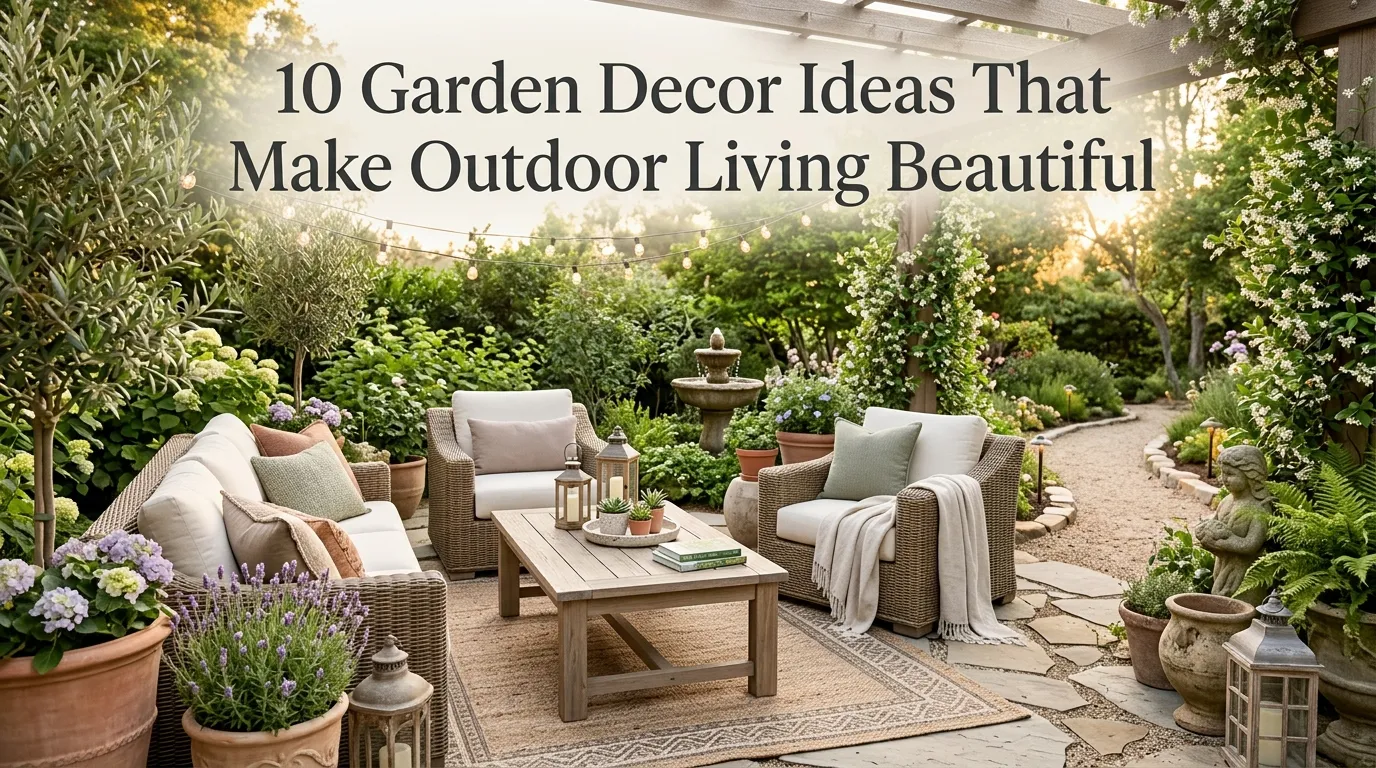
10 Garden Decor Ideas That Make Outdoor Living Beautiful
There’s a particular kind of magic in stepping outside into a garden that feels as intentional and inviting as the inside of your home. In my experience, most outdoor spaces don’t fall short because of a lack of plants or square footage — they fall short because the space was never treated like a room. A garden with beautiful landscaping can still feel unfinished if there’s nowhere comfortable to sit, nothing to soften the hardscape, and no lighting to carry the space into the evening.
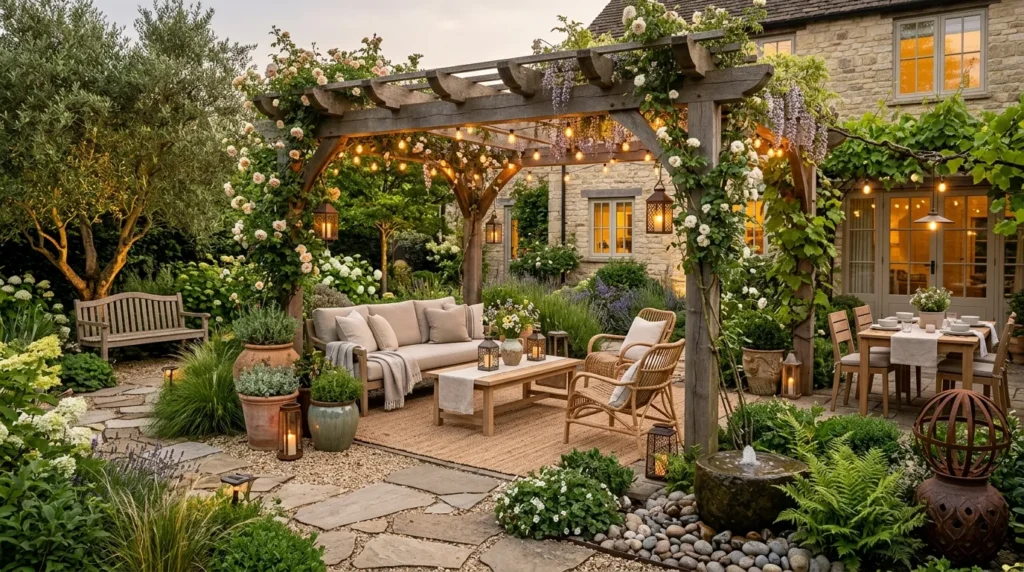
I’ve noticed that the outdoor spaces people fall in love with almost always share the same foundation: layered greenery, natural materials, comfortable seating, and lighting that extends the space well past sunset. A mistake many homeowners make is focusing entirely on plants and forgetting the elements that actually make a garden livable — texture, shade, seating, and a few decorative touches that give the space personality. Outdoor living, done well, blurs the line between yard and living room.
This guide walks through ten practical, achievable garden decor ideas that transform an ordinary backyard, patio, or courtyard into a space that feels genuinely beautiful and usable. These aren’t abstract landscaping concepts — they’re the same layering techniques designers and experienced gardeners use again and again because they work in real yards, not just show gardens. Whether you’re working with a sprawling backyard, a modest patio, or a small apartment balcony, you’ll find ideas here that scale to your space.
By the end of this article, you’ll have a clear roadmap for building an outdoor space that feels as considered and inviting as any room inside your home — from greenery and lighting to seating, pathways, and the small decorative details that pull everything together. Let’s get started.
Table of Contents
- Layered Potted Greenery Building depth and lushness with plants at varying heights.
- Weathered Wood Accents Adding warmth and natural texture throughout the space.
- String Light Canopy Extending your garden’s usability well into the evening.
- Cozy Seating Nook Creating a comfortable spot to sit, relax, and gather.
- Vintage Garden Statuary Adding character and a sense of history to the space.
- Natural Stone Pathways Guiding movement while adding texture underfoot.
- Climbing Vine Trellis Softening walls and fences with living greenery.
- Rustic Water Feature Introducing sound and movement for a calming atmosphere.
- Mixed Metal Lanterns Layering light sources for warmth after dark.
- Textural Outdoor Textiles Bringing softness and color to hard outdoor surfaces.
1. Layered Potted Greenery
Quick Benefits
- Adds instant lushness without permanent landscaping
- Works in gardens, patios, and balconies alike
- Creates depth through varying plant heights
- Allows for easy seasonal changes
- Softens hard surfaces like concrete and stone
Why It Works
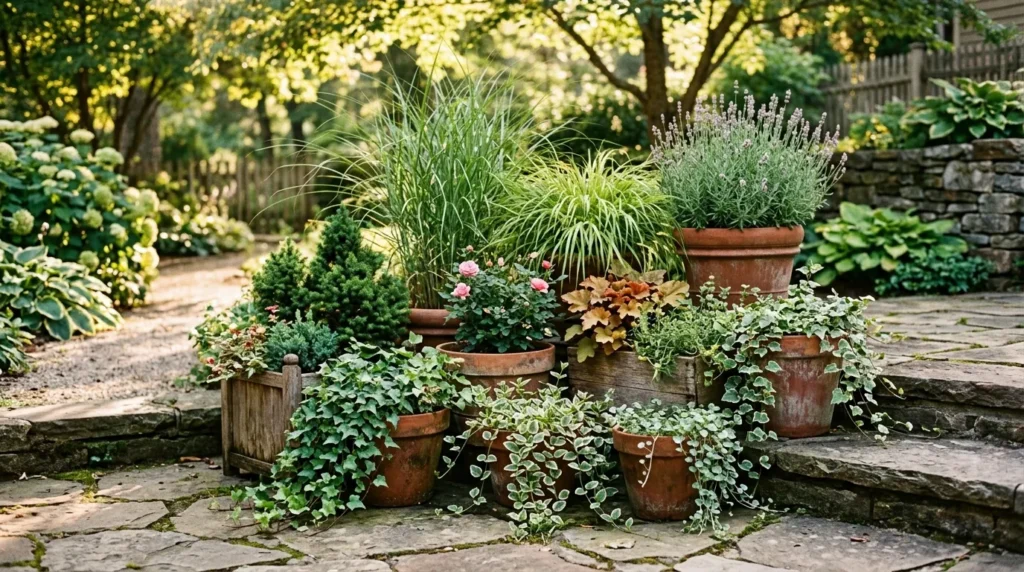
A mistake many homeowners make is placing all of their potted plants at the same height, which creates a flat, one-note look no matter how many plants are involved. Layering greenery — tall structural plants, medium shrubs, and low trailing varieties — mimics the way plants grow naturally and creates the kind of lush, designed look you see in professionally styled gardens. This approach also gives you flexibility, since potted plants can be moved, swapped seasonally, or brought indoors during colder months, unlike permanent in-ground landscaping.
How To Style It
Group pots in odd numbers of three or five, varying both height and container size to create visual rhythm. Place your tallest plants — ornamental grasses, small trees, or upright shrubs — toward the back or center of a grouping, with medium plants in front and trailing varieties like ivy or creeping jenny spilling over the pot edges. Stick to two or three pot materials, such as terracotta, weathered wood, and matte ceramic, so the grouping feels cohesive rather than mismatched. Repeat the same plant varieties in a few spots throughout the garden to create a sense of continuity as you move through the space.
2. Weathered Wood Accents
Quick Benefits
- Adds warmth and natural texture
- Ages gracefully with outdoor exposure
- Pairs well with greenery and stone
- Works across many garden styles
- Requires minimal ongoing maintenance
Why It Works
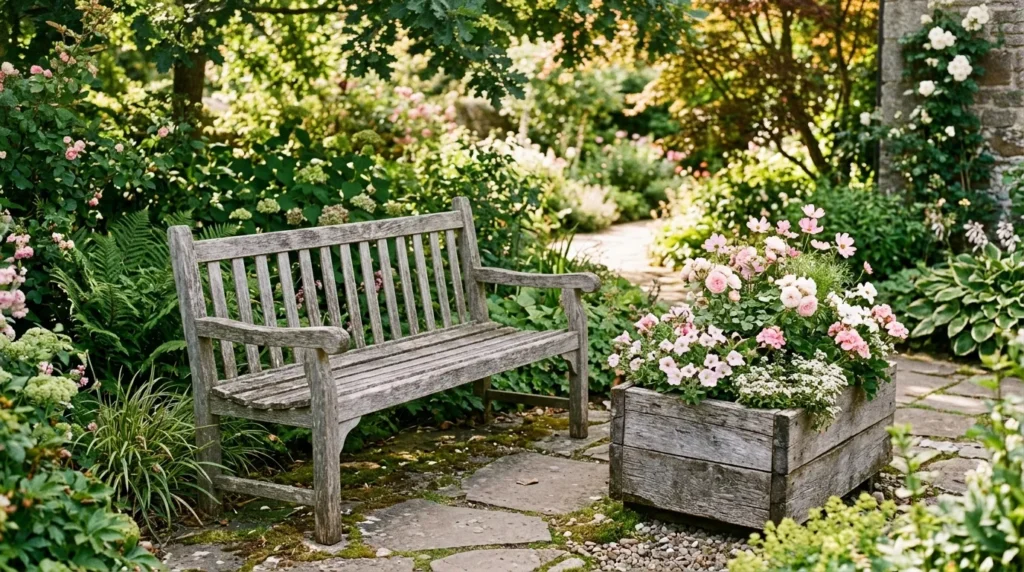
Weathered, natural wood brings a warmth to outdoor spaces that newer, polished materials often can’t match. In my experience, gardens that lean into natural aging — a gray-toned wood bench, a reclaimed timber planter, a rustic trellis — tend to feel more established and intentional than those trying to look brand new. That’s why many designers recommend incorporating at least one or two weathered wood elements into a garden design, since they add a sense of history and grounding that pairs beautifully with the softness of surrounding plant life.
How To Style It
Choose a wood bench, planter box, or set of garden stools with a natural gray or driftwood finish, and let the material weather further over time rather than treating or staining it heavily. Reclaimed wood planters filled with layered greenery add both texture and function in one piece. If your garden includes a pergola or arbor, an untreated or lightly weathered wood finish will develop a soft patina that complements climbing vines and hanging plants far better than a glossy, painted surface. Balance wood accents with a few metal or stone elements so the material palette feels intentional rather than one-note.
3. String Light Canopy
Quick Benefits

- Extends outdoor living well into the evening
- Adds instant warmth and ambiance
- Works in gardens, patios, and small balconies
- Requires minimal installation effort
- Creates a magical, gathering-friendly atmosphere
Why It Works
One simple trick I always suggest for instantly elevating an outdoor space is stringing warm-toned lights overhead. A canopy of string lights transforms a garden from a daytime-only space into one that feels just as inviting after sunset, which dramatically increases how often the space actually gets used. Overhead lighting also adds a sense of enclosure and coziness to an otherwise open outdoor area, similar to the way a ceiling defines an indoor room. This is one of the most affordable, high-impact upgrades available for outdoor decor.
How To Style It
Run string lights from a central point — a pergola beam, a tree branch, or a mounted hook on the house — out to several anchor points around the seating area, creating a canopy effect overhead. Choose warm white bulbs (around 2700K) rather than cool white or multicolored lights for a more sophisticated, ambient glow. Globe-style bulbs tend to read as more elevated than standard mini lights, especially when paired with black or dark bronze cording. Layer string lights with a few lower lanterns or candles at seating height to avoid relying on a single light source for the entire evening atmosphere.
4. Cozy Seating Nook
Quick Benefits
- Gives the garden a clear, usable purpose
- Encourages longer time spent outdoors
- Adds comfort alongside visual appeal
- Works in nearly any size space
- Creates a natural focal point
Why It Works
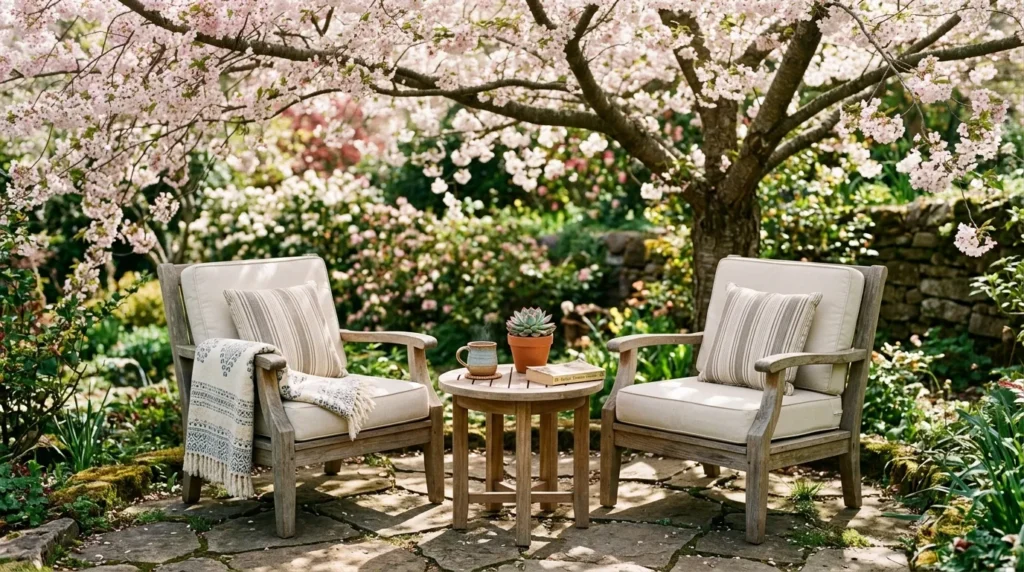
A garden without a place to sit is a garden that mostly gets admired through a window rather than actually used. I’ve seen this idea transform outdoor spaces that felt purely decorative into areas that families and guests genuinely gather in — simply by carving out one comfortable, intentional seating nook. Whether it’s a pair of chairs beside a small table or a built-in bench with cushions, a dedicated seating area gives the garden a purpose beyond landscaping, which is often what separates a beautiful yard from a truly beloved outdoor room.
How To Style It
Choose weather-resistant furniture in a material that complements your garden’s overall palette — woven rattan, teak, or powder-coated metal all work well. Add outdoor cushions and throw pillows in fade-resistant fabric to soften the seating and tie in your color scheme. Position the nook near a natural focal point, such as beneath a tree, beside a flower bed, or facing a water feature, so there’s something to look at while seated. A small side table for drinks or a book completes the space and signals that it’s meant to be used, not just viewed from a distance.
5. Vintage Garden Statuary
Quick Benefits
- Adds character and a sense of history
- Creates unexpected focal points
- Works well tucked among greenery
- Elevates even simple garden beds
- Requires no ongoing maintenance
Why It Works
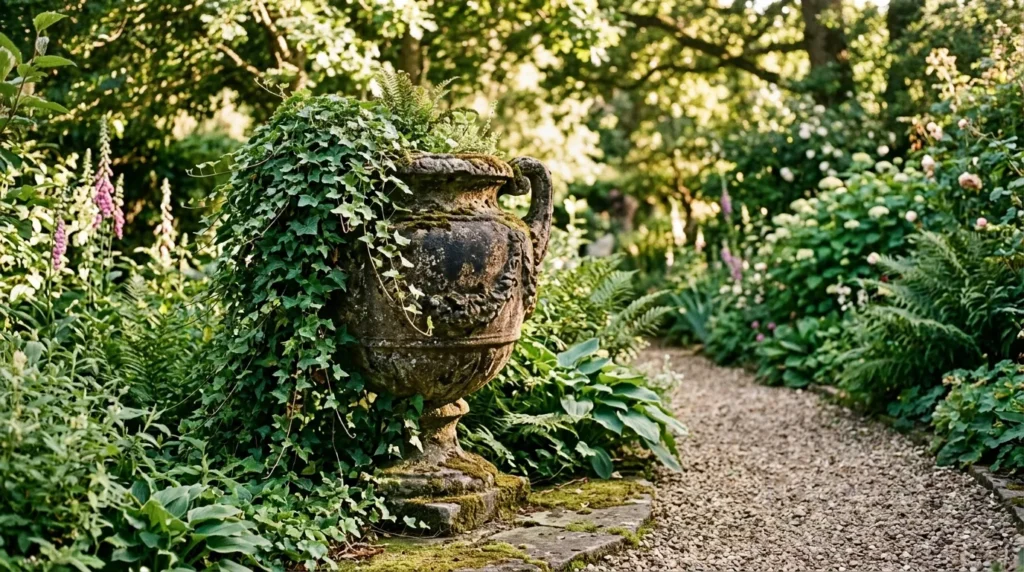
A mistake many homeowners make is filling a garden entirely with plants and furniture while skipping decorative objects altogether, which can leave the space feeling functional but impersonal. Vintage or vintage-inspired statuary — a weathered urn, an aged stone planter, a small garden sculpture — introduces a sense of history and personality that new, mass-produced decor often lacks. These pieces work especially well tucked partially into greenery, where they’re discovered rather than immediately obvious, adding a layer of charm and storytelling to the garden.
How To Style It
Place one or two statement pieces, such as a weathered stone urn or a small vintage sculpture, in spots where they’ll be partially framed by surrounding plants rather than standing fully exposed. Aged concrete, worn stone, and oxidized metal finishes tend to blend more naturally into a garden setting than bright or polished materials. Avoid scattering too many decorative objects throughout the space — one or two well-placed pieces read as curated, while too many can start to feel cluttered. If budget is a concern, secondhand shops and estate sales are excellent sources for authentic, character-rich garden pieces.
6. Natural Stone Pathways
Quick Benefits
- Guides movement through the garden intentionally
- Adds texture and visual interest underfoot
- Reduces mud and wear on grass
- Works well in both formal and casual gardens
- Pairs beautifully with surrounding greenery
Why It Works
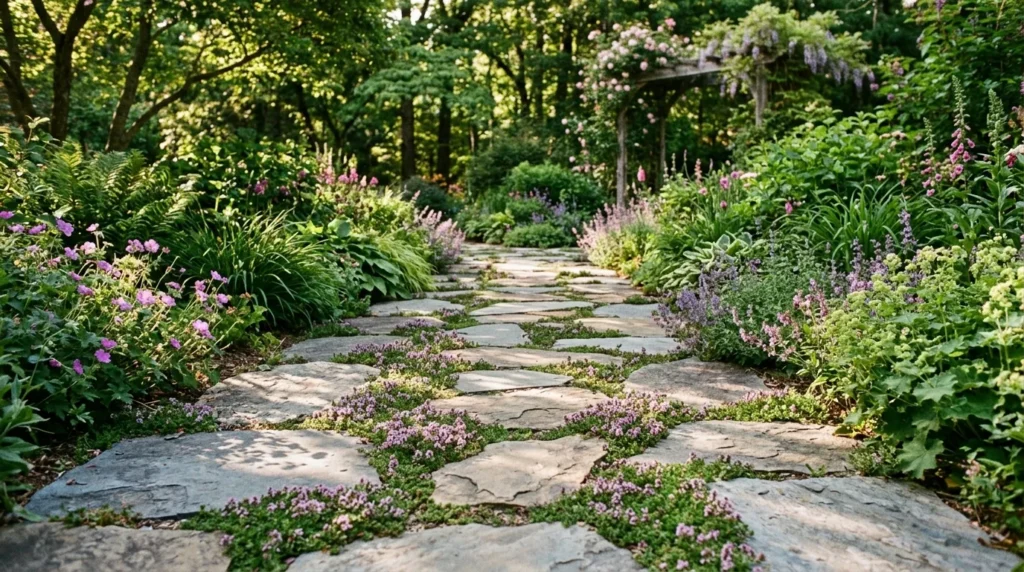
Pathways do more than provide a place to walk — they shape how a garden is experienced, guiding the eye and the body through the space in a deliberate way. In my experience, gardens with a defined stone or gravel pathway feel noticeably more finished than those with only open grass or bare dirt between planting areas. Natural stone, in particular, ages beautifully and develops moss or patina over time, which adds to rather than detracts from the garden’s character, unlike poured concrete, which can feel harsh against softer natural surroundings.
How To Style It
Choose irregular flagstone or fieldstone for a relaxed, natural look, or more uniform pavers for a slightly more formal path. Leave small gaps between stones and fill them with gravel, moss, or low-growing groundcover like creeping thyme, which softens the hard edges and lets the path blend into the surrounding landscape. Curve the pathway slightly rather than running it in a straight line where space allows, since gentle curves feel more organic and encourage a slower, more exploratory walk through the garden. Keep the path width comfortable for at least one person, around two to three feet, and widen it near seating areas or focal points.
7. Climbing Vine Trellis
Quick Benefits
- Softens fences, walls, and structures
- Adds vertical greenery without floor space
- Creates privacy and natural screening
- Works well with pergolas and arbors
- Attracts pollinators when flowering varieties are used
Why It Works
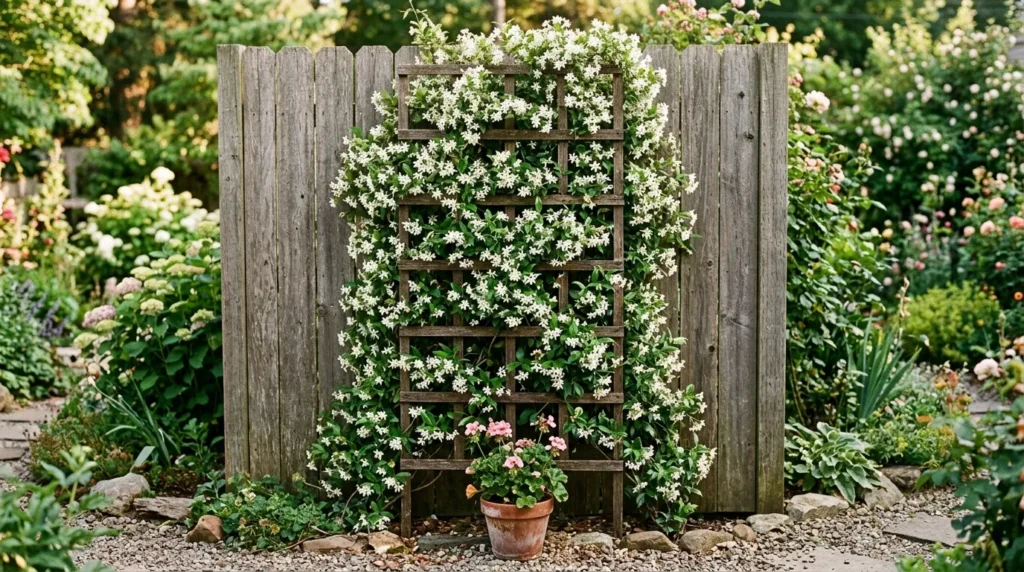
Bare fences and walls are one of the most overlooked opportunities in garden design. A climbing vine trained along a trellis softens hard vertical surfaces and adds a lush, established feel that flat greenery at ground level can’t achieve on its own. That’s why many designers recommend incorporating at least one trellis or climbing structure into a garden plan, particularly in smaller spaces where floor-level planting room is limited. Vertical greenery also adds privacy and a sense of enclosure, making an outdoor space feel more like a private room than an open, exposed yard.
How To Style It
Install a simple wood or metal trellis against a fence, wall, or pergola post, and choose a climbing variety suited to your climate — clematis, climbing roses, and jasmine are popular choices for their combination of coverage and fragrance. Train young vines gently along the trellis structure with soft ties, checking periodically to redirect growth as needed. Position trellises near seating areas if you’ve chosen a fragrant flowering vine, so the scent is enjoyed up close. Combine a trellis with potted plants at its base to create a fuller, more layered vertical greenery effect from the ground up.
8. Rustic Water Feature
Quick Benefits
- Adds calming sound and gentle movement
- Attracts birds and pollinators
- Creates a natural focal point
- Works in both large and small gardens
- Masks background noise from nearby streets
Why It Works
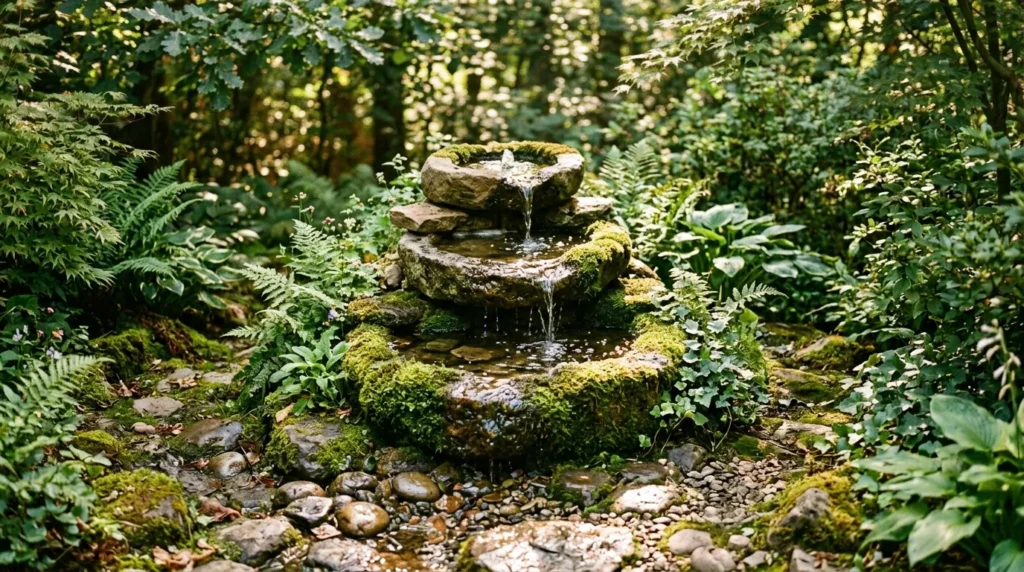
The sound of moving water does more for a garden’s atmosphere than almost any visual element alone. A mistake many homeowners make is assuming a water feature requires a large budget or a full pond installation, when even a small, simple fountain can introduce the same calming effect. I’ve noticed that gardens with a water feature, however modest, tend to feel noticeably more peaceful and immersive, partly because the sound helps mask street noise and other distractions, creating a more enclosed, private atmosphere.
How To Style It
A small tiered fountain, a simple bubbling urn, or a rustic stone basin can all introduce the sound and movement of water without requiring extensive installation. Position the feature within view of your seating area, since the visual and auditory benefits are strongest when it can be seen and heard from where you actually spend time. Surround the base with river rock, moss, or low plantings to help it feel integrated into the garden rather than added on top of it. Keep the water feature’s material consistent with other elements in the garden — a weathered stone basin pairs naturally with the same natural materials used elsewhere in the space.
9. Mixed Metal Lanterns
Quick Benefits
- Adds warm, flexible lighting after dark
- Introduces texture through varied finishes
- Works well grouped at different heights
- Requires no electrical installation
- Complements string lights and candles
Why It Works
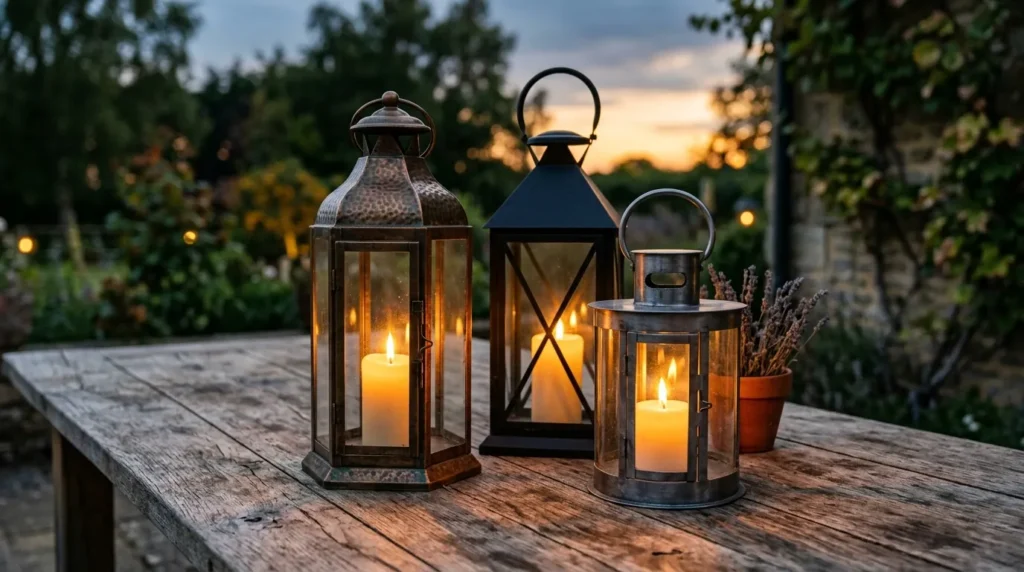
Lanterns offer a flexibility that fixed lighting can’t match — they can be moved, grouped, and repositioned depending on the occasion. If you’re anything like me, you’ve probably found that a cluster of lanterns at varying heights instantly makes an outdoor gathering feel more intentional than a single overhead light source. Mixing metal finishes, such as aged bronze, matte black, and brushed iron, adds subtle textural variety while still feeling cohesive, especially when the lanterns share a similar overall style or era.
How To Style It
Group two or three lanterns of varying heights on a table, ledge, or along a pathway, using candles or battery-operated flameless options for safety and convenience. Choose lanterns with a shared design language — whether that’s a rustic, industrial, or classic aesthetic — even if the finishes vary slightly, so the grouping feels curated rather than mismatched. Hang one or two lanterns from a pergola beam or shepherd’s hook to add height variation alongside tabletop groupings. Reserve your largest lantern for a single statement placement, such as beside an entry gate or seating area, rather than grouping it with smaller pieces.
10. Textural Outdoor Textiles
Quick Benefits
- Softens hard outdoor surfaces
- Adds color and pattern flexibility
- Increases comfort in seating areas
- Allows for easy seasonal updates
- Ties the overall garden palette together
Why It Works
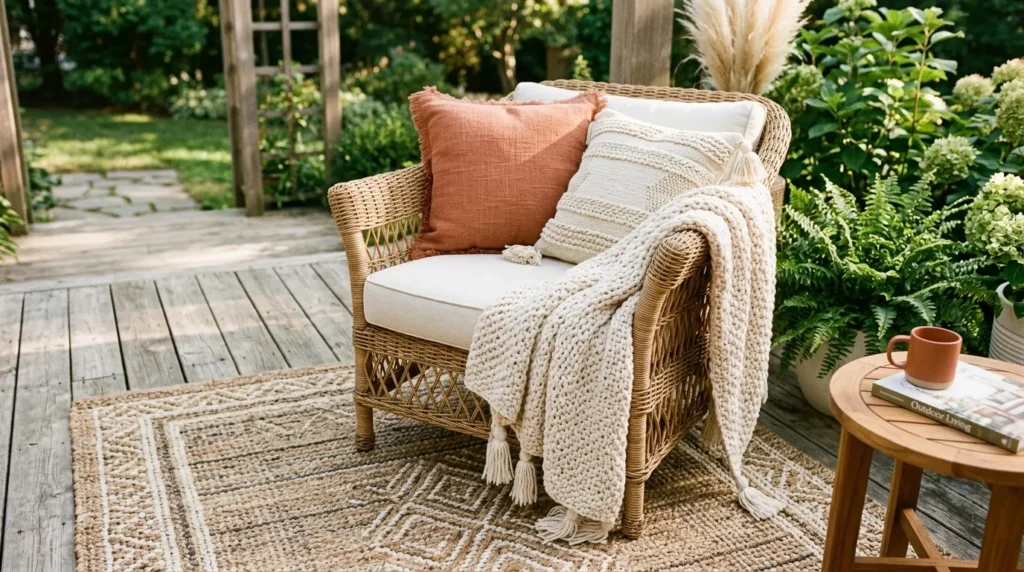
Textiles are often the last thing added to an outdoor space, yet they do some of the most important work in making a garden feel finished and comfortable. An outdoor rug beneath a seating area, weather-resistant throw pillows, and a woven blanket draped over a bench all introduce softness that hardscaping and furniture alone can’t provide. One simple trick I always suggest is treating your outdoor seating area with the same care as an indoor room — textiles are what make the difference between a space that looks nice and one that feels genuinely inviting to sit in.
How To Style It
Choose a fade- and mildew-resistant outdoor rug to anchor your seating area, sized so that at least the front legs of your furniture rest on it. Layer in throw pillows using a mix of solid and subtly patterned fabrics, staying within two or three colors so the palette feels cohesive rather than busy. A woven or knit throw blanket draped over a bench or chair adds texture and signals that the space is meant for lingering, especially during cooler evenings. Store cushions and textiles indoors or in a weatherproof bin during heavy rain or off-season months to extend their lifespan.
Frequently Asked Questions
What’s the easiest way to make a garden feel more decorated?
Adding layered potted plants, string lighting, and a defined seating area with outdoor textiles delivers the biggest visual impact for the least effort. These three elements work together to create depth, warmth, and usability without requiring major landscaping changes.
How do I add lighting to a garden without electrical work?
Solar-powered string lights, battery-operated lanterns, and flameless candles all provide warm ambient lighting without the need for wiring or outlets. These options are especially useful for renters or gardens without existing outdoor electrical access.
What plants work best for layered garden containers?
A mix of upright structural plants, medium filler plants, and trailing varieties creates the fullest, most layered look in container groupings. Ornamental grasses, flowering shrubs, and trailing ivy or vinca are reliable choices across many climates.
Do I need a large yard for a garden decor makeover?
Not at all. Many of these ideas — potted greenery, string lights, lanterns, and textiles — scale easily to balconies, small patios, and courtyards. The same layering principles that work in a large backyard apply just as effectively in a compact space.
How can I add privacy to an outdoor seating area?
A climbing vine trellis, tall potted greenery, or an outdoor curtain panel can all create a sense of enclosure without a permanent structure. Positioning your seating nook near one of these elements makes the space feel more private and room-like.
What’s a low-maintenance way to add a water feature?
A small tabletop or freestanding fountain requires minimal upkeep compared to a full pond installation, needing only occasional water refills and basic cleaning. These smaller features still provide the calming sound and movement associated with larger water elements.
How do I keep outdoor decor looking good through different seasons?
Choose weather-resistant materials for permanent pieces, and store textiles, cushions, and delicate decor indoors during harsh weather or off-season months. Rotating a few seasonal accents, like planters or lantern styles, keeps the space feeling fresh year-round.
Conclusion
A beautiful outdoor living space isn’t defined by acreage or an unlimited landscaping budget — it’s defined by the same layering and intention that makes an indoor room feel complete. From layered greenery and warm lighting to a cozy seating nook and thoughtful textiles, the ten ideas in this guide work together to turn an ordinary garden into a space that feels genuinely designed and deeply livable. None of them require starting from scratch, and most can be introduced gradually over time.
Start with one or two ideas and gradually build a space that reflects your style and supports real outdoor living. Maybe that means stringing up warm lights this weekend and adding a seating nook next month. Small, consistent changes compound into a garden that feels like a true extension of your home — one you’ll actually want to spend your evenings in.
Related Articles
- Cozy Bedroom Ideas
- Small Living Room Layouts
- Modern Farmhouse Decor
- DIY Accent Wall Ideas
- Backyard Patio Makeover Ideas