
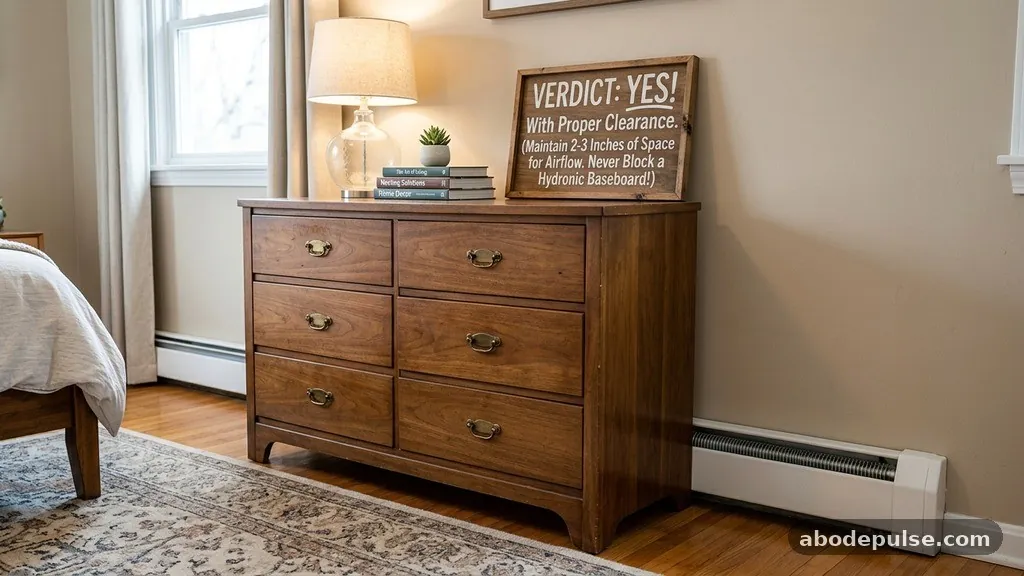
Can You Put a Wood Dresser Directly in Front of a Hydronic Baseboard?
Deciding whether you can put a wood dresser directly in front of a hydronic baseboard is a common dilemma for homeowners looking to maximize small floor plans. While it might seem like a simple interior design choice, the physics of how these heaters function makes the placement more complex than it appears at first glance.
Blocking your heat source can lead to inefficient room temperatures, potential damage to your furniture, and even hidden safety risks. If you are wondering if you can put a wood dresser directly in front of a hydronic baseboard, the short answer is no, you should avoid it entirely to maintain proper airflow and protect your belongings from long-term heat exposure.
The Verdict on Baseboard Clearance
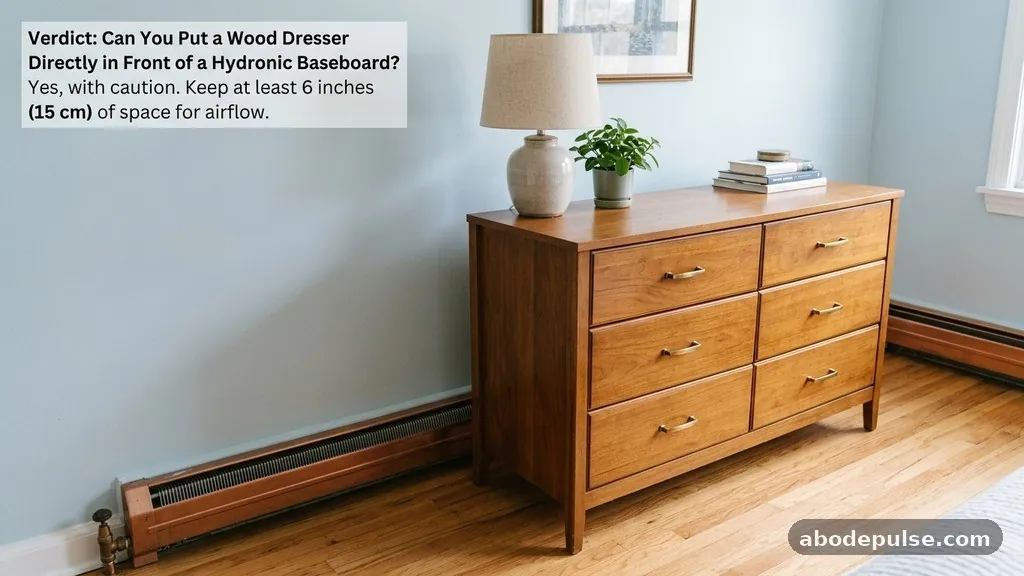
The direct answer to whether you can safely park a piece of furniture against your heater is a firm no. Hydronic baseboard systems rely on convection to circulate warmth throughout your living space.
When you place a solid object like a dresser against the unit, you effectively stop this cycle. Cold air cannot enter the bottom of the heater, and warm air cannot escape from the top.
This obstruction creates a localized “dead zone” where the heat is trapped behind or underneath the dresser. Not only will your room fail to reach the desired temperature, but your heating system will also work much harder to compensate for the lack of circulation. This inefficiency often leads to higher utility bills and unnecessary wear on your boiler and pump.
Furthermore, wood is an organic material that reacts poorly to persistent, direct heat. Placing a dresser against a hot surface causes the wood to dry out, which often results in warping, cracking, or splitting of the finish.
Over time, the structural integrity of the piece may even become compromised. Most manufacturers recommend maintaining a clearance of at least 6 to 12 inches between any furniture and the heating element.
How Hydronic Heating Works
To understand why placement matters, you must first understand how hydronic systems move warmth. Unlike forced-air systems that blow heat through ducts, these units use hot water circulating through copper pipes and aluminum fins. The fins are designed to maximize the surface area that contacts the room’s air.
As the metal fins become hot, they transfer that energy to the surrounding air molecules. This process, known as convection, causes the air to rise as it warms up. As the warm air lifts toward the ceiling, cooler air is pulled into the bottom of the unit to be heated in turn.
When you block this intake or output, you destroy the convection current. The air trapped between the wall and your dresser will superheat, potentially reaching temperatures far higher than the rest of the room. This creates an environment that is detrimental to both your home’s thermal comfort and the longevity of your furniture.
Safety Risks of Obstructed Heaters
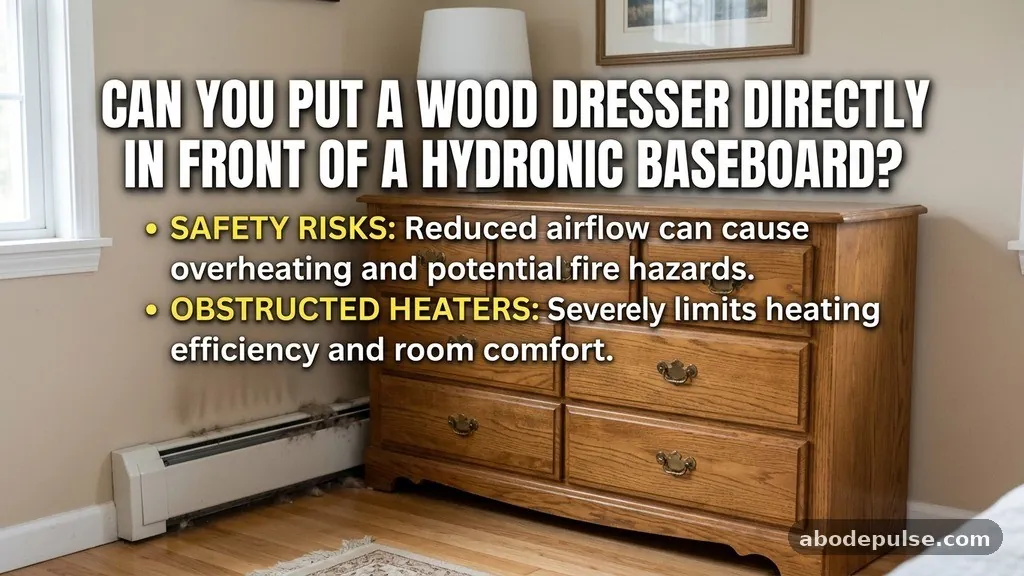
While hydronic baseboards are generally safer than electric models because they do not reach the same extreme surface temperatures, they still present risks when covered. The primary concern is not necessarily fire, but the degradation of materials. However, if your heater is part of a system that occasionally runs at higher temperatures, the risk of scorching nearby items increases.
If you have a wood dresser, the finish is particularly vulnerable. Lacquers, stains, and veneers can bubble or discolor when subjected to constant, dry heat. Even if the dresser doesn’t catch fire, the cosmetic damage can be permanent and costly.
Additionally, trapped heat can cause issues for any items stored inside the dresser. If you keep electronics, candles, or delicate fabrics in the bottom drawers, the heat buildup can cause them to melt or degrade.
You should always prioritize space to ensure the unit can breathe. For more information on maintaining your home’s heating infrastructure, you can review the guidelines provided by the Department of Energy regarding heating efficiency.
Determining the Ideal Gap
If you absolutely must place furniture near a heater, you need to calculate the distance required for safety and efficiency. Most HVAC professionals recommend a minimum of 6 inches of clearance. However, 12 inches is the gold standard for optimal performance and furniture protection.
If your room is too small to allow for a full foot of space, you might consider using a small spacer or a deflector. A deflector is a metal attachment that redirects the airflow away from the furniture and out into the room. While this can help, it is still not a substitute for proper distance.
Always measure the depth of your dresser and compare it to the available floor space. If the piece is too deep, it will inevitably encroach on the heater’s operating zone. Sometimes, it is better to choose a narrower piece of furniture or move the dresser to a different wall entirely.
Impact on Wood Furniture Longevity
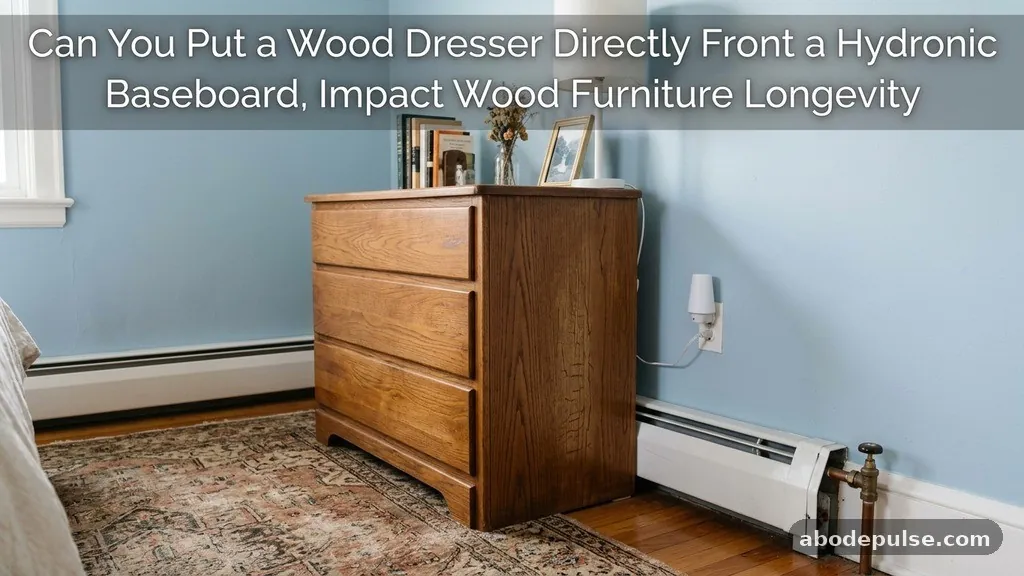
Wood is a hygroscopic material, meaning it absorbs and releases moisture based on the surrounding environment. When you place it directly against a heat source, you are subjecting the wood to a cycle of rapid dehydration. This process pulls moisture out of the fibers much faster than the rest of the room.
The result is often visible within a single heating season. You might notice the joints of your dresser starting to separate or the wood panels bowing outward. Once wood begins to warp, it is notoriously difficult to repair.
Beyond the wood itself, the glue used in the construction of your furniture can also soften under sustained heat. This can lead to wobbly legs, loose drawers, and overall structural failure. Protect your investment by keeping all furniture away from the heat output.
Comparative Clearance Needs
Different types of heating systems have different requirements for furniture placement. While hydronic systems are generally more forgiving than electric resistance heaters, they still require space to move air. The following table summarizes the general clearance needs for common heating types.
| Heating Type | Minimum Recommended Clearance | Risk Level |
|---|---|---|
| Hydronic Baseboard | 6 to 12 inches | Moderate (Warping/Efficiency) |
| Electric Baseboard | 12 to 18 inches | High (Fire Hazard) |
| Forced Air Register | 18 to 24 inches | Low (Airflow Blockage) |
| Radiator (Cast Iron) | 6 to 12 inches | Moderate (Material Damage) |
Furniture Arrangement Strategies
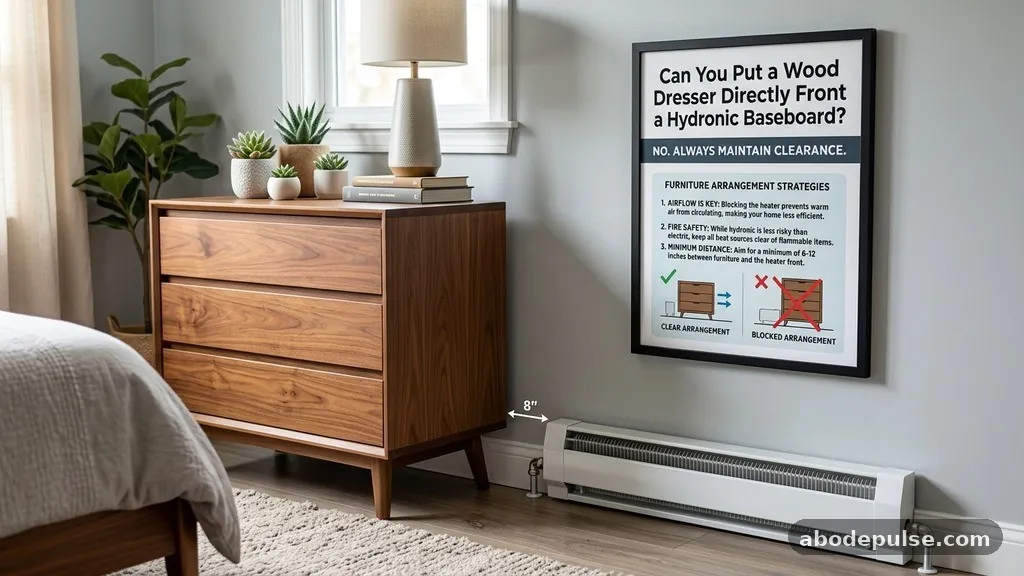
If you are struggling with a difficult room layout, there are several ways to arrange your space without sacrificing comfort. First, consider moving the dresser to an interior wall where there are no heating elements. Interior walls are often better for furniture placement anyway, as they are not subject to the same temperature fluctuations as exterior walls.
If the dresser must stay on the same wall, look for pieces with legs that provide at least a few inches of clearance from the floor. While this doesn’t replace the need for horizontal distance, it allows for some air to pass underneath the unit. This can marginally improve the convection process.
You could also consider using a platform or a riser to elevate the dresser further, though this is often not aesthetically pleasing. Ultimately, the best strategy is to embrace the constraints of your floor plan rather than fighting against them. Sometimes, a smaller dresser or an alternative storage solution is the most practical choice.
Common Mistakes to Avoid
Many people make the mistake of assuming that if the wood doesn’t feel hot to the touch, it is safe. This is a dangerous assumption because the air circulation problem happens behind the furniture where you cannot see it. Even if the front of the dresser stays cool, the back and the wall behind it are trapping intense heat.
Another common error is placing items like curtains, rugs, or blankets near the baseboard. These items are even more flammable than wood and can easily obstruct the intake vents. Always check the area around your heaters before you leave the house to ensure nothing has shifted into the danger zone.
Finally, do not rely on “trial and error” to see if your furniture can withstand the heat. By the time you notice the damage, the repair costs will far exceed the effort of simply moving the dresser. Prevention is always the most cost-effective approach.
Frequently Asked Questions
Is it okay to put a rug in front of a baseboard heater?
No, you should never place a rug in front of a baseboard heater. Rugs can easily obstruct the bottom air intake, significantly reducing the efficiency of the heating system. Furthermore, if the rug is made of synthetic materials, the heat could cause it to melt or release fumes.
Can I put a metal shelf in front of a hydronic baseboard instead of wood?
A metal shelf is more heat-resistant than wood, but it will still block the airflow. Even if the material itself won’t warp or burn, the object still prevents the convection process from working correctly. You would still face the same efficiency issues and potential for poor room heating.
Why does my room stay cold even when the heat is on?
If your room stays cold, it is likely because the convection cycle is being interrupted. Check for furniture, curtains, or other large objects blocking the baseboard units. When the air cannot circulate freely, the thermostat may be satisfied by the heat trapped near the unit while the rest of the room remains chilly.
How can I tell if my furniture is too close to the heater?
A simple test is to place your hand behind the furniture near the heater after it has been running for an hour. If the area feels significantly hotter than the surrounding wall, or if the back of your furniture feels warm or dry, it is too close. You should immediately increase the distance until you no longer feel that concentrated heat.
Do I need to worry about my baseboard heater paint peeling?
Yes, if you place furniture too close, the heat can cause the paint on the baseboard cover to blister and peel. This is a sign that the temperature behind the furniture is exceeding the design specifications of the unit. Moving the furniture will stop this damage and extend the life of your baseboard covers.
Maintaining Your Heating System
Regular maintenance of your hydronic system goes beyond just furniture placement. You should vacuum the fins of your baseboard heaters at least once per year to remove dust and pet hair. This debris can accumulate and act as insulation, preventing the metal from transferring heat effectively to the air.
While cleaning, check for any signs of water leaks or corrosion on the pipes. Even a small leak can cause significant damage to your floors and walls over time. If you notice any unusual noises, such as gurgling or banging, it may indicate air trapped in the system, which requires bleeding the lines.
By keeping the area around your heaters clean and clear, you ensure that your home remains both comfortable and safe. Taking these small steps will improve the longevity of your heating components and keep your home energy-efficient throughout the winter months.
Key Takeaways for Homeowners
When considering whether you can put a wood dresser directly in front of a hydronic baseboard, the evidence points to a clear conclusion. Blocking your heater prevents essential airflow, leads to inefficient heating, and risks permanent damage to your furniture. To maintain a safe and functional home, you should always keep a clearance of at least 6 to 12 inches between any furniture and the heating unit.
If your current room layout makes this distance impossible, look for ways to rearrange your space or choose smaller, more appropriate furniture. Prioritizing proper airflow not only protects your wood dresser from warping and heat damage but also helps your heating system operate at peak efficiency.
By respecting the space requirements of your hydronic baseboards, you ensure a warm, safe, and well-maintained living environment. If you need to make adjustments, start by clearing the area today and observe how much better your room temperature stabilizes.