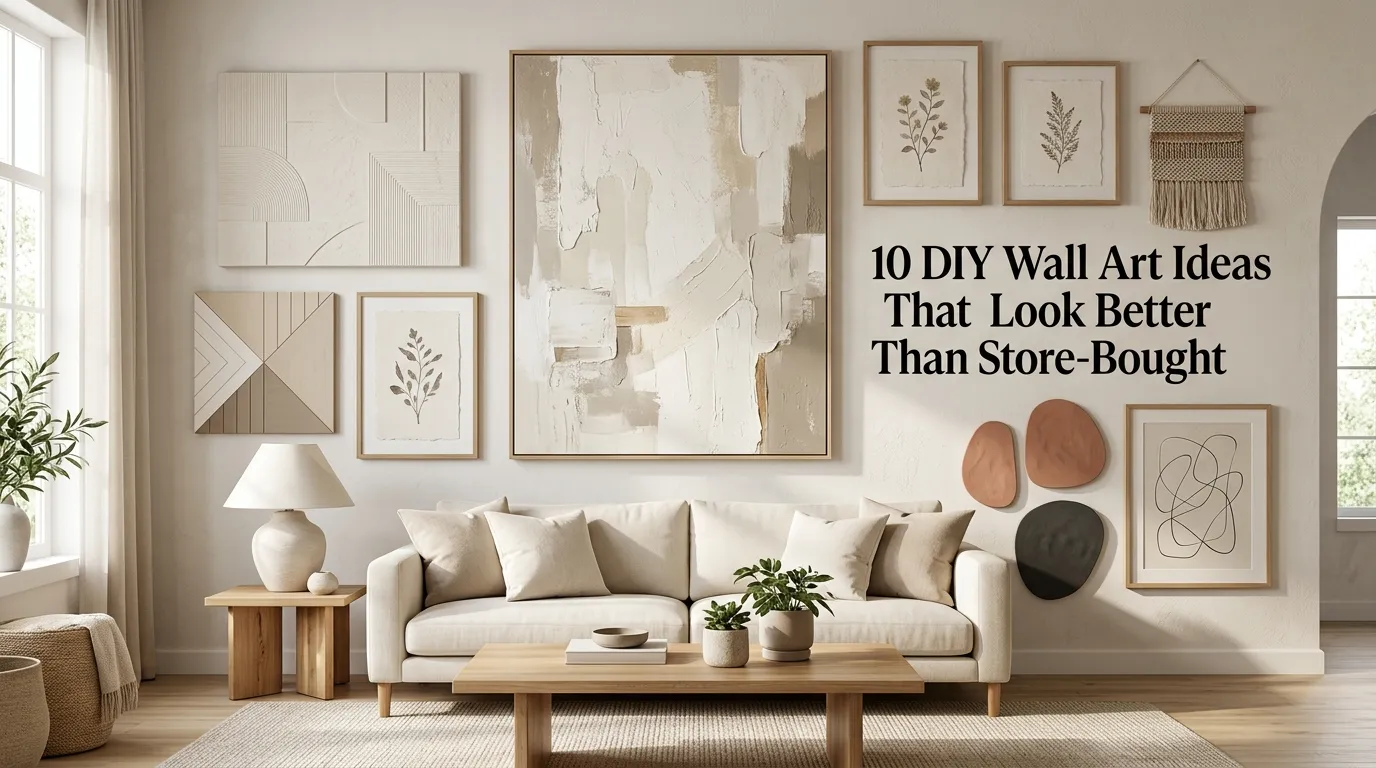
10 DIY Wall Art Ideas That Look Better Than Store-Bought
Blank walls can make a room feel unfinished, but filling them doesn’t mean you need to spend hundreds of dollars on artwork. Some of the most interesting pieces can be made at home with simple materials, a little creativity, and a few thoughtful styling choices.
The secret to making DIY wall art look elevated is not necessarily complicated crafting. It comes down to scale, color, texture, and presentation. A simple canvas can look surprisingly sophisticated when it uses a restrained palette. A basic frame can become a statement piece when several sizes are arranged together. Even inexpensive materials such as fabric, paper, plaster, or paint can create artwork that feels custom rather than homemade.
I’ve found that the best DIY projects are also the ones that suit the room they’re going into. Instead of starting with a craft and trying to find somewhere to hang it, consider your existing furniture, wall color, lighting, and overall decorating style first.
These ideas are designed for real homes and can work in living rooms, bedrooms, hallways, dining rooms, home offices, and even entryways. Whether you prefer modern neutrals, organic textures, colorful abstracts, or vintage-inspired details, there is an approach here you can adapt to your own space.
Table of Contents
1. Textured Canvas Art
Create dimensional artwork with simple texture and a neutral palette.
2. Oversized Abstract Painting
Make a large statement piece using simple shapes and expressive brushwork.
3. Fabric Wall Art
Turn beautiful fabric into affordable custom artwork.
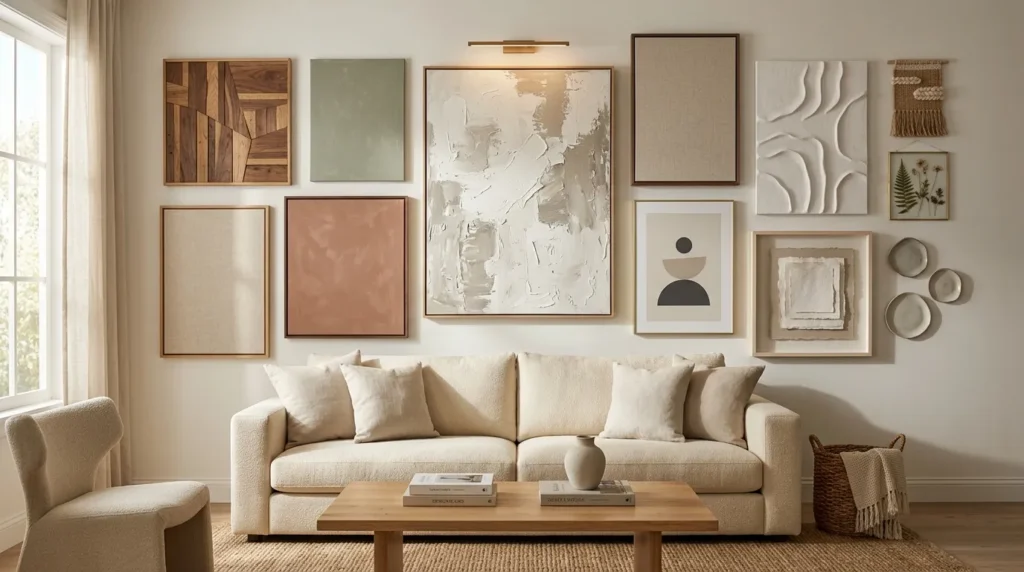
4. Framed Botanical Prints
Create an elegant gallery arrangement inspired by nature.
5. Plaster Texture Art
Add architectural texture with a contemporary plaster-inspired finish.
6. Paper Collage Art
Layer paper shapes to create sophisticated abstract compositions.
7. Painted Arch Panels
Use simple painted shapes to create modern architectural interest.
8. Vintage Frame Gallery
Transform inexpensive or thrifted frames into a collected display.
9. Minimal Line Art
Create understated artwork with simple continuous lines.
10. DIY Canvas Diptych
Turn two simple canvases into one cohesive statement.
1. Textured Canvas Art
Quick Benefits
- Looks custom and high-end
- Adds dimension to plain walls
- Works with neutral interiors
- Easy to customize
- Requires relatively simple materials
Why It Works
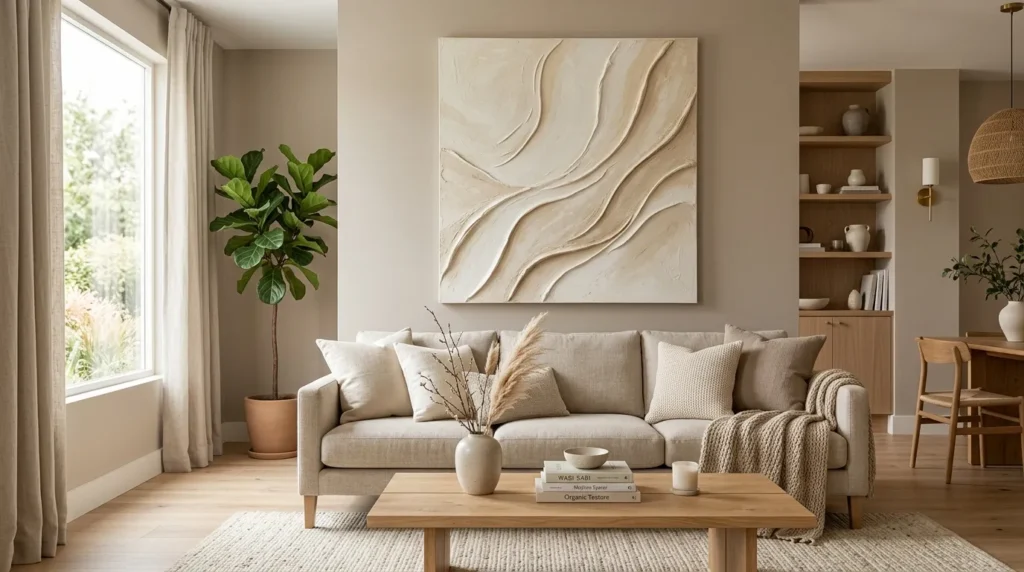
Texture can make even a monochromatic piece of artwork feel visually interesting. Instead of relying on bold colors, textured canvas art creates depth through raised lines, organic shapes, and subtle shadows. This makes it particularly effective in modern, minimalist, Scandinavian, and organic-style interiors where too much color might compete with the room. A restrained palette of ivory, beige, cream, and taupe can make the finished piece feel like something you’d find in a contemporary art gallery.
How To Style It
Start with a stretched canvas and a suitable modeling paste or textured medium. Apply the material using a palette knife, scraper, or other appropriate tool to create loose arches, waves, lines, or abstract forms. Allow it to dry completely before painting if desired. For a sophisticated look, use one or two related neutral shades rather than many colors. A large textured canvas works beautifully above a sofa, bed, console, or dining table. Leave enough surrounding wall space so the texture remains the focal point.
2. Oversized Abstract Painting
Quick Benefits
- Creates a dramatic focal point
- Can fill a large wall affordably
- Completely customizable
- Works with many decorating styles
- Allows you to match existing colors
Why It Works
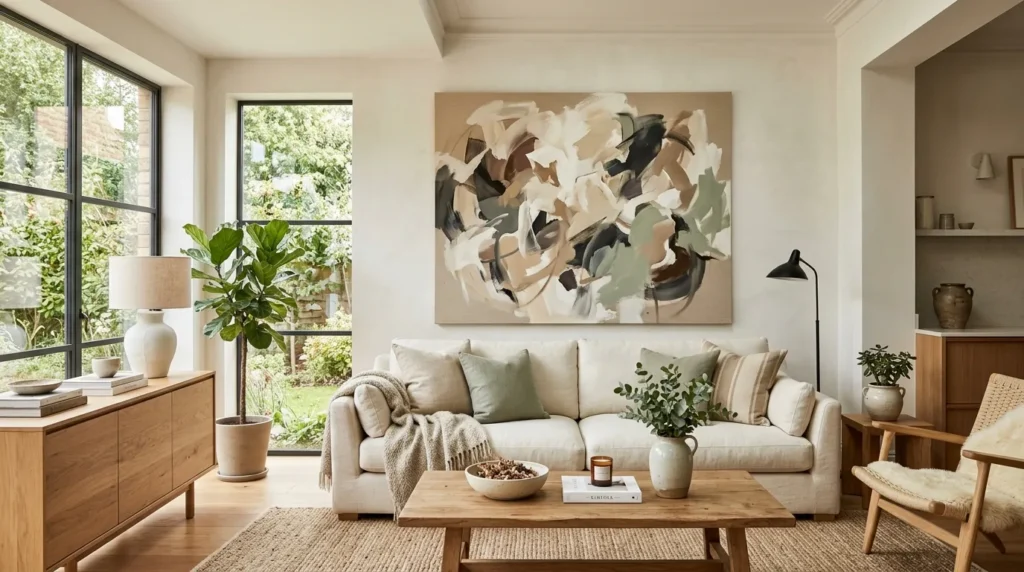
Large artwork can be expensive, which makes an oversized DIY abstract painting an especially useful alternative. You don’t need advanced painting skills because abstract work is more about composition, movement, color, and balance than perfect representation. A large canvas can visually anchor a room and help connect the colors of furniture, rugs, curtains, and accessories. The trick is to avoid adding random colors simply because they look attractive individually.
How To Style It
Choose three to five colors already present in your room. For example, combine cream, warm beige, muted brown, charcoal, and a small amount of sage. Start with a broad background and gradually layer larger shapes, brush marks, and subtle details. Don’t try to make every area equally busy. Leaving negative space can make the artwork feel more intentional. Hang an oversized piece above a sofa or bed, making sure its width feels proportional to the furniture below it.
3. Fabric Wall Art
Quick Benefits
- Adds softness and texture
- Requires minimal artistic skill
- Creates a custom look
- Great for renters
- Easy to coordinate with textiles
Why It Works
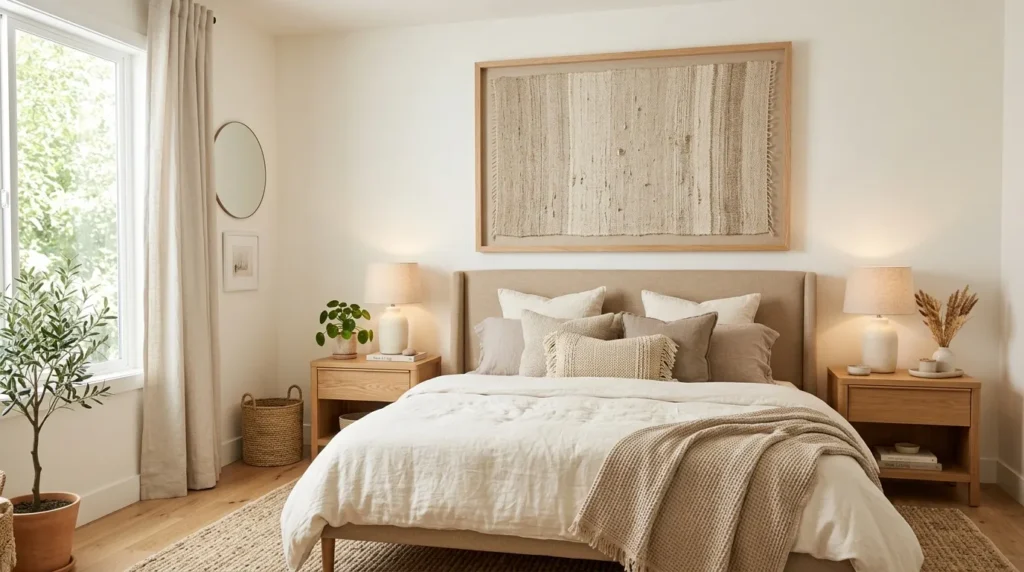
Fabric can introduce a completely different quality to a wall because it adds softness that traditional framed prints don’t provide. Linen, cotton, woven textiles, patterned fabric, and even vintage textiles can become beautiful wall art. This approach is especially useful when you want to repeat a fabric pattern or color already used elsewhere in the room. It can also be considerably more affordable than purchasing a large textile artwork.
How To Style It
Stretch fabric over a wooden frame or mount it securely onto a suitable backing. Choose a textile with colors that complement your room rather than competing with it. A large neutral linen piece can work beautifully in a minimalist bedroom, while a colorful woven textile can add personality to a bohemian or eclectic living room. Keep the surrounding decor relatively simple. For a more polished appearance, use a substantial frame or create a clean gallery-style presentation.
4. Framed Botanical Prints
Quick Benefits
- Brings nature indoors
- Creates a timeless appearance
- Works in many rooms
- Easy to customize
- Excellent for gallery walls
Why It Works
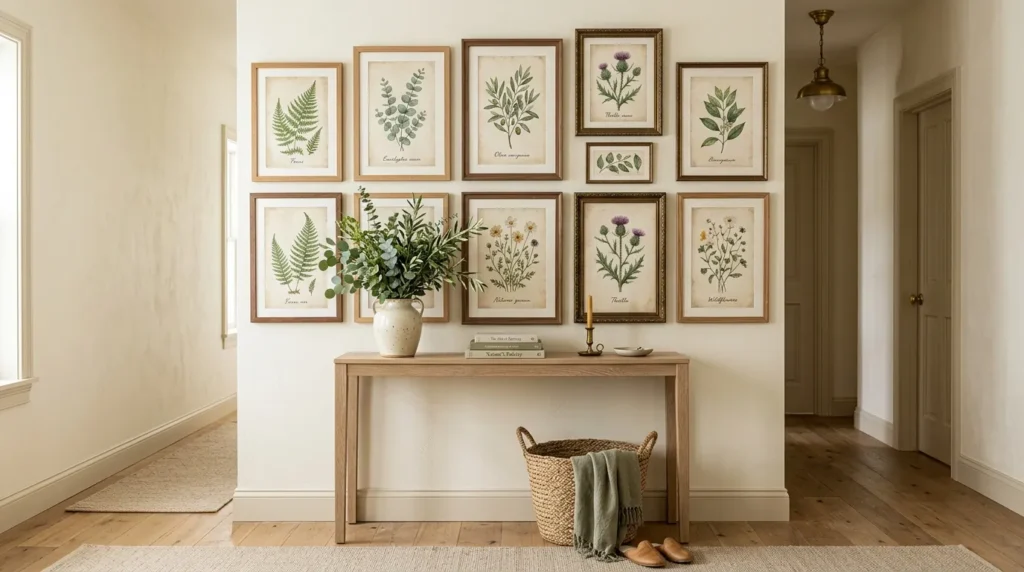
Botanical imagery has a timeless quality because it combines natural shapes with decorative structure. You don’t necessarily need expensive antique botanical prints. High-quality public-domain-style illustrations, your own pressed leaves, or carefully photographed plants can provide the same visual inspiration. Botanical art works particularly well with neutral interiors because greens and earthy tones add color without becoming overwhelming.
How To Style It
Create a set of coordinated prints rather than relying on one isolated image. Use matching frames for a clean appearance or intentionally mix vintage-style frames for a more collected look. Black, natural wood, antique gold, and warm white frames can all work. Arrange three or four pieces in a balanced grid, or create a larger gallery arrangement. Keep the matting generous if you want the artwork to feel more sophisticated.
5. Plaster Texture Art
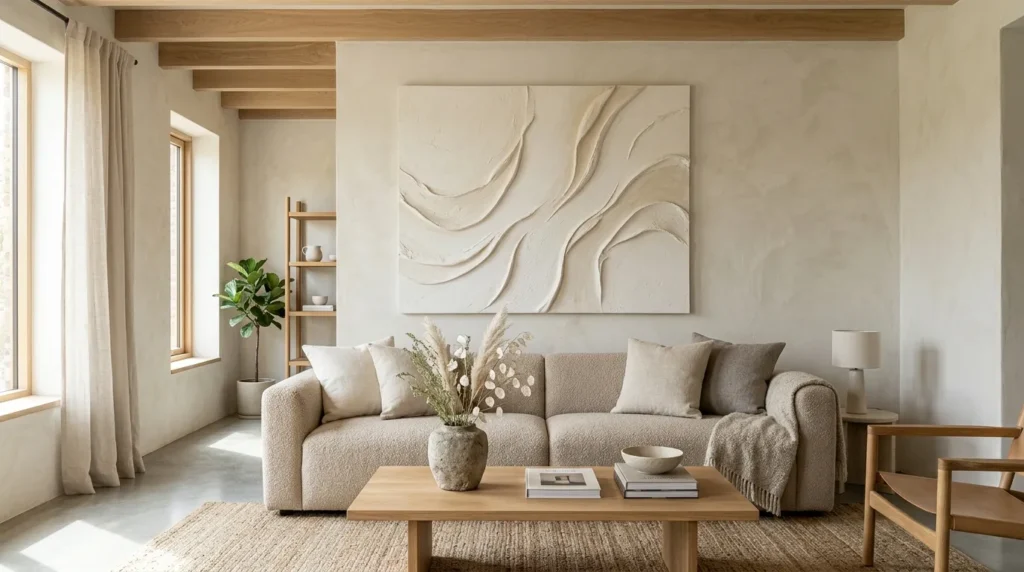
Quick Benefits
- Creates architectural texture
- Looks sophisticated
- Works beautifully with neutral decor
- Adds dimension
- Can be completely customized
Why It Works
Plaster-inspired artwork has become popular because it captures the quiet texture of architectural finishes in a small, accessible format. Its subtle imperfections can make a room feel warmer and more layered. Unlike highly detailed artwork, plaster-style pieces rely on shadows, ridges, curves, and tonal variation. This makes them particularly effective above furniture where you want visual interest without introducing a strong pattern.
How To Style It
Use a canvas or rigid art panel and apply a suitable texture medium in broad, organic shapes. Curved lines, arches, overlapping forms, and gentle ridges can create an architectural effect. Keep the color close to the base material for a monochromatic appearance, or add a thin layer of warm white or beige paint. Allow plenty of drying time. Display the finished piece in a simple wood frame or hang it unframed for a more contemporary look.
6. Paper Collage Art
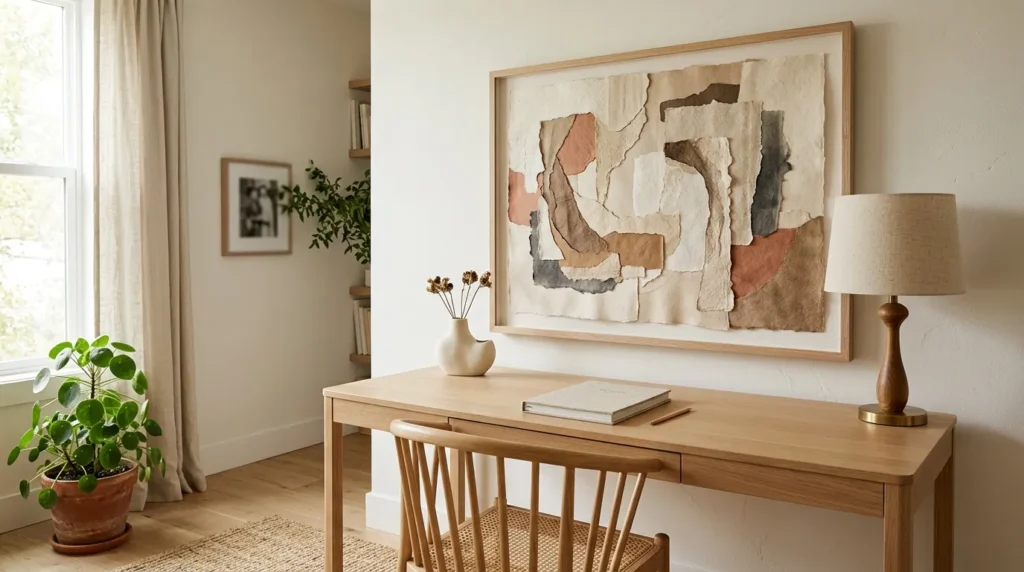
Quick Benefits
- Budget-friendly
- Easy to experiment with
- Completely customizable
- Great for modern interiors
- Creates interesting layering
Why It Works
Paper collage is one of the simplest ways to experiment with composition. You can create sophisticated artwork by combining torn paper, painted paper, printed materials, or handmade textures. The key is controlling the palette. When the colors are cohesive, even simple shapes can look remarkably intentional. Collage also gives you the freedom to keep changing the composition before permanently attaching anything.
How To Style It
Choose a restrained palette that works with your room. Cut or tear paper into organic shapes, geometric forms, strips, or blocks. Arrange the pieces on heavyweight paper until the composition feels balanced. Overlapping shapes can create depth, while negative space keeps the piece from feeling chaotic. Once you’re happy with the arrangement, secure the pieces and frame the finished artwork behind glass. This project is particularly effective for bedrooms, offices, and creative spaces.
7. Painted Arch Panels
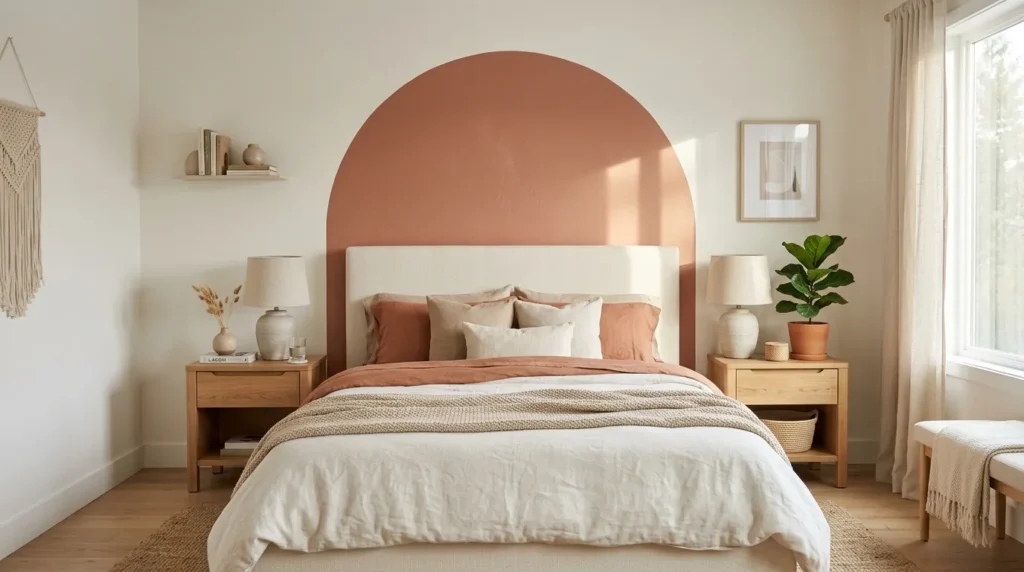
Quick Benefits
- Creates architectural interest
- Works in minimalist rooms
- Extremely customizable
- Can be inexpensive
- Adds color without overwhelming the space
Why It Works
Arches are visually appealing because their curved shape softens rooms dominated by straight architectural lines. A painted arch can imitate the appearance of a built-in architectural feature without construction. When used as wall art, the shape creates an immediate focal point behind furniture. The technique works particularly well when the color is repeated subtly elsewhere in the room.
How To Style It
Create the artwork on a canvas panel or board rather than directly on the wall if you want flexibility. Choose a color that complements your existing palette, such as muted terracotta, sage, dusty blue, warm beige, or creamy white. Use painter’s tape and a carefully measured curved guide to achieve clean edges. Place the finished panel above a console, nightstand, or desk. Keep surrounding accessories simple so the geometric silhouette remains prominent.
8. Vintage Frame Gallery
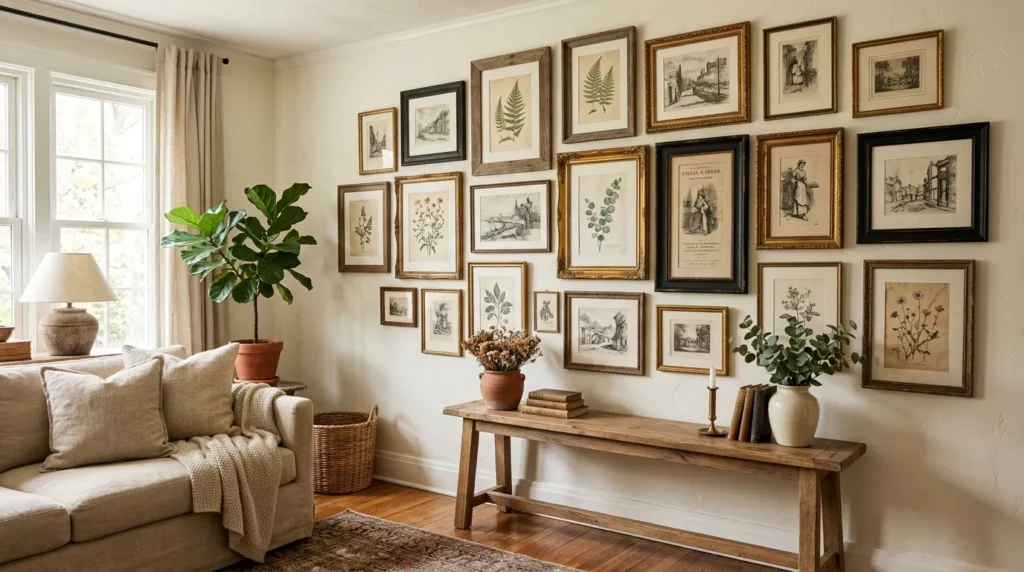
Quick Benefits
- Creates a collected appearance
- Makes inexpensive art feel special
- Works with thrifted frames
- Adds personality
- Easy to expand over time
Why It Works
Sometimes the frame is just as important as the artwork. A collection of vintage-inspired frames can give ordinary prints a more substantial, curated appearance. Mixing subtle variations in finish, shape, and size can make the wall feel like it has evolved over time rather than being purchased as a matching set. This approach works especially well in traditional, cottage, French-inspired, and eclectic homes.
How To Style It
Look for frames in wood, antique gold, aged black, or warm neutral finishes. They don’t need to match exactly, but they should share a common visual quality. Fill them with botanical prints, family photographs, sketches, vintage-inspired illustrations, or your own artwork. Lay everything out on the floor before hanging it. Start with the largest frame and build outward, maintaining comfortable spacing between pieces.
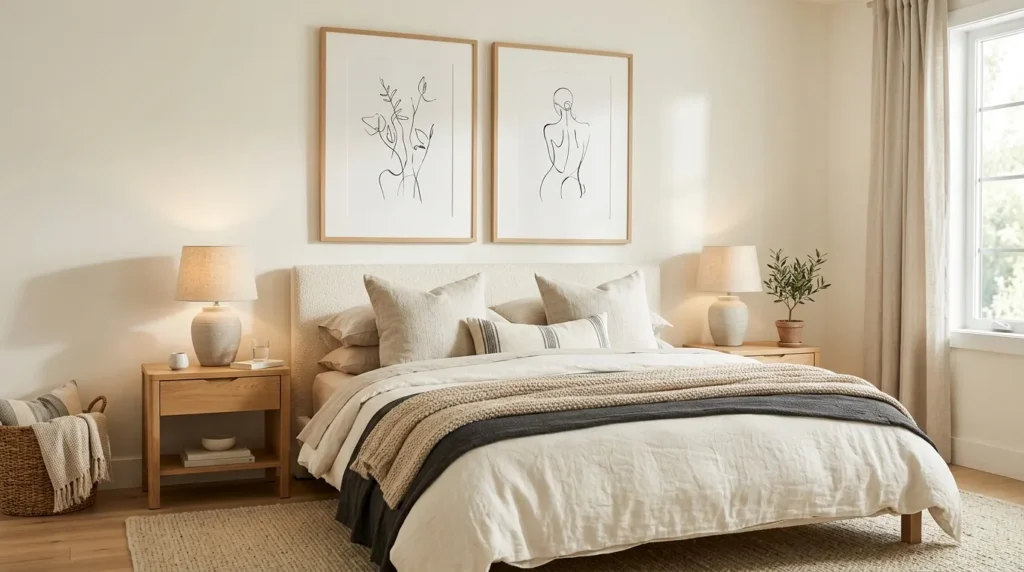
9. Minimal Line Art
Quick Benefits
- Simple and inexpensive
- Looks sophisticated
- Works in small spaces
- Easy to customize
- Complements modern interiors
Why It Works
Minimal line art demonstrates how little you sometimes need to create attractive wall decor. A single continuous line can suggest a face, body, plant, vase, or abstract shape. The simplicity allows the artwork to blend with the room rather than compete with furniture and architecture. It is particularly effective when you want a calm, uncluttered aesthetic.
How To Style It
Create the artwork using black, charcoal, brown, or another muted tone on a warm white background. You can draw directly on paper or create a digital design and print it at home or through a printing service. Use a wide mat and simple frame to give the artwork more visual presence. Hang a pair of related drawings side by side, or combine several pieces into a small gallery. This idea works especially well above nightstands, desks, and narrow console tables.
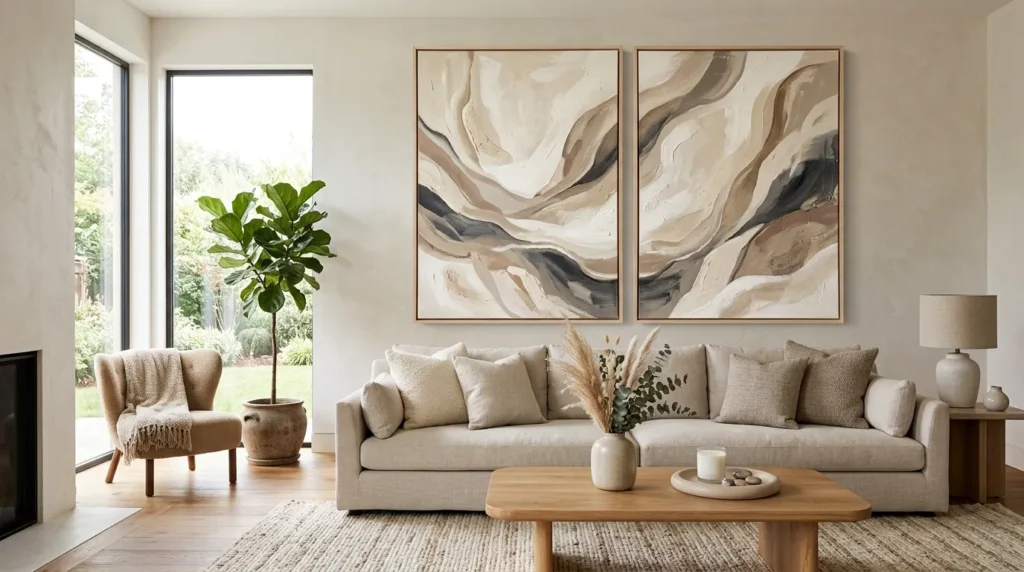
10. DIY Canvas Diptych
Quick Benefits
- Creates a large-scale statement
- Easier than one enormous canvas
- Works above furniture
- Looks professionally designed
- Allows balanced composition
Why It Works
A diptych divides one artwork into two coordinated panels, creating a sense of scale without requiring a single oversized canvas. The small gap between the pieces adds visual rhythm while keeping the artwork connected. This is particularly useful above long furniture such as sofas, beds, sideboards, and dining consoles. A diptych can also make a room feel more intentionally designed because the two panels create built-in symmetry.
How To Style It
Choose two canvases of the same size and paint them as one continuous composition. Use a restrained palette that relates to the room. Abstract brushwork, soft shapes, textured neutral forms, or a landscape divided between the panels can all work beautifully. Keep the gap relatively consistent and center the pair over the furniture below. The combined width should feel substantial enough to anchor the furniture without overwhelming the wall.
How To Make DIY Wall Art Look Expensive
The biggest difference between inexpensive DIY artwork and elevated-looking artwork is often presentation.
Start with scale. A tiny piece of art can disappear above a large sofa, while an appropriately sized piece immediately feels more intentional.
Next, control your palette. Using a limited number of colors creates cohesion and allows texture and composition to become more important than decoration.
Frames also matter. A simple print inside a generous mat and substantial frame can look far more polished than an unframed print taped directly to the wall.
Don’t be afraid of negative space. Leaving portions of a canvas quiet can make the finished artwork look more sophisticated.
Finally, take your time with placement. Center artwork in relation to the furniture below it, rather than simply centering it on the entire wall.
DIY Wall Art Materials Worth Keeping
You don’t need a huge craft collection to create beautiful wall decor.
A small collection of useful supplies can support many different projects:
- Stretched canvases
- Heavyweight art paper
- Acrylic paint
- Paint brushes
- Palette knives
- Texture medium
- Painter’s tape
- Wooden frames
- Mat boards
- Fabric scraps
- Craft scissors
- Rulers
- Hanging hardware
- Neutral cardstock
- Natural wood panels
Choose materials based on the project and follow product instructions, especially when working with adhesives, texture mediums, or finishes.
Where To Hang DIY Wall Art
The right placement can make an inexpensive project look considerably more intentional.
Above a Sofa
Use one large piece, a diptych, or a balanced gallery arrangement.
Above a Bed
Choose artwork with calming colors and avoid overly busy compositions.
In a Hallway
Try a series of smaller framed pieces arranged along the wall.
Above a Console
Use a statement piece combined with a few simple decorative objects.
In a Dining Room
Large abstract artwork can add color and personality without taking up floor space.
In a Home Office
Line art, botanical prints, and restrained abstract pieces can create visual interest without becoming distracting.
Common DIY Wall Art Mistakes
Choosing the Wrong Scale
Artwork that’s too small can make a room feel unfinished. Measure the wall and furniture before beginning your project.
Using Too Many Colors
A complicated palette can make homemade artwork look less cohesive. Start with colors already present in the room.
Hanging Everything Too High
Artwork generally feels more connected to furniture when it isn’t floating excessively above it.
Overcomplicating the Design
Simple compositions can look more sophisticated than projects with too many decorative elements.
Skipping the Frame
Not every piece needs a frame, but framing can dramatically elevate paper-based artwork and prints.
Making Every Wall a Focal Point
A room needs visual breathing room. Choose one or two walls for statement artwork and allow the remaining areas to stay quieter.
Frequently Asked Questions
What is the easiest DIY wall art for beginners?
Textured canvas art, simple abstract painting, and minimal line art are excellent starting points. They don’t require advanced drawing skills and allow you to experiment with color, composition, and texture.
How can I make DIY art look expensive?
Focus on scale, restrained colors, quality presentation, and good framing. Large artwork with a cohesive palette often looks more sophisticated than several small pieces with unrelated colors.
What colors work best for DIY wall art?
Choose colors that already exist in your room. Cream, beige, brown, charcoal, sage, muted blue, terracotta, and soft white are versatile options that can be combined in many decorating styles.
Is DIY wall art good for a rental?
Absolutely. Framed prints, canvas artwork, fabric panels, and lightweight decorative pieces can provide personality without requiring permanent changes. Use appropriate removable hanging solutions when permitted and suitable for the wall surface.
How large should wall art be above a sofa?
As a general decorating guideline, artwork or a grouping of artwork should have enough visual width to relate to the sofa without extending dramatically beyond it. Measure both the furniture and wall before deciding on the final size.
Can I make wall art without painting?
Yes. Fabric panels, botanical prints, paper collages, photography, pressed plants, vintage frames, and typography can all become attractive DIY artwork without traditional painting.
How do I choose DIY art for my room?
Start with the room’s existing colors, furniture style, and available wall space. Choose artwork that complements those elements rather than trying to make every piece the center of attention.
Conclusion
Creating beautiful wall art at home doesn’t require professional painting skills or a large craft budget. The most successful projects often rely on simple concepts: good scale, thoughtful color, interesting texture, and careful presentation.
A textured canvas can add dimension to a neutral living room. A fabric panel can bring softness to a bedroom. Botanical prints can create a timeless gallery wall, while an oversized abstract painting can give an ordinary wall a dramatic focal point.
If you’re unsure where to begin, start with one wall that feels unfinished. Look at the colors already present in the room, decide how much visual impact you want, and choose a project that fits your skill level.
Don’t worry about making the artwork perfectly flawless. A little variation is part of what makes handmade pieces interesting. The goal is to create something that feels intentional, personal, and connected to your home.
Choose one idea, gather your materials, and give yourself permission to experiment. You may be surprised by how polished a simple DIY project can look once it’s properly sized, framed, and styled.
Related Articles
- 10 DIY Wall Decor Ideas to Transform a Blank Wall
- 11 Living Room Wall Decor Ideas for a Stylish Home
- 10 DIY Home Decor Projects That Look Expensive
- 10 Gallery Wall Ideas for Every Decorating Style
- 11 Budget-Friendly Living Room Decorating Ideas