Can Curtains Fall Behind a Baseboard Heater Safely (Fire Hazard Facts)?
Determining whether your window treatments can safely hang behind a baseboard heater is a common concern for homeowners looking to balance aesthetics with safety. Many people wonder if they can curtains fall behind a baseboard heater safely (fire hazard facts) without risking an accidental blaze in their living space. The short answer is no, this practice is never considered safe and should be avoided entirely to prevent potential ignition.
Baseboard units are designed to draw cool air from the floor, heat it, and vent it upward; obstructing this flow creates a dangerous accumulation of heat. Understanding the mechanics of your heating system is the first step in keeping your home secure and your family protected from preventable fire risks.
The Direct Answer Regarding Fire Hazards
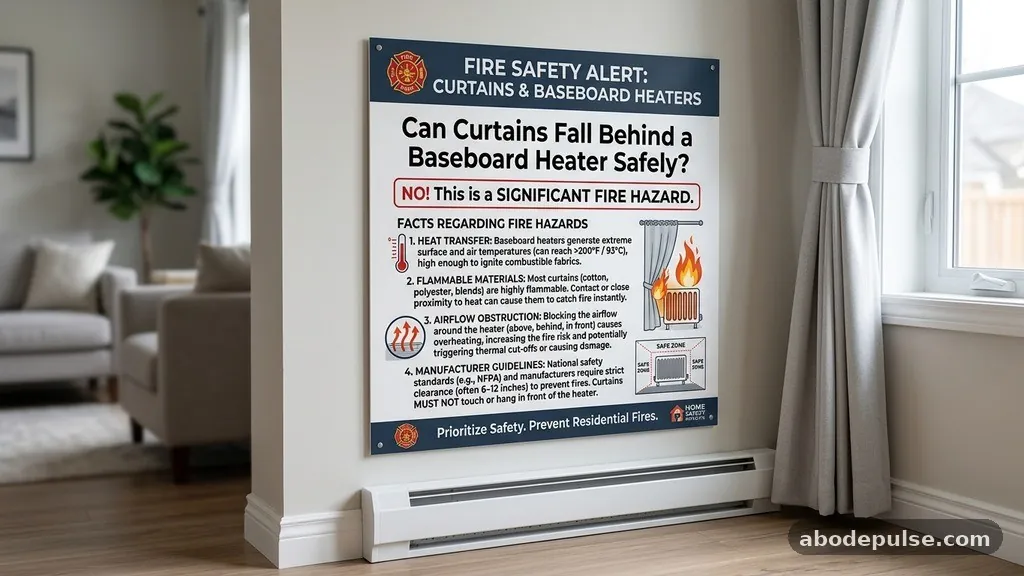
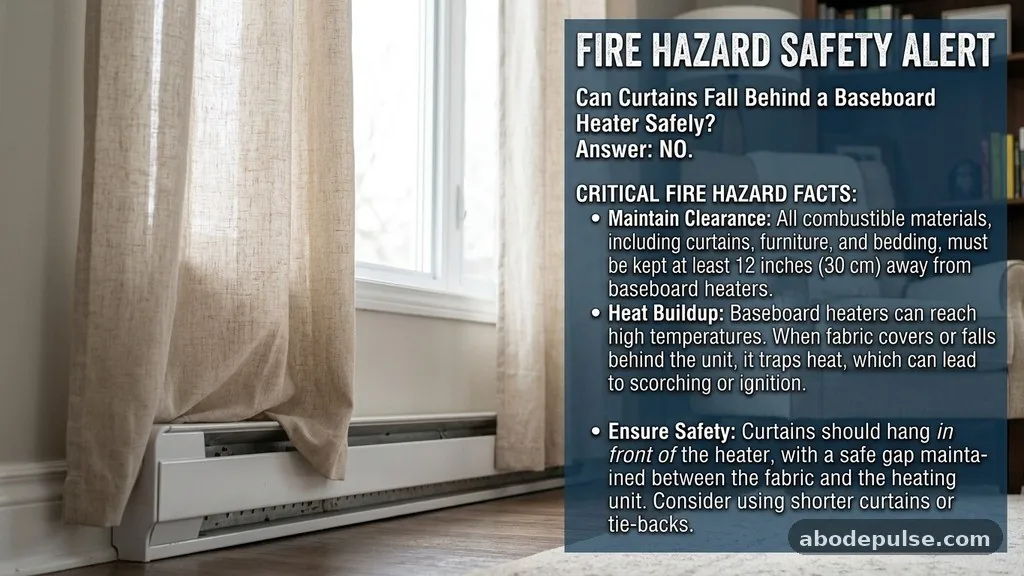
To be perfectly clear, placing any fabric, including curtains, behind or directly against a baseboard heater is a significant fire hazard. These heating elements can reach surface temperatures high enough to ignite synthetic or natural fibers if they remain in contact for an extended period.
While modern heating units often include thermal limit switches, these safety devices are not a substitute for proper clearance. Relying on an automatic shut-off mechanism is a gamble, as these components can occasionally fail or become stuck in the “on” position.
When curtains fall behind a heater, they trap heat against the wall and the unit itself. This insulation effect causes the temperature of the internal heating elements to spike rapidly.
Even if the fabric doesn’t burst into flames immediately, prolonged exposure to high heat can cause the material to scorch, discolor, or become brittle. Over time, this degradation makes the fabric more susceptible to catching fire from a stray spark or a sudden surge in the heating element’s temperature.
How Baseboard Heating Systems Function
Baseboard heaters operate on a simple convection principle that relies on unobstructed airflow. Cold air enters the bottom of the unit, passes over heated fins or a water-filled pipe, and rises out the top as warm air.
When you hang curtains that drape over the top or fall behind the unit, you essentially choke the system. This blockage prevents the heater from effectively warming the room while causing the unit itself to overheat.
The efficiency of your heating unit depends on the free movement of air through the metal housing. If the air cannot circulate, the thermostat may continue to signal for more heat because the room isn’t reaching the desired temperature.
This puts unnecessary strain on the heating components and increases the risk of the unit’s exterior casing becoming dangerously hot. Keeping the area around your heater clear is essential for both home safety and the longevity of your heating equipment.
Minimum Clearance Requirements

Most manufacturers and fire safety organizations recommend a minimum clearance of several inches around all sides of a heating unit. While specific numbers vary by manufacturer, a standard rule of thumb is to keep curtains at least 6 to 12 inches away from the heater. This buffer zone ensures that even if a draft blows the fabric, it will not make contact with the hot metal surface.
If your window is located directly above a baseboard heater, you may need to adjust your window treatment strategy. Choosing shorter curtains that end well above the heater is the most effective solution.
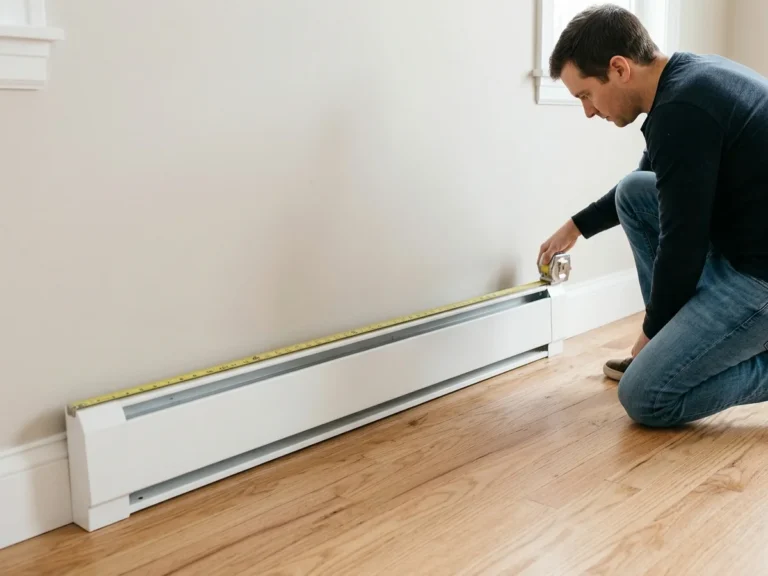
Alternatively, you can use specialized curtain rods that extend further out from the wall to keep the fabric away from the danger zone. Measuring the distance from your wall to the front of the heater is a vital step before installing any new hardware.
Comparing Different Heater Types
Not all baseboard heaters pose the exact same level of risk, though all require caution. Electric units often reach higher surface temperatures more quickly than hydronic, or water-based, systems. Because electric heaters rely on resistance coils that glow hot, they can ignite nearby materials much faster than the slower-warming water-filled pipes.
| Heater Type | Typical Heat Source | Risk Level |
|---|---|---|
| Electric Baseboard | Resistance Coils | High |
| Hydronic Baseboard | Hot Water Pipes | Moderate |
| Fan-Forced Wall | Internal Blower | Moderate |
Regardless of the type of system you have, treat all heating units as potential ignition sources. Even hydronic systems can get hot enough to damage delicate fabrics or cause smoldering if the ventilation is blocked for a long enough period. Always prioritize safety over the visual appeal of floor-length curtains when planning your room layout.
Risks of Synthetic Versus Natural Fabrics
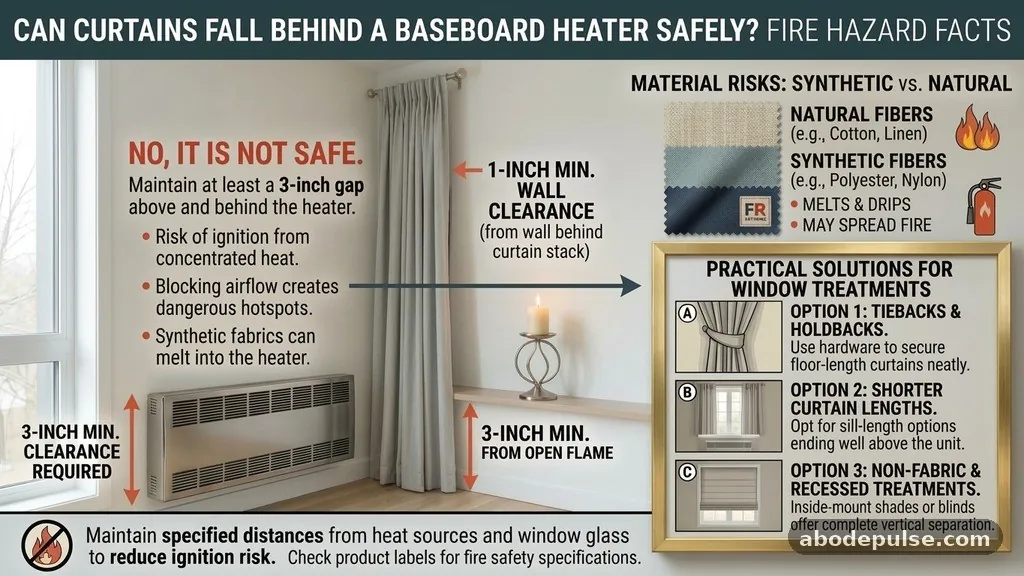
The material composition of your curtains significantly influences how they react to high heat. Synthetic fibers like polyester and nylon are common in many affordable curtain sets, but they are particularly problematic near heat sources.
These materials are petroleum-based and tend to melt when exposed to high temperatures rather than just burning. A melting curtain can drip onto the floor or into the heater, creating a secondary fire risk that is difficult to extinguish.
Natural fibers like cotton or linen are also flammable, though they behave differently when subjected to heat. They are more likely to char and ignite into an open flame if they reach their ignition point.
Whether your curtains are synthetic or natural, the danger remains the same: any fabric touching a hot surface is an accident waiting to happen. You should consult the National Fire Protection Association guidelines for more information on home heating safety.
Identifying Signs of Overheating
If you have been using long curtains near your baseboard heaters, you should inspect the area for signs of heat damage. Look for yellowing, browning, or a “toasted” appearance on the fabric near the bottom or edges.
You might also notice a faint, metallic, or burning smell when the heater turns on after a long period of inactivity. These are clear indicators that your curtains are getting too close to the unit and that you need to take immediate corrective action.
Check the wall behind the curtain as well. If the paint is peeling, bubbling, or discolored, the wall itself is being subjected to excessive heat.
This is a sign that the convection process is failing and heat is being trapped against the structure of your home. If you see these warning signs, remove or shorten the curtains immediately to prevent a potential fire.
Practical Solutions for Window Treatments

You don‘t have to sacrifice style to keep your home safe from fire hazards. There are several ways to dress windows near heaters without creating a dangerous environment.
Roman shades or blinds are excellent alternatives to floor-length curtains because they stay contained within the window frame. They provide privacy and light control without hanging down into the path of the heating unit.
If you prefer the look of fabric, consider using shorter, cafe-style curtains that cover only the bottom half of the window. These can be adjusted to hang well above the heater, providing a decorative touch without risking contact. You can also install valances that stay high up on the window frame, keeping the fabric completely clear of the floor-level heating elements.
The Role of Thermostats and Sensors
Modern heating setups often include wall-mounted thermostats that can influence how often and how hard your heaters work. If you have furniture or curtains blocking the heater, the thermostat may not receive an accurate reading of the room’s temperature.
This causes the heater to run continuously, increasing the surface temperature and the risk of fire. Ensuring that the space around your thermostat is also clear is just as important as keeping the heaters themselves unobstructed.
Some newer electric baseboard systems feature built-in thermal sensors that cut power if the unit detects a blockage. While these are great additions, they are not foolproof.
Never rely solely on technology to compensate for poor placement of household items. Manual inspection and common-sense placement remain your best defense against heating-related accidents.
Common Mistakes in Room Layout
One of the most frequent mistakes homeowners make is pushing furniture or heavy decor right up against a baseboard heater. Curtains are often part of this problem, as people naturally want to cover the entire wall to make a room feel cozy.
However, the space around a heater is a “no-go zone” for anything that can burn. This includes not just curtains, but also rugs, toys, and upholstered furniture.
When rearranging a room, always identify the location of your heating units first. Treat these points as fixed obstacles that dictate where your furniture can safely go.
If you find that your desired layout forces your curtains to touch a heater, you must change your design plans. No decor choice is worth the risk of a house fire, especially when simple adjustments can solve the problem.
Frequently Asked Questions
Is it safe to have curtains over baseboard heaters if they are made of fire-resistant material?
Even if a fabric is labeled as flame-retardant, it is not fireproof. These treatments can wear off over time, and the intense, localized heat from a baseboard heater can still damage the fabric or cause it to melt. It is safer to keep all fabric, regardless of its rating, away from heating elements.
How far away should my curtains be from a heater to be safe?
A safe rule of thumb is to maintain at least 6 to 12 inches of clearance. This space allows for adequate airflow and ensures that even if the fabric moves due to a draft, it will not touch the hot surface. Always check your specific heater manufacturer’s manual for their recommended clearance distances.
Can I use a heat shield to protect my curtains?
Heat shields can help deflect some thermal energy, but they are not a perfect solution for curtains. If the curtain is long enough to hang behind the heater, it will likely still trap heat and block the necessary airflow. It is always better to shorten the curtains than to rely on a DIY shield.
Why does my heater smell like burning when I turn it on?
The smell is often caused by dust, pet hair, or lint that has settled inside the heater during the off-season. When the unit heats up, these particles burn off, creating an odor. However, if the smell persists or if you notice your curtains are discolored, you must investigate to ensure the heat isn’t damaging your window treatments.
Should I worry about my curtains touching the wall above the heater?
The wall itself can become quite hot, and while it is less likely to catch fire than the curtain, heat damage to the wall finish is a real possibility. If your curtains are touching the wall directly above the heater, they are likely obstructing the upward flow of warm air. It is best to keep them clear of this area as well.
Conclusion
Maintaining a safe home environment requires a consistent focus on how your daily choices interact with your heating systems. Knowing that you cannot let curtains fall behind a baseboard heater safely (fire hazard facts) is an essential part of responsible home ownership. By respecting the clearance requirements and choosing appropriate window treatments, you can enjoy a warm, comfortable home without the constant worry of an accidental fire.
Regularly inspecting your heaters for dust buildup and ensuring that no fabric or furniture encroaches on the designated airflow space will go a long way. If you are ever in doubt about the safety of your current setup, it is always better to remove the item and find a safer alternative that keeps your living space both beautiful and secure.