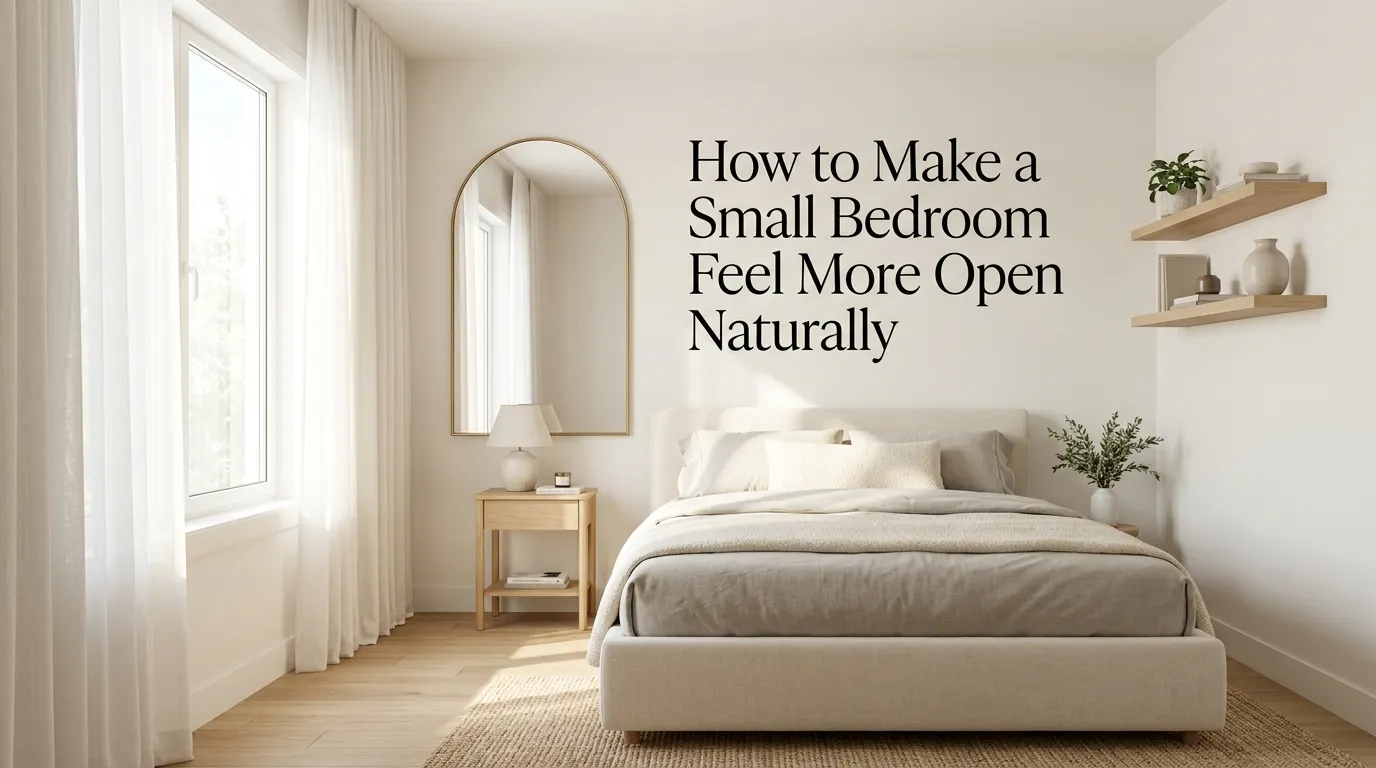
How to Make a Small Bedroom Feel More Open Naturally
A small bedroom doesn’t have to feel small, and in my experience, the difference between a cramped-feeling room and an airy one rarely comes down to actual square footage. It’s almost always about how the space is being used — furniture scale, color choices, and a handful of small decisions that either work with the room’s proportions or fight against them.
If you’re anything like me, you’ve probably assumed the only real fix for a tight bedroom is knocking down a wall or moving to a bigger house. The good news is that most small bedrooms have far more visual potential than their square footage suggests, and a lot of that potential gets left on the table simply because of oversized furniture, heavy dark colors, or clutter that makes the room feel smaller than it actually is.
A mistake many homeowners make in a small bedroom is trying to fit in every piece of furniture they’d want in a larger room — a bed, two nightstands, a dresser, a bench, an accent chair — without considering how much floor space each addition actually costs. That’s why many designers recommend the opposite approach for compact bedrooms: choosing fewer, better-scaled pieces and being intentional about what actually earns a spot in the room.
I’ve noticed that the small bedrooms people save most often on Pinterest share a few consistent strategies — using light, reflective colors, keeping furniture legs visible rather than boxy and grounded, and directing the eye upward and outward rather than letting clutter pull it downward and inward.
In this guide, I’m sharing ten ways to make a small bedroom feel more open naturally, without any construction or major renovation. Each idea includes practical guidance so you can apply it to the room you already have, rather than the one you wish you had more square footage for.
Table of Contents
- Light, Reflective Wall Color A foundational choice that bounces light around the room.
- Furniture with Visible Legs A scale trick that opens up floor space visually.
- Strategic Mirror Placement A classic technique that doubles perceived space.
- Vertical Storage Over Floor Storage A shift that frees up usable floor area.
- Sheer or Minimal Window Treatments A lighting choice that maximizes natural brightness.
- Monochromatic Color Scheme A palette trick that removes visual breaks in the room.
- Underbed Storage Instead of a Dresser A furniture swap that eliminates a bulky piece entirely.
- Oversized Art Instead of Multiple Small Pieces A styling choice that reduces visual clutter on walls.
- A Rug That Extends Under the Furniture A flooring trick that visually expands the room’s footprint.
- Decluttering Surfaces Completely A simple habit that keeps the room feeling calm and open.
1. Light, Reflective Wall Color
Quick Benefits
- Bounces natural and artificial light around the room
- Creates a brighter overall atmosphere
- Makes walls feel like they recede rather than close in
- Works with nearly any furniture style
- One of the highest-impact, lowest-cost changes available
Why It Works
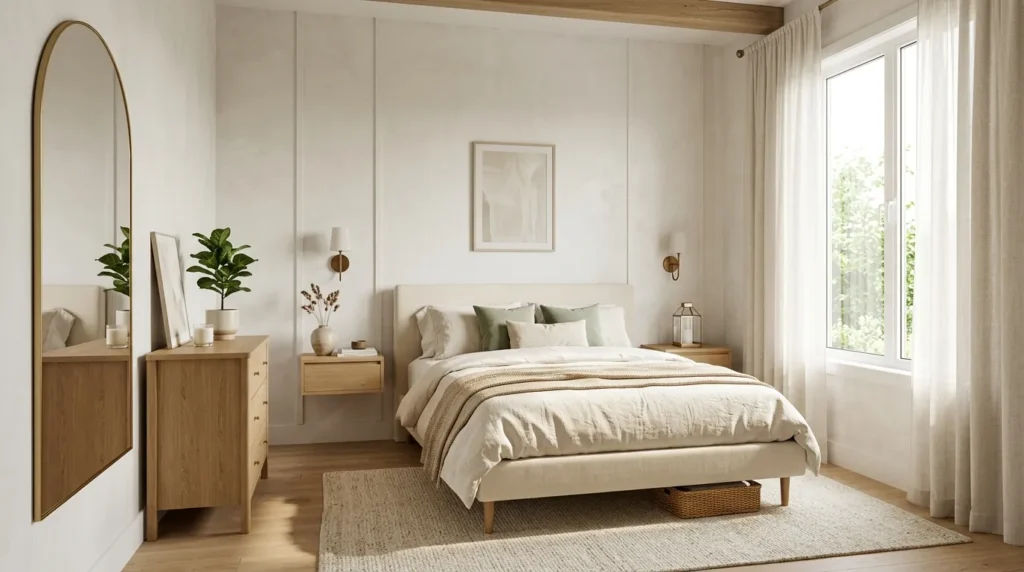
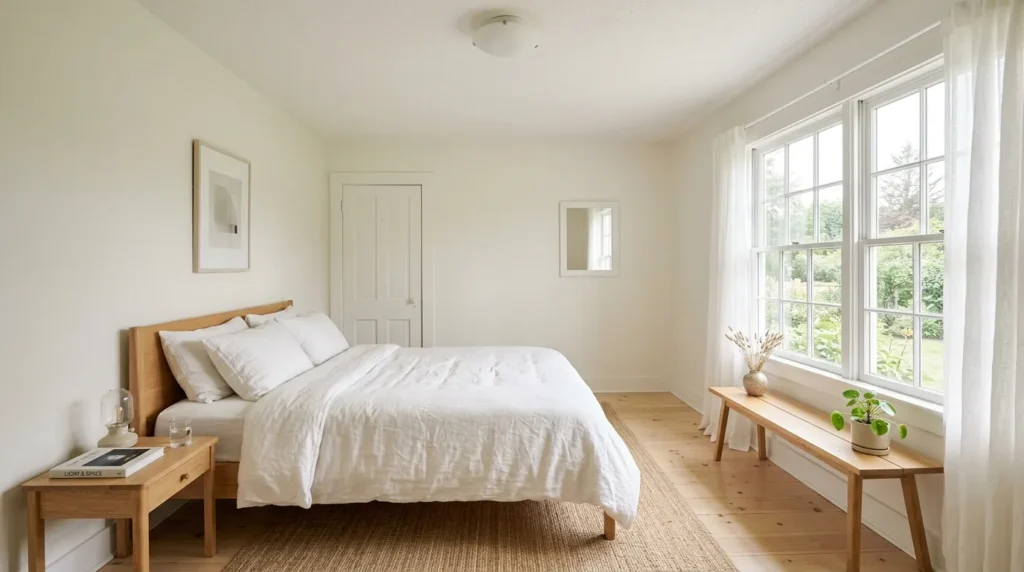
Wall color is one of the single biggest factors in how open or closed-in a small bedroom feels, since dark, saturated colors absorb light and visually pull walls inward, while light, reflective tones bounce available light around the room and make walls feel like they recede rather than press in. In my experience, this is the very first change worth making in a small bedroom, before any furniture rearranging or decor updates, since it affects the entire room’s baseline brightness and sense of scale before a single other decision gets made.
How To Style It
Choose a light, warm white, soft cream, or pale neutral for the walls, and consider carrying that same color up onto the ceiling as well, since a contrasting darker ceiling can visually lower and shrink a room. A slightly glossy or eggshell finish reflects more light than a flat matte finish, which can make a meaningful difference in a room without much natural light to begin with. One simple trick I always suggest is testing paint swatches at different times of day before committing, since a color that looks airy in daylight can shift and feel heavier under evening artificial lighting.
2. Furniture with Visible Legs
Quick Benefits
- Creates a sense of visual airiness
- Allows sightlines to continue under furniture
- Makes the floor feel larger than it is
- Works well with nearly any furniture style
- Simple criteria to apply when shopping for new pieces
Why It Works
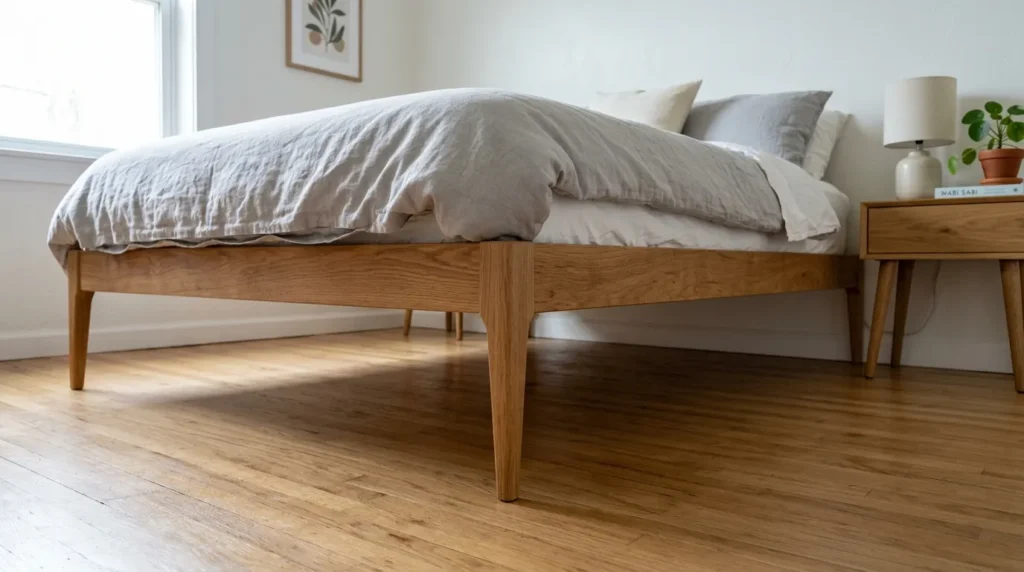
Furniture that sits flush to the floor — a bed frame with a solid base, an upholstered bench with no visible legs — blocks sightlines and makes a room’s floor space read as smaller than it actually is, since the eye can’t travel underneath or around the piece. That’s why many designers recommend prioritizing furniture with visible, slender legs specifically for small bedrooms, since the visual continuity of floor space beneath each piece tricks the eye into perceiving more open square footage than a room full of solid, grounded furniture would offer.
How To Style It
Choose a bed frame, nightstands, and any additional seating with slim, visible legs rather than solid platform bases or skirted furniture that touches the floor along its entire perimeter. If you already own furniture with a solid base, even a few inches of visible space beneath it makes a meaningful difference compared to furniture sitting completely flush to the ground. This idea pairs particularly well with a light wall color, since both strategies work together to keep sightlines open and uninterrupted throughout the room.
3. Strategic Mirror Placement
Quick Benefits
- Doubles the perceived depth of the room
- Reflects and amplifies natural light
- Works as both function and decor
- Simple to add without any construction
- Highly effective, classic small-space trick
Why It Works
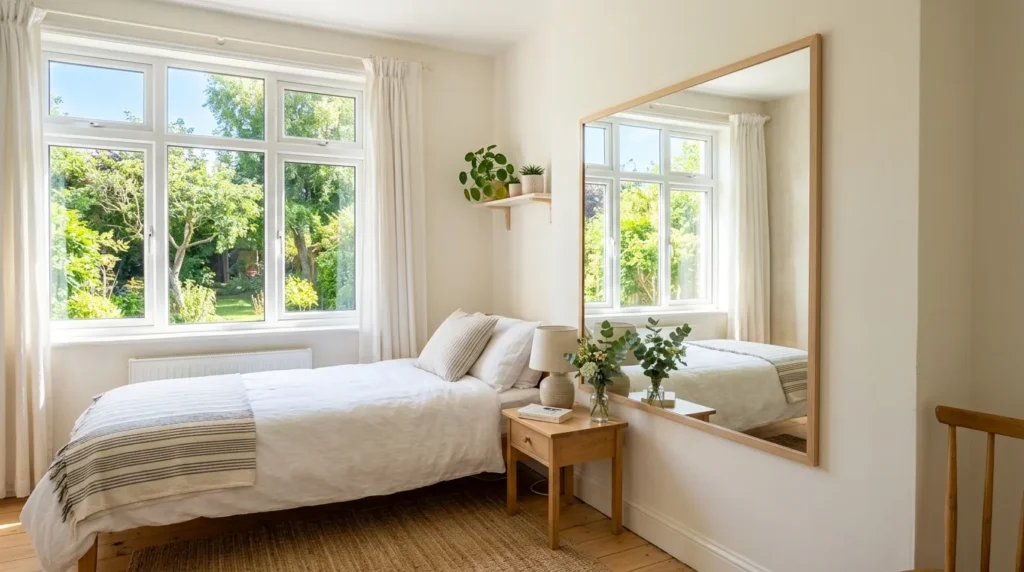
A well-placed mirror is one of the most classic and genuinely effective small-space tricks available, since it visually doubles whatever it reflects, whether that’s a window’s natural light or simply more of the room’s own floor space. I’ve seen this idea transform small, dim bedrooms into spaces that feel significantly larger and brighter, purely through the placement of one or two well-chosen mirrors, without moving a single piece of existing furniture.
How To Style It
Position a full-length or large mirror on a wall perpendicular to a window, so it reflects and amplifies incoming natural light throughout the day, rather than placing it directly across from the window where it may just bounce light back outside. A mirror placed behind a piece of furniture, like leaning a large mirror against the wall behind a dresser, can also create the illusion of a deeper, more expansive room. Avoid overly ornate or heavy-framed mirrors in a small space, since a simple, minimal frame keeps the focus on the reflective quality itself rather than adding visual bulk.
4. Vertical Storage Over Floor Storage
Quick Benefits
- Frees up usable floor space
- Uses often-underutilized wall height
- Reduces the need for bulky floor furniture
- Keeps the room’s footprint feeling open
- Works well in rooms with limited square footage
Why It Works
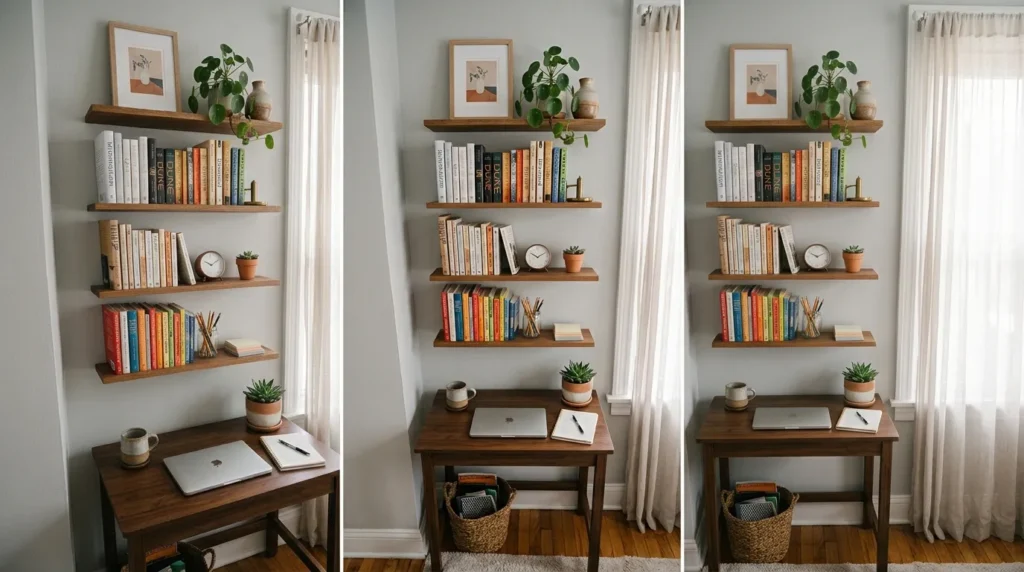
Floor-based storage — dressers, chests, and large freestanding furniture — takes up valuable square footage in a small bedroom, while vertical storage solutions use wall height that would otherwise go completely unused. A mistake many homeowners make in a small bedroom is defaulting to the same furniture layout they’d use in a larger room, adding a full dresser and nightstands without considering whether some of that storage could be relocated upward instead, freeing up meaningful floor space in the process.
How To Style It
Replace or supplement a traditional dresser with tall, narrow shelving or wall-mounted storage that draws the eye upward rather than spreading storage across the floor. Floating shelves above a desk or bed can hold books, decor, or folded clothing without consuming any floor footprint at all. This idea pairs particularly well with the visible-leg furniture strategy above, since both approaches aim to keep as much of the actual floor visible and open as possible, relying on vertical space to handle storage needs instead.
5. Sheer or Minimal Window Treatments
Quick Benefits
- Maximizes natural light entering the room
- Avoids visually shrinking the window opening
- Keeps the room feeling airy during the day
- Simple, affordable update
- Works well paired with a blackout layer for nighttime
Why It Works
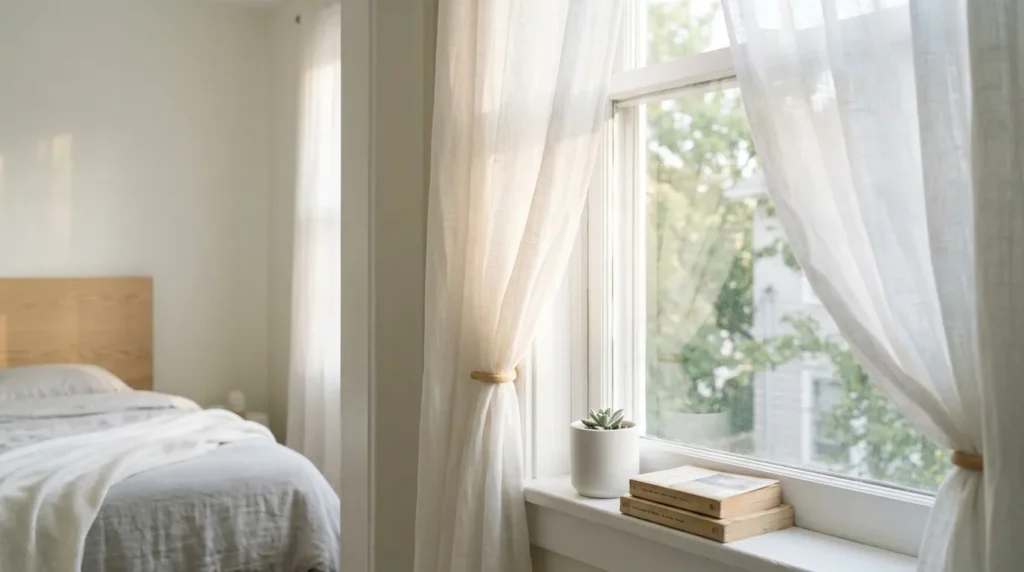
Heavy, layered curtains can visually shrink a window and block a significant portion of the natural light a small bedroom relies on to feel open and bright during the day. That’s why many designers recommend sheer or minimal window treatments specifically for small bedrooms, reserving heavier blackout fabric for nighttime use only if needed, rather than defaulting to thick, light-blocking curtains as the room’s primary daytime treatment.
How To Style It
Hang lightweight sheer or linen curtains that let natural light filter through during the day, mounting the curtain rod slightly wider and higher than the window frame itself so the fabric doesn’t cover any part of the actual glass when open. If blackout coverage is needed for sleeping, layer in a slim blackout roller shade mounted inside the window frame, which can be lowered at night and remains completely hidden during the day. This combination keeps the room feeling bright and open for most of the day while still offering full darkness when it’s actually needed.
6. Monochromatic Color Scheme
Quick Benefits
- Removes visual breaks that make a room feel choppy
- Creates a seamless, expansive feeling
- Simplifies decorating decisions
- Works well with textural variety for visual interest
- Elevates a small room into a cohesive, elegant space
Why It Works
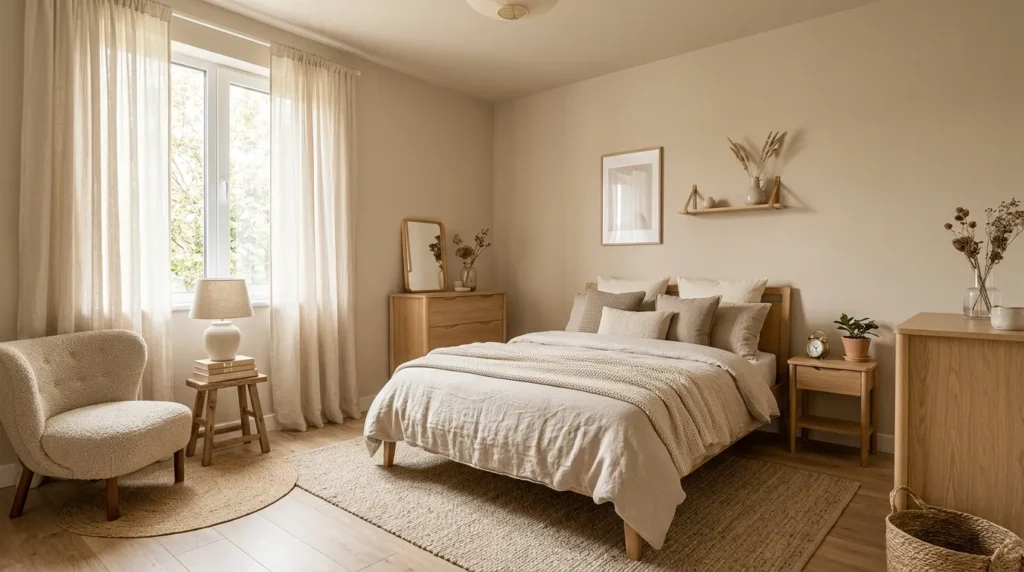
A monochromatic or tonal color scheme — walls, bedding, and furniture all within the same narrow color family — removes the visual breaks and contrast points that can make a small room feel busier and more broken up than it actually is. I’ve noticed that small bedrooms styled with a lot of color contrast, even when each individual color is attractive on its own, tend to feel more chopped-up and smaller than rooms that commit to a single, cohesive tonal palette throughout.
How To Style It
Choose one base color family — soft white, warm greige, or a pale blush are all popular choices — and apply it consistently across walls, bedding, and major furniture pieces, varying only the shade and texture slightly rather than introducing entirely different colors. Add visual interest through texture instead of color contrast — a nubby knit throw, a woven basket, or a textured headboard all add depth without breaking the room’s cohesive tonal story. This approach pairs particularly well with the light, reflective wall color strategy, extending that same brightening principle across the entire room’s palette.
7. Underbed Storage Instead of a Dresser
Quick Benefits
- Eliminates a bulky furniture piece entirely
- Uses already-existing dead space under the bed
- Frees up significant floor area
- Works with nearly any bed frame height
- Simple, affordable storage solution
Why It Works
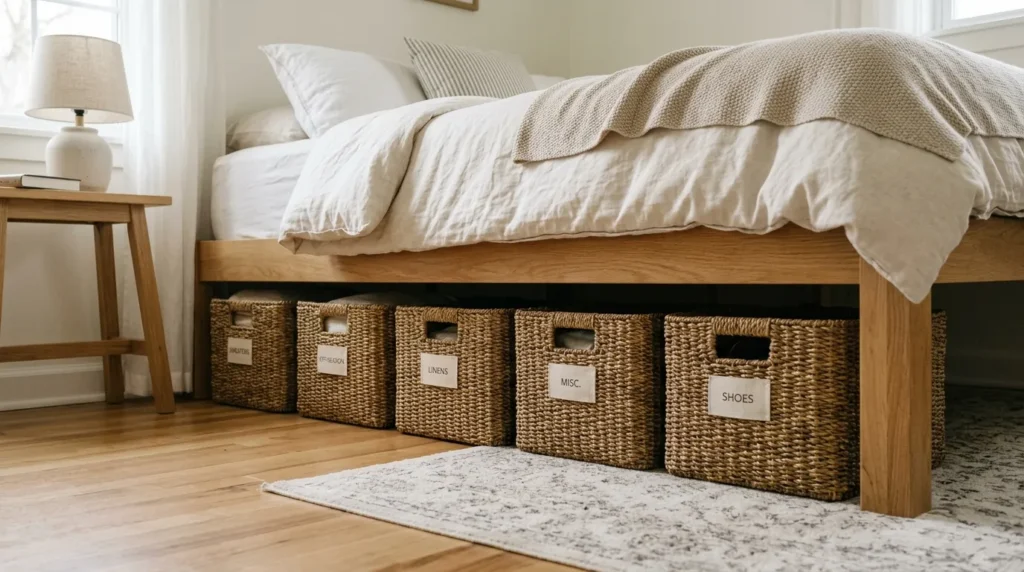
The space beneath a bed frame is one of the most underutilized areas in a typical bedroom, and shifting some or all of a dresser’s storage function into that space can eliminate an entire piece of bulky furniture from the room altogether. That’s why many designers recommend this swap specifically for very small bedrooms, where a full dresser might be one of the largest single floor-space consumers in the entire room, despite the fact that much of what it holds could just as easily live in bins or drawers tucked beneath the bed instead.
How To Style It
Choose a bed frame with enough clearance underneath for storage bins, or invest in a bed frame with built-in drawers specifically designed for this purpose. Use matching, uniform storage bins or baskets rather than a mismatched assortment, so the underbed storage looks tidy and intentional if visible from the room’s main sightlines. This idea works especially well combined with vertical wall storage, splitting what would have been dresser storage between under-bed bins and wall-mounted shelving instead, freeing up the floor space a traditional dresser would have occupied.
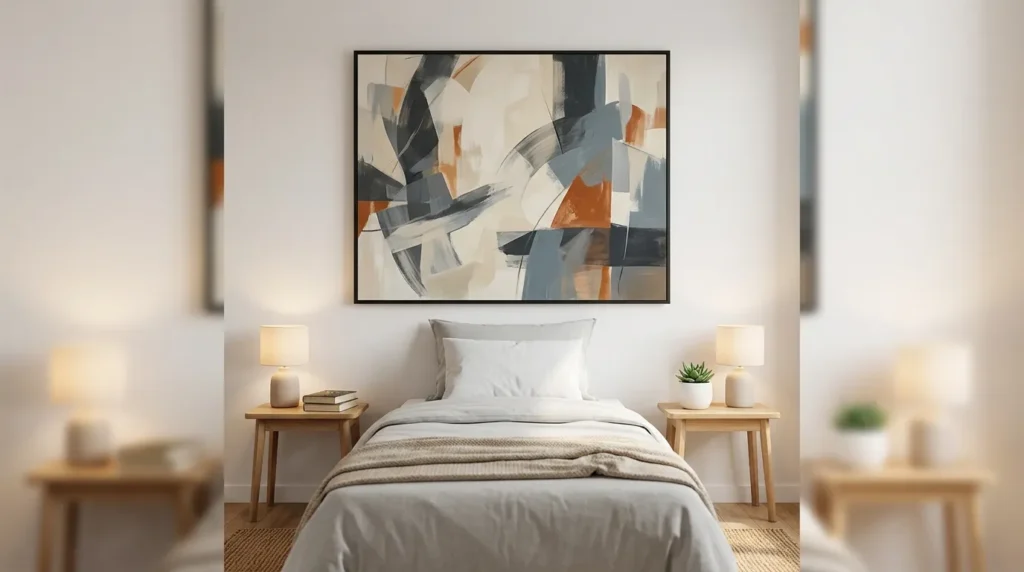
8. Oversized Art Instead of Multiple Small Pieces
Quick Benefits
- Reduces visual clutter on the walls
- Creates a clear, singular focal point
- Simplifies the room’s overall styling
- Works well above a bed or on a feature wall
- Feels more intentional than a scattered gallery approach
Why It Works
A collection of many small framed pieces scattered across a wall can create visual busyness that makes a small room feel more chaotic and cluttered, even when each individual piece is attractive. A single, well-scaled larger piece of art accomplishes the same goal of filling wall space and adding personality, but with one clean visual moment instead of several competing smaller ones, which tends to read as calmer and more spacious in a room that’s already working with limited square footage.
How To Style It
Choose one larger-scale piece of art or a single oversized mirror to anchor the space above the bed or on a key feature wall, sizing it generously enough to feel proportional to the wall rather than lost within it. This doesn’t mean small rooms can never support a gallery wall, but in a genuinely tight space, a single statement piece often reads as more sophisticated and less visually busy than a cluster of smaller frames competing for the same limited wall real estate.
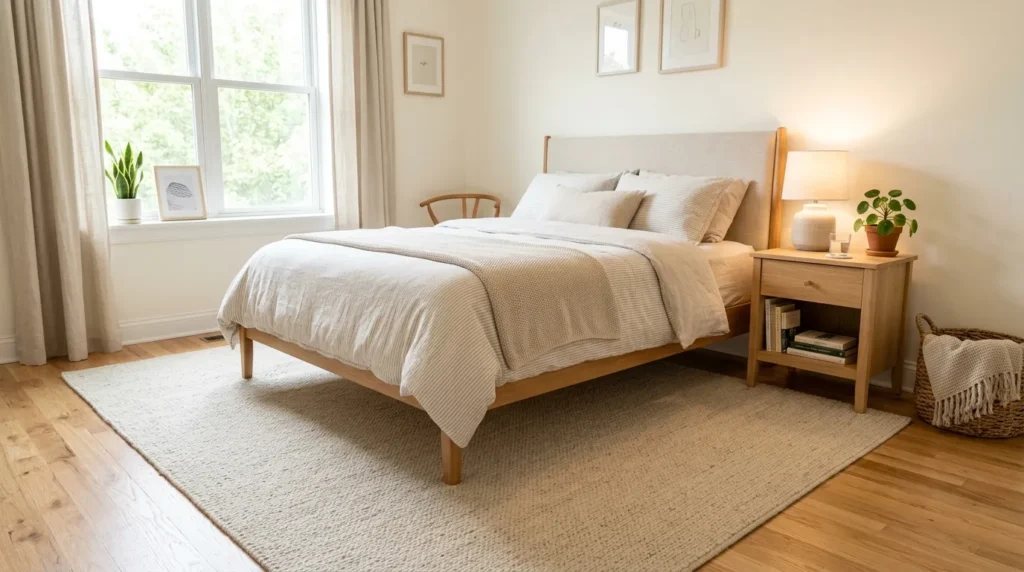
9. A Rug That Extends Under the Furniture
Quick Benefits
- Visually expands the room’s perceived footprint
- Creates a cohesive, grounded feel
- Prevents a choppy, fragmented floor appearance
- Simple flooring update with high visual impact
- Works with nearly any furniture layout
Why It Works
A rug that’s too small for the room, floating in the middle with visible flooring on all sides, actually makes a small bedroom feel more fragmented and cramped, since the eye registers the room as being divided into separate zones rather than one cohesive space. A properly sized rug that extends at least partially under the bed and nightstands, by contrast, visually expands the room’s perceived footprint, since the furniture appears to be sitting within one larger, unified area rather than floating on an island in the middle of bare floor.
How To Style It
Choose a rug large enough that at least the front legs of the bed, and ideally the nightstands as well, sit on top of it rather than a smaller rug that only fits in the open floor space at the foot of the bed. A lighter rug tone continues the same light, reflective color principle used elsewhere in the room, though a slightly deeper tone can still work well if it doesn’t create too much contrast against the surrounding flooring. This idea pairs particularly well with furniture featuring visible legs, since the rug and the furniture legs work together to keep the overall floor plane feeling continuous and open.
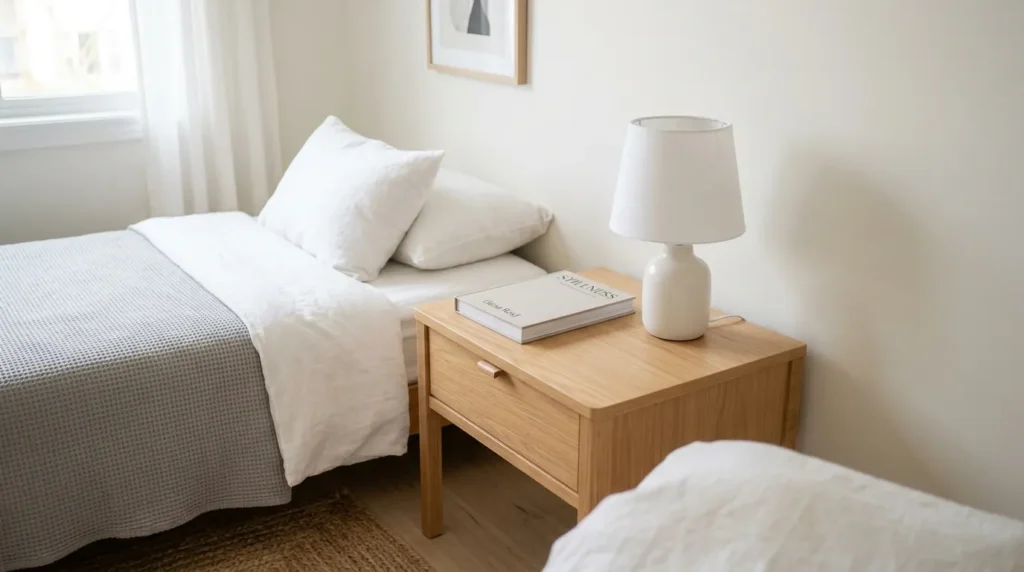
10. Decluttering Surfaces Completely
Quick Benefits
- Immediately makes the room feel calmer and larger
- Requires no purchases or renovation
- Highlights the other space-enhancing choices already made
- Simple habit to maintain going forward
- Highest-impact, zero-cost change on this entire list
Why It Works
Even a small bedroom with perfect paint color, well-scaled furniture, and thoughtful mirror placement will still feel cramped if every surface — nightstands, the top of a dresser, windowsills — is covered in miscellaneous items. Visual clutter registers as physical clutter to the eye, regardless of how much actual floor space is technically available, which is why decluttering surfaces completely is one of the simplest and most immediately effective strategies on this entire list, requiring no purchases or design changes at all.
How To Style It
Clear every visible surface in the room down to just one or two intentional items — a single lamp and a small stack of books on a nightstand, rather than a phone charger, a water glass, jewelry, and miscellaneous clutter all competing for the same small surface. Find a dedicated, hidden home for everyday items that tend to accumulate on visible surfaces, whether that’s a drawer, a small basket, or the underbed storage covered earlier in this list. This single habit, maintained consistently, does more to preserve the open, airy feeling created by every other idea on this list than almost any other single change.
Frequently Asked Questions
What color makes a small bedroom look bigger? Light, warm whites and soft neutrals are generally the most effective at making a small bedroom feel larger, since they reflect available light rather than absorbing it the way darker colors do. Carrying the same light color up onto the ceiling can further enhance the sense of openness.
Does furniture placement really affect how big a small room feels? Yes, furniture with visible legs, appropriately scaled pieces, and layouts that keep sightlines open all contribute significantly to how spacious a room feels, independent of its actual square footage. Bulky, floor-hugging furniture tends to make the same room feel noticeably smaller than furniture chosen with these principles in mind.
Should I avoid rugs in a small bedroom? Rugs can actually help a small bedroom feel larger when sized correctly, extending under at least part of the furniture rather than floating as a small island in the open floor space. A rug that’s too small for the room tends to fragment the space rather than unify it.
How many pieces of furniture should a small bedroom have? There’s no fixed number, but prioritizing only the essential pieces — a bed, one nightstand if space is truly limited, and either a dresser or underbed storage rather than both — tends to keep a small bedroom from feeling overcrowded. Every additional piece should genuinely earn its floor space.
Do mirrors actually make a small room feel bigger? Yes, strategically placed mirrors reflect both light and the room’s existing space, creating a genuine sense of added depth and brightness. Placement matters significantly, with mirrors positioned to reflect windows or open floor space working most effectively.
Is it better to use vertical storage in a small bedroom? Vertical storage, like wall-mounted shelving, generally makes better use of limited square footage than floor-based furniture, since it uses wall height that would otherwise go unused rather than consuming valuable floor space. This is particularly effective in bedrooms too small to comfortably fit a full dresser.
How often should I declutter a small bedroom to keep it feeling open? A brief, regular decluttering habit — clearing surfaces every few days or at least weekly — helps maintain the open feeling far more effectively than an occasional deep clean, since small bedrooms show accumulated clutter more noticeably than larger rooms with more visual space to absorb it.
Final Thoughts
A small bedroom has more visual potential than its square footage might suggest, and the strategies that actually open up the space rarely involve buying new furniture or undertaking a renovation. Light color choices, furniture with visible legs, well-placed mirrors, and a consistent habit of keeping surfaces clear all work together to create a room that feels genuinely spacious, regardless of its actual dimensions.
Start with one or two ideas — a lighter paint color and a decluttered nightstand are often enough to notice a real difference — and build from there as time and budget allow. A small bedroom, thoughtfully approached, can feel just as calm and open as a much larger one, simply by working with its proportions instead of against them.
Related Articles
- Small Living Room Layout Ideas
- Bedroom Wall Decor Ideas with Elegant Gallery Walls
- Modern Living Room Ideas with Soft Organic Textures
- Neutral Home Decor Inspiration
- How to Declutter Your Home Without Creating More Mess