
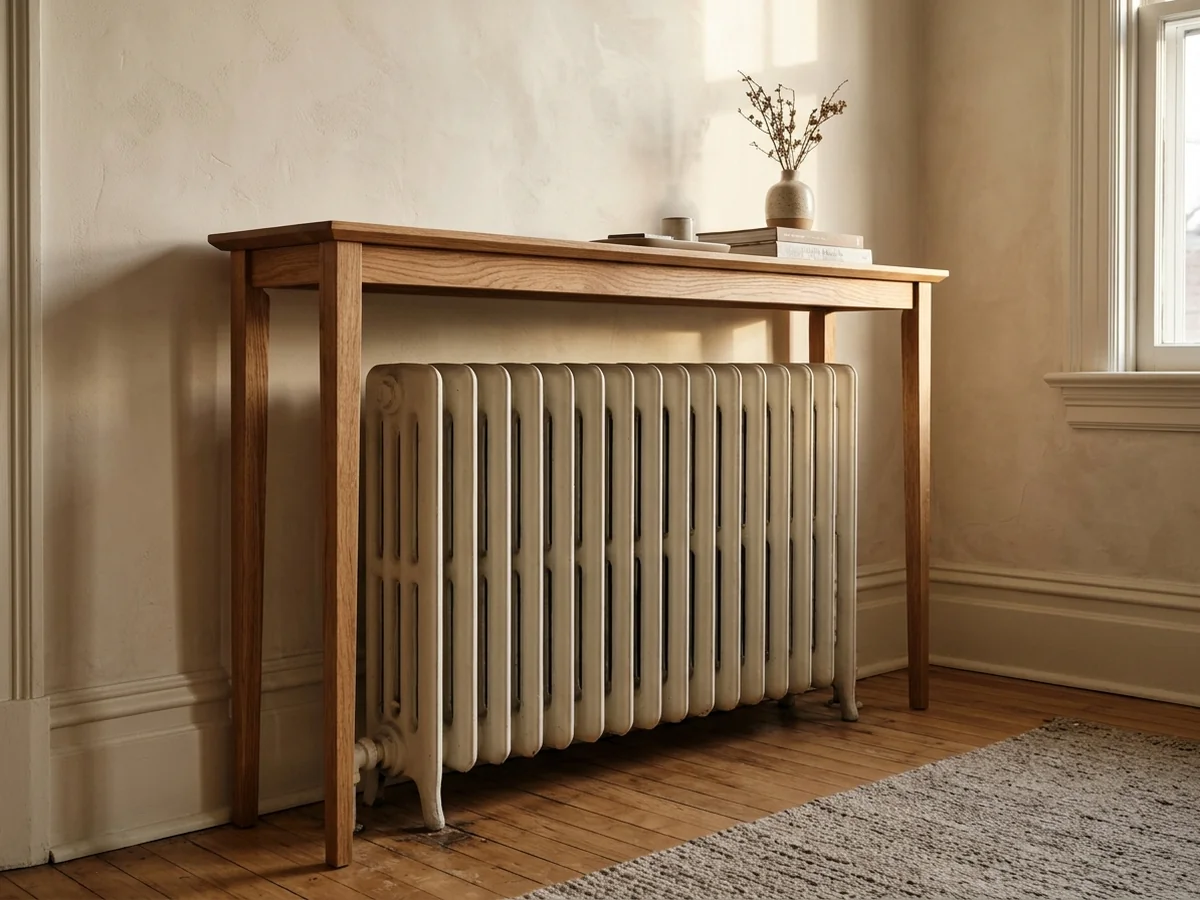
Can You Put a Wood Console Table Straddling a Low Cast Iron Radiator?
Cover Your Radiator Safely

You can safely place a console table over cast iron radiator units by ensuring proper airflow and using heat-resistant materials. A solid wood top requires at least 6 inches of clearance between the underside of the table and the top of the iron fins. This gap allows natural convection to circulate warm air into your hallway instead of trapping it under the wood surface. Without this space, heat builds up quickly, which causes varnish to crack and might lead to structural warping.
Choose hardwood over MDF for the tabletop to better handle thermal expansion caused by fluctuating temperatures. If you DIY a bridge table, keep the sides open to prevent heat accumulation near your thermostat. Use wall brackets to secure the furniture rather than resting weight directly on the radiator pipes. This setup protects your flooring and preserves your home heating efficiency while hiding an eyesore. Adding a thin heat shield underneath the wood provides extra protection for the finish during the peak of winter.
The Radiator Design Struggle
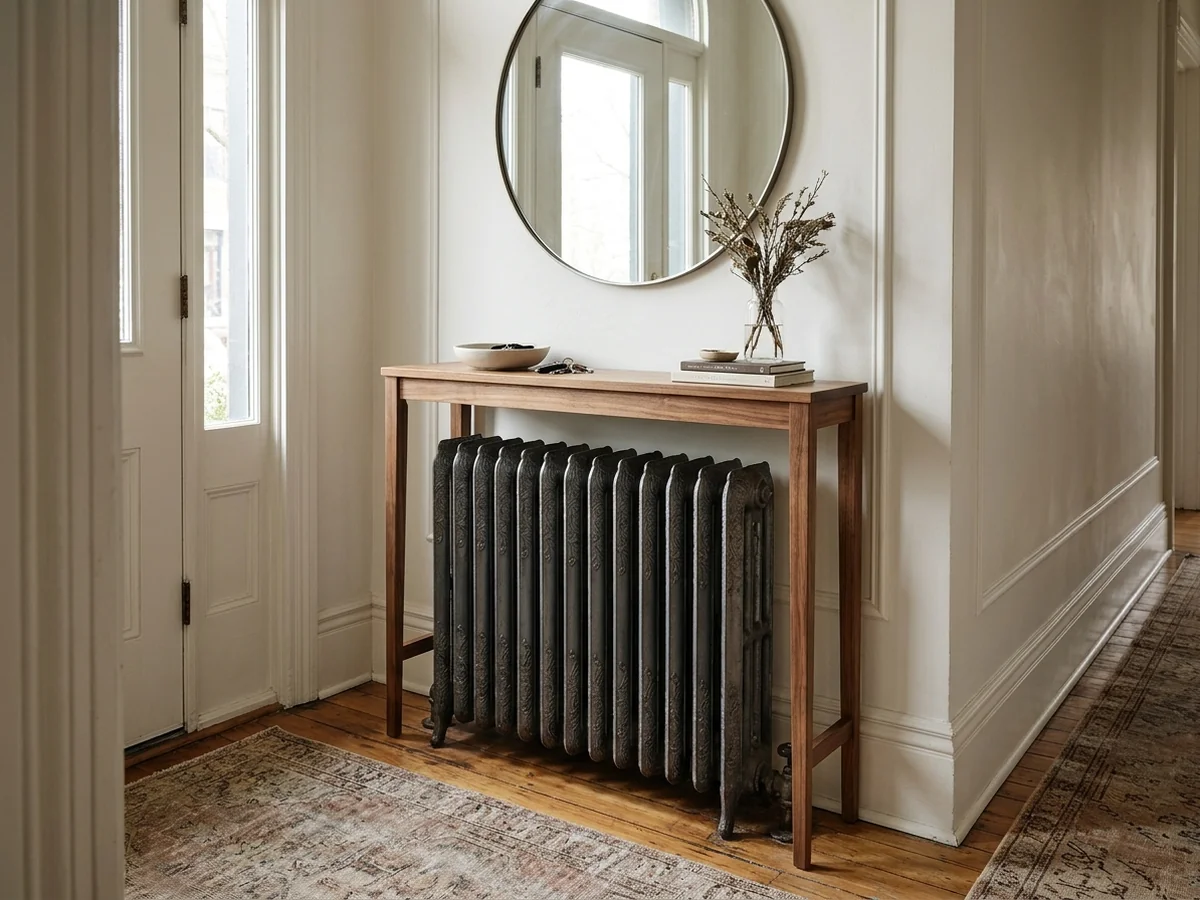
Old cast iron radiators often turn your entryway into an eyesore. You want a stylish console table over cast iron radiator setups to hide the metal bulk. But placing standard furniture directly against these heaters creates real problems. You risk warped wood, cracked varnish, and major heating loss.
Source: etsy.com
The heat trapped under your furniture causes thermal expansion issues in natural wood. Even high quality hardwood pieces can twist or split when subjected to constant, uneven temperatures. You might worry about fire safety, but the more immediate danger is the slow ruin of your home decor investment. Blocking the top of the unit stops natural convection. This forces your thermostat to work harder and drives up your monthly energy bills.
Many homeowners try to solve this with a simple wooden radiator cover console, but they often ignore the required airflow. A standard console table lacks the ventilation gap needed for efficient heat circulation. Without proper clearance, the heat stays trapped against the underside of your table. This persistent heat cycle destroys delicate finishes and creates a potential safety hazard in your hallway.
You need at least a 6 inch vertical clearance between the top of your cast iron radiator and the underside of any wood surface. This gap allows air to flow freely and prevents the surface temperature of the wood from reaching dangerous levels. Achieving this balance requires more than just sliding a table into place. You must consider the material thickness and the mounting method to protect your home. Most store-bought tables fail these basic safety requirements because they sit too low or lack an open back design.
Effective hallway solutions prioritize both aesthetics and function. A proper design ensures your furniture stays beautiful while your home stays warm. You can achieve a professional look without sacrificing heating efficiency or safety. Proper planning helps you avoid the common pitfalls of wood degradation and uneven room temperatures. Addressing these technical constraints early saves you from costly repairs or the disappointment of ruined furniture later.
Safe Bridging Solutions

You can safely place a console table over cast iron radiator units by prioritizing airflow. A bridge design keeps the heat moving into your hallway instead of trapping it under the wood. Proper clearance ensures your home heating efficiency remains high while you gain extra surface space.
I always suggest a minimum ventilation gap of at least 4 inches between the top of the iron and the underside of your table. This space allows natural convection to pull cool air from the floor and push warmth out into the room. Without this gap, the wood surface will absorb too much heat and likely warp or crack over time.
Thermal expansion remains the biggest challenge when mixing wood and iron. Cast iron radiators expand as they warm up, while wood tends to contract or move in response to dry, heated air. Avoid bolting your table directly to the radiator plumbing. Instead, use wall brackets to secure the furniture to the wall behind it. This setup keeps the table steady while letting the radiator move independently.
When selecting materials, avoid thin veneers or low quality MDF. These materials often fail under constant temperature swings. Use solid hardwood like oak or walnut, as they handle heat fluctuations better than engineered boards. Apply a high quality, heat resistant varnish to protect the surface from long term drying effects.
If you build a DIY radiator console table, consider these functional details:
- Leave the sides open to maximize air circulation.
- Install a thin metal heat shield underneath the tabletop to reflect warmth away from the wood.
- Ensure the legs sit at least 2 inches away from the iron body to prevent direct heat transfer.
- Keep the area near your thermostat clear to ensure accurate temperature readings.
Following these steps turns your radiator into a useful entryway feature. You get the aesthetic appeal of a console table without compromising your home’s warmth or safety. A well planned bridge design keeps the room cozy and protects your furniture investment for years.
Key Safety Benefits

Safety is the most important factor when you decide to place a console table over cast iron radiator hardware in your home. You can enjoy a stylish entryway without compromising your heating efficiency or home security by following these expert guidelines.
- Prevent overheating risks by maintaining a strict 4 inch ventilation gap between the top of the cast iron and the bottom of your tabletop to allow for proper convection.
- Ensure structural integrity by choosing high quality hardwood or dense heat resistant MDF that handles the constant thermal expansion cycles of a radiator better than cheap veneers.
- Protect your wood finish from intense rising heat by applying a specialized heat shield backing to the underside of the console table to stop varnish from bubbling or cracking.
- Stabilize your furniture by securing the console to the wall using discreet metal brackets to keep the unit steady without ever touching the radiator pipes or delicate plumbing.
Following these steps keeps your home safe and keeps your wood furniture in great condition for years. A proper installation ensures that warm air circulates freely throughout your hallway rather than becoming trapped against the underside of the wood. Using solid materials like oak or maple helps your table resist the drying effects of a cast iron radiator. Always check your local fire safety codes before adding furniture near a heat source. If your radiator gets extremely hot to the touch, you might consider adding an extra layer of fire retardant insulation to your heat shield. This simple setup turns an awkward heating unit into a functional and beautiful display space. You will find that these precautions make your DIY project both practical and long lasting for your daily needs.
Simple Setup Steps
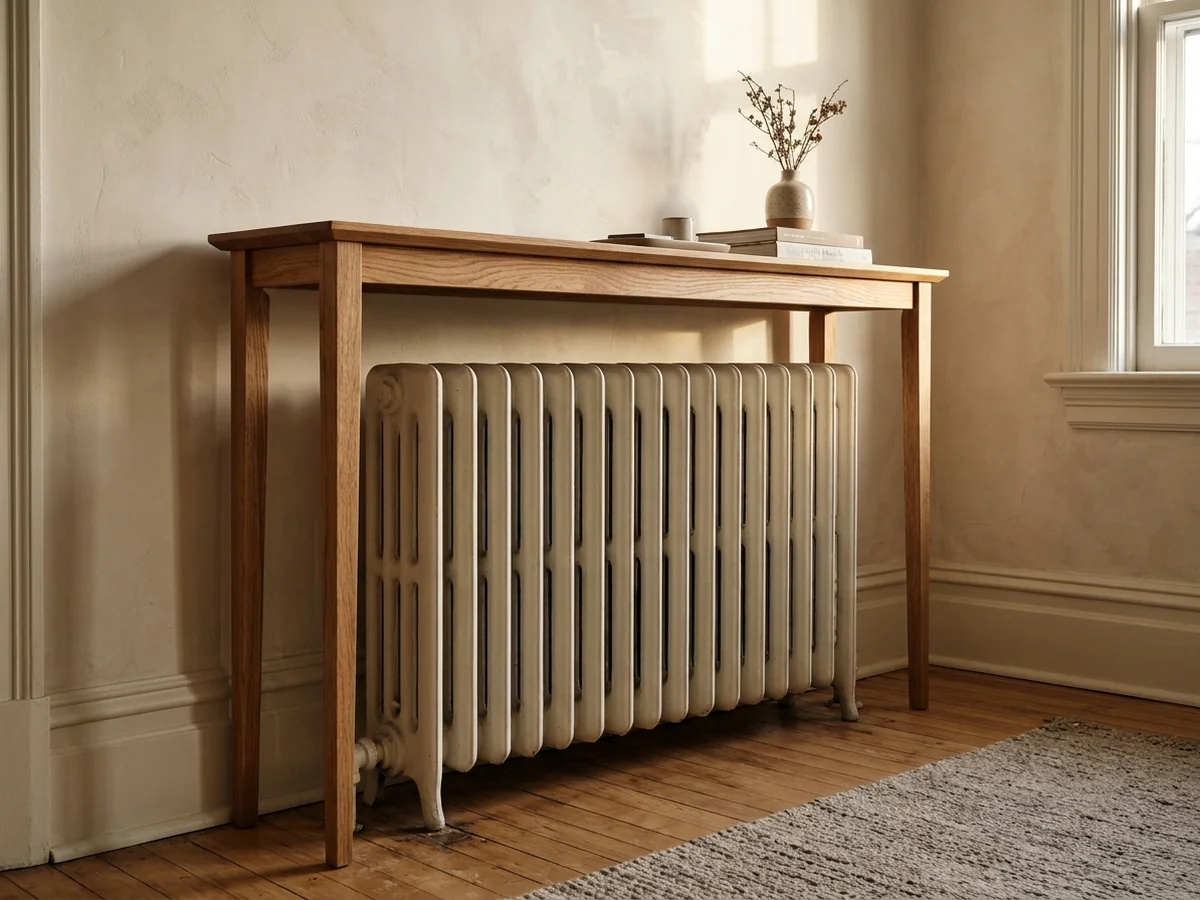
You can safely style a console table over cast iron radiator units by following a few critical safety habits. Proper installation keeps your home warm while protecting your furniture from warping or heat damage.
First, measure your unit carefully. Record the exact height and width of your radiator. Add an extra 4 inches of clearance on each side to ensure proper air circulation. This gap prevents the wood from trapping heat, which is essential for maintaining your room’s heating efficiency.
Choose a bridge design that remains open on the sides. Avoid solid side panels that block the natural convection process. An open frame allows warm air to move into your hallway or entryway freely. This design choice ensures you won’t need to turn up the thermostat to keep the space comfortable.
Protect your wood from intense heat by installing a heat reflective liner. Attach this thin metallic barrier to the underside of your console top. It acts as a shield against the rising heat from the cast iron. This simple step prevents the finish from cracking and stops the wood from drying out over time.
Secure the piece to your wall using sturdy metal brackets. These brackets keep the table stable and upright. This method ensures the furniture never touches the radiator unit itself. You avoid direct contact, which prevents potential fire hazards and protects the table from damage caused by thermal expansion.
- Measure your radiator plus 4 inches of side clearance.
- Pick an open design to maintain airflow.
- Add a heat shield underneath the tabletop.
- Use wall brackets for a secure, floating fit.
A well-planned setup creates a functional and safe console table over cast iron radiator look in any room. By keeping the wood away from the heat source and allowing air to flow, you enjoy a stylish entry without compromising your home comfort. Always check your setup after a few days of use to ensure no heat builds up near the wood surface.
Proven Safety Standards
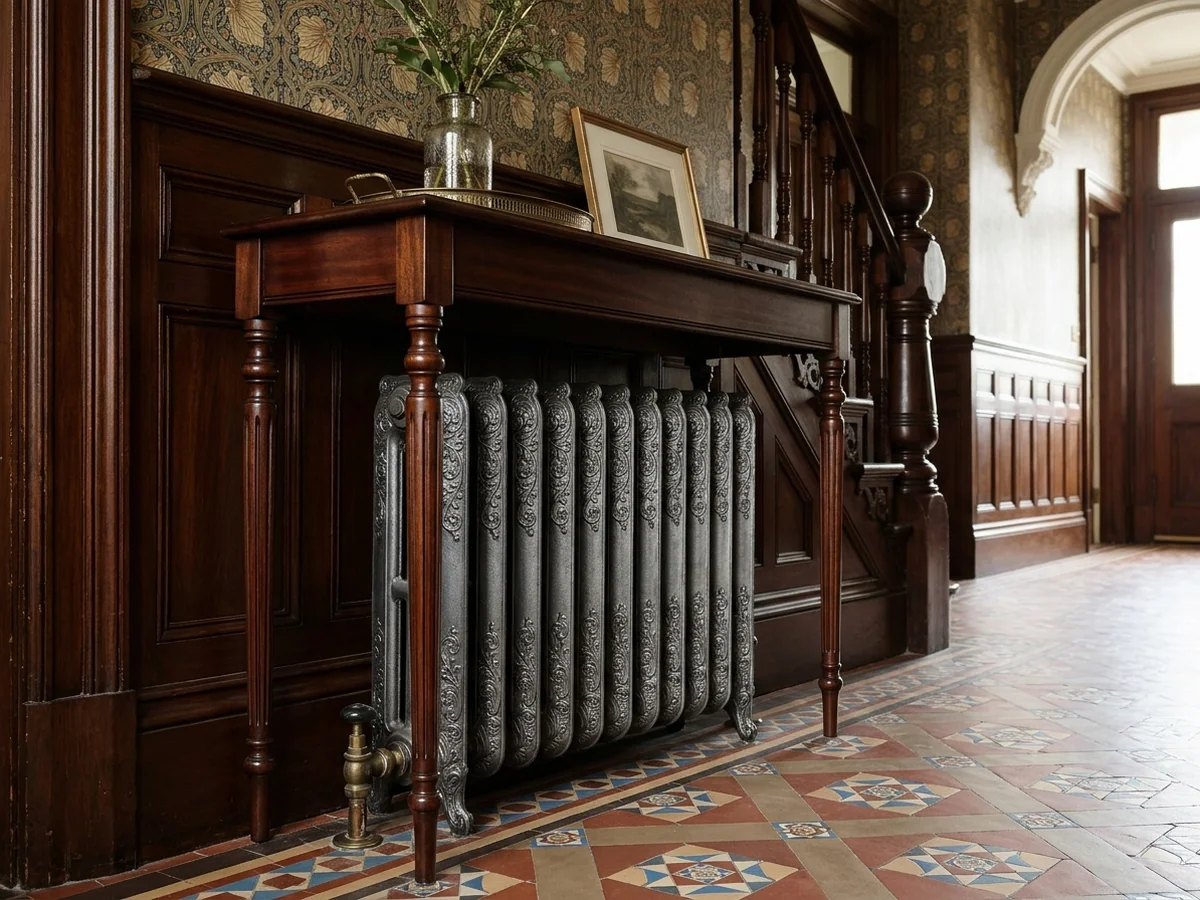
You can safely style a console table over cast iron radiator units by following strict thermodynamic guidelines. These rules protect your home heating efficiency while preventing heat damage to your furniture. Thousands of homeowners have already updated their Victorian entryways using these specific clearance and material steps.
We base these recommendations on simple physics to ensure your comfort. Your goal is to manage heat circulation without trapping warmth against the wood. Trapped heat leads to warped surfaces and ruined finishes over time. Proper design stops this before it starts.
- Maintain a minimum 4-inch vertical gap between the top of your radiator and the underside of the table. This space allows for natural convection currents to flow into your hallway.
- Select solid hardwood instead of MDF or particle board. Hardwood resists thermal expansion better than glued composites.
- Avoid placing items directly on the table surface that might block rising warm air.
- Use a heat-resistant varnish or a thin metal heat shield on the underside of your table. This layer acts as a barrier against direct radiation.
- Secure your furniture using wall brackets rather than resting weight on the iron unit. This avoids interference with the plumbing or the cast iron radiator itself.
Following these steps ensures your DIY radiator console table stays structurally sound. You will enjoy the aesthetic upgrade without worrying about fire safety or warped materials. Proper ventilation is the difference between a functional piece of decor and a damaged surface. Always check your local fire safety codes to confirm compliance with your specific heating setup. By respecting these clearance requirements, you turn a dated eyesore into a polished entryway feature that works with your home rather than against it. These standards keep your living space cozy and your furniture beautiful for years.
FAQ
Will wood catch fire?
Wood does not ignite when you keep a 4 inch clearance between the radiator and the table top. This distance ensures the surface temperature stays far below the point of combustion. You can safely place a console table over cast iron radiator units if you respect this air gap.
Does this block heat?
You will experience a negligible drop in room temperature if you keep the sides open for proper convection. By allowing air to flow freely, you maintain your home heating efficiency while hiding an unsightly radiator. Avoid solid side panels to ensure heat circulates throughout your hallway.
How do I stop warping?
Choose high quality hardwood instead of cheap MDF to prevent damage from thermal expansion. Applying a heat resistant varnish adds an extra layer of protection against the intense dry air. Avoid thin woods that react poorly to constant temperature shifts during the winter months.
Do I need to drill into the radiator?
Never attach furniture directly to the plumbing or the iron unit. Always anchor your console table to the wall using heavy duty brackets for stability. This keeps the weight off the heating system and prevents accidental damage to your pipes.
Is this safe for old homes?
Installing a console table over cast iron radiator fixtures is a common solution for Victorian home decor. It provides a functional surface in a narrow entryway without compromising fire safety. Just ensure the wood is sealed and the installation allows for easy access to your thermostat.
Start Your Project Today

You can transform your hallway by adding a console table over cast iron radiator units. This simple upgrade hides dated heating elements while adding functional surface space. Follow our safety guide to ensure your home stays beautiful and warm all winter long.
Start by measuring the height of your radiator. You need at least a 4-inch ventilation gap between the top of the metal and the underside of the wood. This space allows for proper convection. Without it, heat gets trapped. That trapped heat causes wood finishes to crack or warp.
Choose your materials wisely. Use solid hardwood instead of cheap MDF. High-quality oak or walnut handles heat better than processed boards. Apply a heat-resistant varnish to the underside of the table. This protects the wood from direct thermal expansion issues.
- Check your radiator clearance requirements before buying furniture.
- Install wall brackets to keep the table stable and safe.
- Ensure your design allows hot air to move freely into the room.
- Keep the wood surface at least 2 inches away from any thermostat dials.
Installing a console table over cast iron radiator setups is a quick weekend task. You do not need professional carpentry skills to succeed. Most projects cost under $150 in lumber and hardware. Focus on airflow to maintain your heating efficiency while improving your entryway decor.
Safety is the priority. Do not let the wood touch the iron directly. Use a small heat shield if you have limited space. This simple barrier prevents the wood from getting too hot to touch. You get the look you want without the fire hazard.
Ready to build? You can start this project right now with confidence. Our detailed steps keep your home safe and stylish. Grab your tape measure and pick your wood finish today.
For another perspective, this detailed piece on Over Radiator Console Table is worth a read.
You might also like: What Happens If Furniture Blocks the Convection Airflow of Baseboard H