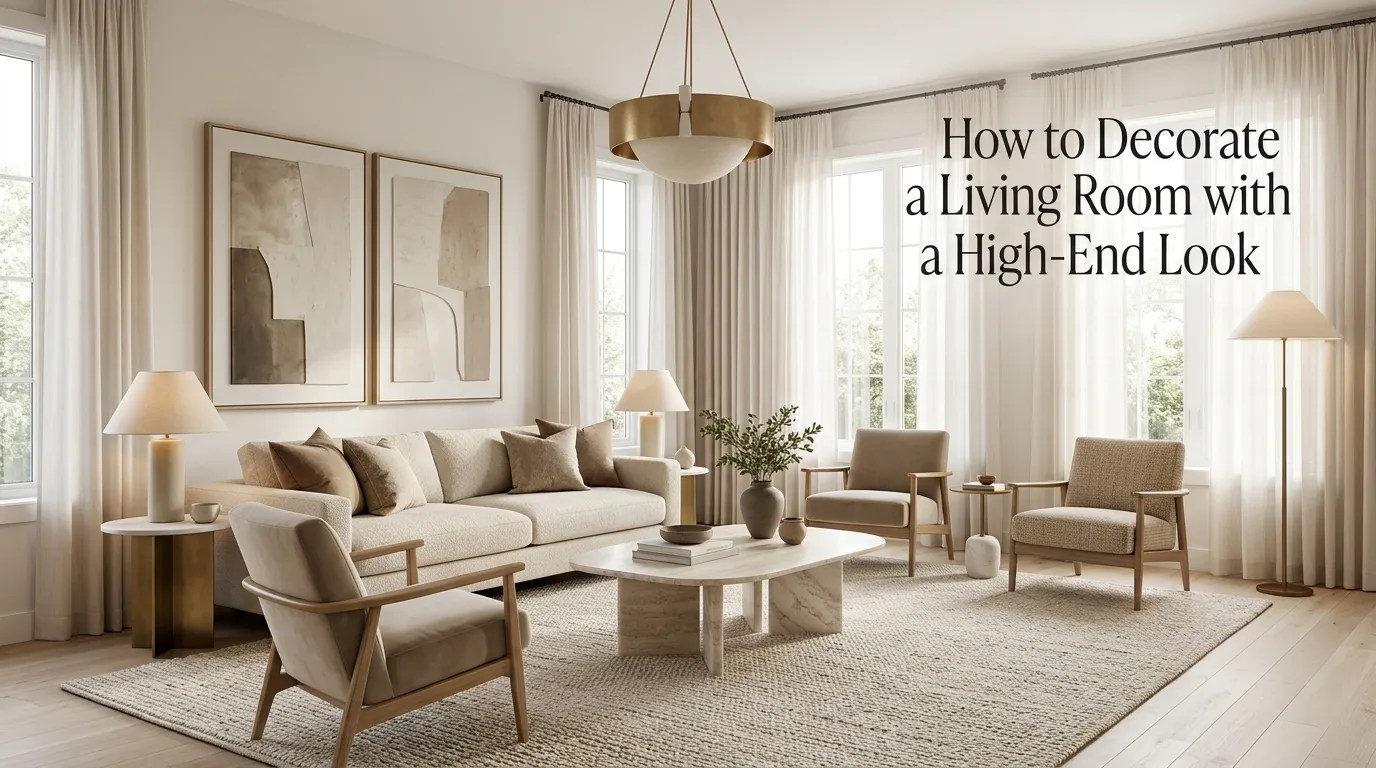
How to Decorate a Living Room with a High-End Look
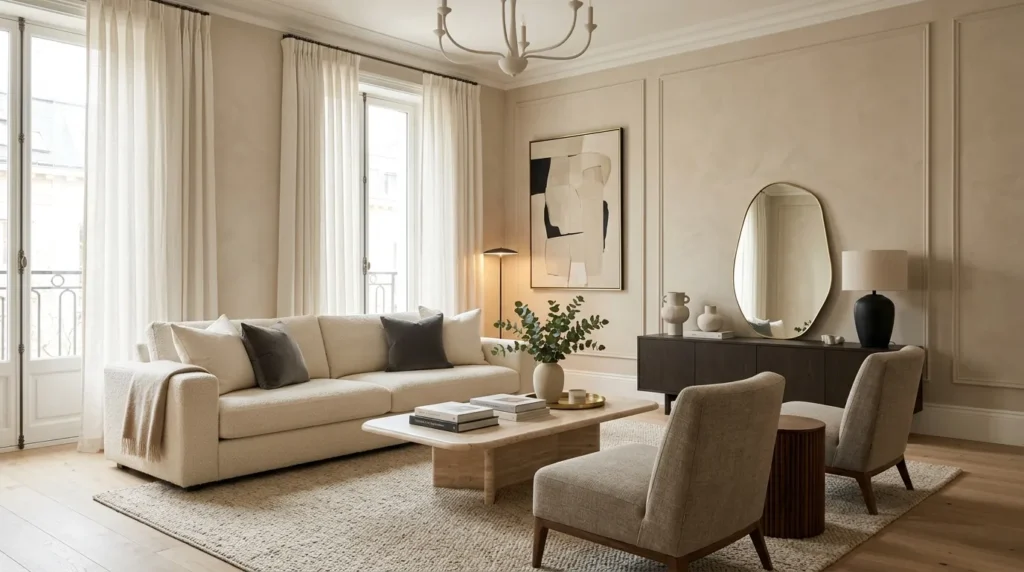
There’s a specific quality that separates a living room that looks “nice” from one that looks genuinely high-end — and in my experience, it rarely comes down to how much was spent. I’ve walked into rooms furnished almost entirely with budget-friendly pieces that felt more polished and expensive than rooms filled with designer furniture, simply because of how those pieces were chosen and arranged. A high-end look is less about price tags and more about restraint, proportion, and consistency.
I’ve noticed that the living rooms people describe as feeling “expensive” almost always share a few specific traits: a limited, cohesive color palette, quality materials used with intention, and a sense that nothing in the room was chosen randomly. A mistake many homeowners make is trying to achieve a high-end look by adding more — more accessories, more patterns, more furniture — when the opposite is almost always true. High-end design leans on fewer, better choices, with plenty of negative space left to let each piece stand out.
This guide walks through ten practical strategies for bringing that elevated, high-end feeling into your own living room, regardless of your starting budget. These are the same principles interior designers rely on again and again, broken down into steps you can actually apply this weekend or over the next few months. Whether you’re working with an existing furniture collection or starting from scratch, you’ll find ideas here that scale to your space and your budget.
By the end of this article, you’ll have a clear, practical roadmap for creating a living room that feels genuinely elevated — from furniture and lighting to color, materials, and the small styling details that make the biggest visual difference. Let’s get started.
Table of Contents
- Investment Piece Anchoring Building the room around one substantial, quality furniture piece.
- Tailored Upholstery Choices Choosing furniture silhouettes that read as considered, not generic.
- Layered Lighting Design Using multiple light sources to add warmth and depth.
- Natural Material Mixing Combining wood, stone, and metal for visual richness.
- Oversized Art Statement Using scale to create an instant focal point.
- Tonal Color Restraint Limiting your palette for a calm, sophisticated feel.
- Quality Over Quantity Styling Choosing fewer, better decor pieces throughout the room.
- Architectural Drapery Details Framing windows with fabric that adds height and softness.
- Coffee Table Styling Ritual Curating a surface that feels intentional, not cluttered.
- Hardware and Finish Consistency Unifying metal tones for a cohesive, polished finish.
1. Investment Piece Anchoring
Quick Benefits
- Establishes a clear focal point for the room
- Elevates the perceived quality of surrounding pieces
- Provides long-term durability and value
- Simplifies decisions around remaining furniture
- Creates a sense of intentional design
Why It Works
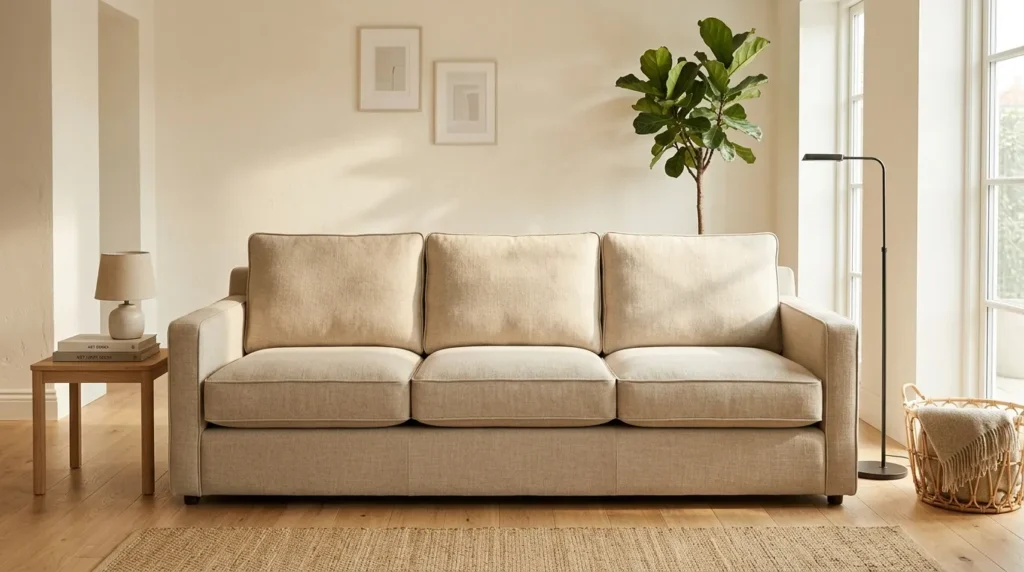
A mistake many homeowners make is spreading their budget evenly across every piece of furniture in the room, which often results in a space full of decent but forgettable items. In my experience, a high-end look comes together far more effectively when at least one substantial, quality piece — a well-made sofa, a solid wood media console, a genuine leather chair — anchors the room. That single investment piece sets a quality benchmark that everything else in the space is then styled around, which elevates the perceived value of the entire room, even when surrounding pieces are more budget-conscious.
How To Style It
Identify the piece of furniture you’ll use most or see most often — typically the sofa — and allocate the largest portion of your budget there, prioritizing construction quality, frame material, and upholstery over trend-driven details. Choose a timeless silhouette and a neutral, durable fabric so the piece remains relevant well beyond current design trends. Once your anchor piece is in place, select remaining furniture in complementary tones and materials that support rather than compete with it. Let the investment piece’s quality set the standard for the finishes, hardware, and materials you choose throughout the rest of the room.
2. Tailored Upholstery Choices
Quick Benefits
- Adds a custom, considered feel to furniture
- Elevates even mid-range furniture pieces
- Creates cleaner, more refined silhouettes
- Improves durability with the right fabric choice
- Works across a range of design styles
Why It Works
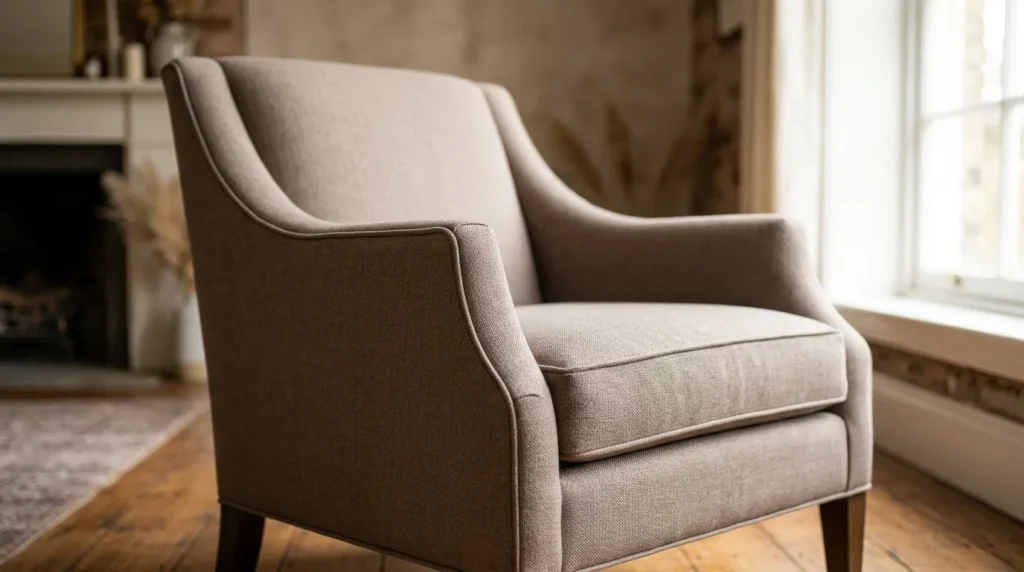
The difference between furniture that reads as generic and furniture that reads as high-end often comes down to upholstery details most people don’t consciously notice. Tailored, tight-back cushions with crisp welting or piping create a more structured, refined silhouette than loose, overstuffed cushions, which can look casual or even slightly unfinished by comparison. That’s why many designers recommend paying close attention to upholstery construction, since these details signal quality and intentionality even on furniture that wasn’t especially expensive to begin with.
How To Style It
Look for furniture with tight-back or semi-tailored cushion construction rather than loose, overstuffed pillow-back designs, which tend to read as more casual and less structured. Welted or piped seam details along cushion edges add a crisp, finished look that elevates the entire piece. Choose performance fabrics in solid, neutral tones for durability and a timeless appearance, reserving pattern for smaller, easily replaceable accent pieces like throw pillows. If reupholstering an existing piece isn’t in the budget, a well-fitted, tailored slipcover in a structured fabric can achieve a similar visual effect for considerably less investment.
3. Layered Lighting Design
Quick Benefits
- Adds warmth and dimension throughout the room
- Eliminates flat, unflattering overhead lighting
- Creates flexibility for different times of day
- Highlights architectural and decor details
- Signals a finished, professionally designed space
Why It Works
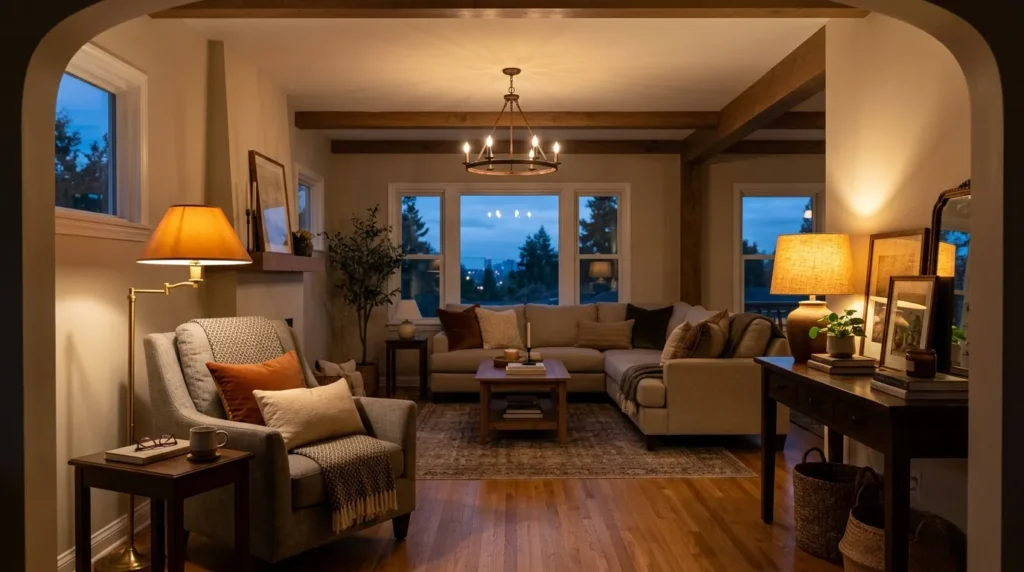
Lighting is one of the fastest ways to distinguish a high-end living room from one that simply has nice furniture in it. A single overhead fixture creates flat, even light that can make even beautifully chosen furniture and decor look flat and uninviting. I’ve seen this idea transform rooms that felt underwhelming despite quality furnishings into spaces that suddenly read as considered and elevated — simply by adding two or three additional light sources at varying heights throughout the room.
How To Style It
Layer at least three light sources: an ambient overhead or recessed light, a floor lamp near seating, and a table lamp on a console or side table. Choose lighting fixtures with a consistent finish — brass, matte black, or aged bronze — so they read as part of a coordinated plan rather than mismatched pieces collected over time. Warm-toned bulbs, generally in the 2700K to 3000K range, create a more inviting glow than cooler white light, which can feel clinical in a residential space. If your budget allows, a dimmer switch on the main overhead fixture adds valuable flexibility between bright daytime function and a softer evening atmosphere.
4. Natural Material Mixing
Quick Benefits
- Adds richness and depth through texture
- Creates visual interest without added color
- Grounds the room with organic warmth
- Elevates even simple furniture silhouettes
- Works with nearly any design style
Why It Works
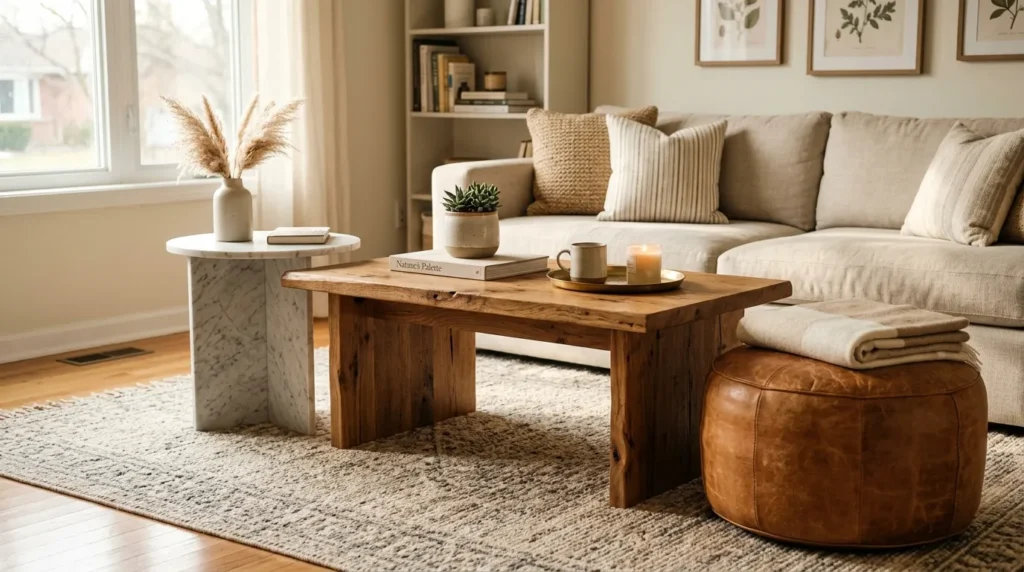
High-end interiors rarely rely on a single material throughout a room. Instead, they layer natural materials — wood, stone, metal, linen, leather — to create depth and richness that a room built entirely from one material type can’t achieve. If you’re anything like me, you’ve probably noticed that a room with only fabric and painted surfaces can feel visually flat compared to one that incorporates a stone side table, a leather ottoman, and a wood console alongside upholstered seating. This material variety is part of what gives high-end spaces their layered, considered feel.
How To Style It
Aim to incorporate at least three distinct natural materials in your living room — for example, a wood coffee table, a stone or marble side table, and a leather or wool accent chair. Balance warm materials like wood and leather with cooler ones like stone or metal to create contrast without visual conflict. Keep upholstery fabrics in natural fibers where possible, such as linen, wool, or performance versions of these materials, which tend to read as higher quality than synthetic alternatives. Distribute materials evenly around the room rather than clustering them in one corner, so the eye moves naturally across different textures as it takes in the space.
5. Oversized Art Statement
Quick Benefits
- Creates an immediate, confident focal point
- Fills wall space without additional furniture
- Adds personality and depth to the room
- Balances large furniture pieces visually
- Elevates the room’s overall design language
Why It Works
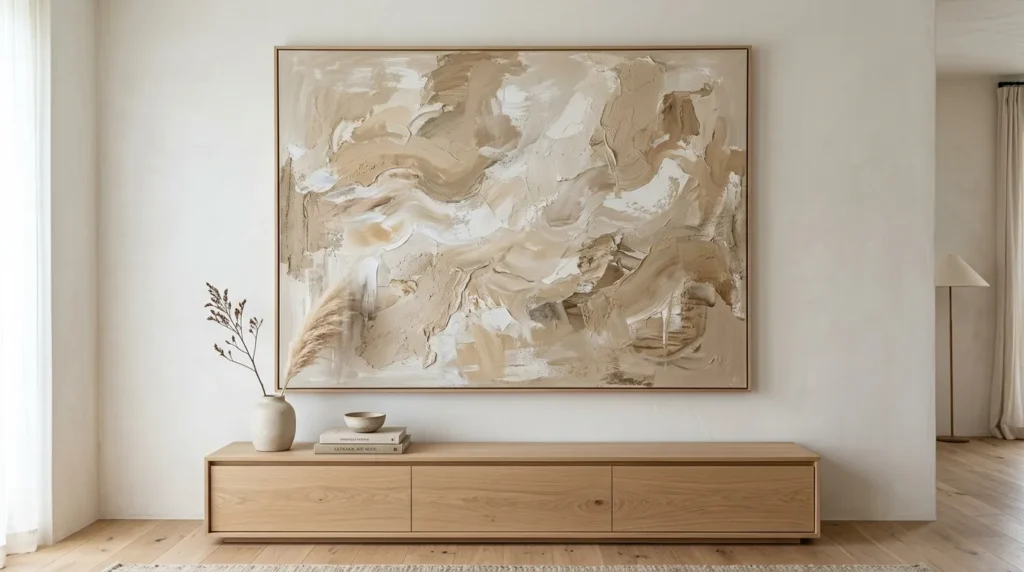
Small, scattered art tends to read as an afterthought on a large living room wall, while one substantial piece creates the kind of confident visual statement associated with professionally designed spaces. A mistake many homeowners make is under-scaling their art relative to the size of their walls and furniture, which can make even a beautifully decorated room feel slightly unfinished. Oversized art, properly scaled to the wall or the furniture beneath it, gives the eye a clear place to land and signals the same kind of intentional design choice found throughout high-end interiors.
How To Style It
Choose a piece roughly two-thirds the width of the sofa or console beneath it, hung with its center at approximately eye level, generally 57 to 60 inches from the floor. Abstract art, large-scale photography, or a substantial framed textile all work well in a high-end living room, particularly in muted or tonal color palettes that complement rather than compete with the room’s furniture. If a single oversized piece isn’t available, two large pieces hung with minimal spacing between them can create similar visual weight. Leave breathing room around the art rather than crowding the wall with smaller frames, which preserves its impact as the room’s clear focal point.
6. Tonal Color Restraint
Quick Benefits
- Creates a calm, cohesive visual foundation
- Makes materials and textures stand out
- Feels timeless rather than trend-driven
- Simplifies future decor decisions
- Reads as considered rather than accidental
Why It Works
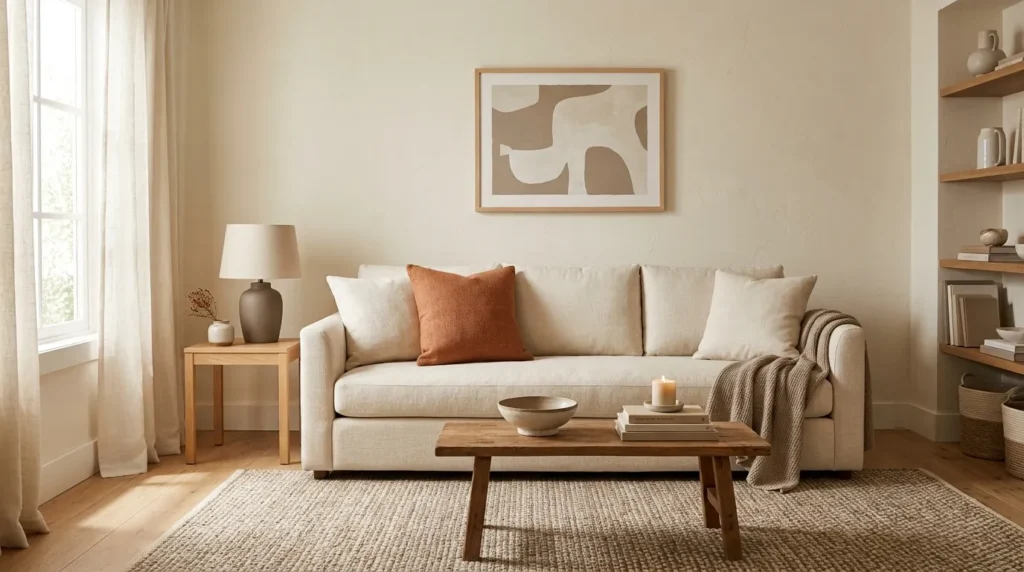
One simple trick I always suggest for an instantly more expensive-looking living room is narrowing the color palette. High-end rooms almost always work within a tight, tonal color range — often just two or three related colors — rather than incorporating many competing hues. This restraint allows texture, material, and form to become the room’s visual interest instead of color, which tends to read as more sophisticated and less trend-dependent. A room with too many competing colors, even if each one is individually attractive, can feel busy and less considered by comparison.
How To Style It
Choose one dominant neutral for your walls and largest furniture pieces, a secondary tone within the same family for supporting furniture and textiles, and a single accent color used sparingly throughout. Keep patterns minimal and tonal, favoring subtle texture over bold contrast if you do incorporate pattern into pillows or rugs. Extend your chosen palette to less obvious elements like book spines, vases, and picture frame mats, which reinforces the cohesive feel even in small details. Resist the urge to introduce a new color with every new decor purchase — check new pieces against your established palette before bringing them into the room.
7. Quality Over Quantity Styling
Quick Benefits
- Prevents a cluttered, overwhelmed look
- Allows individual pieces to stand out
- Creates a more sophisticated, editorial feel
- Encourages more intentional purchasing decisions
- Elevates the room’s overall sense of calm
Why It Works
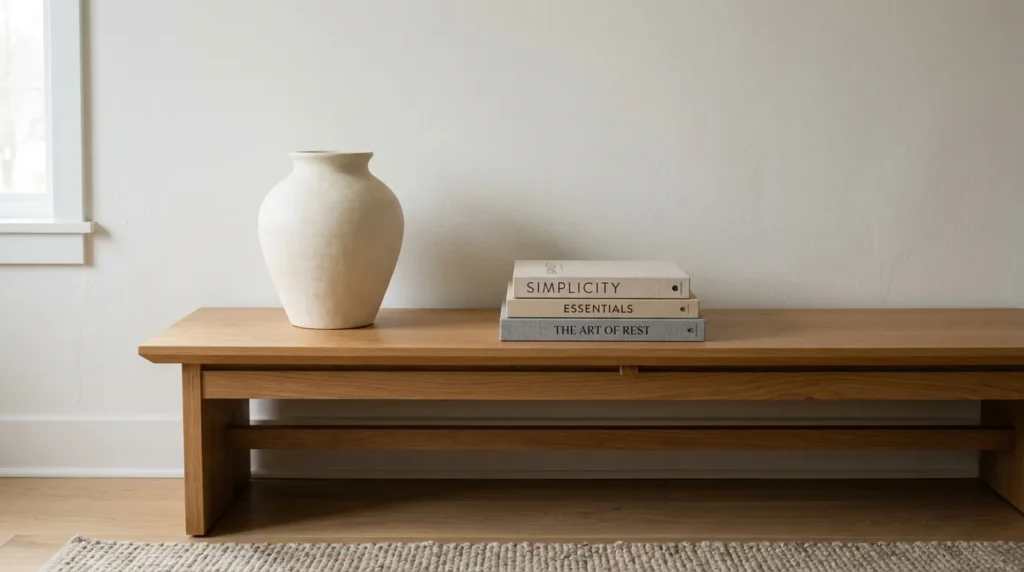
A mistake many homeowners make is filling every shelf, surface, and corner with decor in an effort to make a room feel complete. In my experience, high-end rooms almost always include less decor than expected, not more — the restraint is exactly what allows each remaining piece to be appreciated rather than lost in visual noise. That’s why many designers recommend a “fewer, better” approach: a small number of well-chosen, quality objects reads as considerably more sophisticated than a large collection of budget accessories, even when the total dollar amount spent is similar.
How To Style It
Before adding a new decor piece to the room, ask whether it earns its place — does it add genuine visual or functional value, or is it filling space out of habit? Choose a smaller number of larger, higher-quality objects rather than many small trinkets, since fewer larger pieces tend to photograph and read as more intentional. Leave visible negative space on shelves, consoles, and coffee tables rather than filling every available surface, which allows the room to feel calm rather than crowded. Periodically edit existing decor, removing pieces that no longer serve the room’s overall look to keep the space feeling curated rather than accumulated.
8. Architectural Drapery Details
Quick Benefits
- Adds height and softness to the room
- Frames natural light in a flattering way
- Introduces texture without extra furniture
- Elevates the perceived ceiling height
- Completes the room’s overall sense of polish
Why It Works
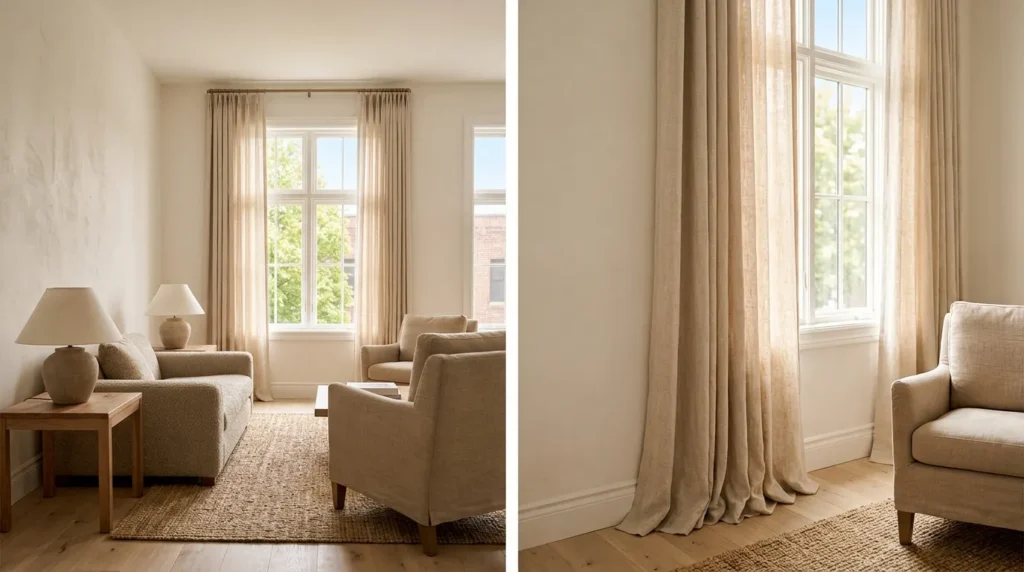
Window treatments are frequently overlooked, yet they carry significant weight in determining whether a room feels finished or unfinished. Floor-length curtains mounted close to the ceiling create the illusion of height and add a soft, flowing texture that hard surfaces alone can’t provide. That’s why many designers recommend checking curtain proportions before almost any other styling decision — short, tight curtains hung directly at the window frame are one of the most common culprits behind a room that otherwise has good furniture but still feels somehow unpolished.
How To Style It
Mount curtain rods as close to the ceiling as practical, extending several inches beyond the window frame on each side so curtains frame the window generously and allow maximum light when open. Choose curtains that graze the floor or puddle slightly, avoiding lengths that stop noticeably short above the ground. Linen and heavier cotton blends drape more naturally and read as higher-end than lightweight polyester options. If your windows are small or oddly proportioned, hanging curtains at ceiling height regardless of the actual window size helps create the illusion of a larger, more architecturally significant window.
9. Coffee Table Styling Ritual
Quick Benefits
- Creates a curated, magazine-worthy focal point
- Balances function with visual polish
- Reflects personal style without clutter
- Anchors the room’s overall color story
- Easy to refresh seasonally
Why It Works
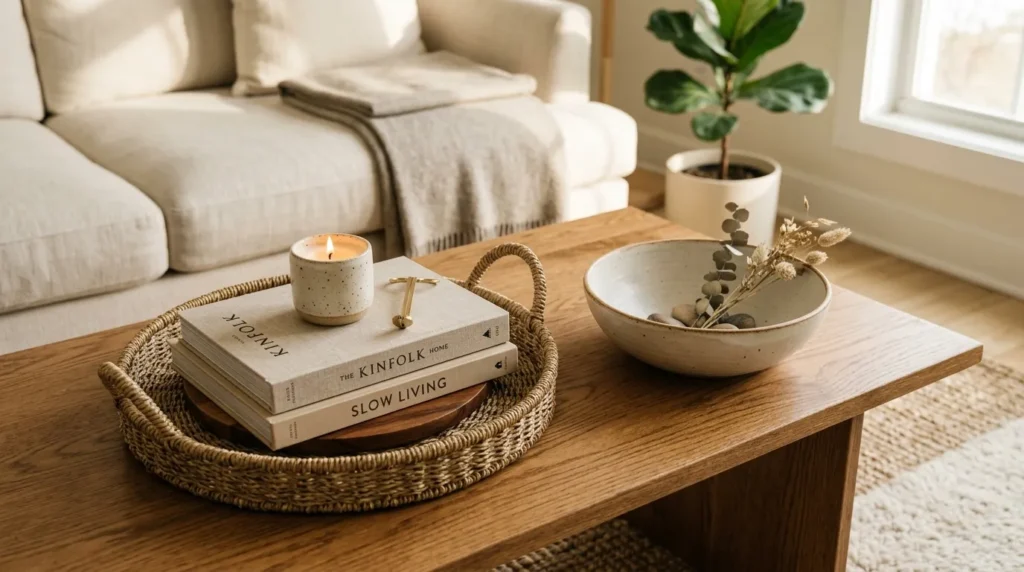
The coffee table sits at the visual center of most living rooms, which makes its styling disproportionately influential on how the entire space reads. A mistake many homeowners make is either leaving it completely bare or overloading it with too many small objects, both of which undercut the room’s overall polish. A well-styled coffee table — a stack of books, a low tray, one or two decorative objects, and perhaps a small vase — signals the same intentional restraint found throughout the rest of a high-end room, while still remaining genuinely functional for everyday use.
How To Style It
Anchor the table with a tray to visually contain smaller items and keep the surface looking tidy even during daily use. Add a stack of two to three coffee table books in colors that complement your room’s palette, and top the stack with a small object like a candle or a piece of sculptural decor. Include one low, textural element, such as a small plant or a ceramic bowl, to add organic softness to the otherwise structured arrangement. Leave roughly a third of the table’s surface empty rather than filling it completely, which keeps the styling feeling intentional rather than crowded.
10. Hardware and Finish Consistency
Quick Benefits
- Creates a subtle, unifying design thread
- Elevates even simple or budget furniture
- Reduces visual noise throughout the room
- Signals attention to detail
- Requires minimal investment for high impact
Why It Works
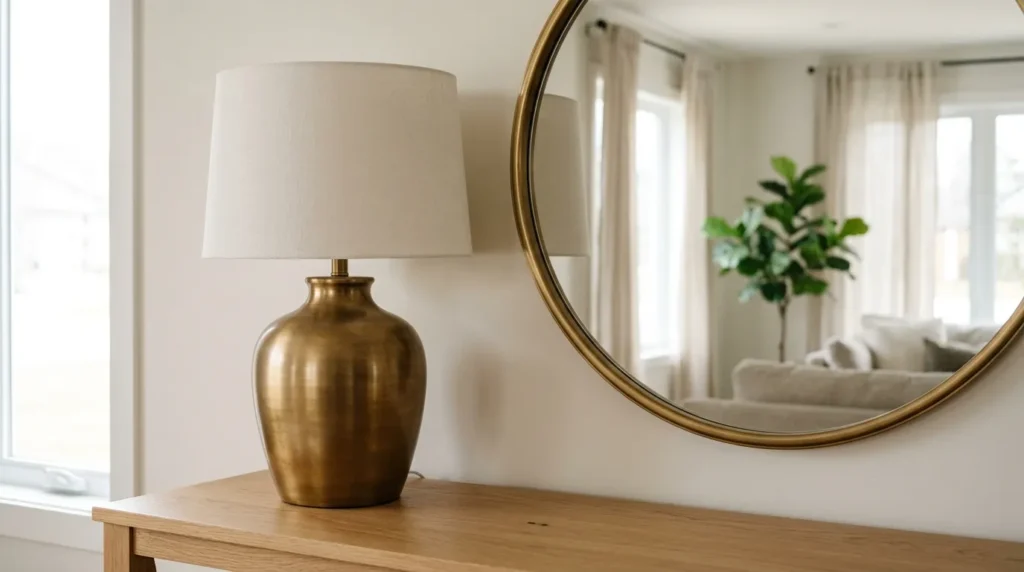
Small hardware and finish details — lamp bases, picture frames, drawer pulls, curtain rods — are easy to overlook individually, but their cumulative consistency has an outsized effect on how polished a room feels. A mistake many homeowners make is mixing metal finishes randomly across a room without a unifying logic, which can create a subtle sense of visual chaos even when the furniture itself is well chosen. High-end rooms typically commit to one, or at most two, complementary metal finishes throughout, which ties the space together in a way that’s easy to miss consciously but immediately noticeable when it’s absent.
How To Style It
Choose one primary metal finish — warm brass, matte black, or aged bronze are popular high-end choices — and apply it consistently across lighting fixtures, picture frames, and hardware throughout the room. If you’re working with existing furniture in mismatched finishes, prioritize updating the most visible elements first, such as lamp bases and curtain rods, before tackling smaller details like drawer pulls. A second, complementary finish can be introduced in smaller doses, such as a single mixed-metal accent piece, without disrupting the overall consistency. Walk through the room periodically and note any hardware or finish that feels out of place — these small inconsistencies are often the easiest and most affordable fixes for an instantly more elevated look.
Frequently Asked Questions
Do I need to buy new furniture for a high-end living room look?
Not necessarily. Updating hardware, adding layered lighting, tightening your color palette, and reupholstering or slipcovering existing pieces can dramatically shift the feel of a room without a full furniture replacement.
What’s the most important element for a high-end living room?
Restraint is arguably the most important factor — a limited color palette, fewer and better-chosen decor pieces, and consistent finishes throughout the room. These choices matter more to the overall perception of quality than any single expensive item.
How many colors should a high-end living room include?
Most high-end rooms work within two to three related tones, with a single accent color used sparingly. This tonal restraint allows texture and material to carry visual interest instead of competing colors.
Is it necessary to hire a professional designer for this look?
Not at all. The strategies covered here, including layered lighting, material mixing, and hardware consistency, are all approachable for homeowners to apply on their own, often with a modest budget and some patience.
What’s a low-cost way to instantly elevate a living room?
Adjusting curtain height and length, adding a floor or table lamp for layered lighting, and editing down existing decor to a smaller, more curated selection are all low-cost changes with a noticeably high visual impact.
How do I know if my living room has too much decor?
If shelves, coffee tables, and consoles are fully covered with little to no visible negative space, the room likely has more decor than a high-end look calls for. Removing roughly a third of existing items is a good starting point for most overfilled rooms.
What materials read as the most high-end in a living room?
Natural materials like solid wood, genuine leather, stone, and linen consistently read as higher-end than their synthetic counterparts. Mixing several of these materials throughout the room adds the layered texture associated with elevated interior design.
Conclusion
A high-end living room isn’t defined by how much you spend — it’s defined by restraint, consistency, and intentional choices at every level, from your anchor furniture piece down to your lamp finishes. From investment furniture and layered lighting to a tightened color palette and thoughtfully styled surfaces, every idea in this guide works toward the same underlying principle: fewer, better decisions almost always outperform more, average ones. None of these changes require a complete overhaul, and most can be introduced gradually over time.
Start with one or two ideas and gradually build a space that reflects your style and feels genuinely elevated to live in every day. Maybe that means adjusting your curtain height this weekend and layering in new lighting next month. Small, deliberate changes compound into a living room that feels considered, cohesive, and unmistakably high-end — regardless of what you spent to get there.
Related Articles
- Small Living Room Layouts
- Modern Farmhouse Decor
- Neutral Home Styling
- DIY Accent Wall Ideas
- Cozy Bedroom Ideas