

10 Aesthetic Bedroom Ideas That Feel Cozy All Year
There’s a particular kind of bedroom that feels good to be in no matter the season — warm in winter, breathable in summer, and inviting every night in between. In my experience, that year-round coziness isn’t the result of one big design choice, but a handful of smaller, layered decisions that work together. A room can look beautiful in photos and still feel cold or uninviting to actually sleep in, which is usually a sign that texture, lighting, and warmth were treated as an afterthought rather than the foundation.
I’ve noticed that the coziest, most aesthetic bedrooms almost always share a few core elements: soft layered textiles, warm lighting, natural materials, and a handful of personal touches that make the space feel lived-in rather than staged. A mistake many homeowners make is chasing a specific trend or color scheme without considering whether it actually feels comfortable to spend time in. True coziness is sensory as much as visual — it’s about how a room feels to walk into after a long day, not just how it photographs.
This guide walks through ten practical, achievable ideas for building a bedroom that feels genuinely cozy in every season, without needing to redecorate every few months. These are the same layering principles designers and stylists return to again and again, broken down into steps you can apply gradually, whether you’re starting from scratch or simply want to warm up a space that already has good bones. You’ll find guidance on textiles, lighting, color, and the small personal details that make a room feel like yours.
By the end of this article, you’ll have a clear roadmap for creating a bedroom that feels as warm and inviting in July as it does in January — one thoughtful layer at a time. Let’s get started.
Table of Contents

- Warm Layered Textiles Building coziness through fabric, texture, and layered bedding.
- Soft Ambient Lighting Using warm, low lighting to create a relaxed evening mood.
- Natural Wood Tones Grounding the room with warm, organic material choices.
- Oversized Reading Nook Creating a dedicated corner for slowing down and relaxing.
- Cloud-Like Bedding Making the bed itself the coziest spot in the room.
- Candlelit Styling Touches Adding small details that create warmth and ambiance.
- Woven Texture Accents Introducing tactile richness through baskets, rugs, and throws.
- Warm Wall Color Choosing a palette that feels enveloping rather than stark.
- Curtain Layering Technique Softening windows with fabric that adds warmth and privacy.
- Personal Sentimental Details Making the space feel lived-in with meaningful touches.
1. Warm Layered Textiles
Quick Benefits
- Adds instant softness and visual warmth
- Creates depth through varied textures
- Easy to adjust seasonally without a full redesign
- Improves comfort as much as appearance
- Works with almost any color palette
Why It Works
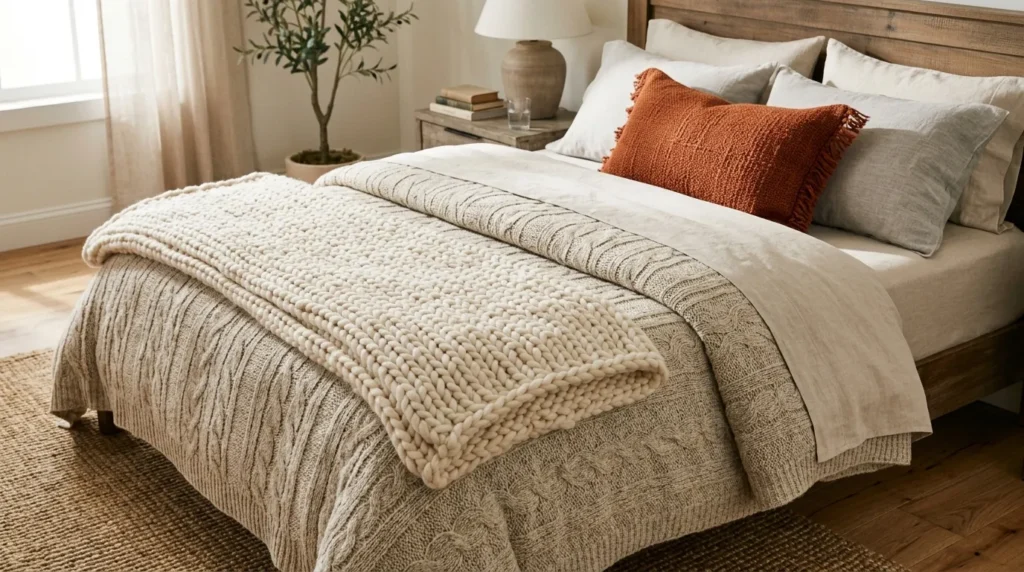
A mistake many homeowners make is treating textiles as a final, minor touch rather than a foundational part of a cozy bedroom. Layered fabric — a knit throw, a textured pillow, a substantial duvet — does more to create warmth, both visually and physically, than almost any other single design choice. In my experience, a room with several layered textures reads as considerably cozier than a room with expensive furniture but flat, single-texture bedding. Texture also gives the eye more to take in, which makes a room feel richer and more considered without requiring additional color or pattern.
How To Style It
Layer at least three different textures on the bed alone — a smooth cotton or linen sheet, a textured knit or quilted duvet, and a chunky knit throw folded at the foot. Extend the same layering principle to seating areas, adding a soft throw blanket over a chair or bench. Mix natural fibers like wool, linen, and cotton for the richest tactile variety, since synthetic fabrics tend to feel flatter and less substantial by comparison. Rotate heavier textiles like wool and flannel into the room during colder months, and swap in lighter linen and cotton pieces for summer, keeping the same color palette so the room’s overall look stays consistent year-round.
2. Soft Ambient Lighting

Quick Benefits
- Creates a relaxed, inviting evening mood
- Softens harsh overhead lighting
- Adds flexibility throughout the day
- Highlights texture and warmth in the room
- Signals a considered, finished design
Why It Works
Lighting has an outsized effect on how cozy a bedroom actually feels, often more than color or furniture choices. A single bright overhead fixture creates a flat, functional feeling more suited to a hallway than a bedroom meant for rest. One simple trick I always suggest is layering in at least two additional light sources — bedside lamps, a floor lamp, or string lights — so the room can shift from bright and functional during the day to soft and enveloping at night. This kind of ambient lighting mimics the warm, low glow associated with candlelight, which the body and mind naturally read as calming.
How To Style It
Add a lamp to each nightstand, choosing warm-toned bulbs around 2700K rather than cool white, which can feel clinical in a space meant for rest. A dimmer switch on the main overhead light, if your setup allows it, adds valuable flexibility for adjusting brightness throughout the day. Consider a small floor lamp in a reading corner or beside a dresser to add another layer of soft, low light. In the evening, rely primarily on your lamps rather than overhead lighting, reserving the brighter fixture for daytime tasks like getting dressed or cleaning.
3. Natural Wood Tones
Quick Benefits
- Grounds the room with organic warmth
- Pairs well with nearly any color palette
- Adds richness without introducing more color
- Feels timeless rather than trend-dependent
- Works across a range of bedroom styles
Why It Works
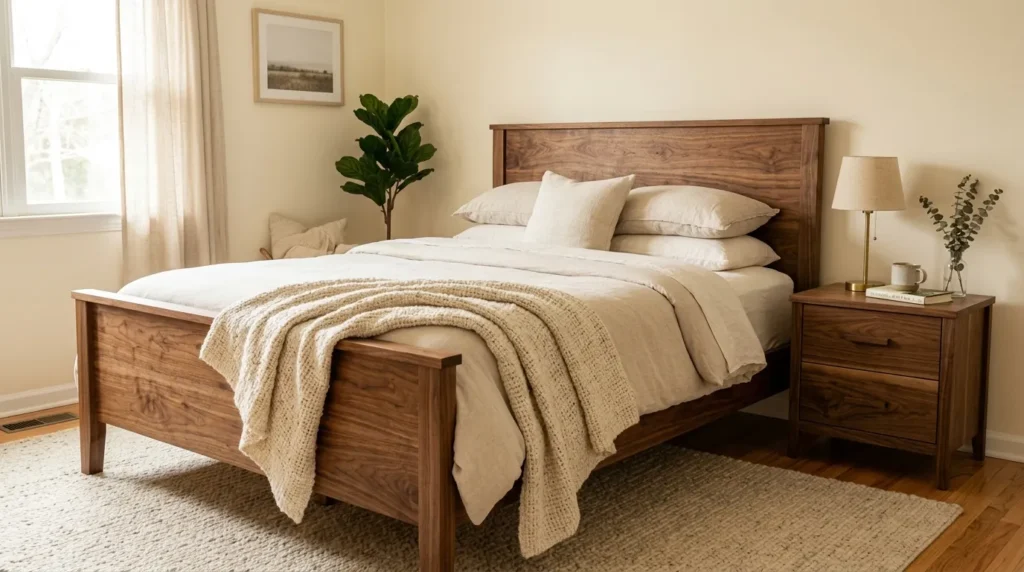
Natural wood brings a warmth and groundedness to a bedroom that painted or synthetic materials often can’t replicate. In my experience, rooms that lean too heavily on white, glossy, or metallic finishes can start to feel sterile despite otherwise thoughtful design. Introducing warm wood tones — a wood bed frame, nightstands, or even a single wood accent shelf — softens the overall feel of the room and adds a sense of natural texture that supports the same coziness created by layered textiles.
How To Style It
Choose at least one or two substantial wood pieces, such as a bed frame or dresser, in a warm tone like walnut, oak, or honey pine, and let the natural grain remain visible rather than fully painting over it. If your existing furniture is a cooler-toned or painted finish, introduce warmth through smaller wood accents like a nightstand, a wall shelf, or a woven-and-wood bench at the foot of the bed. Keep wood tones relatively consistent throughout the room to avoid a mismatched, uncoordinated look — mixing two complementary tones is fine, but more than that can start to feel visually busy. Pair wood surfaces with soft textiles and warm lighting to reinforce the overall cozy, grounded feeling.
4. Oversized Reading Nook
Quick Benefits
- Creates a dedicated spot to slow down and relax
- Adds function beyond just sleeping
- Encourages screen-free downtime
- Works well in a corner or beside a window
- Elevates the room’s overall sense of comfort
Why It Works
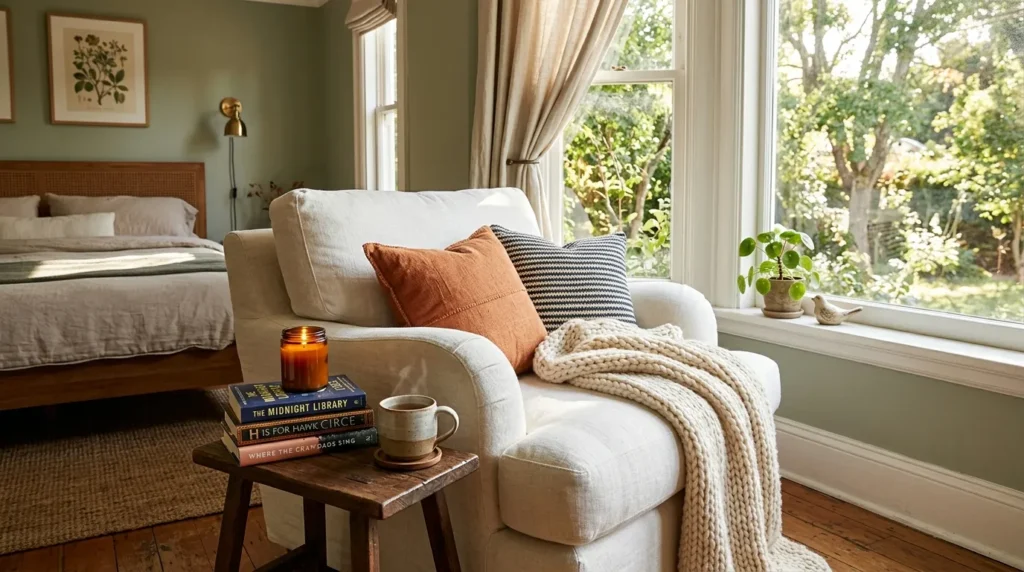
A bedroom that only serves as a place to sleep misses an opportunity to become a genuine retreat. I’ve seen this idea transform bedrooms that felt purely functional into rooms people actually want to spend time in — simply by adding one comfortable chair, a soft throw, and a small side table in an underused corner. A reading nook signals that the room is meant for rest and relaxation beyond sleep alone, which reinforces the cozy, restorative feeling the rest of the space is working to create.
How To Style It
Choose an oversized, upholstered chair or a small loveseat with soft, deep cushions, positioned near a window if possible to take advantage of natural light during the day. Add a floor lamp beside the chair for reading in the evening, along with a small side table for a book, a mug, or a candle. Layer in a soft throw blanket and one or two accent pillows to make the spot as inviting as the bed itself. If floor space is limited, even a single chair tucked into a corner with good lighting can serve the same purpose without requiring a full seating arrangement.
5. Cloud-Like Bedding
Quick Benefits
- Makes the bed the coziest spot in the room
- Improves both comfort and visual appeal
- Creates an inviting, hotel-like focal point
- Works with a wide range of design styles
- Encourages genuine relaxation and rest
Why It Works
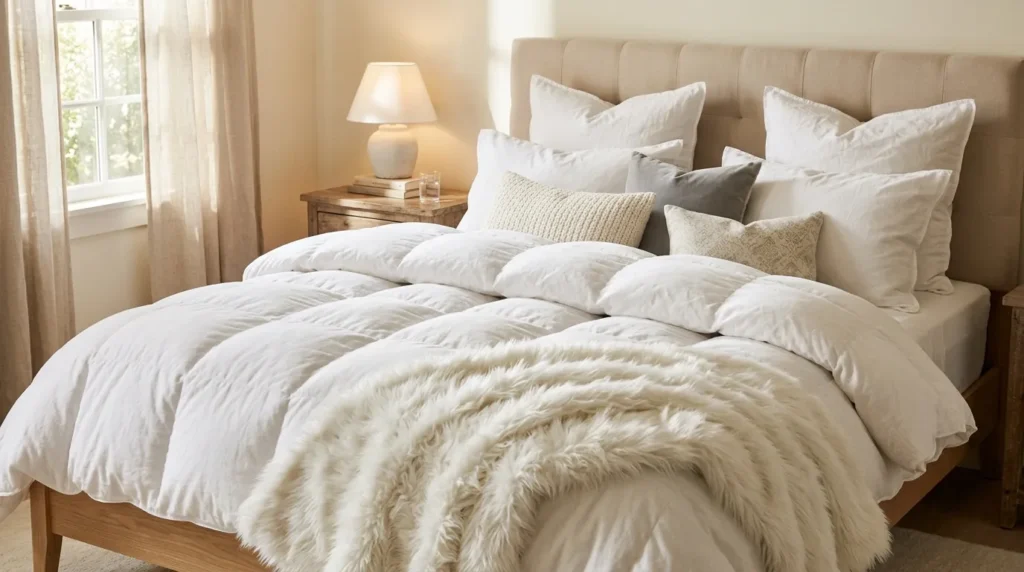
The bed is both the literal and visual center of the bedroom, which means its comfort and styling carry more weight than any other single element in the room. A mistake many homeowners make is prioritizing how the bed looks over how it actually feels, when the two are more connected than they might expect — a genuinely plush, substantial bed almost always looks as inviting as it feels. That’s why many designers recommend investing in a high-quality duvet insert and a generous pillow arrangement, since an overly flat or thin-looking bed can undercut an otherwise cozy room.
How To Style It
Choose a duvet insert with generous fill for a plush, cloud-like appearance, paired with a soft, breathable duvet cover in a natural fiber like cotton or linen. Layer four to six pillows total, mixing sleeping pillows with one or two Euro shams for added height and fullness against the headboard. A chunky knit or faux-fur throw folded at the foot of the bed adds both texture and an extra layer of warmth for colder months. In warmer seasons, swap heavier layers for lighter quilted or waffle-textured coverlets while keeping the same generous pillow arrangement, so the bed stays inviting year-round.
6. Candlelit Styling Touches
Quick Benefits
- Adds warmth and ambiance in small doses
- Introduces a sensory, non-visual layer of coziness
- Works well on nightstands, dressers, or shelves
- Requires minimal investment for high impact
- Pairs naturally with soft lighting
Why It Works
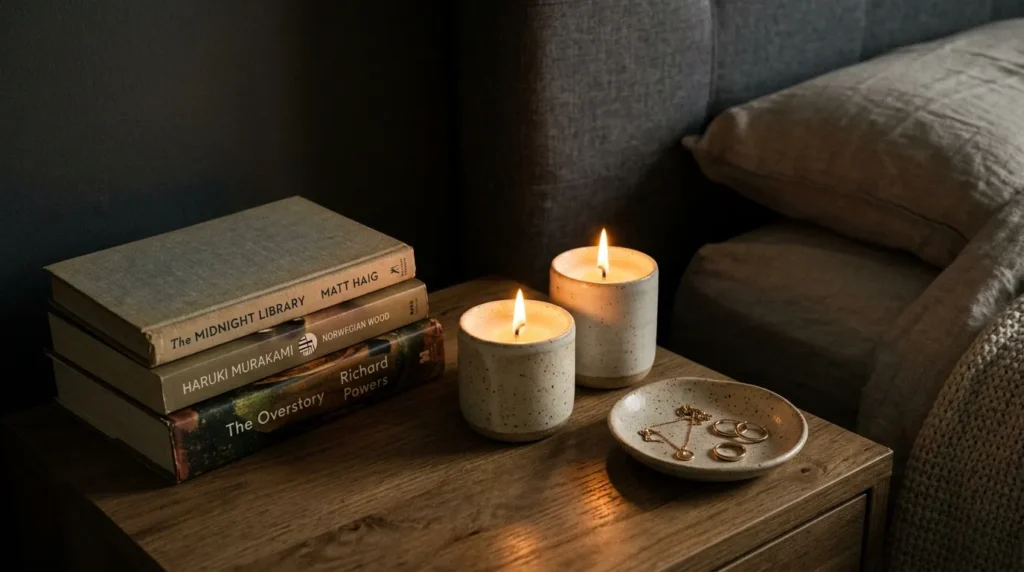
Candles do double duty in a cozy bedroom, adding both a warm visual glow and a sensory layer through scent that photographs and furniture alone can’t provide. If you’re anything like me, you’ve probably noticed how a lit candle on a nightstand shifts the entire mood of a room within minutes, even without changing anything else. This small styling detail reinforces the soft, low lighting already established through lamps, adding one more layer of warmth to the overall sensory experience of the space.
How To Style It
Place one or two candles on your nightstand or dresser in simple, neutral vessels that complement your room’s existing color palette. Choose warm, comforting scents like sandalwood, vanilla, or amber for a cozy feel, and lighter scents like cotton or linen for warmer months if you prefer a seasonal rotation. For safety and convenience, flameless LED candles are a good alternative, particularly on a nightstand close to bedding. Group candles with one or two other small objects, like a small dish or a stack of books, rather than placing them alone, to create a more styled, intentional vignette.
7. Woven Texture Accents
Quick Benefits
- Adds tactile richness throughout the room
- Introduces texture without adding more color
- Works well in baskets, rugs, and wall decor
- Pairs naturally with wood and soft textiles
- Elevates simple, budget-friendly pieces
Why It Works
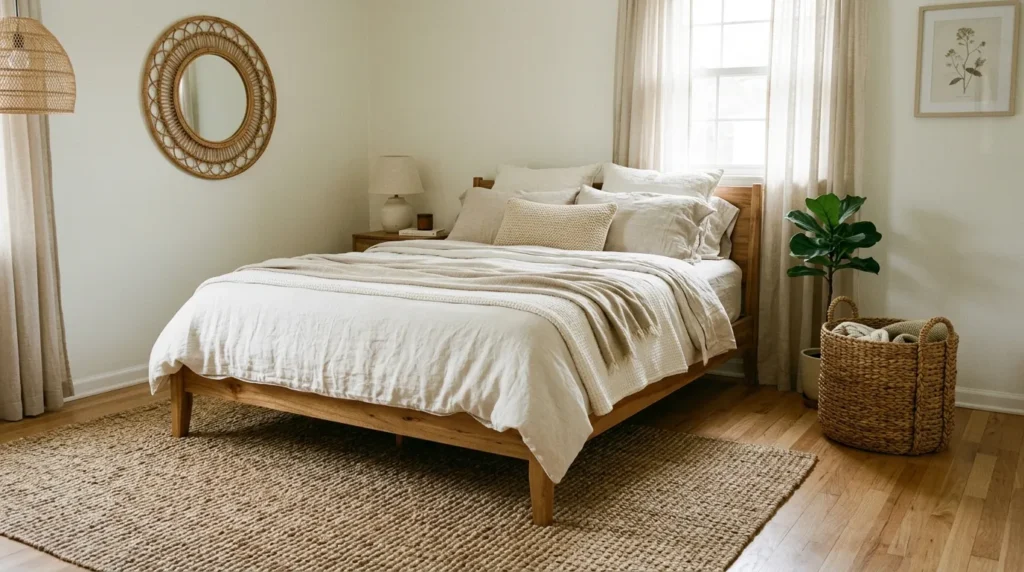
Woven materials — rattan, jute, seagrass, and similar natural fibers — bring a tactile richness to a bedroom that smooth, manufactured surfaces can’t replicate. A mistake many homeowners make is relying entirely on soft textiles like blankets and pillows for texture while overlooking the value of woven elements, which add a different, more grounded kind of warmth. In my experience, a room that combines soft textiles with a few woven pieces feels more layered and complete than one relying on fabric alone, since the contrast between soft and structured textures adds genuine visual and tactile depth.
How To Style It
Add a woven jute or seagrass rug beneath the bed to introduce texture underfoot, especially effective in rooms with hardwood or other hard flooring. Use woven baskets for practical storage, such as holding extra blankets or laundry, so the texture serves a function beyond decoration. A woven wall hanging or a rattan mirror frame adds vertical texture without requiring additional floor space. Balance woven pieces with your existing soft textiles and wood tones, distributing them around the room rather than clustering them all in one spot, so the texture feels woven throughout the space rather than isolated to a single area.
8. Warm Wall Color
Quick Benefits
- Sets the emotional tone for the entire room
- Enhances the effect of warm lighting
- Feels enveloping rather than stark
- Works well with natural wood and textiles
- Creates a strong foundation for coziness
Why It Works
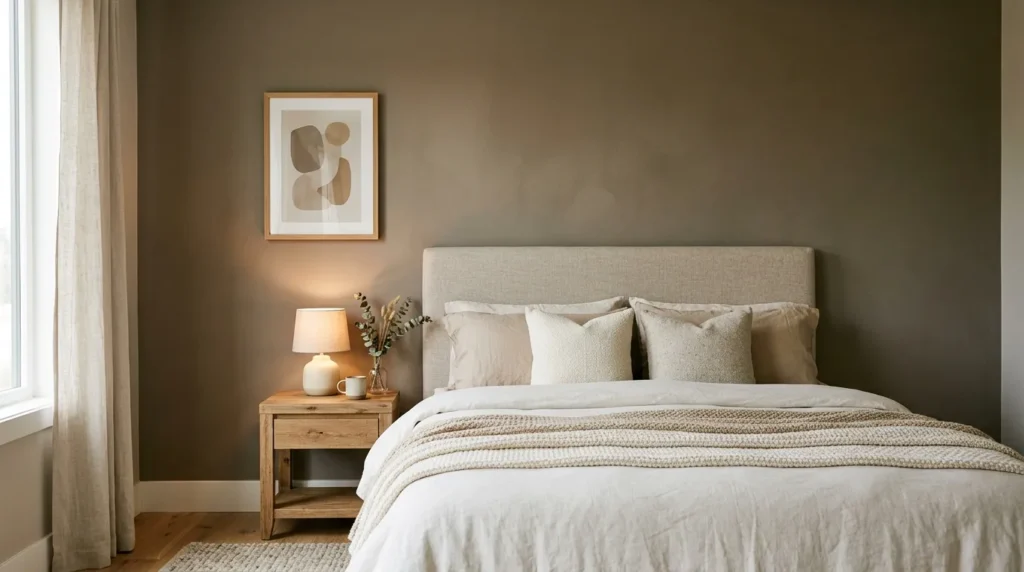
Wall color does more to establish a room’s overall mood than almost any other single design choice, and cool or stark white walls can work against the coziness created by every other element in the room. That’s why many designers recommend choosing a warm neutral — soft taupe, warm greige, or a muted terracotta — over a cool white or gray for a bedroom meant to feel enveloping. Warm wall tones also interact more favorably with the warm-toned lighting discussed earlier in this guide, since cool wall colors can sometimes read as slightly flat or clinical even under soft lighting.
How To Style It
Choose a warm neutral paint color, testing samples on your actual walls at different times of day to see how the tone shifts under your room’s natural and artificial light. If a full repaint isn’t in the budget or timeline, a single warm-toned accent wall behind the headboard can introduce the same enveloping effect in a smaller, more manageable project. Pair warm walls with your existing wood tones and textiles so the whole room feels cohesive rather than having the wall color stand apart as a separate decision. Avoid stark white trim against warm walls if possible, as too much contrast can undercut the cozy, blended feeling — a soft off-white trim tends to integrate more smoothly.
9. Curtain Layering Technique
Quick Benefits
- Softens windows and adds privacy
- Introduces texture without extra furniture
- Adds warmth and insulation in colder months
- Elevates the room’s overall sense of finish
- Works well with any window size
Why It Works
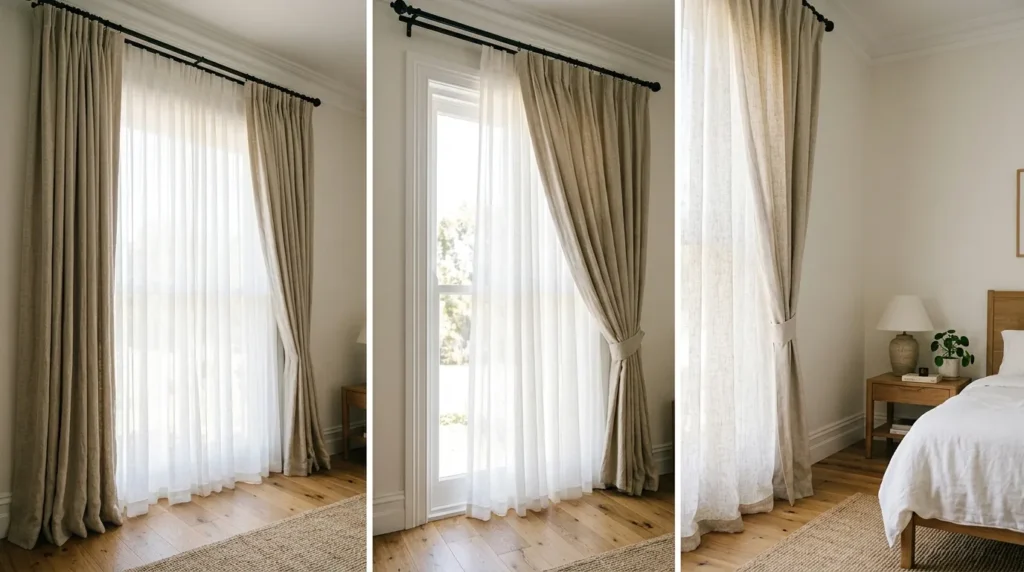
Bare or minimally dressed windows can leave an otherwise cozy bedroom feeling incomplete, since fabric is one of the primary ways a room builds softness and warmth. Layered curtains — a sheer panel for daytime privacy and light diffusion, paired with a heavier drape for evening warmth and coverage — add both function and texture. One simple trick I always suggest is hanging curtains close to the ceiling rather than tight to the window frame, which not only makes the room feel taller but also allows for a fuller, more substantial layer of fabric that contributes meaningfully to the room’s coziness.
How To Style It
Mount a curtain rod close to the ceiling, extending several inches beyond the window frame on each side to allow for full curtain coverage when closed. Layer a sheer curtain closest to the window for soft daytime light, with a heavier linen or cotton curtain behind it for evening privacy and added warmth. Choose curtain colors that either match your wall tone for a soft, blended look or introduce a warm complementary tone for gentle contrast. In colder months, heavier drapery also provides a small but genuine insulating benefit against drafts near windows, adding a practical layer of coziness alongside the visual one.
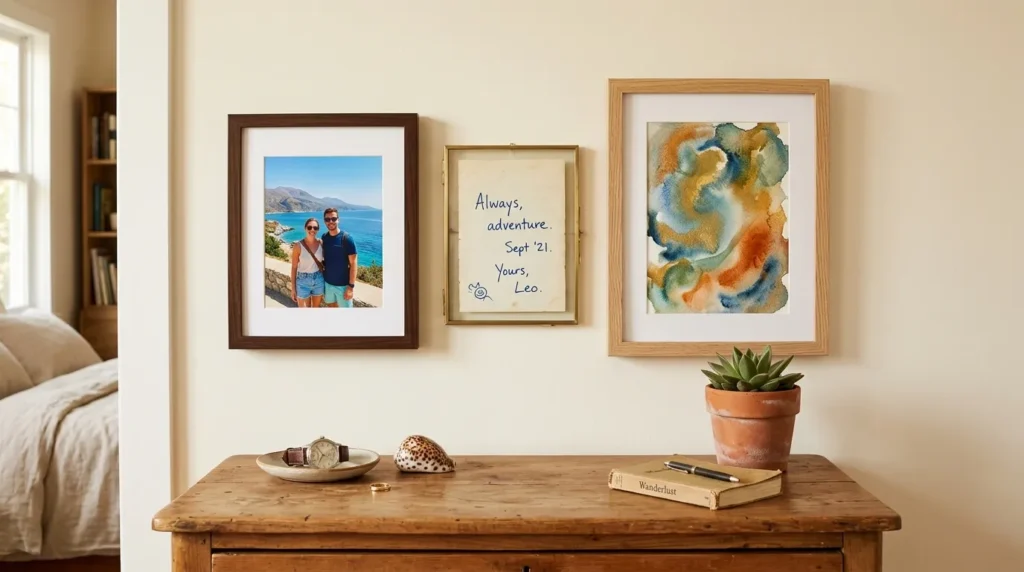
10. Personal Sentimental Details
Quick Benefits
- Makes the room feel genuinely lived-in
- Adds personality beyond trend-driven decor
- Creates emotional warmth alongside visual warmth
- Requires little to no additional spending
- Reflects your own story and taste
Why It Works
A bedroom can be beautifully designed and still feel slightly impersonal if it doesn’t include anything that reflects the person living in it. In my experience, the coziest bedrooms almost always include a few personal, sentimental touches — a favorite photo, a piece of art collected while traveling, a stack of well-loved books — mixed in alongside more intentionally styled decor. These details add an emotional layer of warmth that purely aesthetic choices can’t replicate on their own, and they’re often the elements that make a room feel truly like home rather than a styled showroom.
How To Style It
Choose a small handful of meaningful items — a framed photo, a travel souvenir, a handwritten note, a piece of art from someone you love — and integrate them thoughtfully among your more curated decor rather than displaying everything you own. A single personal item on a nightstand or a small gallery wall mixing sentimental pieces with more polished art often strikes the right balance between personality and intentional styling. Rotate sentimental items occasionally to keep the room feeling fresh, without needing to redecorate the space as a whole. Let these personal touches be the exception to an otherwise curated palette — a slightly mismatched frame or an imperfect object often adds more warmth than a flawlessly coordinated one.
Frequently Asked Questions
How do I make my bedroom feel cozy without spending much money?
Focus on layering existing textiles, adding warm-toned lighting through lamps you may already own, and incorporating a few personal, sentimental touches. These changes rely more on rearranging and layering than on new purchases, making them some of the most budget-friendly coziness upgrades available.
What colors make a bedroom feel the coziest?
Warm neutrals like taupe, soft terracotta, and warm greige tend to feel more enveloping than cool grays or stark white. These tones also pair well with natural wood and warm lighting, reinforcing the room’s overall sense of warmth.
How can I keep my bedroom cozy in warmer months without it feeling too heavy?
Swap heavier textiles like wool and flannel for lighter linen and cotton, while keeping the same color palette and layering approach. This maintains the room’s cozy feel without the visual or physical heaviness that can feel uncomfortable in summer.
What lighting works best for a cozy bedroom?
Warm-toned bulbs around 2700K, layered across at least two or three sources like bedside lamps and a floor lamp, create a soft, inviting glow. Avoiding a single bright overhead light as the room’s only source makes the biggest difference in overall coziness.
Do I need a reading nook if my bedroom is small?
A full nook isn’t necessary — even a single comfortable chair with a small lamp and throw blanket tucked into an underused corner can serve the same relaxing purpose. The goal is a dedicated, comfortable spot for downtime, regardless of how much space it occupies.
How many textures should a cozy bedroom include?
Three to five different textures, spread across bedding, rugs, and seating, generally creates enough richness without feeling overdone. Mixing textiles like knit, linen, and wool with woven elements like jute or rattan adds variety without requiring additional color.
What’s the difference between a cozy bedroom and a cluttered one?
A cozy bedroom layers texture, warmth, and personal touches with intention, while a cluttered room accumulates items without a cohesive plan. Keeping surfaces edited and choosing textiles and decor that support a consistent palette is what separates the two.
Conclusion
A genuinely cozy bedroom isn’t built around a single design trend — it’s built through layers of warmth, texture, and personal meaning that hold up regardless of the season. From soft, layered textiles and warm ambient lighting to natural wood tones and sentimental personal touches, each idea in this guide works toward the same goal: a room that feels as good to be in as it looks. None of these changes require a full redesign, and most can be introduced gradually as your time and budget allow.
Start with one or two ideas and gradually build a space that reflects your style and supports genuine year-round comfort. Maybe that means layering in a new throw blanket and lamp this week, and adding a reading nook next season. Small, consistent changes compound into a bedroom that feels like a true retreat — warm, personal, and inviting no matter what time of year it is.
Related Articles
- Cozy Bedroom Ideas
- Small Living Room Layouts
- Modern Farmhouse Decor
- Neutral Home Styling
- DIY Accent Wall Ideas