10 French Style Kitchen Ideas with Warm European Charm
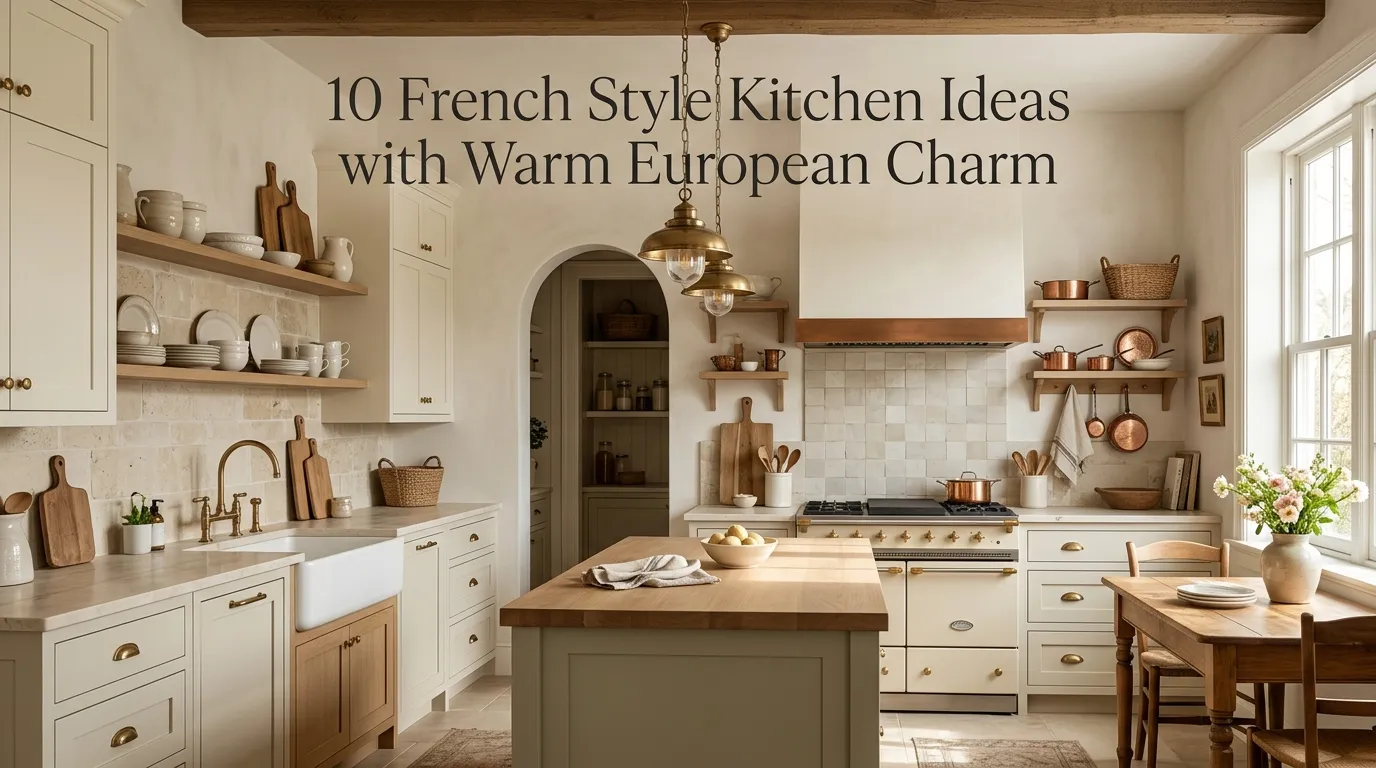
There is something effortlessly inviting about a French-inspired kitchen. It doesn’t feel overly polished or dependent on the latest trend. Instead, it combines beautiful materials, comfortable details, aged finishes, and practical elements to create a room that feels collected over time.
The appeal is in the balance. A French-style kitchen can have elegant cabinetry without feeling formal, vintage accessories without looking old-fashioned, and decorative details without becoming cluttered. Warm wood, creamy whites, natural stone, aged metals, and softly imperfect textures all contribute to that relaxed European character.
If your kitchen currently feels too plain, too contemporary, or simply lacks personality, you don’t necessarily need a complete renovation. Swapping hardware, introducing warmer lighting, adding natural materials, or styling open shelves can shift the atmosphere considerably.
In my experience, the most successful French-inspired kitchens aren’t perfect replicas of kitchens you’d find in France. They borrow the elements that make European interiors so appealing and adapt them to everyday American homes.
Whether you’re planning a full kitchen renovation or simply looking for decorating inspiration, these ideas can help you create a kitchen that feels warm, timeless, practical, and beautifully lived-in.
Table of Contents
1. Creamy Cabinetry
Use warm cabinetry colors to create an inviting foundation.
2. Natural Stone Surfaces
Bring authentic-looking texture into the kitchen with stone countertops and backsplashes.
3. Aged Brass Hardware
Add warmth and character through softly aged metal finishes.
4. Vintage Wood Accents
Balance painted cabinetry with furniture-like natural wood pieces.
5. Farmhouse Sink
Create a classic focal point with a deep, practical apron-front sink.
6. Open Shelving
Display everyday dishes and collected pieces for relaxed European character.
7. Statement Range Hood
Turn a functional feature into an architectural focal point.
8. Soft Pendant Lighting
Use warm lighting to create an intimate and welcoming atmosphere.
9. European-Inspired Decor
Layer practical objects and decorative accents without overfilling the room.
10. Rustic Dining Nook
Create a comfortable gathering space that makes the kitchen feel lived-in.
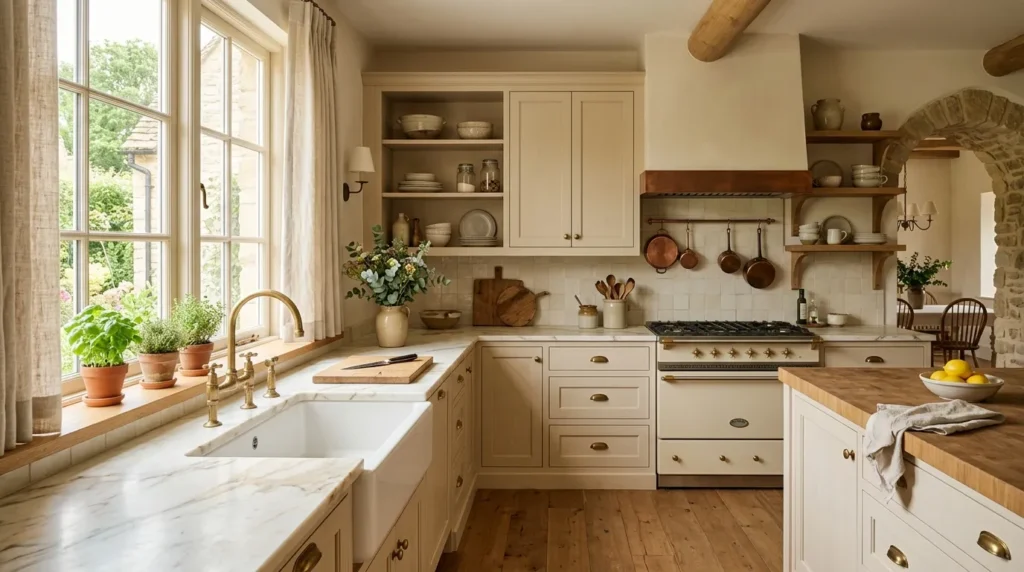
1. Creamy Cabinetry
Quick Benefits
- Creates a warm foundation
- Makes the kitchen feel inviting
- Works with natural materials
- Ages beautifully
- Complements traditional and modern homes
Why It Works
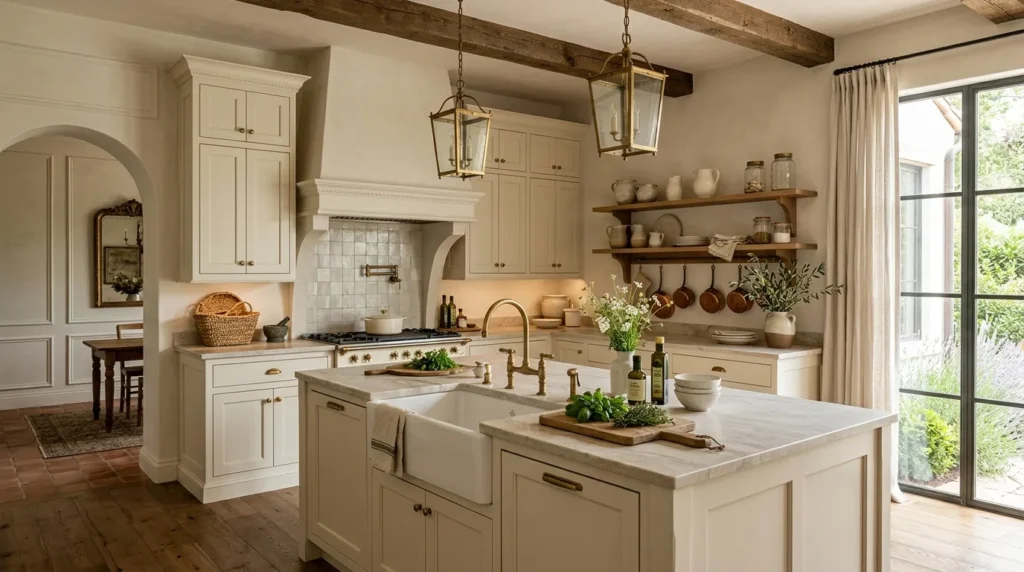
French-inspired kitchens often avoid stark, clinical whites in favor of warmer shades such as cream, ivory, mushroom, putty, and soft beige. These colors reflect natural light while giving cabinetry a softer, more established appearance. Warm cabinetry also pairs beautifully with wood, stone, brass, and aged finishes. The result feels sophisticated without appearing overly coordinated. If your kitchen receives limited natural light, a warm neutral can be particularly effective because it creates a gentle atmosphere rather than emphasizing cool shadows.
How To Style It
Consider cabinetry in creamy white, warm ivory, pale taupe, or muted greige. Shaker doors or subtly detailed cabinet fronts can reinforce the traditional European influence. Pair them with natural stone countertops and aged brass hardware for warmth. If you’re updating existing cabinets, painting them may be enough to change the entire room. Keep the surrounding finishes relatively restrained so the cabinetry remains the visual foundation. Add a few wood accessories, woven baskets, and ceramic pieces to keep the space feeling relaxed rather than overly formal.
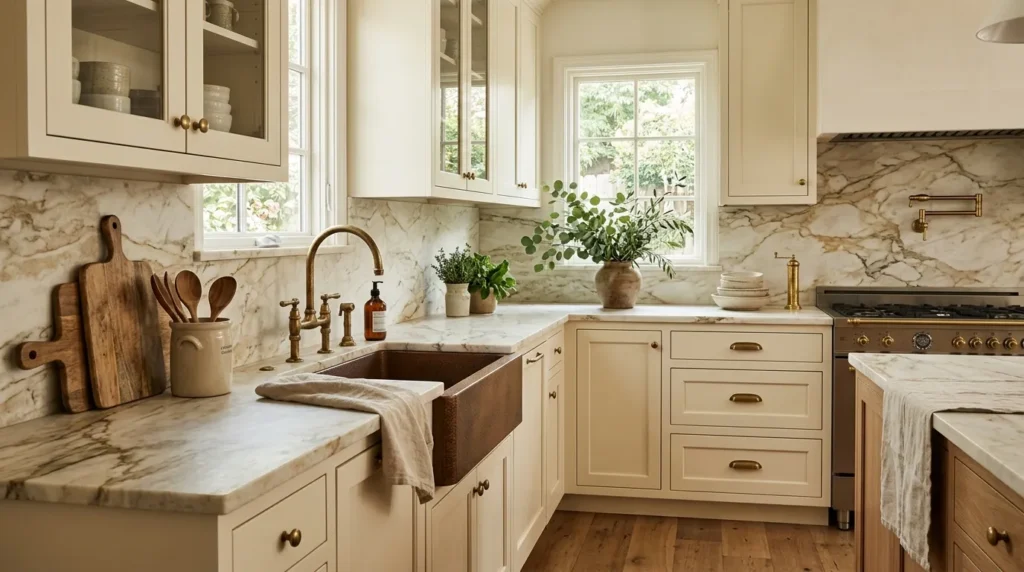
2. Natural Stone Surfaces
Quick Benefits
- Adds authentic texture
- Creates visual depth
- Feels timeless
- Complements warm cabinetry
- Works across decorating styles
Why It Works
Natural stone brings an organic quality that is difficult to reproduce with perfectly uniform materials. Marble, limestone, soapstone, and other natural-looking surfaces can introduce subtle variation, veining, and texture. Those imperfections contribute to the relaxed character associated with European kitchens. Rather than making the room feel precious, natural stone often makes it feel more established and authentic. Even if you don’t use stone throughout the kitchen, incorporating it in one prominent location can have a strong effect.
How To Style It
A stone countertop can serve as the main statement, especially when paired with simple cream cabinetry. For a more dramatic approach, extend the stone up the backsplash or behind the range. If you’re concerned about maintenance, research the specific material carefully and choose a surface appropriate for your lifestyle. Honed finishes can create a softer, less glossy appearance. Complement the stone with wood cutting boards, ceramic vessels, linen textiles, and understated metal hardware.
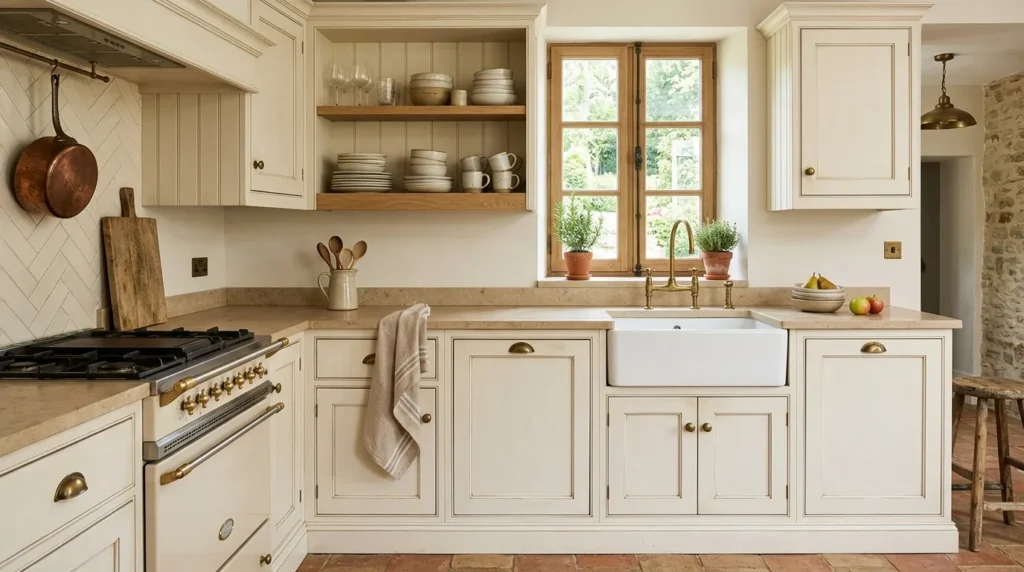
3. Aged Brass Hardware
Quick Benefits
- Adds warmth
- Introduces subtle contrast
- Complements cream cabinetry
- Feels timeless
- Easy to update
Why It Works
Hardware may be a small detail, but it can strongly influence the character of a kitchen. Aged brass works particularly well in French-inspired spaces because it has warmth without looking overly shiny or contemporary. Its slightly muted appearance pairs naturally with cream cabinetry, natural stone, and wood. Over time, the finish can develop additional character, reinforcing the relaxed, collected feeling you’re trying to create.
How To Style It
Use aged brass cabinet pulls, cup pulls, knobs, and faucets throughout the kitchen. You don’t necessarily need every metal surface to match perfectly, but keeping the dominant hardware finish consistent will help the room feel cohesive. Choose hardware with simple traditional shapes rather than overly ornate designs. If brass feels too warm for your kitchen, antique bronze or aged nickel can provide a similar sense of character. Repeat the finish in small details such as lighting, shelf brackets, or decorative accessories.
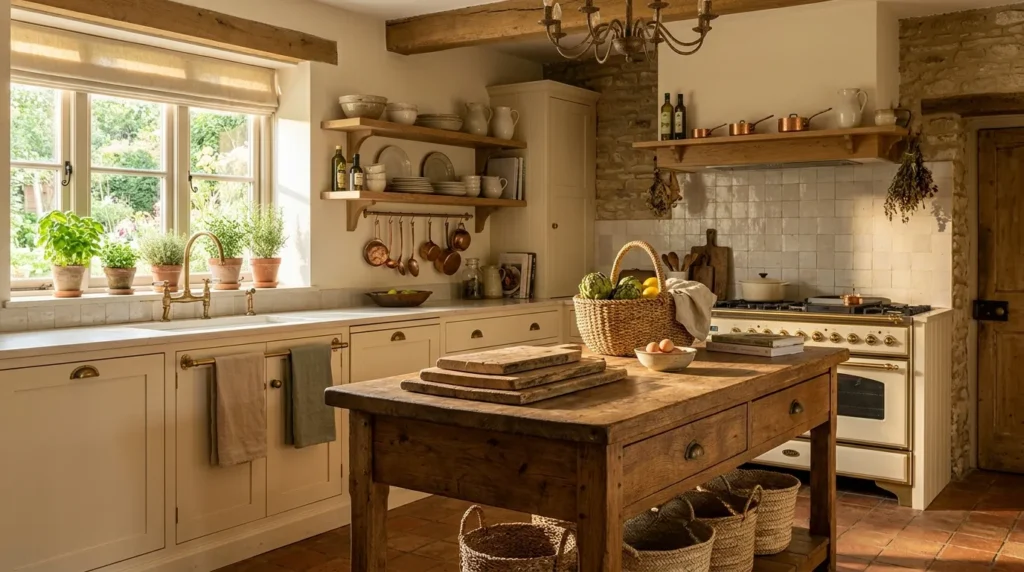
4. Vintage Wood Accents
Quick Benefits
- Adds warmth
- Breaks up painted cabinetry
- Creates a furniture-like feel
- Introduces natural texture
- Makes the kitchen feel collected
Why It Works
One of the easiest ways to make a kitchen feel less like a showroom is to introduce natural wood. French-inspired interiors often combine painted cabinetry with wood furniture, cutting boards, beams, stools, or decorative pieces. The contrast creates warmth and visual variety. Wood also helps balance stone and metal surfaces, preventing the kitchen from feeling too hard or cold.
How To Style It
Consider a reclaimed wood island, antique-style stools, a freestanding wooden cabinet, or a simple butcher-block section. If your kitchen already has plenty of wood, use smaller accents instead. A large wooden cutting board leaning against the backsplash can be both useful and decorative. Add a woven basket filled with linens or produce for additional texture. Look for wood with visible grain and a naturally aged appearance rather than pieces that feel overly glossy or manufactured.
5. Farmhouse Sink
Quick Benefits
- Creates a classic focal point
- Adds practical depth
- Complements traditional cabinetry
- Reinforces European-inspired character
- Works in renovated kitchens
Why It Works
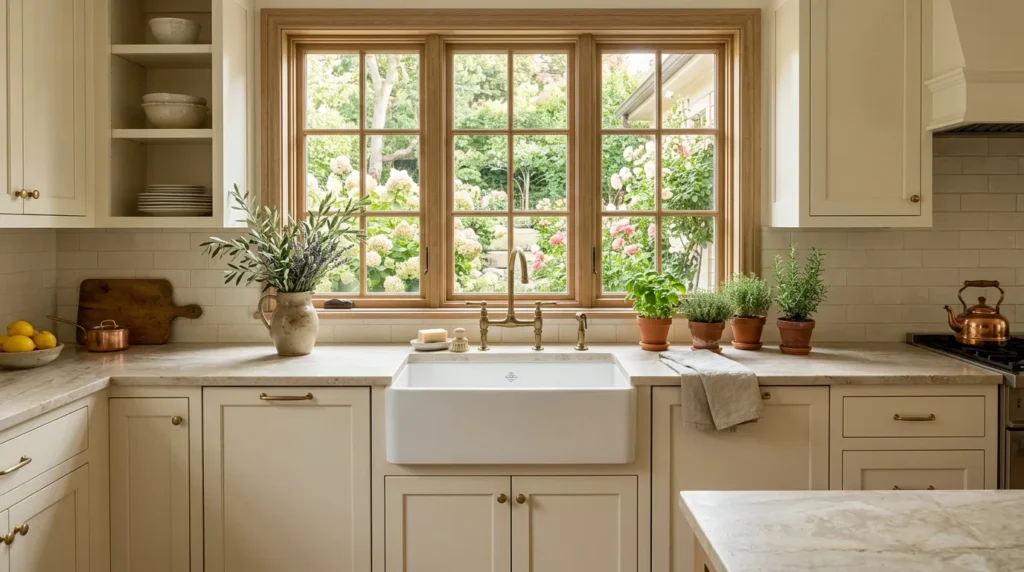
A deep apron-front sink immediately introduces a traditional farmhouse influence. It has practical benefits, too, especially for anyone who regularly cooks large meals or washes oversized cookware. Visually, the broad front creates a strong horizontal feature that works beautifully beneath a window or within a simple run of cabinetry. Although farmhouse sinks are associated with rustic kitchens, a clean-lined version can fit comfortably into a sophisticated French-inspired design.
How To Style It
Pair a white fireclay-style sink with cream cabinetry and an aged brass or antique bronze faucet. For more contrast, consider a stone or darker sink if it suits the rest of the room. A window above the sink is ideal because natural light can highlight the surrounding materials. Add a small potted herb, ceramic soap dispenser, or folded linen towel nearby. Keep the area practical and uncluttered. The sink itself should provide enough visual character that you don’t need excessive decoration.
6. Open Shelving
Quick Benefits
- Adds visual openness
- Makes everyday items accessible
- Provides space for personality
- Softens cabinetry
- Encourages practical styling
Why It Works
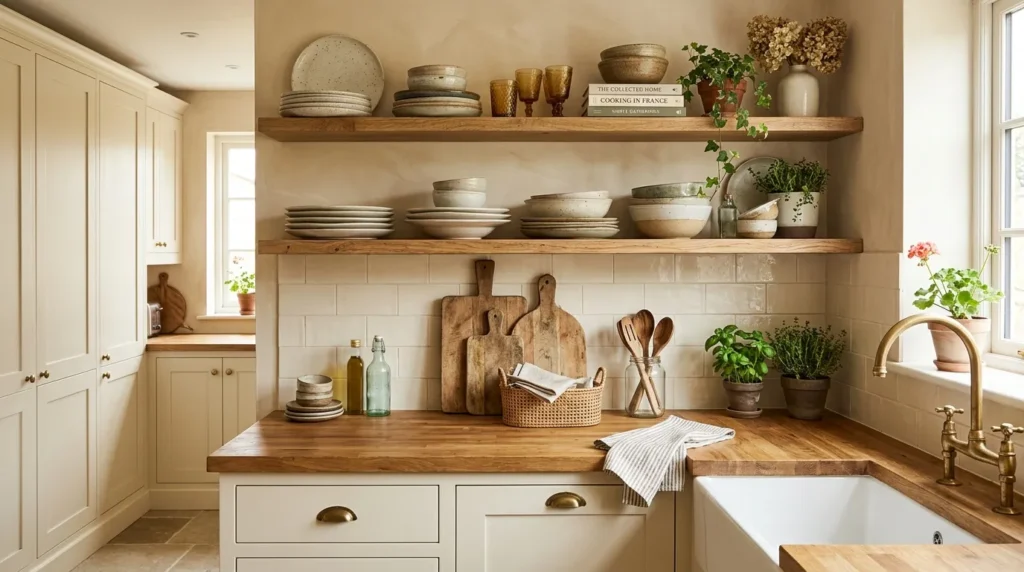
Open shelving can make a kitchen feel more relaxed and personal because it allows everyday objects to become part of the decor. French-inspired kitchens often have an appealing sense of informality, and displaying ceramic plates, glasses, cookbooks, baskets, and pottery can recreate that feeling. The key is restraint. Shelves look beautiful when the objects are useful and intentionally arranged, but they can quickly become cluttered when every available space is filled.
How To Style It
Use natural wood shelves or simple painted shelves with understated brackets. Arrange objects by varying height, shape, and texture. Stack a few plates, lean a cutting board against the wall, and add one or two ceramic vessels. Leave empty space between groups so the shelves can breathe. Mix practical items with a small amount of decor. If dust and maintenance are concerns, consider open shelving only in a limited section of the kitchen rather than replacing all upper cabinets.
7. Statement Range Hood
Quick Benefits
- Creates a strong focal point
- Adds architectural character
- Can soften modern appliances
- Makes the cooking area memorable
- Works with traditional layouts
Why It Works
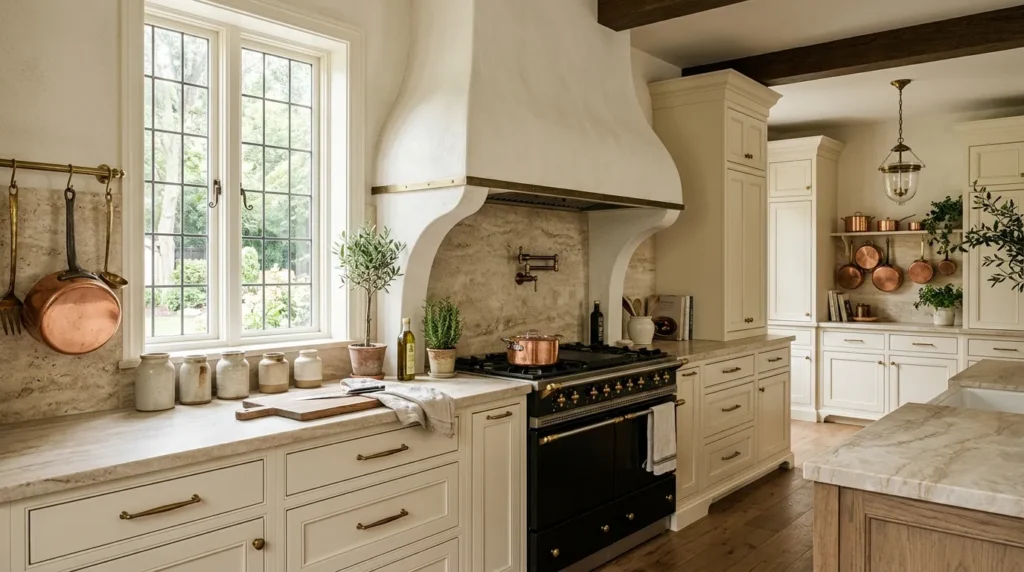
A custom-looking range hood can give a kitchen an architectural quality that standard stainless-steel appliances sometimes lack. In French-inspired spaces, the hood can become a subtle centerpiece above the cooking area. Plaster, painted wood, stone, or other textured finishes can make the hood feel integrated with the cabinetry. This is especially effective when the surrounding design is relatively simple.
How To Style It
Choose a hood shape that complements your kitchen’s architecture. A plaster-look hood in warm white can create a soft Mediterranean or French-country influence, while a painted hood can blend with cabinetry for a more seamless appearance. Add a simple stone or tile backsplash underneath. Keep decorative objects around the range to a minimum because this area should remain practical and easy to clean. If you want more character, a small rail for frequently used utensils can provide both function and charm.
8. Soft Pendant Lighting
Quick Benefits
- Creates warmth
- Improves task lighting
- Adds architectural interest
- Defines the island
- Enhances evening ambiance
Why It Works
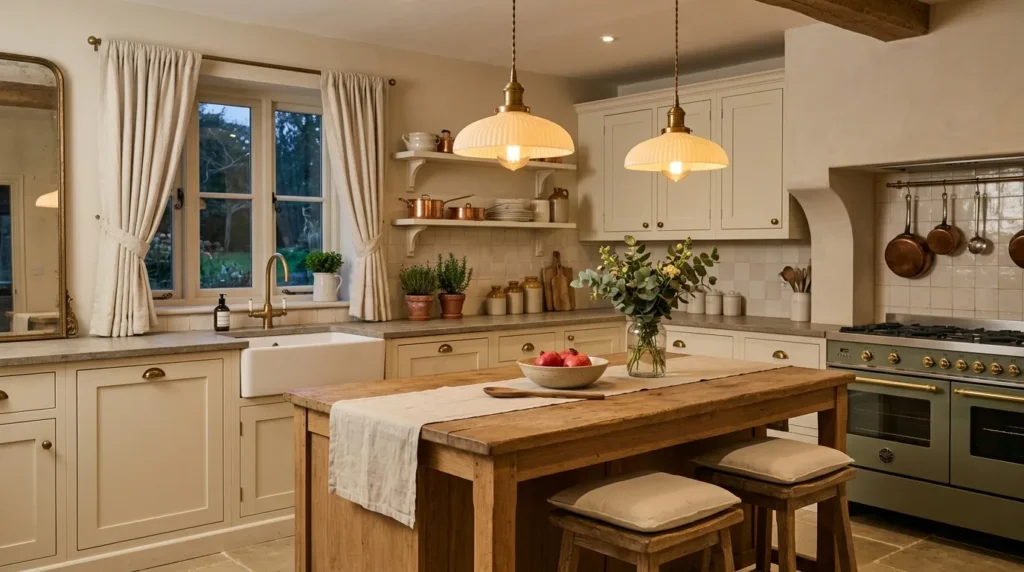
Lighting plays a major role in creating the intimate quality associated with European interiors. Rather than relying entirely on bright ceiling fixtures, combine several sources of illumination. Pendant lights over an island can provide focused light while also adding personality. Materials such as aged metal, glass, ceramic, linen, or woven fibers can reinforce the kitchen’s warm character.
How To Style It
Hang two or three pendants over a large island, depending on its size and the fixture dimensions. Choose fixtures with warm bulbs and avoid excessively cool white lighting. Aged brass, antique bronze, creamy ceramic, and clear or softly tinted glass can all work beautifully. If your kitchen is small, one substantial pendant may be enough. Combine pendant lighting with under-cabinet lighting and ambient fixtures to create flexibility throughout the day.
9. European-Inspired Decor
Quick Benefits
- Adds personality
- Makes the kitchen feel lived-in
- Softens modern cabinetry
- Creates visual interest
- Allows inexpensive updates
Why It Works
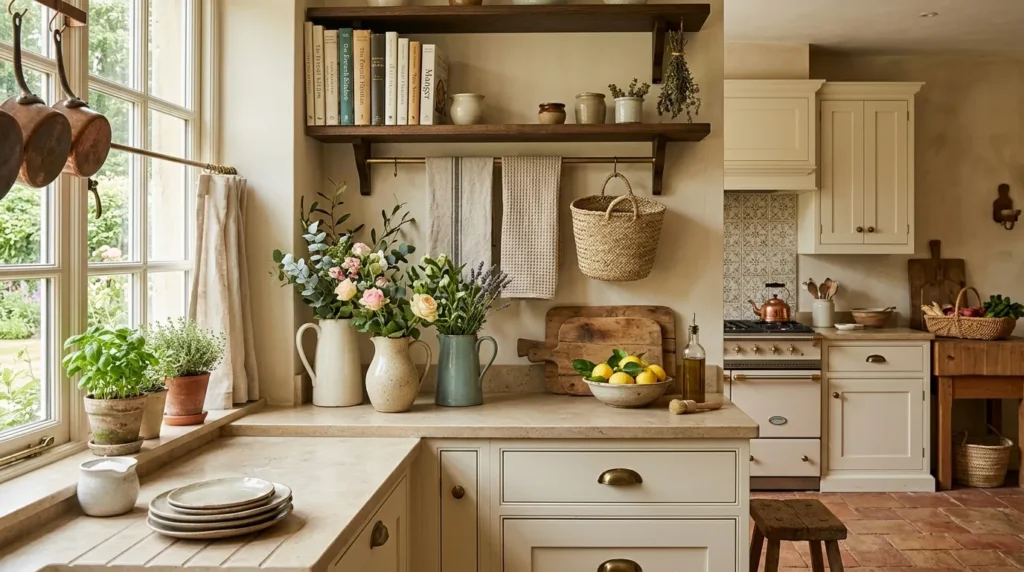
A French-inspired kitchen should feel like a room that is actually used. Decorative objects don’t need to be purely ornamental; some of the most charming details can be practical. Wooden boards, ceramic pitchers, linen towels, cookbooks, woven baskets, pottery, and fresh flowers can all contribute to the atmosphere. The goal is to create a collected appearance rather than a perfectly styled display.
How To Style It
Place a stack of cookbooks on an island, display a few handmade-looking ceramics on open shelving, or use a large cutting board as a backsplash accent. A bowl of lemons or seasonal produce can provide natural color. Fresh herbs in simple pots add both beauty and usefulness. Avoid buying dozens of themed accessories. Instead, choose a few pieces with interesting shapes, textures, or signs of craftsmanship. Allow some surfaces to remain empty so the room feels relaxed rather than staged.
10. Rustic Dining Nook
Quick Benefits
- Encourages casual meals
- Makes the kitchen more social
- Adds warmth
- Uses awkward corners effectively
- Creates a relaxed European feel
Why It Works
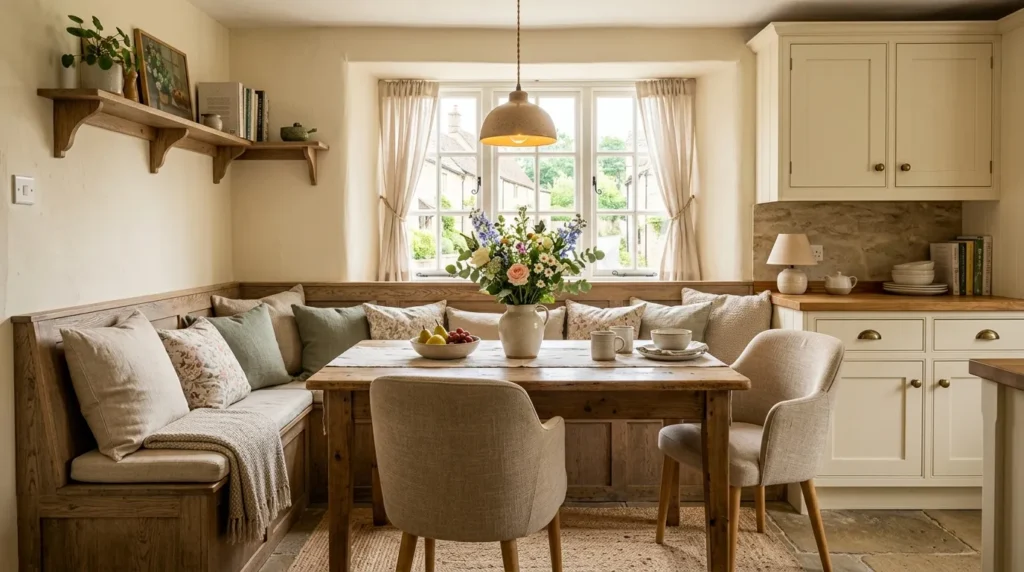
French kitchens are often associated with gathering, conversation, and everyday meals, so a comfortable dining area can reinforce that atmosphere. A small table tucked into a corner can make the kitchen feel more like a lived-in room rather than a purely functional workspace. Natural wood, upholstered seating, linen textiles, and soft lighting can make even a compact breakfast area feel special.
How To Style It
Use a simple round or rectangular wood table depending on your available space. Mix comfortable chairs with a built-in bench if you want to maximize seating. Add a linen cushion or washable textile for softness. Hang a small pendant above the table to visually define the area. A vase of fresh flowers or a bowl of seasonal fruit can become the centerpiece. If the nook sits beside a window, take advantage of natural light and frame the view with simple linen curtains.
How To Get the French Kitchen Look Without a Full Renovation
You don’t have to replace your entire kitchen to introduce European charm.
Start with the elements that are easiest to change.
Hardware is one of the fastest updates. Replacing basic knobs and pulls with aged brass, antique bronze, or another warm finish can immediately soften a contemporary kitchen.
Next, introduce natural materials. A large wooden cutting board, woven basket, ceramic pitcher, or linen towel can bring warmth without major construction.
Lighting is another high-impact change. Replace a dated fixture with a warm pendant or chandelier-inspired light.
You can also reconsider what is displayed. Removing unnecessary items and intentionally displaying a few beautiful everyday objects can create a more collected appearance.
Finally, bring in something living. Fresh herbs, flowers, or a small olive-tree-inspired plant can add color and soften hard architectural lines.
French Kitchen Color Palette Ideas
The right palette can establish the mood before you add a single accessory.
Cream + Natural Oak
Warm, relaxed, and especially versatile.
Ivory + Aged Brass
Classic and elegant without feeling overly formal.
Soft Taupe + Walnut
Rich and sophisticated for a slightly moodier kitchen.
Sage + Cream
Fresh, natural, and connected to the garden.
Warm White + Muted Blue
A subtle European coastal influence that remains timeless.
Mushroom + Natural Stone
Earthy and sophisticated, particularly beautiful with aged metals.
When selecting paint, test samples at different times of day. Natural and artificial lighting can dramatically change how warm or cool a color appears.
French Style Kitchen Materials to Consider
Materials are a major part of creating authentic-looking character.
Natural stone: Marble, limestone, soapstone, and other stone surfaces can provide organic variation.
Wood: Use oak, walnut, reclaimed wood, or naturally finished timber for warmth.
Ceramic: Handmade-looking tiles and pottery add subtle imperfections and craftsmanship.
Linen: Curtains, towels, and cushions introduce softness.
Aged metals: Brass, bronze, and antique-inspired finishes provide warmth.
Plaster-inspired finishes: These can give walls and range hoods a softly textured appearance.
The goal isn’t to use every material. Choose three or four that complement one another and repeat them throughout the space.
Common French-Inspired Kitchen Mistakes
Making Everything Too Ornate
French-inspired doesn’t have to mean elaborate. Too many decorative details can make a kitchen feel theatrical instead of authentic.
Using Only One Neutral
A room filled with one shade of white can feel flat. Layer cream, beige, wood, stone, and subtle tonal variations.
Overfilling Open Shelves
Open storage needs breathing room. Display fewer, better pieces rather than filling every inch.
Choosing Extremely Shiny Finishes
Highly polished hardware can make the room feel more contemporary. Softer aged finishes tend to work better.
Ignoring Function
Beautiful kitchens still need to work. Keep frequently used items accessible and make sure decorative styling doesn’t interfere with cooking and cleaning.
Mixing Too Many Styles
A few modern elements can work beautifully, but too many competing influences can weaken the overall French-inspired character.
Frequently Asked Questions
What colors are best for a French-style kitchen?
Warm white, cream, ivory, taupe, mushroom, soft sage, muted blue, and natural wood tones work particularly well. These colors create a softer appearance than stark white while complementing materials such as stone, brass, and wood.
What makes a kitchen look French?
French-inspired kitchens typically combine warm cabinetry, natural materials, aged hardware, comfortable furniture, traditional architectural details, and collected accessories. The overall effect should feel relaxed and timeless rather than perfectly matched.
Does a French-style kitchen have to be traditional?
Not at all. You can combine French-inspired materials and colors with contemporary cabinetry and modern appliances. The key is balance. Warm finishes, natural textures, and understated decorative details can bring European charm to an otherwise modern kitchen.
What hardware works best in a French kitchen?
Aged brass, antique bronze, and muted nickel can all work beautifully. Look for finishes that aren’t overly glossy and hardware shapes that feel simple and substantial rather than excessively ornate.
How can I make a modern kitchen feel more French?
Add warmth through cream or taupe textiles, aged hardware, natural wood accessories, ceramic pieces, soft lighting, and fresh greenery. Replacing a few cold or highly polished finishes can make a noticeable difference.
What countertops work with French-style kitchens?
Natural stone such as marble, limestone, or soapstone can complement the style beautifully. Quartz and other engineered surfaces can also work when they have a natural appearance and subtle variation.
How do I decorate French kitchen shelves?
Display useful everyday items such as ceramic plates, bowls, cutting boards, cookbooks, woven baskets, pitchers, and glassware. Vary the heights and textures, group items thoughtfully, and leave some empty space to prevent clutter.
Conclusion
A beautiful French-inspired kitchen isn’t about perfectly recreating a European farmhouse. It’s about capturing the qualities that make these spaces so appealing: warmth, craftsmanship, practicality, natural materials, and an easy sense of elegance.
Start with a warm foundation such as creamy cabinetry, natural stone, and wood. Then introduce aged metals, soft lighting, handmade-looking ceramics, and a few pieces that feel collected rather than mass-produced.
Remember that the little details can be just as important as a major renovation. New hardware, a wooden cutting board, linen textiles, fresh flowers, or a warmer pendant light can gradually shift the personality of your kitchen.
Most importantly, allow the room to feel lived in. A French-inspired kitchen should be beautiful enough to admire but comfortable enough to cook, gather, share meals, and enjoy every day.
Choose a few elements that genuinely appeal to you, layer them gradually, and you’ll create a kitchen with warmth and character that doesn’t depend on passing trends.
Related Articles
- 10 French Country Kitchen Ideas for a Timeless Look
- 11 Warm White Kitchen Ideas for a Cozy Home
- 10 Farmhouse Kitchen Ideas With Timeless Charm
- 11 European-Inspired Home Decor Ideas
- 10 Kitchen Cabinet Color Ideas for a Beautiful Update