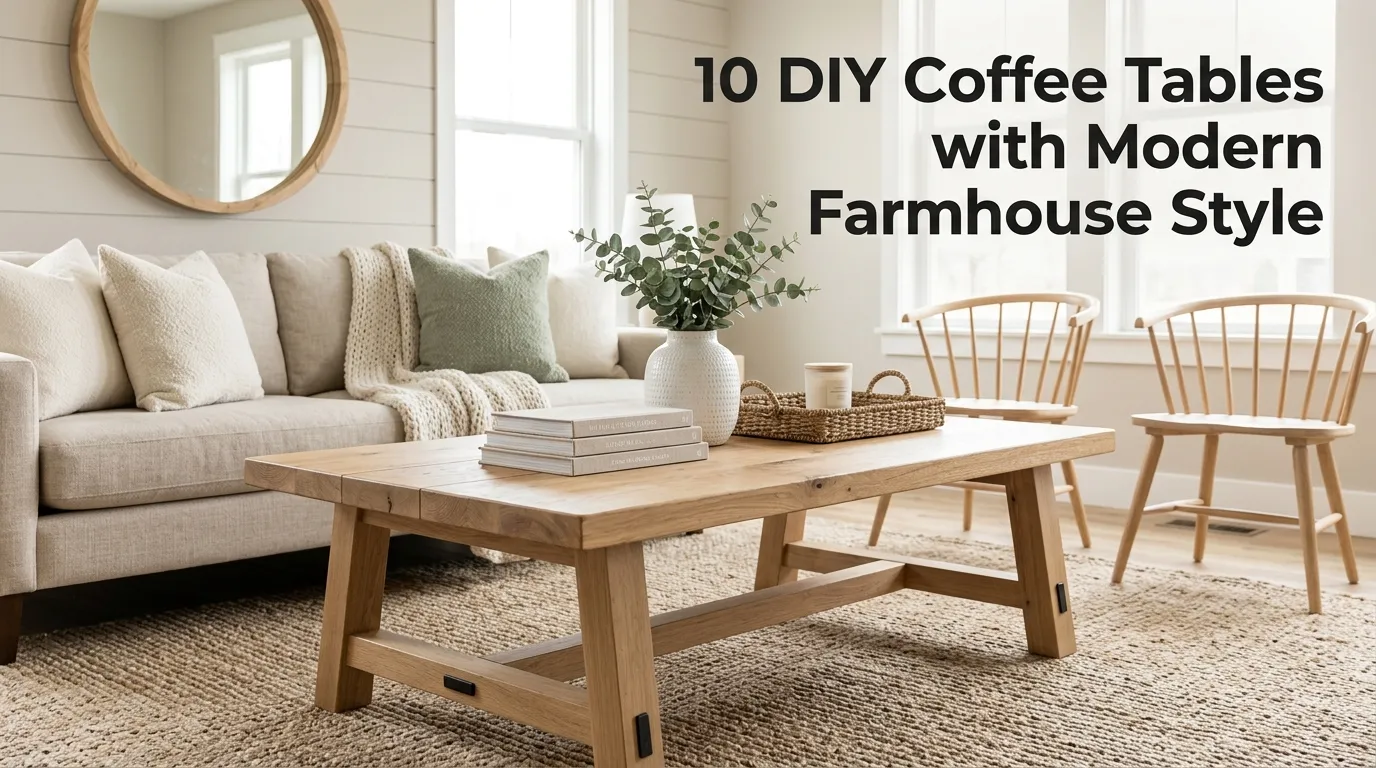
10 DIY Coffee Tables with Modern Farmhouse Style
There’s something deeply satisfying about building a piece of furniture that becomes the centerpiece of your living room. In my experience, the coffee table is one of the most approachable DIY furniture projects for exactly that reason — it’s small enough to complete in a weekend, forgiving enough for beginners, and impactful enough to transform the entire feel of a room. Modern farmhouse style, with its mix of raw wood, clean lines, and understated hardware, happens to be one of the most beginner-friendly aesthetics to build toward.
I’ve noticed that a lot of people assume DIY furniture means a rustic, unfinished look, but modern farmhouse coffee tables can be just as polished as anything you’d find in a furniture showroom. A mistake many DIYers make is skipping the small details — a properly finished edge, a consistent stain, well-chosen hardware — that separate a homemade table from a designer-quality one. The good news is that these details are simple to execute once you know what to look for, and they don’t require advanced woodworking skills or a garage full of specialty tools.
This guide walks through ten distinct DIY coffee table styles, each rooted in the modern farmhouse aesthetic — think black metal accents, whitewashed and natural wood tones, clean geometric lines, and a mix of raw and refined materials. These aren’t abstract inspiration ideas; they’re practical builds with real material suggestions, styling guidance, and the kind of construction logic that makes each project achievable, even for someone building their first piece of furniture.
By the end of this article, you’ll have ten concrete directions to choose from, along with the material choices, build logic, and styling details that will help your finished table look intentional and cohesive in your living room. Let’s get into it.
Table of Contents
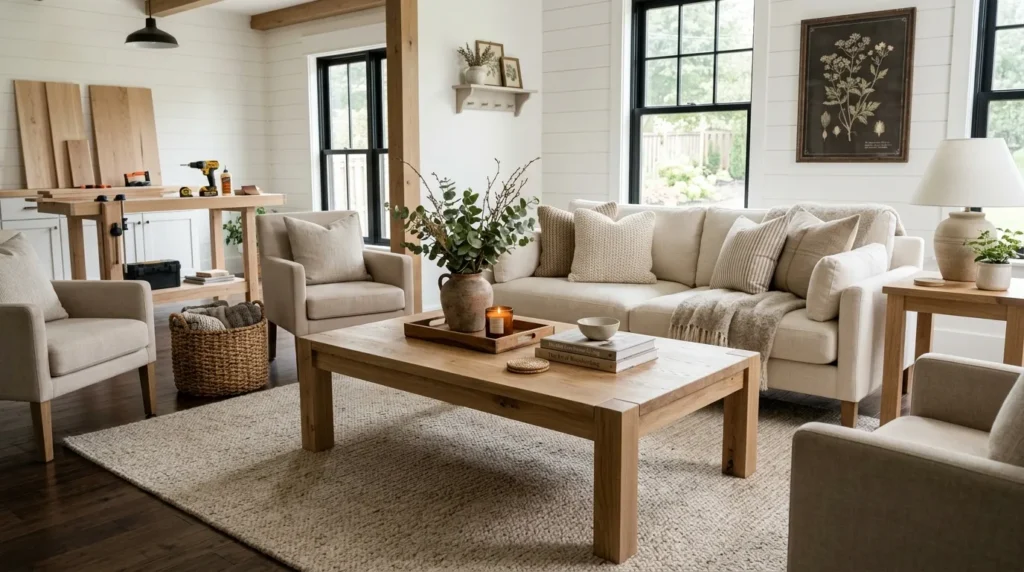
- X-Base Trestle Table A classic farmhouse silhouette built around a crossed wood base.
- Reclaimed Wood Slab A single-slab tabletop that showcases natural wood character.
- Whitewashed Farmhouse Build A soft, light-toned table using a simple whitewash technique.
- Crate-Style Storage Table A built-in crate design that adds function and rustic charm.
- Turned Leg Classic A traditional silhouette updated with a modern farmhouse finish.
- Herringbone Plank Top A patterned tabletop that adds visual interest through wood layout.
- Barn Door Inspired A table design that borrows sliding barn door details.
- Pipe and Wood Hybrid An industrial-farmhouse mix using black pipe and natural wood.
- Nesting Cube Duo A flexible two-piece design for small or evolving spaces.
- Trunk-Style Storage Table A boxy, trunk-inspired build with generous hidden storage.
1. X-Base Trestle Table
Quick Benefits
- Iconic modern farmhouse silhouette
- Sturdy, beginner-friendly construction
- Works with a range of tabletop finishes
- Adds visual interest through the crossed base
- Pairs well with most seating styles
Why It Works
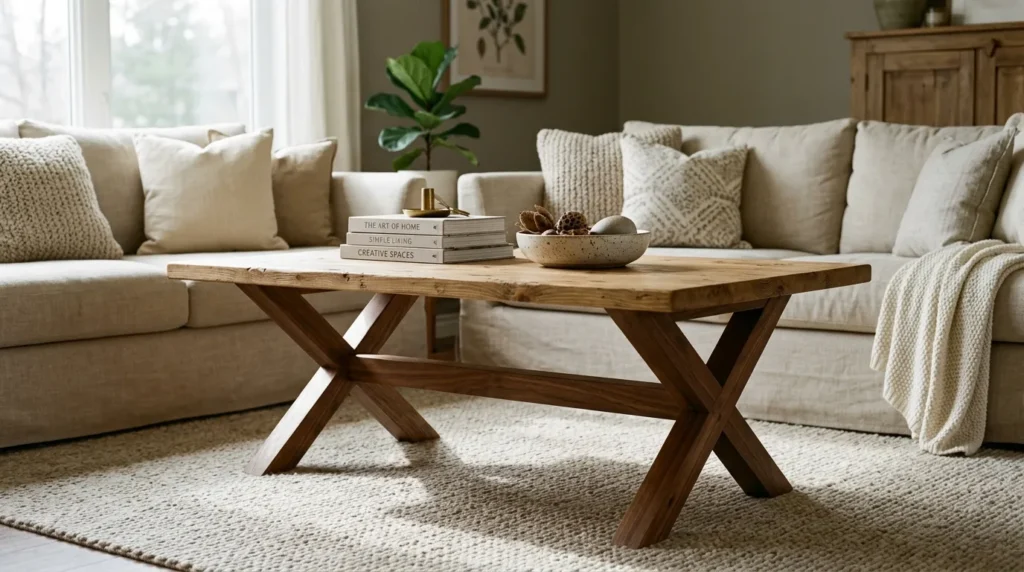
The X-base trestle table is one of the most recognizable modern farmhouse silhouettes, and for good reason — the crossed base adds visual interest and structural stability without requiring complex joinery. In my experience, this is one of the best starting projects for a first-time furniture builder, since the base can be constructed from straightforward pocket-hole joints and still looks intentional and well-crafted. The open base also keeps the piece from feeling visually heavy, which is especially useful in living rooms where floor space is limited.
How To Style It
Build the base from 2×4 or 2×6 lumber, cutting each side at matching angles so the crossed pieces sit flush and symmetrical. A simple pine or poplar tabletop finished with a warm walnut or driftwood stain pairs beautifully with the base, especially when the base itself is left in a natural or lightly whitewashed tone for contrast. Sand all edges smooth and consider a slight bevel on the tabletop’s edge for a more refined, less blocky look. Style the finished table with a stack of linen-bound books, a low ceramic bowl, and a small woven tray to keep the top from feeling too bare.
2. Reclaimed Wood Slab
Quick Benefits
- Showcases unique, natural wood character
- Adds authentic farmhouse texture
- Environmentally conscious material choice
- Creates a true one-of-a-kind piece
- Works well with simple, minimal bases
Why It Works
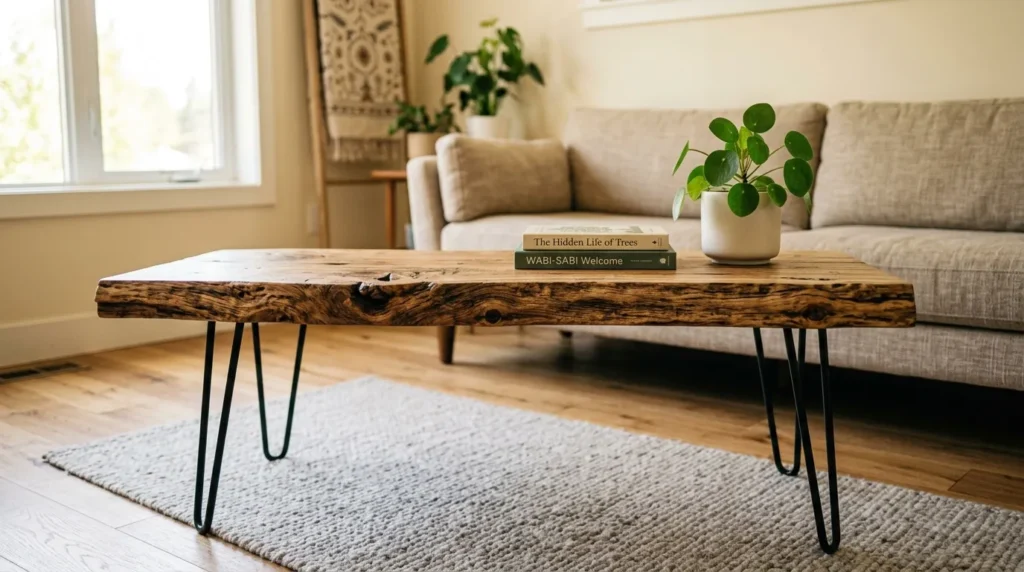
A mistake many DIYers make is over-designing a table when the material itself could be the star of the piece. A single slab of reclaimed wood — with its natural knots, grain variation, and weathered character — brings an authenticity to a modern farmhouse space that new lumber simply can’t replicate. That’s why many designers recommend letting a reclaimed slab stand largely unadorned, pairing it with a simple, understated base so the wood’s natural texture remains the clear focal point of the piece.
How To Style It
Source a reclaimed slab from a salvage yard, barn wood supplier, or a local woodworker, and choose one with interesting grain or knot patterns rather than a perfectly uniform surface. Sand the top smooth while preserving natural edges or live-edge detail if present, and finish with a clear matte or satin oil to protect the wood without masking its texture. Pair the slab with a simple black metal hairpin or angular base to keep the visual weight on the tabletop itself. Keep styling minimal — a single plant, a stack of two or three books, and one small object are enough to let the wood’s natural beauty remain the focal point.
3. Whitewashed Farmhouse Build
Quick Benefits
- Bright, airy addition to any living room
- Softens a room’s overall color palette
- Simple technique achievable in one weekend
- Pairs well with both light and dark furniture
- Easy to touch up or refresh over time
Why It Works
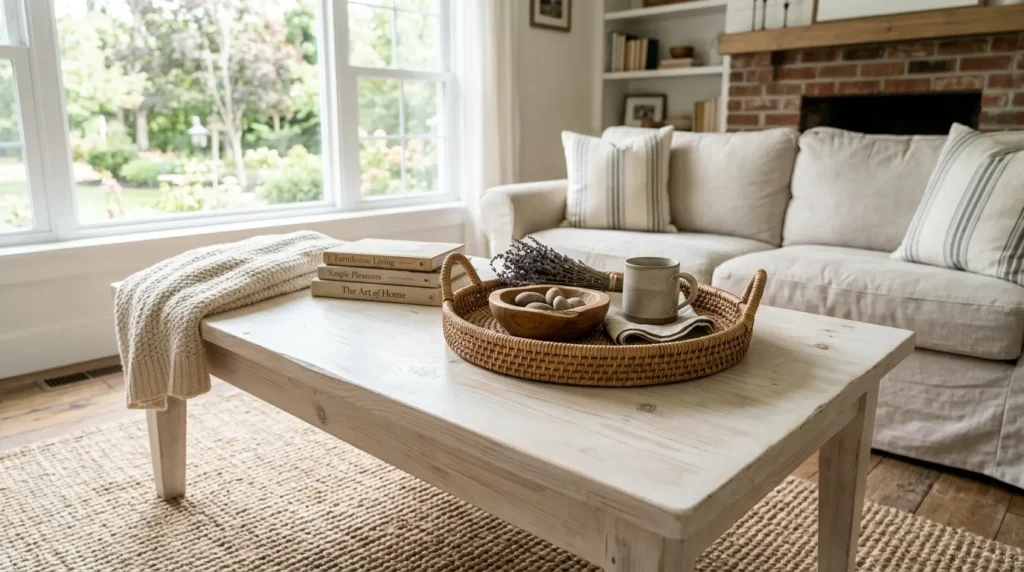
A whitewashed finish is one of the simplest ways to achieve that soft, sun-bleached modern farmhouse look without fully painting over the wood grain. Unlike solid paint, whitewashing allows the wood’s natural texture to show through a translucent white or cream wash, which reads as intentional and layered rather than flat. I’ve seen this idea transform a basic pine build into something that looks considerably more refined, simply by applying a thinned white paint and wiping it back before it fully dries.
How To Style It
Build the table from an affordable wood like pine or poplar, which takes a whitewash finish particularly well due to its light base tone and visible grain. Mix white paint with water at roughly a one-to-one ratio, brush it onto the raw wood, and wipe away the excess with a clean cloth before it dries, leaving the grain visible beneath the soft white finish. Seal with a matte polyurethane once fully dry to protect the surface from daily use. Style the finished table with warm wood or woven accessories — a rattan tray, a wood bowl, a linen coaster set — to keep the overall look from feeling too cool or stark.
4. Crate-Style Storage Table
Quick Benefits
- Adds practical hidden or open storage
- Rustic, approachable farmhouse character
- Great for small living rooms needing function
- Simple, beginner-friendly construction
- Doubles as a styling surface and storage piece
Why It Works
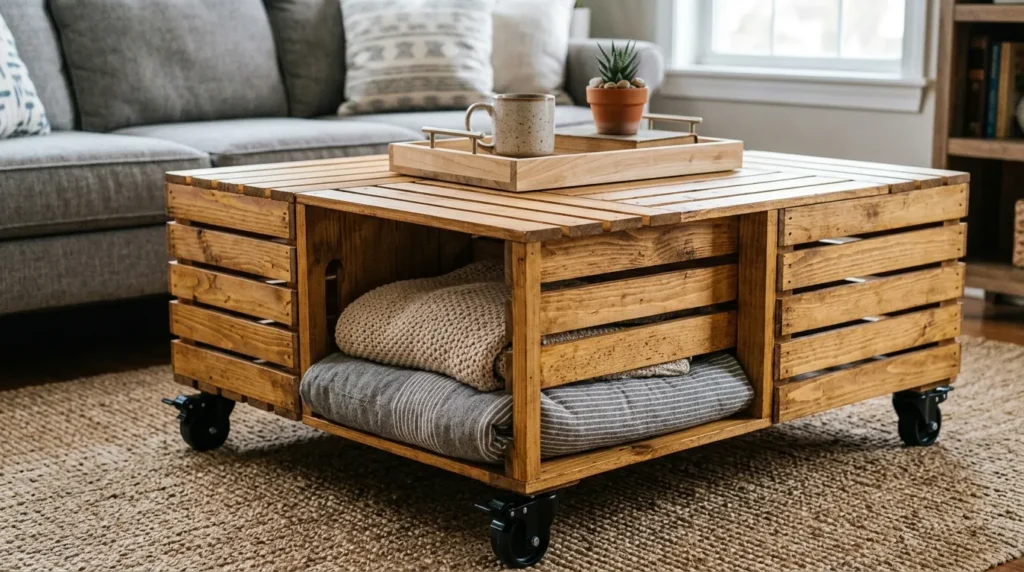
One simple trick I always suggest for small living rooms is choosing furniture that pulls double duty, and a crate-style coffee table does exactly that. Built from simple slatted wood crates mounted on a low frame or set of casters, this style combines the rustic charm of farmhouse decor with genuinely useful storage for blankets, magazines, or toys. The visible slatted construction also adds textural interest that a solid, flat-paneled table can’t offer, giving the piece a handmade, lived-in quality that fits naturally into a farmhouse-styled room.
How To Style It
Build or source two to four wood crates of matching size, and mount them side by side on a simple frame with a flat top surface, or leave the tops open for accessible storage. Add locking caster wheels beneath the frame for easy mobility, a detail that also reads as an intentional industrial-farmhouse touch. Stain the crates in a warm honey or driftwood tone, and use the interior storage for folded blankets or woven baskets that stay visible and add texture. Top the table with a simple wood tray or a stack of books to create a usable surface for drinks or decor.
5. Turned Leg Classic
Quick Benefits
- Softens a room with traditional detailing
- Blends farmhouse charm with classic furniture lines
- Works well in both formal and casual spaces
- Adds visual interest through leg silhouette
- Pairs beautifully with upholstered seating
Why It Works
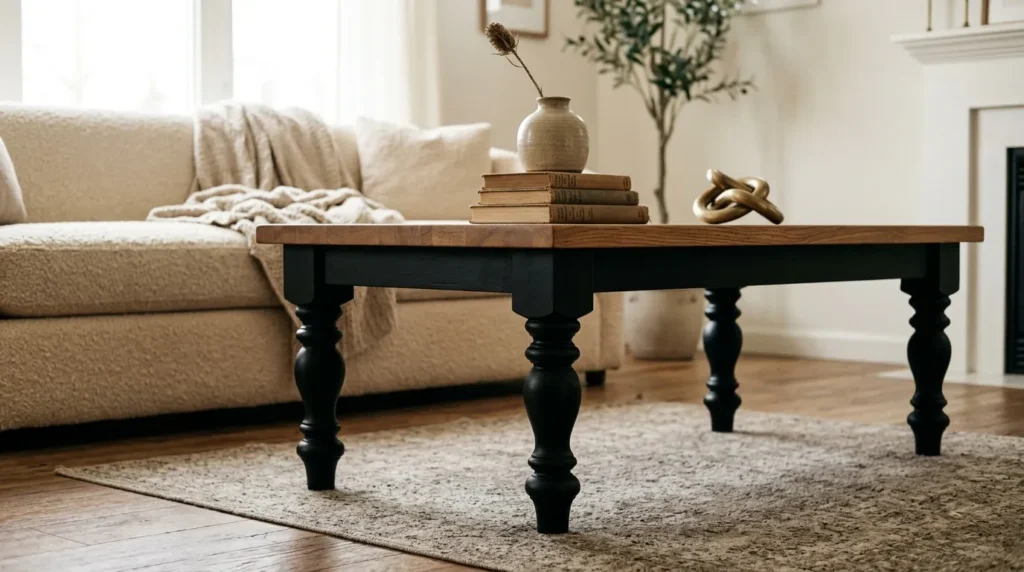
While much of modern farmhouse design leans toward clean, angular lines, a turned-leg coffee table introduces a softer, more traditional silhouette that still fits comfortably within the style when paired with the right finish. A mistake many homeowners make is assuming farmhouse decor only works with straight, boxy furniture, when in fact turned legs — especially in a matte black or warm wood finish — add a layer of visual interest and slightly elevated detail that can make a room feel more curated and less predictable.
How To Style It
Purchase pre-turned wood legs from a hardware or woodworking supplier if lathe access isn’t available, and attach them to a simple rectangular or round tabletop using leg mounting plates. Paint the legs in a matte black or deep charcoal for contrast against a natural wood top, which is a classic modern farmhouse pairing. Choose a tabletop finish in a warm oak or walnut stain to balance the more traditional leg silhouette with a contemporary material choice. Style the table with a mix of textures — a stack of books, a small ceramic vase, and one metal object — to echo the mixed-material theme established by the legs and top.
6. Herringbone Plank Top
Quick Benefits
- Adds sophisticated pattern and texture
- Elevates a simple build with visual detail
- Creates a strong conversation-piece focal point
- Pairs well with a minimal, simple base
- Showcases wood grain in a dynamic layout
Why It Works
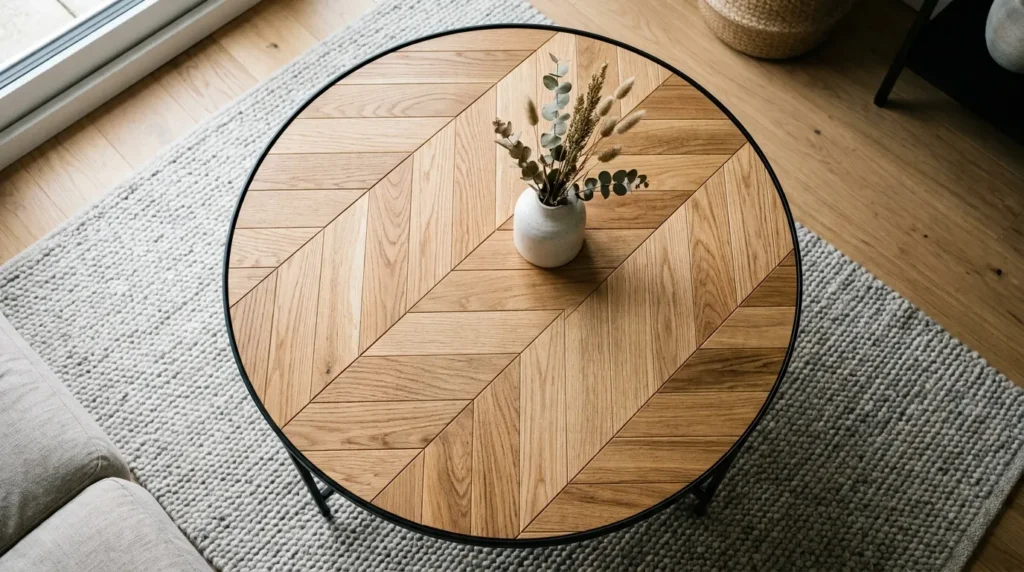
A herringbone-patterned tabletop takes a fairly simple build and elevates it into something that looks considerably more custom and high-end. In my experience, this pattern works especially well in modern farmhouse spaces because it adds sophistication and visual texture while still relying on natural wood as its primary material. The angled, interlocking plank layout catches light differently across its surface, which adds a dynamic, almost sculptural quality to what would otherwise be a flat, simple tabletop.
How To Style It
Cut matching wood planks at consistent 45-degree angles, and arrange them in an interlocking herringbone pattern on a plywood base before securing with wood glue and finishing nails. Sand the surface thoroughly once assembled to ensure the seams between planks sit flush and smooth. A natural or lightly stained finish showcases the pattern best, since a dark stain can sometimes obscure the visual detail of the herringbone layout. Pair the top with a simple black metal or straight wood-leg base so the patterned surface remains the clear focal point, and keep styling minimal to avoid competing with the tabletop’s built-in visual interest.
7. Barn Door Inspired
Quick Benefits
- Strong, recognizable farmhouse character
- Adds architectural detail through paneling
- Works well as a statement piece
- Pairs naturally with black hardware
- Sturdy, substantial construction
Why It Works
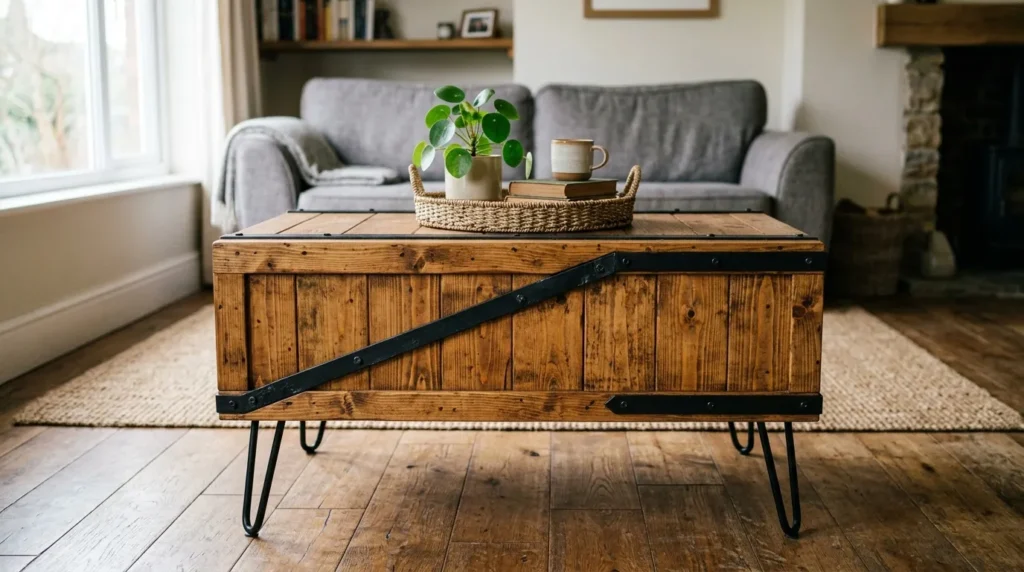
Few details read as more distinctly modern farmhouse than barn door styling, and translating that look into a coffee table creates an instant style statement. A barn-door-inspired tabletop uses vertical wood planks joined with horizontal or diagonal cross braces, mimicking the construction of an actual barn door. That’s why many designers recommend this style for living rooms that want a clear farmhouse focal point, since the paneled construction and visible joinery add a substantial, architectural quality that a simple flat tabletop doesn’t offer.
How To Style It
Join several vertical wood planks using horizontal cross braces at the top and bottom, plus a diagonal brace across the center for authentic barn door detailing. Secure the braces with black metal screws or decorative bolts left slightly visible for an authentic, hardware-forward look. Mount the finished panel onto a simple, sturdy base or set of hairpin legs in matching black metal to tie the hardware tones together. Because this style carries strong visual weight on its own, keep tabletop styling minimal — one tray, one plant, and perhaps a single stack of books is plenty.
8. Pipe and Wood Hybrid
Quick Benefits
- Blends industrial and farmhouse aesthetics
- Sturdy, exposed hardware detailing
- Budget-friendly base material option
- Adds a masculine, grounded visual weight
- Pairs well with leather and canvas textiles
Why It Works
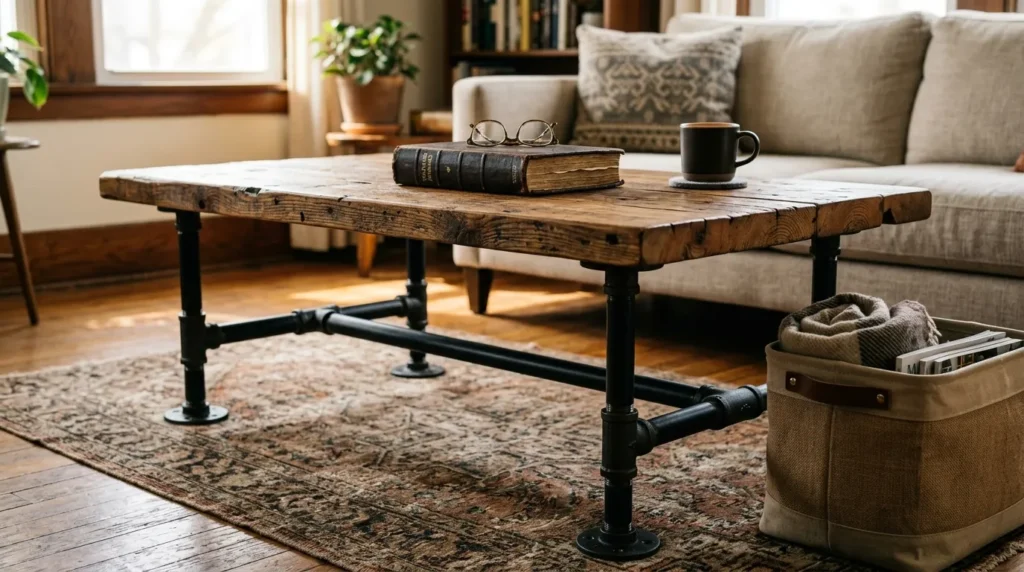
The pairing of black iron pipe with warm, natural wood is a signature combination in industrial farmhouse design, and it happens to be one of the more affordable and accessible base options for a DIY build. A mistake many first-time builders make is assuming pipe fittings require welding or specialty tools, when in fact most pipe bases can be assembled with threaded fittings alone. The contrast between the raw, dark metal and the warmth of a natural wood top creates a grounded, substantial look that works particularly well in living rooms with leather furniture or other industrial-leaning elements.
How To Style It
Assemble a base from threaded black iron pipe and flange fittings, available at most hardware stores, choosing a configuration with at least four floor-level points for stability. Attach a solid wood tabletop — reclaimed, pine, or a hardwood like oak — using flange plates screwed directly into the underside of the top. Leave the pipe in its natural matte black finish rather than painting over it, since the slightly imperfect, industrial texture is part of the style’s appeal. Style the table with a mix of leather, canvas, and wood accessories to reinforce the industrial-farmhouse material story established by the base.
9. Nesting Cube Duo
Quick Benefits
- Highly flexible for small or changing spaces
- Doubles seating or surface area when separated
- Simple, beginner-friendly construction
- Easy to store when not in use
- Works well in apartments and rentals
Why It Works
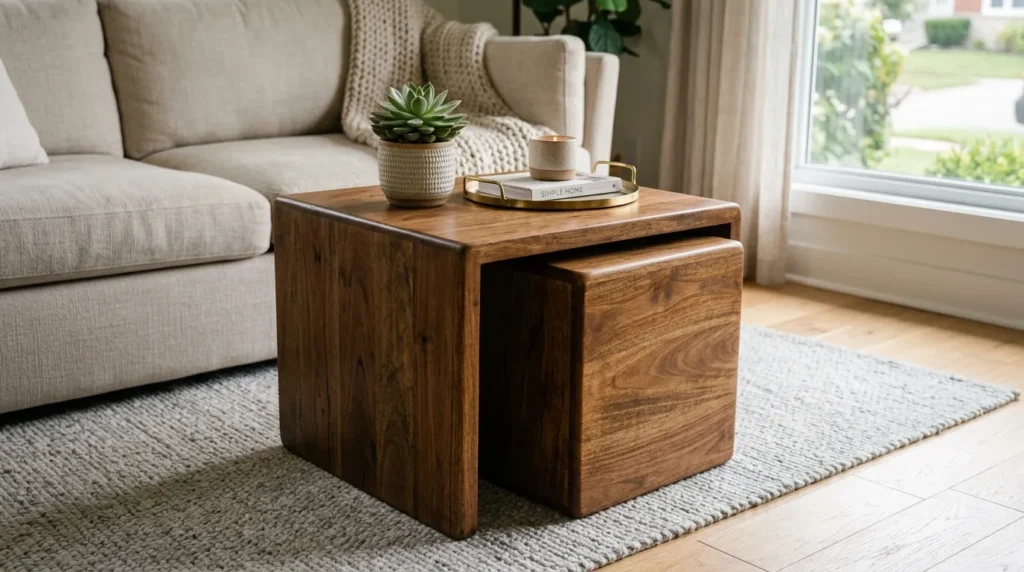
A nesting cube design solves a very specific problem: the need for a coffee table that can adapt to different uses without taking up permanent floor space. One simple trick I always suggest for small living rooms is choosing furniture that can expand or contract based on the moment, and a pair of nesting cubes does exactly that — pushed together for a single table, or pulled apart to create extra seating or surface space when guests are over. This flexibility, combined with straightforward box-style construction, makes it one of the more practical builds on this list.
How To Style It
Build two simple wood boxes in slightly different sizes so one can slide beneath or beside the other when nested together. Use plywood or solid wood panels joined with pocket screws for a clean, sturdy construction, finishing both cubes in a matching or complementary stain. Add a thin wood or metal top to each cube if a flatter surface is preferred over an open box top. Style the nested pair with a single plant or tray when combined, and keep each cube simple enough that either one can stand alone as a side table when separated for extra seating or surface space.
10. Trunk-Style Storage Table
Quick Benefits
- Generous hidden storage capacity
- Substantial, grounded farmhouse presence
- Doubles as extra seating when needed
- Classic silhouette with broad style appeal
- Practical for blankets, games, or seasonal items
Why It Works
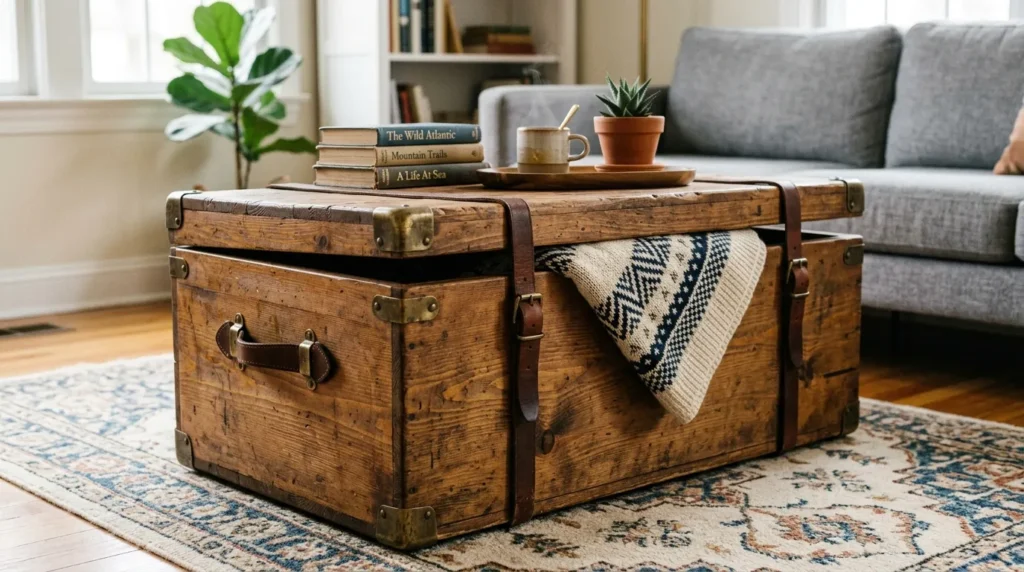
A trunk-style coffee table brings a substantial, grounded presence to a living room while offering some of the most generous hidden storage of any coffee table style. I’ve noticed that this design works particularly well in family living rooms, where the hinged or lidded top can hold blankets, board games, or seasonal decor out of sight, while the sturdy, boxy silhouette still reads as a classic, farmhouse-appropriate piece. The flat top also doubles easily as extra seating in a pinch, adding practical value beyond its storage function.
How To Style It
Build a simple rectangular box from plywood or solid wood panels, reinforcing the corners for stability given the weight the piece will need to support. Attach a hinged lid using sturdy metal hinges, choosing a black or aged bronze finish that complements other hardware in the room. Add simple metal or leather handles to the sides for an authentic trunk-inspired detail, and finish the wood in a warm stain or a lightly distressed painted finish for added farmhouse character. Style the flat lid with a low tray, a stack of books, and one small decorative object, keeping items lightweight and easy to move aside when the storage underneath is needed.
Frequently Asked Questions
What wood is best for a DIY farmhouse coffee table?
Pine and poplar are popular choices for beginners due to their affordability and how well they take stain and whitewash finishes. For a more substantial, higher-end look, reclaimed wood or a hardwood like oak offers richer grain and durability, though at a higher cost.
Do I need advanced woodworking skills to build these tables?
Most of these designs, including the X-base trestle and nesting cubes, can be built using basic tools like a pocket-hole jig, a saw, and a drill. More advanced builds like the herringbone top require more precision but don’t require specialty woodworking equipment.
How do I get an authentic farmhouse finish on new wood?
Whitewashing, light distressing, and warm stains like driftwood or weathered oak all help new lumber read as more farmhouse-appropriate. Lightly sanding edges and corners after staining also mimics the natural wear found on authentic reclaimed pieces.
What base material pairs best with a modern farmhouse coffee table top?
Black metal, whether in hairpin legs, pipe fittings, or a turned-leg finish, is one of the most common and versatile pairings in modern farmhouse design. It provides contrast against warm or whitewashed wood tops without competing with the tabletop’s texture.
How much storage should a DIY coffee table include?
This depends on your living room’s needs, but a crate-style or trunk-style design offers the most storage capacity for blankets, games, or seasonal items. If storage isn’t a priority, a simpler slab or trestle design keeps the build faster and more straightforward.
Can these coffee table styles work in a small living room?
Yes, particularly the nesting cube duo and crate-style storage table, both of which are designed with flexibility and function in mind. Scaling down the dimensions of any of these builds also makes them suitable for smaller spaces without losing the overall farmhouse character.
What finish protects a DIY coffee table for everyday use?
A matte or satin polyurethane applied over stain or whitewash provides solid protection against spills, scratches, and daily wear. For tables with heavier use, such as in a family living room, two coats offer additional durability without significantly altering the finish’s appearance.
Conclusion
A DIY coffee table is one of the most rewarding ways to bring modern farmhouse style into your living room, whether you’re a first-time builder or simply looking for your next weekend project. From the classic X-base trestle to a trunk-style build with generous storage, each of these ten designs offers a distinct look while staying genuinely achievable, even without advanced tools or woodworking experience. The details — stain choice, hardware finish, and thoughtful styling — are what turn a simple build into a piece that looks intentional and complete.
Start with one design that fits your skill level and your living room’s needs, and don’t be afraid to adjust the dimensions or finish to match your own space. Maybe that means starting with a simple whitewashed build this weekend and working up to a more detailed herringbone top down the line. Each finished table becomes not just a functional piece of furniture, but a genuine reflection of the time and care you put into building it yourself.
Related Articles
- Cozy Bedroom Ideas
- Small Living Room Layouts
- Modern Farmhouse Decor
- DIY Accent Wall Ideas
- Neutral Home Styling